Introducing a 'gene mutation unique to humans' into mice changes their vocalizations, which may be related to the emergence of speech

Modern humans (Homo sapiens) are capable of complex speech, and this ability has been of great help to the survival of the species. In an experiment conducted by a research team at
A humanized NOVA1 splicing factor alters mouse vocal communications | Nature Communications
https://www.nature.com/articles/s41467-025-56579-2
The Rockefeller University » A single protein may have helped shape the emergence of spoken language
https://www.rockefeller.edu/news/37279-a-single-protein-may-have-helped-shape-the-emergence-of-spoken-language/
Scientists Put a Human Language Gene Into Mice And Changed Their Voice : ScienceAlert
https://www.sciencealert.com/scientists-put-a-human-language-gene-into-mice-and-changed-their-voice
The development of vocalization in Homo sapiens involves anatomical components and complex neural networks, but the genetic factors behind it remain poorly understood.
Previous research has shown that people with mutations in the gene ' FOXP2 ,' which is involved in early brain development, exhibit severe language disorders, such as being unable to coordinate lip movements with their voice. In addition, Homo sapiens' FOXP2 has a genetic mutation not seen in other primates or mammals, but it is known that Neanderthals also had a similar genetic mutation, suggesting that this occurred in the ancestors of the human lineage. However, there is some disagreement about the findings regarding FOXP2, and the exact details are unknown.
In recent years, in addition to FOXP2, a gene called ' NOVA1 ' has emerged as a candidate for the emergence of spoken language. NOVA1 produces an RNA-binding protein involved in brain development and neuromuscular control, and is found in the same form in a wide range of animal species from mammals to birds, but it is said that a special amino acid mutation is found only in Homo sapiens.
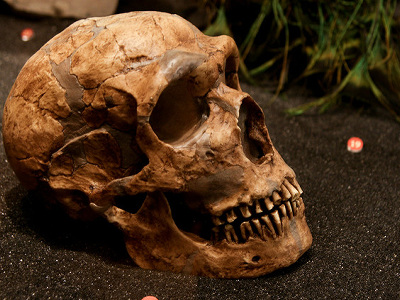
Neanderthals and Denisovans , close relatives of Homo sapiens, do not have similar genetic mutations, which may have been the mutation responsible for the success of Homo sapiens. 'Such changes may have played an important role in the acquisition of characteristics that contributed to the emergence, expansion, and survival of Homo sapiens,' said Yoko Tajima , a postdoctoral researcher at Rockefeller University.
Tajima and his team used the gene editing technique
The analysis showed that the NOVA1 gene mutation found in Homo sapiens did not affect RNA binding related to neurodevelopment or motor control in mice. However, it was reported that RNA binding related to vocalization was altered in mice that had the mutant gene introduced. Regarding this discovery, Tajima said, 'Furthermore, we found that many of these vocalization-related genes are binding targets of NOVA1, further suggesting that NOVA1 is involved in vocalization.'
Over the next few years, the team investigated the effects of the NOVA1 mutation on vocalizations in mice and found that the mice that had the mutation had altered vocalization patterns, both in juveniles and adults, and in both males and females.
As juveniles, mice with the Homo sapiens gene mutation produced higher-pitched calls than normal mice. The change in calls did not affect the attention that mothers paid to their young, which may indicate increased attempts at social interaction by the mice. In adult mice, courting males produced higher-pitched calls.
'NOVA1 is part of a fundamental evolutionary change in early Homo sapiens that may represent the ancient origins of spoken language,' said Robert Darnell , a professor at Rockefeller University who has studied NOVA1 since the early 1990s.
Darnell's research team plans to study how NOVA1 controls language functions, focusing on language and developmental disorders. 'We believe that solving these problems will provide important insights into how the brain works during speech communication and how its miscontrol can lead to certain disorders,' said Tajima.
Related Posts: