6 Middle and High Schools in Asia that Shocked Former Teachers

What kind of image do you have of Asian schools? As a former teacher, I have visited 12 schools in 10 Asian countries, and I would like to introduce 6 junior and senior high schools with unique features that would be unheard of in Japan.
Hello!
Before I left, I was a science teacher at a junior and senior high school. Therefore, one of the themes of my trip is to 'visit junior and senior high schools around the world.' The goals are to 'acquire new teaching methods,' 'learn the characteristics of schools around the world,' 'understand the realities of students in each country,' and 'compare club activities with those in Japan.'
We will introduce the schools in the order of the route above. At the end of each one, we will also include interviews with students.
◆Japanese was a compulsory subject in Bali
In Indonesia, we visited the public SMA Negeri 1 Kuta High School on the island of Bali.
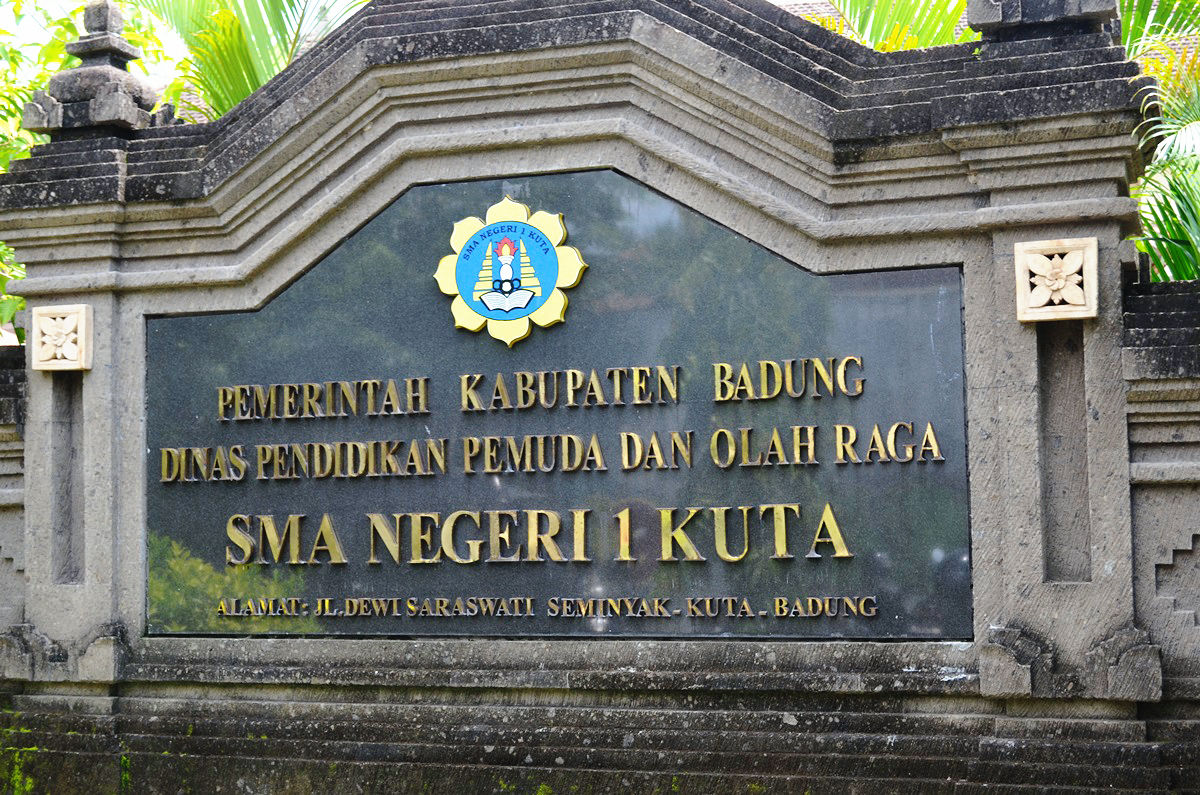
Before entering the school building, you will be surprised by the number of mopeds parked around the large grounds, giving you a glimpse into the motorcycle-loving society.

The school building is so beautiful that it's hard to believe it's a public school. It makes me excited to commute to school.

When I entered the classroom, I was surprised by the number of students. My previous class had about 35 students, but here there were about 50. I take my hat off to the teachers who manage to keep the class together.

I also learned that Japanese is a compulsory subject for one year. The photo shows a student who came to ask a question with a Japanese teacher. The question was, 'Which is better, watching a movie at the cinema with your partner' or 'Watching a movie at the cinema with your partner?'

She is a third-year student (18 years old), named Reisha. She enjoys math, English, and economics classes, is active in the English club after school, and has even won a debate award. She said her dream is to work in the legal field.

The mandatory Japanese language course shows that the government is putting effort into attracting Japanese tourists. For those of us who struggle with just English, it's hard to imagine that there is an environment where high school students can learn a second foreign language.
In Kuala Lumpur, sex education was taught four times a week.
In Malaysia, I visited Victoria Institution, a public school in Kuala Lumpur with a long history of over 100 years. It combines what would be considered a junior high school and high school in Japan with what is known as a university preparatory school, and some students attend for seven years.

The school building was very tasteful, and the grounds were so vast that it seemed endless.

There is a mosque on the premises, which shows that Malaysia is an Islamic country.

When I was listening to the explanation of the timetable, I learned that there were four classes a week on something called Gender Science. At first, I thought it was a class about cultural and social aspects of sexuality, but when I peeked into the class, I saw that they were studying the menstrual cycle.

Perhaps due to this influence, in the biology room, next to the insect specimens, there was also a fetus specimen. This was the most surprising thing in Asia.

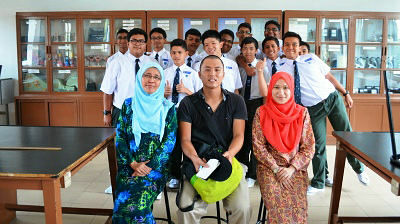
The boy on the right is Iskander. He is currently in his second year of junior high school (14 years old) and is a member of the Taekwondo club. His favorite class is IT, and he said he wants to be an engineer in the future.

There is still a lot of prejudice surrounding sex education in Japan, and there is room for improvement in teaching methods. It is also true that
It was also refreshing to see Indian, Malay, and Chinese students studying in the same language. As a result, English education is advanced, and I was also impressed by the fact that not only English but also science and math classes are taught in English.
◆There was a 'film' class in Cambodia
In Cambodia, I visited a private ELT (English Language Teaching Institute) in Phnom Penh. According to information from the Ministry of Foreign Affairs , due to a shortage of teachers, public schools in Cambodia are only able to offer half-day classes, and it seems common for students to use their free time to attend cram schools or private schools. For this reason, this ELT offered both full-day and half-day courses.
First of all, the exterior looks like the office of a listed company, even though this is Cambodia.

And when you go inside, you'll be amazed at the modern design. The computers at the reception desk are all Macs. I want to work at a school like this.

Also, the library was all white, making me feel like I was in a different country.

This is an English class. This class covers all levels from kindergarten to high school, and this is an elementary school classroom. The students were reading aloud from their textbooks fluently.

Also, when I looked at the timetable, I saw that there was a film class! Apparently there are three theater rooms.

The girl on the right is Lenha, a third-year junior high school student. Her favorite subject is the national language (Khmer), and she said she likes watching movies at school. She hasn't decided what she wants to do in the future yet.
When I thought of schools in Cambodia, I imagined wooden school buildings built in the middle of nowhere, but in reality, there are modern schools like this one, which cleared up another of my prejudices.
I also felt that showing 'movies' to students was meaningful. I place importance on presenting visual materials in class because it makes it easier for students to visualize. In that regard, showing movies related to the class is one teaching method I would like to try.
A physics teacher from Hanoi was a super celebrity with 10,000 likes on his Facebook page.
In Vietnam, I visited this public high school in Hanoi.

The school has three buildings and has a retro atmosphere.

The teacher who showed me around the school, a handsome man with sideburns, was a famous physics teacher who had been featured on TV and other media.

His Facebook page has over 10,000 likes. Is there any other public school teacher in Japan who is as famous as him?

His name is Ron, a 16-year-old high school freshman. He is good at English and wants to find a job that will contribute to society in the future. After school, he makes a daily habit of going to an internet cafe, where the internet costs about 30 yen per hour.

The other day, I met a traveler over 70 years old who was the principal of a public junior high school in Japan. He said that the problem with Japanese school education is that it is 'closed and exclusive.' I guess, but I feel that it is precisely because of the contrasting, open school environment here in Vietnam that public school teachers are able to attract attention and become famous.
In Nepal, a quiz competition was held once a week.
In Nepal, we visited the public Durber High School in Kathmandu.

The school building was traditionally built as shown in the photo.

On this day, classes were put aside for a quiz competition. The entire school (about 150 students) gathered in a large classroom.

The teachers take the lead in asking questions based on what students have learned on a daily basis, which is fun for teachers as it allows them to gauge the students' level of understanding.

Then, (probably) students from the same grade will be divided into five teams and compete against each other to show off the results of their daily studies.

The team in the back is answering the questions, while the team in the front looks frustrated. They said that quiz competitions and debates like this are held every week.

He is 18 years old and likes math, so he studies statistics after school. He also wants to join the military in the future.

It's great that the whole school is using gamification like this quiz competition. It would be interesting if Japan also had quiz festivals alongside sports festivals and school festivals. I feel like we should incorporate more efforts to create an environment where students can learn while having fun.
◆ Bangladeshi schools without libraries
In Bangladesh, I visited Al Sabah Academy, a private school in Dhaka, where primary and secondary school students aged between 5 and 15 attend school. Girls attend school in the morning and boys in the afternoon.

The school building was decorated with characters such as Doraemon.

Since Bangladesh is an Islamic country, many of the female students wear headscarves. It must be difficult to remember their names because they are all mixed up (lol).

Bangladesh has few tourists, so foreigners are treated like movie stars, with students asking for autographs.

In this way, I wrote their names in Japanese and signed about 100 autographs (lol).
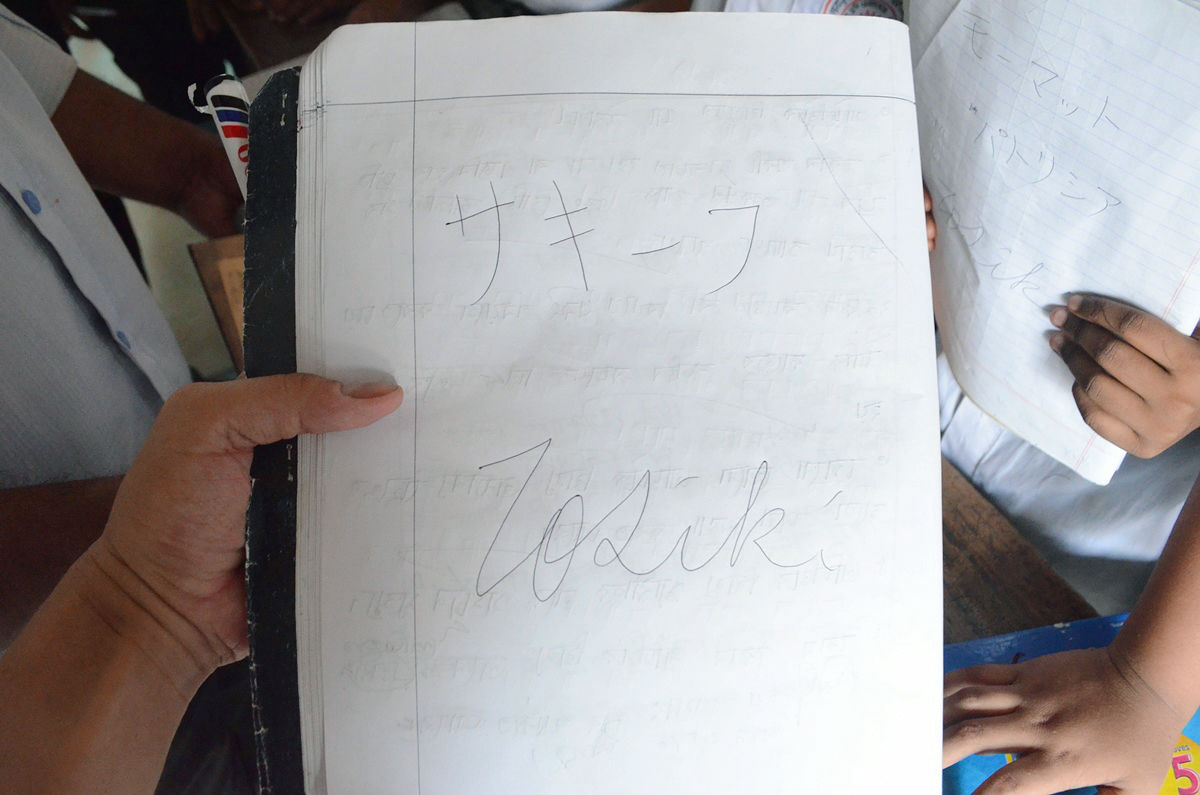
Her name is Konica, and she is 14 years old. Her favorite subject is English, and she wants to be a doctor in the future. She helps out around the house after school.

The school's monthly tuition fee is 300 taka (about 400 yen). Even so, 30% of students say they cannot afford it. The school also does not have a library, computer room, or laboratory. The English teacher who showed me around asked me if there was anything I could do, saying, 'These are essential for education.' I promised to write an article to spread the word. If anyone is able to help, please contact me using the inquiry email form on my website, COSMOPOLITAN .
Summary
What I felt throughout Asia's developing countries this time was that educational facilities were better than I expected and that English education was excellent. It seems that my prejudice that students study in dreary wooden school buildings even in urban areas in developing countries was a misconception, and many students were happy to answer my interview questions in English.
In contrast, club activities were as expected. No other country has seen them as popular as Japan. Finally, what's rather disappointing is that blackboard culture is not commonplace. About half of the schools I visited had whiteboards. I like the feel and sound of writing with chalk on a blackboard, so I feel like I want to cherish this culture more.
We would like to continue providing school information from the Middle East, Africa, and South America.
Text and interview: Hiroharu Zoshiki http://zoshiki.com/wp/
Supervised by: Sekai Shinbun sekaishinbun.net

Related Posts: