In an era where AI is solving countless unsolved mathematical problems, what is mathematician Terence Tao's proposed 'Math 2.0'?
As AI becomes increasingly capable of solving unsolved mathematical problems, renowned mathematician
Math 2.0 | What's new
https://terrytao.wordpress.com/2026/10/10/math-2-0/
Math 2.0
(PDF file) https://teorth.github.io/tao-web/slides/math-2-0-caltech-2026.pdf
Tao explains that traditional mathematical research has developed based on the premise of 'the scarcity of proofs.' Finding answers to unsolved problems and mathematically proving their correctness is extremely difficult, requiring advanced expertise and many years of research. As a result, the research system, evaluation system, and even the compensation and prestige of researchers in the mathematical community have been built around solving difficult problems.
However, modern AI is overturning this premise. For example, the proof assistance system 'Lean' allows computers to mechanically verify proofs written in the correct format, giving AI the characteristic of being able to 'objectively verify whether it is correct or not.' In addition, mathematical research often does not require physical experiments, and the vast number of mathematical papers and textbooks have been digitized, creating an environment that is easy for AI to learn from.
According to Tao, the mathematical world is shifting from an era of scarcity of proofs to an era of abundance of proofs. Mathematics is a field that is very compatible with AI machine learning techniques, and major AI research institutions such as OpenAI and Anthropic are investing significant resources in improving mathematical problem-solving capabilities.
In fact, with sufficient computing resources and high-performance AI models, many previously unsolved problems can now be solved relatively quickly. Furthermore, the humans operating the AI no longer necessarily need to possess advanced mathematical expertise.
However, Tao emphasizes that 'AI cannot solve all of mathematics.' The majority of problems at the forefront of current mathematical research remain unsolved even with the investment of vast computing resources. Furthermore, he states that mathematical problems are infinite and there is no upper limit to their difficulty, so even as AI develops, new research areas will continue to expand.
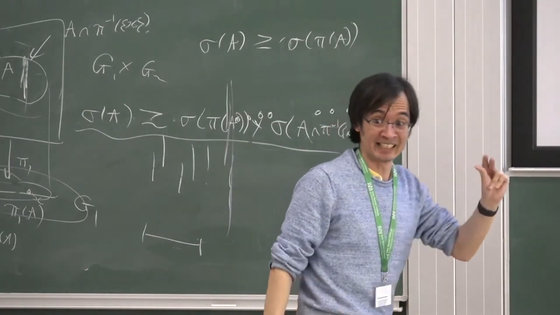
by Isaac Newton Institute
Furthermore, he warns against the fact that only success stories of AI receive attention in the media and on social media. Looking only at success stories can create the illusion that AI can solve all mathematical problems, but in reality, there are many failures that have not been made public. Tao argues that 'in order to accurately evaluate the capabilities of AI, a highly transparent evaluation is needed that includes not only success stories but also failures and the amount of computing resources consumed,' and as an example of such an initiative, he cites ' First Proof ,' which verifies the mathematical research capabilities of AI from an independent standpoint.
On the other hand, Tao's concern is that the original value of mathematical research will be lost as AI becomes able to easily provide answers to problems.
Tao argued that for mathematicians, unsolved problems in mathematics are not simply about solving them, but also serve as a 'lighthouse' for exploring the surrounding world of mathematics. New theories and methods often emerge during the trial-and-error process of attempting to solve unsolved problems, and these results can sometimes be more valuable than the final answer itself.

However, if AI only generates answers to unsolved problems in a short amount of time, these opportunities for discovery may be lost. Furthermore, even mathematically correct answers are not necessarily appropriate when applied to the real world, such as in medicine or engineering, and human understanding and judgment are crucial.
This is where Mr. Tao's concept of 'Math 2.0' comes in. In Math 2.0, AI is not simply used as a tool to solve unsolved problems, but rather to deepen mathematical understanding, explore new research areas, and apply mathematical knowledge to the real world.
Specifically, this includes research aimed at discovering more concise and understandable proofs of already proven theorems, or investigating the conditions necessary for such proofs in detail. We also propose using AI to organize large volumes of mathematical papers, linking different research findings, and developing databases for reusing verified mathematical knowledge.
As an example of large-scale mathematical research using AI, Tao introduces the ' Equational Theories Project .' This project combines human and automated proof methods to determine the truth value of more than 22 million propositions related to universal algebra . Such efforts have the potential to evolve mathematical research, which has traditionally focused on examining individual problems, into research that explores the characteristics and laws of mathematics as a whole from massive amounts of data. Furthermore, as a direction for Math 2.0, Tao suggests creating educational materials that integrate the results of mathematical research and developing highly secure open-source AI models specifically for mathematics.
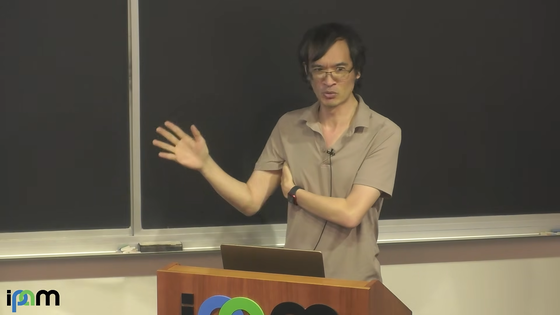
by IPAM
Tao stated that 'the biggest obstacle to realizing Math 2.0 is not technology or institutional culture, but imagination,' and argued that as AI improves its ability to solve mathematical problems, humans and AI should collaborate to open up new possibilities for mathematical research that go beyond simply increasing the number of proofs.
Related Posts: