The mechanism by which gene mutations causing autism disrupt brain development has been discovered.
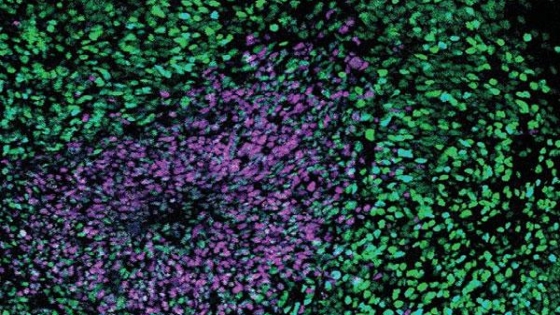
More than 250 genes are thought to be involved in autism spectrum disorder (ASD), but it is not fully understood how mutations in these genes affect the developing brain. A research team centered at the University of California, San Francisco (UCSF) examined the linkages of proteins produced from 100 genes strongly associated with ASD and discovered the mechanism by which these genes disrupt brain development.
Autism mutations rewire protein interaction networks to drive neurodevelopmental pathology | Science
Largest Molecular Map of Autism Opens Path to Precision Therapies | School of Pharmacy
https://pharmacy.ucsf.edu/news/2026/08/largest-molecular-map-of-autism-opens-path-to-precision-therapies
ASD is a type of 'neurodevelopmental disorder' that affects the development of the nervous system, including the brain, and is believed to be largely influenced by genetic factors. Some genes associated with ASD contain information for protein synthesis, and mutations in these genes can alter the shape and function of the proteins produced. However, even when genes associated with ASD are identified, it is not fully understood what happens to the altered proteins within cells. Since many proteins work by binding to other proteins, the research team focused on how gene mutations change the binding partners of proteins.
The research team focused on 100 genes with strong evidence linking them to ASD, and examined the binding partners of the proteins produced by each gene in human cells. Furthermore, they compared how gene mutations found in ASD patients alter protein-protein binding and used a brain model created from human iPS cells to investigate the impact on neuronal development.
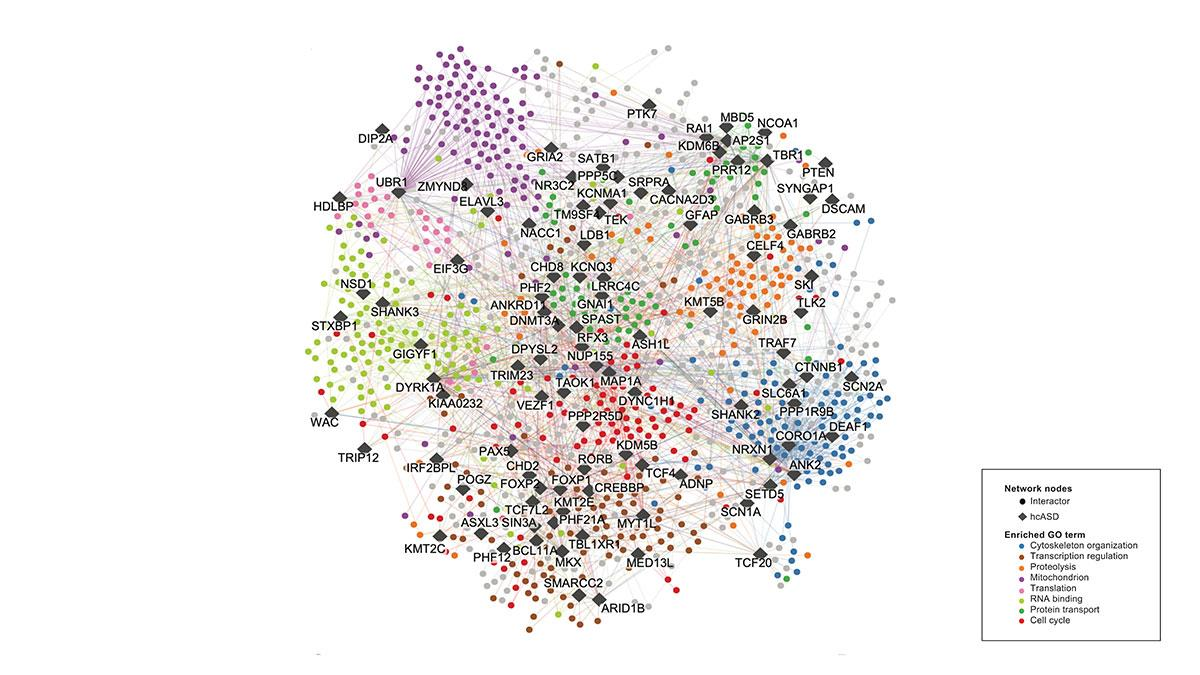
As a result, the research team reported that they found 1074 binding partners for 100 ASD-related proteins, resulting in a total of 1881 possible combinations. Of these 1881 combinations, 87% were previously unreported.
Different ASD-related proteins formed a large network through common partners and groups of proteins working together. The network diagram released by UCSF shows that 100 ASD-related proteins, represented by diamonds, are connected to more than 1000 binding partners, represented by dots, forming numerous groups.
Next, the research team analyzed a total of 54 different gene mutations that occurred in 30 ASD-related genes. These were all gene mutations in which a single amino acid, a building block of proteins, is replaced with a different type. By comparing the binding between proteins with and without each gene mutation, 253 combinations were found where the binding became weaker or stronger. Examples were also confirmed where different gene mutations commonly affected the binding with the same partner or protein cluster.
As a specific example, the research team examined the
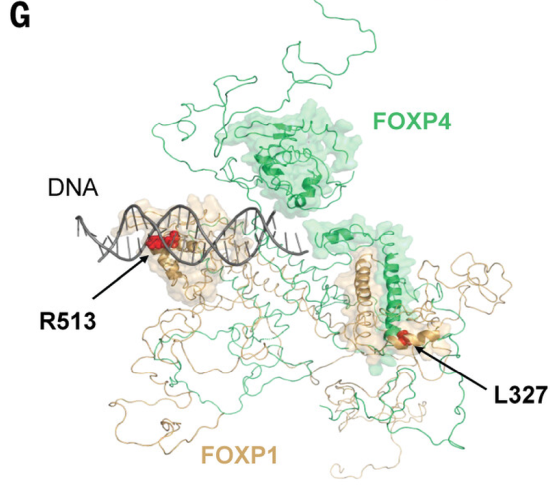
When researchers examined three types of gene mutations in the FOXP1 gene, they found that in all cases, the link between FOXP1 and FOXP4 was weakened. Of these, the R513H gene mutation, which was predicted to be highly likely to cause disease, was investigated in detail by the research team to examine its effects on the developing brain. The research team created 'forebrain organoids' that reproduce the developing forebrain from human iPS cells with the R513H gene mutation and compared them with organoids without the R513H gene mutation. As a result, on day 39 of culture, the proportion of neural progenitor cells, which are the precursors of nerve cells, decreased, and the proportion of nerve cells that make up the deep part of the cerebral cortex increased. However, on day 101 of culture, the proportion of nerve cells that make up the deep part of the cerebral cortex was lower than that of organoids without the R513H gene mutation.
The images below show the cells cultured at 39 days on the left and 101 days on the right. In the graph, red indicates cells without the R513H gene mutation, and blue indicates cells with the R513H gene mutation. 'PAX6' represents neural progenitor cells, while 'BCL11B' and 'TBR1' represent markers for nerve cells that make up the deeper parts of the cerebral cortex.
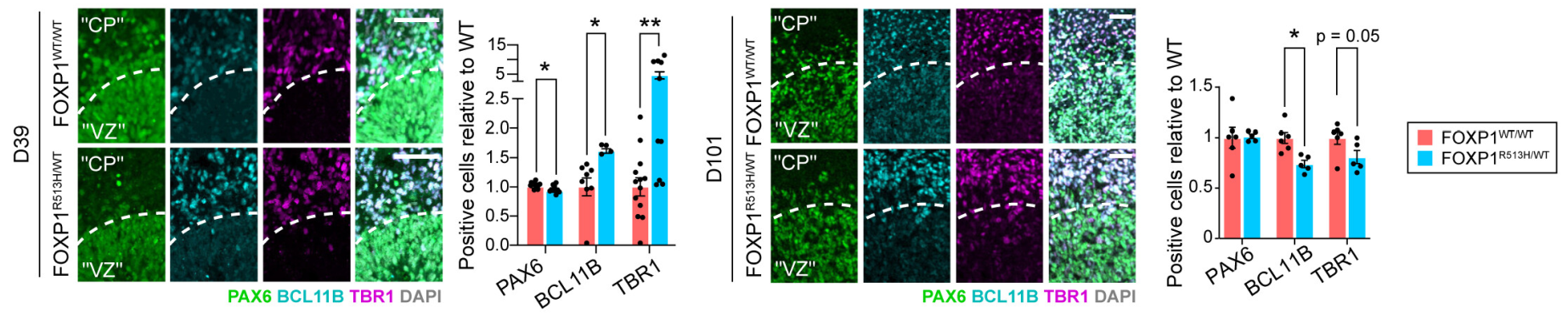
The research team believes that the reason the increase and decrease of nerve cells reversed depending on the stage is because 'the R513H gene mutation accelerated the time at which neural progenitor cells transformed into cerebral cortical nerve cells.' As a result of more nerve cells being produced than usual in the early stages of development, the original neural progenitor cells decreased earlier, and consequently, fewer nerve cells were produced in later stages.
To investigate the mechanism behind this change, the research team examined the binding sites of FOXP1 and FOXP4. In organoids without the R513H gene mutation, 94.7% of FOXP4 binding sites overlapped with those of FOXP1. In contrast, in organoids with the R513H gene mutation, the overlap between FOXP1 and FOXP4 binding sites decreased to 67.4%, and FOXP4 bound to approximately 4700 new sites. The research team believes that FOXP4, unable to pair with FOXP1 as easily, binds to DNA in locations other than its original state, altering the function of genes involved in nerve cell development.
Furthermore, when the FOXP4 gene was disabled in cells with the R513H gene mutation, the proportion of nerve cells constituting the deep parts of the cerebral cortex, which had increased by day 39 of culture, returned to a level close to that of organoids without the R513H gene mutation. The research team believes that the R513H gene mutation weakens the connection between FOXP1 and FOXP4, causing FOXP4 to bind to DNA in a location other than its normal state, thereby disrupting the timing of nerve cell formation.
Similarly, a gene mutation called L327P in the FOXP1 gene and another gene mutation in PPP2R5D, another ASD-related gene, were observed to result in a decrease in neural progenitor cells and an increase in neurons that make up the deeper parts of the cerebral cortex during early development. The research team believes that even if the genes involved or the location of the gene mutations are different, changes in the binding between common proteins may cause neurons to be produced earlier than usual.
Following this discovery, the research team stated, 'In addition to creating separate drugs tailored to individual gene mutations, we can also consider methods to adjust the binding of proteins that are similarly affected by multiple gene mutations using drugs.' For example, drugs that reinforce necessary bindings weakened by gene mutations or prevent newly formed harmful bindings could be considered. However, this verification is still at the stage of using experimental models such as cells and organoids grown in the laboratory, and does not mean that an effective treatment for humans has been completed.
Regarding this research, Nevan Krogan, director of the Quantitative Biosciences Institute (QBI), a research organization at UCSF, explained, 'In this study, we pinpointed the exact locations where proteins are linked together, which are altered by gene mutations. These locations could be targets for therapeutic drugs to alter their function.' Krogan believes this method could be applied to other diseases involving gene mutations, such as diseases that gradually damage nerve cells and cancer.
Related Posts:



in Science, Posted by log1b_ok