Chinese company Xiaomi has announced the 'XRING O3' chip for its flagship smartphones.
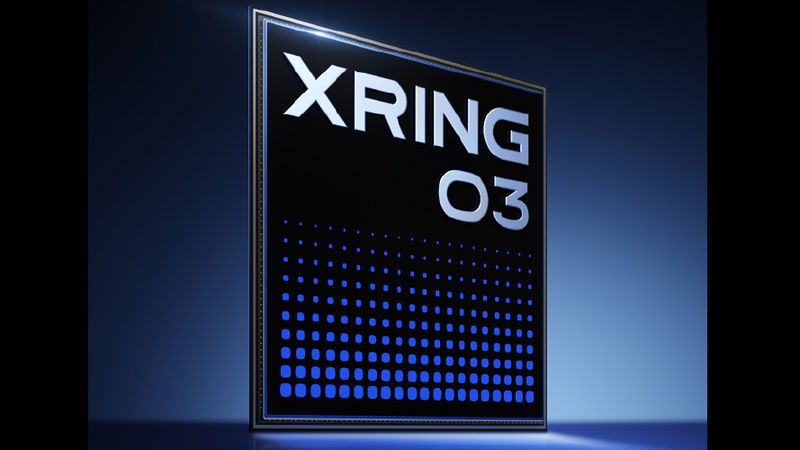
On August 24, 2026, Xiaomi, a technology company based in China, announced the '
Weibo Masafumi - Weibo
https://weibo.com/2202387347/5335442573754887
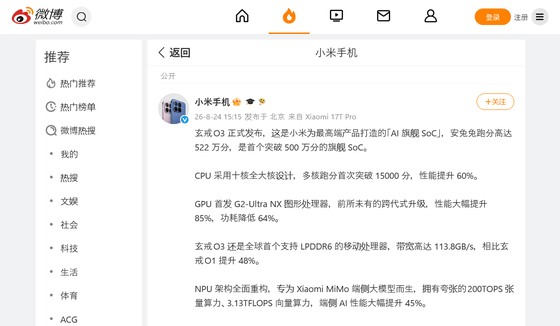
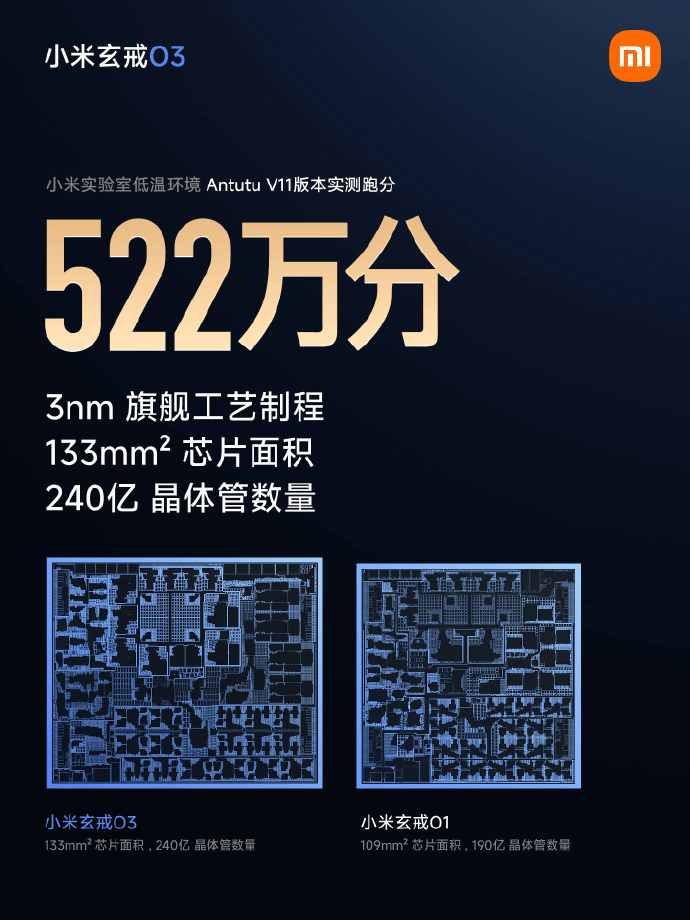
The XRING O3 is an 'AI flagship SoC' developed by Xiaomi for its top-of-the-line products. It achieved a score of 5.22 million points on the benchmark app ' AnTuTu ,' becoming the first flagship SoC to surpass 5 million points.
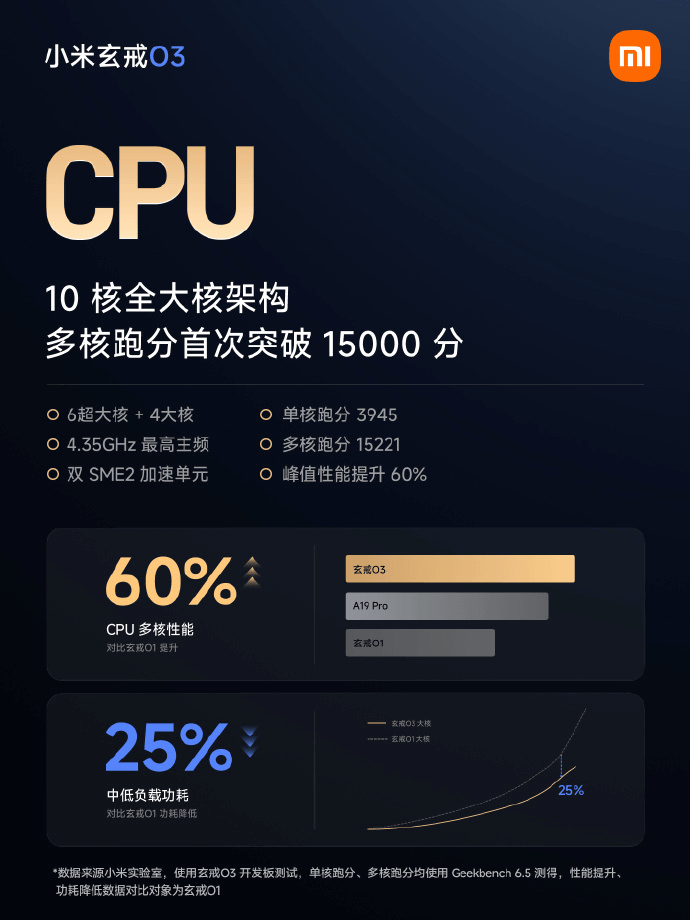
The CPU employs a 10-core 'all-high-core' design. 'All-high-core' means that instead of using the low-power, small cores found in conventional smartphone SoCs, all CPU cores are composed solely of high-performance cores (high-cores). As a result, the Geekbench multi-core score has exceeded 15,000 points for the first time, achieving a 60% performance improvement over the previous generation.
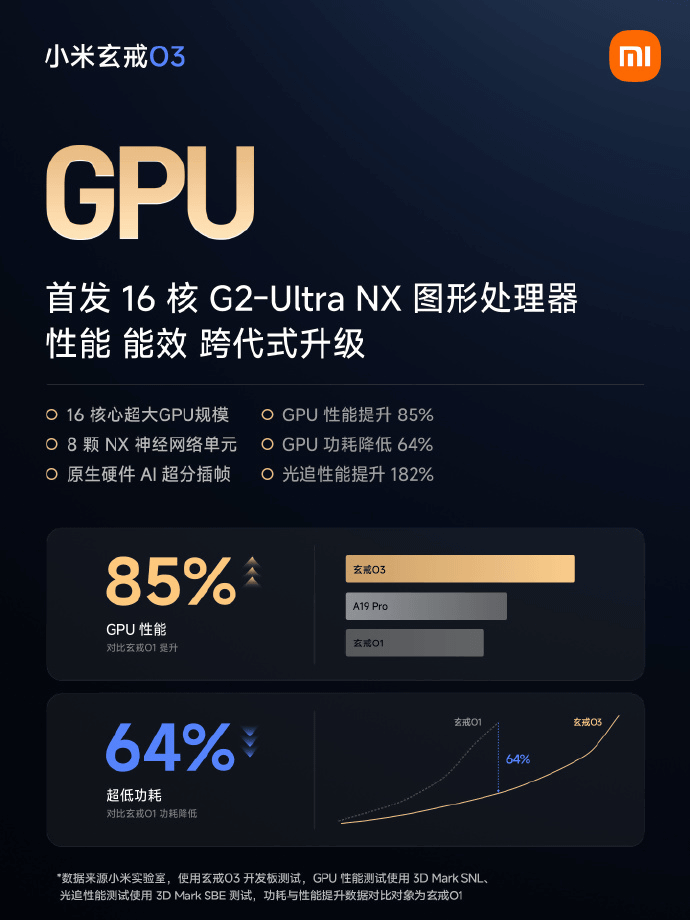
The GPU features the newly introduced 'G2-Ultra NX graphics processor,' achieving a significant upgrade with an 85% performance improvement and a 64% reduction in power consumption. Reports indicate that the GPU has a 16-core configuration and supports third-generation ray tracing.
Furthermore, the XRING O3 is being promoted as the world's first mobile processor to support the low-power memory standard 'LPDDR6'. Its memory bandwidth reaches a maximum of 113.8GB/s, a 48% improvement compared to the XRING O1.
In addition, the NPU architecture, designed to accelerate AI, has been completely redesigned and is specifically engineered for large-scale models running on Xiaomi's AI model, ' Xiaomi MiMo .' This results in tensor computation performance of 200 TOPS and vector computation performance of 3.13 TFLOPS, improving AI performance on the device by 45%.
In addition to its powerful NPU, the XRING O3 integrates AI into every module. With dual SME2 acceleration units in the CPU, eight new NX neural network accelerators in the GPU, an integrated AINR unit in the ISP, an integrated hardware AI super-resolution unit in the DPU, and an integrated AI engine in the ADSP, the XRING O3 is said to have made comprehensive advancements in edge AI performance, hardware-level super-resolution and frame interpolation, and video noise reduction in night scenes.
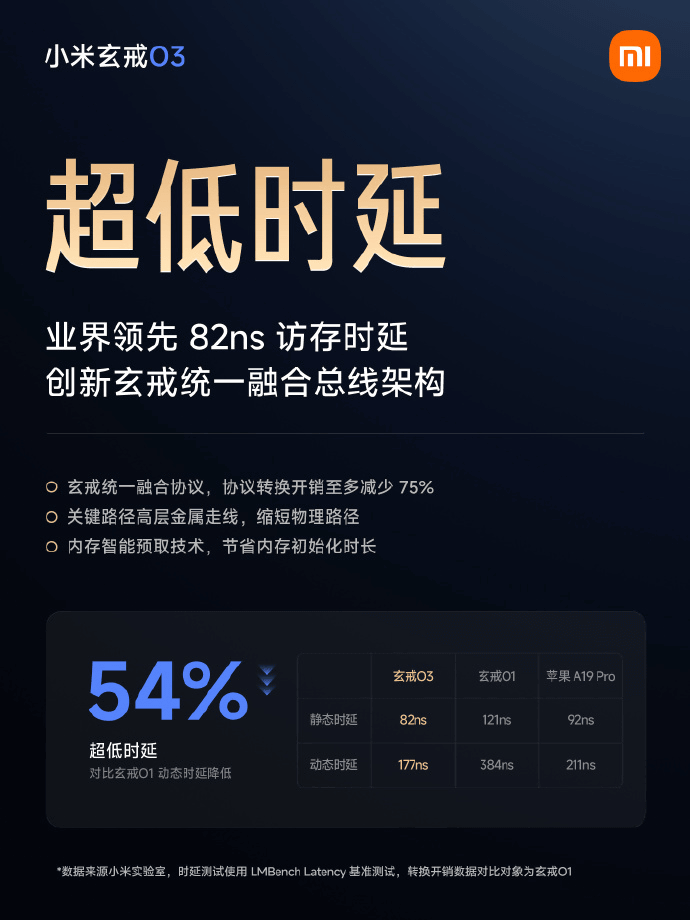
Power consumption and smooth operation have also been thoroughly optimized, and by employing a unique integrated fusion bus architecture and top-layer metal wiring technology, it achieves an industry-leading memory access latency of '82ns'.
Xiaomi concludes its announcement by saying, 'This is the XRING O3, which we have lovingly created after 459 days of development.'
Software expert Daniel Lemir commented on the XRING O3, saying, 'Xiaomi is a Chinese technology giant. Their smartphones compete with the iPhone. Xiaomi's new CPU performs almost as well as Apple's core in single-threaded tasks and is much faster in multi-threaded execution. Of course, this advantage may not last long, as Apple may soon announce its next-generation processor.' According to Lemir, the XRING O3 features a large 44MB cache and a CPU core with 21 execution ports that excels at data parallel processing, clearly demonstrating the latest CPU trend of 'increasing the number of arithmetic units to enhance parallel processing capabilities and speeding up data processing with a large cache.'
Xiaomi is the Chinese tech giant. Their phones compete with iPhones.
— Daniel Lemire (@lemire) August 24, 2026
Their new CPU roughly matches Apple cores on single threaded tasks, and is much faster in multithreaded execution. Of course, Apple may soon announce their next processor, so this edge may not last long. And… https://t.co/w1bpVMdUpD pic.twitter.com/POW80eDp61
The following video shows the Chinese technology channel 'Geekerwan' testing the XRING O3. According to Geekerwan, the XRING O3 far surpasses current Android flagship models in terms of energy efficiency, and its specifications are the most impressive among currently available smartphone CPUs. In addition, Geekerwan reports that it performed as advertised by Xiaomi, with latency ranking among the best of all mobile processors. Furthermore, Geekerwan also conducted a 'delivery analysis' of the XRING O3 chip after removing it from its packaging, and pointed out that the chip area is 138.3 mm², which is a relatively large size.
Xiaomi Genkai O3 Core Katamae Cheongsho: Gaisei Science and Technology! - YouTube
On the social news site Hacker News, comments have been made that the fact that Xiaomi, the world's third-largest smartphone manufacturer by shipment volume, can now produce high-performance chips is 'bad news for MediaTek and Qualcomm, which manufacture chips for smartphones.'
Related Posts: