A heart-beat-driven pacemaker that never needs replacing for a lifetime has been developed.

A pacemaker has been developed that generates electricity from the heart's movements to power itself. While conventional pacemakers require replacement or addition, this new type is expected to last a lifetime.
Self-sustaining leadless intracardiac pacemaker powered by triboelectric nanogenerator | Science Advances
Heartbeat-Powered Pacemaker Could Last a Patient's Lifetime | Inside Precision Medicine
The most common type of conventional pacemaker is called a 'transvenous pacemaker,' which is a battery-powered device implanted near the collarbone, with leads running from the veins to the heart to stimulate the heartbeat. In addition, a type called a 'leadless pacemaker,' which is implanted directly in the heart, has recently come into use. However, both types of pacemakers only have batteries that last 7 to 10 years, and while the batteries in transvenous pacemakers cannot be replaced, leadless pacemakers cannot be replaced, requiring a new implantation.
Penfei Chen and his colleagues at the University of Wisconsin-Madison have developed a leadless pacemaker that eliminates the need for replacement by generating power from the heart's movement.
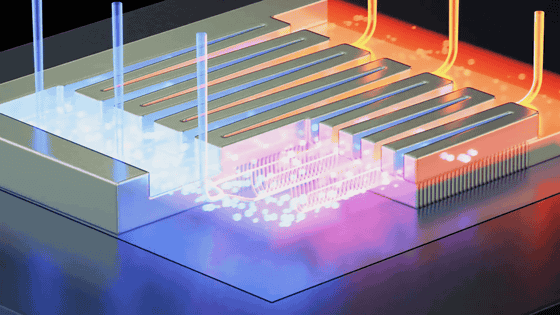
Chen and his colleagues have designed a 'nano-generator' that recovers energy from an oscillator consisting of a pair of electrode plates with opposite charges. This device could use the charge generated by the movement of the electrode plates, which moves closer together and further apart due to the heart's movement, to power a pacemaker or store in a small capacitor.
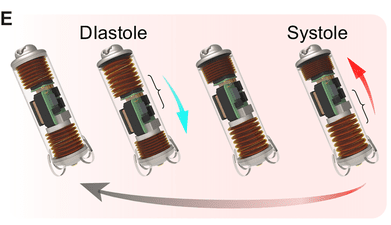
Laboratory tests showed that the nano-generator could generate enough energy to operate a pacemaker. Subsequently, Chen and his colleagues implanted the device in pigs for one month and confirmed that it could normally stimulate the heart without causing adverse reactions.
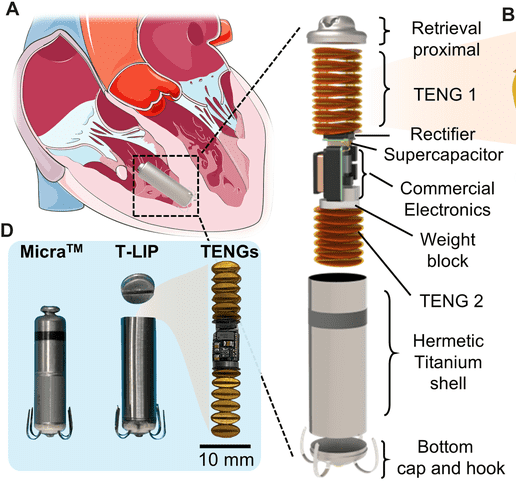
However, in pig hearts, the energy generated by the nano-generators was less than in laboratory tests. This is thought to be due to the soft tissue attenuating the movement, and the complex movements of the heart interfering with the 'straight up-and-down movement pattern' that produced maximum output in the laboratory environment.
Shudong Wang, who supervised the research, said, 'We want to find out how to efficiently convert the irregular movements of the heart. This will allow us to demonstrate that the heart can generate sufficient and stable energy, bringing us closer to our goal.'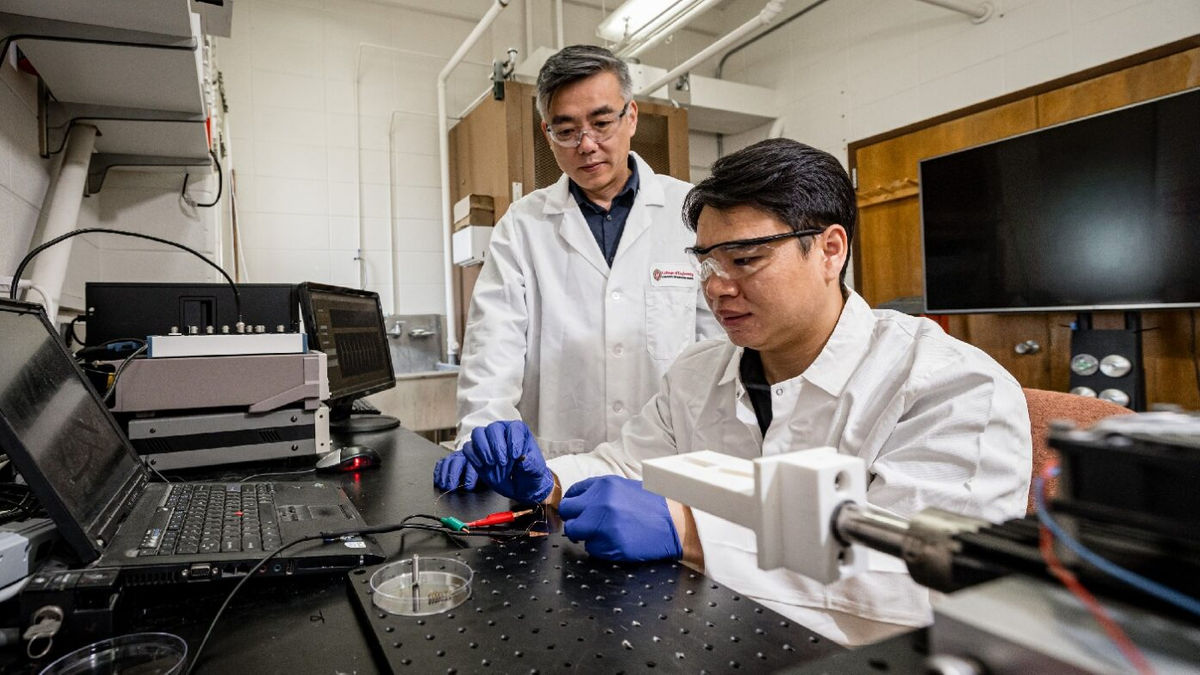
The pacemaker has a simple design, can be manufactured at a relatively low cost, and is robust enough to last a lifetime. Chen pointed out, 'We had to consider how to balance stability and flexibility so that it could maintain movement while vibrating millions or tens of millions of times.' Wang said, 'With this technology, we have achieved an order of magnitude higher power density compared to previous nano-generators.'
Related Posts:


in Science, Posted by log1p_kr