A YouTube channel that provides Korean-language commentary on Japanese anime has its 'fair use' claim rejected.
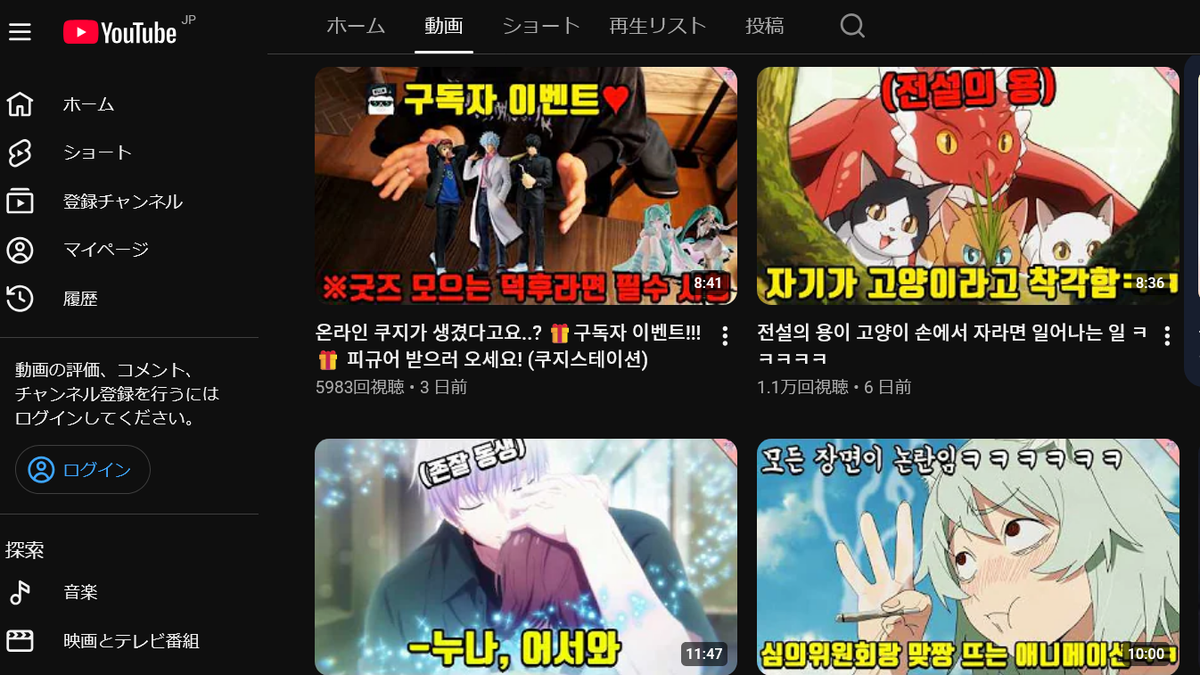
In January 2026, KADOKAWA filed a DMCA subpoena in a U.S. federal court against YouTube, alleging that three YouTube channels were infringing on its copyright and requesting the disclosure of personal information. The YouTube channels in question argued that their videos were commentaries, reviews, and analyses aimed at Korean-speaking audiences and therefore constituted fair use, and sought to have the content removed. However, their argument was rejected, and the court concluded that they were not protected under the principle of fair use.
Court Rejects Fair Use Claim, Orders YouTube to Unmask Anime Recap Channels * TorrentFreak
The three YouTube channels targeted this time are those of Kim Bong-seop and Yang Woo-hyuk, each with approximately 500,000 subscribers, and Go Young-yoon, with approximately 350,000 subscribers. Each channel takes snippets of anime content such as ' A Ninja and an Assassin Living Together, ' ' [Oshi no Ko],' and ' Until a Witch Dies ,' and posts content such as custom Korean subtitles, reactions, story explanations, reviews, and media analysis. Below is Kim's YouTube channel.
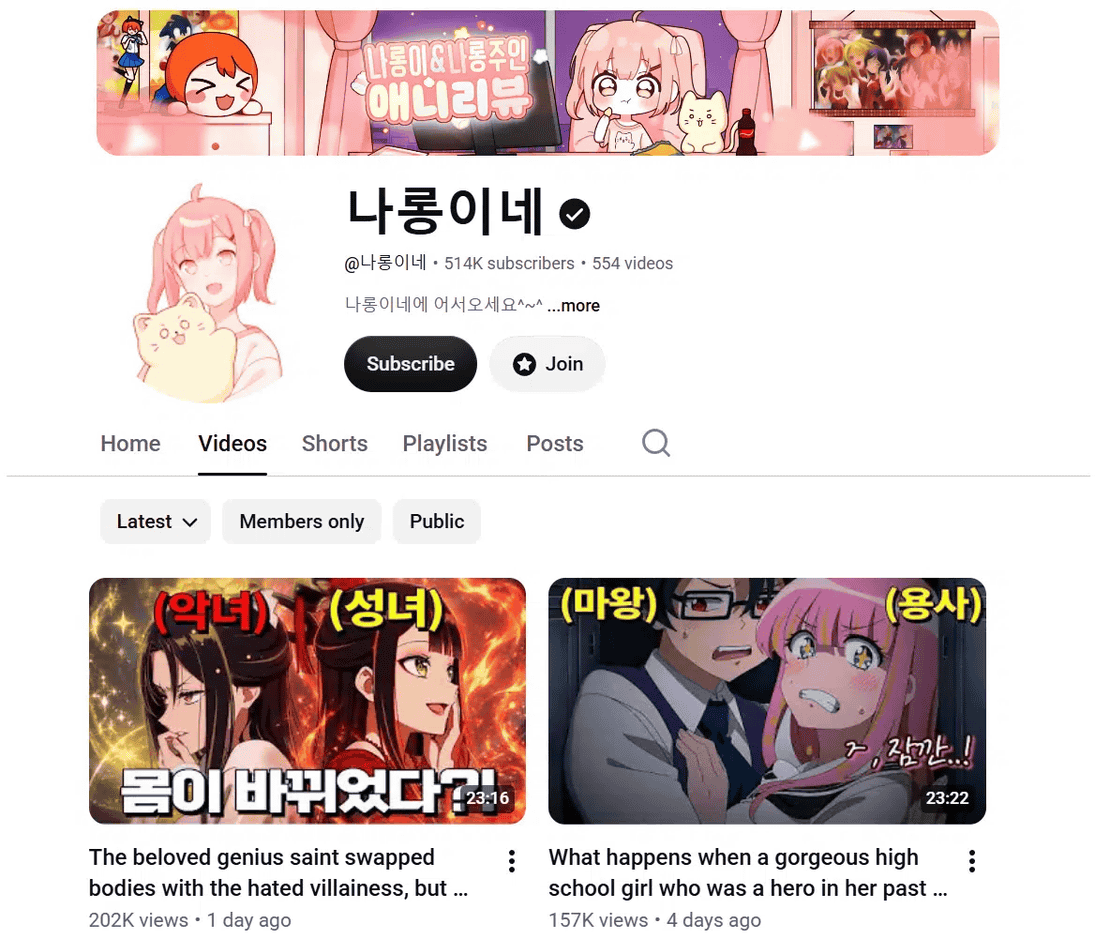
KADOKAWA claims that the videos on each YouTube channel infringe on its copyright by simply adding narration and commentary to clips of its anime content, and has requested a DMCA subpoena from YouTube to compel them to disclose their personal information.
On the other hand, the YouTube channel stated, 'These videos use specific parts of the original work in relation to Korean narration, explanation, summary, commentary, and the creator's own presentation. They are not uploaded as raw, complete episodes of copyrighted works, nor as reproductions,' arguing that their YouTube channel is not simply infringing on copyright.
Furthermore, they argue that their videos do not compete with original content, but rather promote it and increase viewership. In fact, all three YouTube channels include links to 'Laftel,' Korea's official anime distribution platform, in the video descriptions and pinned comments. According to the analytics data shared by Kim, the engagement rate for those links was 82%, and the combined total number of clicks on the three videos reached 114,494.

YouTube allows users to report copyright infringing content, and videos from the three individuals' channels have actually been removed. However, the videos were restored when the three filed objections, as KADOKAWA did not take legal action. For this reason, the three individuals point out that 'given that such actions are repeated, this subpoena may not be based on a genuine intention to file a lawsuit, but rather reflects an overly broad or coercive use of DMCA procedures.'
Following KADOKAWA's request for a DMCA subpoena and YouTube's motion to dismiss it, Judge Trina L. Thompson of the U.S. District Court for the Northern District of California ordered both parties to submit supplementary opinions on fair use in April 2026. In response, the YouTube channel reiterated that 'each video uses only about 15% of the anime itself, and uses only limited content without competing with the official release.' On the other hand, KADOKAWA argued that two of the three problematic videos had already been removed, and that the remaining one merely summarized the story and lacked originality.
Following the hearing, Judge Thompson rejected the motion to dismiss the lawsuit in an order issued on July 17, 2026. The order stated that, because the video was set to private, there was 'insufficient documentation of the facts,' and that 'unlike criticizing, parodying, or otherwise altering a copyrighted work, the applicant's treatment of the work does not constitute a 'creative and transformative use' of a copyrighted work as permitted by law.'
A key point of discussion in this case is the concept of ' fair use .' Strictly speaking, copying a copyrighted work without permission and distributing it as one's own content constitutes copyright infringement. However, under US copyright law, even unauthorized use is permitted if it is recognized as 'fair use.' US copyright law defines the factors for determining whether something constitutes fair use as 'the purpose and nature of the use of the work,' 'the nature of the copyrighted work,' 'the quantity and importance of the work used,' and 'the potential impact that the use has on the market value of the work.'
How do courts determine 'fair use' of copyrighted works on the internet? - GIGAZINE
In this ruling, the court concluded that the YouTube channels 'reproduced essential parts' of KADOKAWA's content and did not demonstrate sufficient alteration, and therefore were not eligible for protection under the fair use principle.
Judge Thompson also cited the February 2026 ruling in the Barnes v. Sanchez case, in which a YouTube channel reading chapters from copyrighted books was not eligible for similar fair use protection. The two rulings on fair use of YouTube videos in such a short period suggest that the courts are skeptical of the 'video format that combines reading and summarization.'
The lawsuit is not yet closed, and the three YouTube channels have filed an appeal with the Ninth Circuit Court of Appeals. They have also requested a stay of absence from disclosing their personal information while the appeal proceedings are pending, and a decision on this request has not yet been made as of the time of writing.
Related Posts:

in Anime, Posted by log1e_dh