A simple 30-minute daily habit may slow down cognitive decline in older adults.
It's common for memory, attention, and language skills to decline with age, but if this progresses beyond the typical age-related decline and into
Full article: Can brain exercises mitigate cognitive decline? A quasi-experimental evaluation of the StrongerMemory program
https://www.tandfonline.com/doi/full/10.1080/03601277.2025.2528677
A simple 30-minute daily routine may help slow cognitive decline
https://www.psypost.org/a-simple-30-minute-daily-routine-may-help-slow-cognitive-decline/
One of the factors that protects the brain from dementia is the concept of ' cognitive reserve.' Cognitive reserve is the ability to suppress the decline of cognitive function due to aging or illness, and it is believed that cognitive reserve can be strengthened by engaging in stimulating tasks and keeping the brain mentally active.
Many 'brain training games' that claim to improve cognitive function focus on specific tasks such as memorizing word lists or matching shapes, but recent research suggests that combining multiple different tasks can yield greater results. Psychology media outlet PsyPost stated, 'Multimodal routines mimic natural demands in daily life by simultaneously activating multiple networks in the brain.'
In this study, a research team led by Emily Ihara, a social worker at George Mason University in the United States, investigated the effectiveness of a multimodal intervention program called the 'StrongerMemory Program.' The StrongerMemory Program combines reading aloud, handwriting, and arithmetic, and is designed to stimulate the prefrontal cortex , which is involved in memory recall, attention maintenance, and problem-solving.
The research team recruited 102 participants aged 59 and older from local care villages—community networks that support elderly people in living independently at home—and continuous care communities for the elderly that provide housing and care in one location. All participants had concerns about their memory, but none had received a formal diagnosis of dementia.

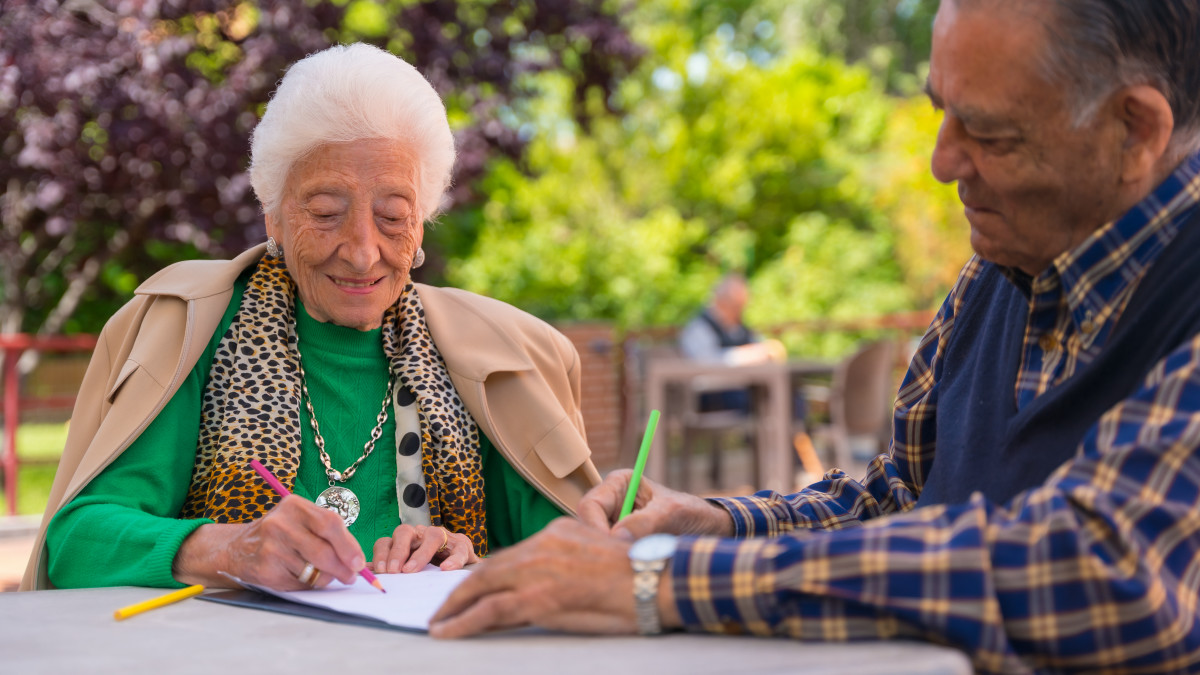
Participants were instructed to spend 30 minutes each day on three activities offered by the StrongerMemory program: 'reading a text aloud for 10 minutes,' 'writing a text by hand for 10 minutes,' and 'solving simple math problems for 10 minutes.' Participants were free to choose the topics of the texts they read aloud and the writing topics they wanted to cover.
Reading aloud requires two types of sensory input—sight and hearing—and therefore demands a higher level of concentration than simply reading silently. Furthermore, writing by hand helps practice fine motor skills and maintains memory. While the math problems required concentration and logical thinking, they were designed to be simple enough not to cause anxiety in the subjects.
Participants worked on the program at their own convenience and received support by attending weekly progress review meetings. To measure brain health, the research team administered the Mini Montreal Cognitive Assessment, which measured participants' memory recall, verbal fluency, and spatial reasoning abilities, before and after the 12-week program. In addition, participants completed a questionnaire asking how their memory had changed compared to one year prior.
After completing the 12-week program, participants recorded higher scores on objective cognitive tests, with their average score increasing from 12.73 to 13.26 out of 15. This improvement was largely attributed to memory recall ability, and participants also reported feeling that their memory had improved compared to a year prior in subjective questionnaires.
The research team categorized the participants' living environments into three categories: 'living alone,' 'living in a community,' and 'residence in a care facility.' They found that those living alone or in a community recorded higher scores after the program. This result suggests that the brain training may have been more effective in an independent living environment because it requires more daily decision-making.

Because this study did not include a control group that did not participate in the StrongerMemory program, it is impossible to rule out the possibility that the memory improvements observed were due to the placebo effect . Furthermore, the results may have been influenced not by the program itself, but by weekly progress review meetings and participants' responses to researchers. In addition, the improvement in cognitive function test scores was relatively small, suggesting that this may not necessarily translate to significant improvements in daily life.
Despite these limitations, a 30-minute daily routine combining reading aloud, handwriting, and calculations is an easy way for older adults to improve their cognitive function. The research team plans to investigate whether varying the difficulty of the exercises can further enhance the brain's adaptability.
Related Posts:







in Science, Posted by log1h_ik