Google DeepMind has announced 'Gemini Robotics 2,' an AI model for robots that can control the entire body, from walking to fine motor skills with both hands.
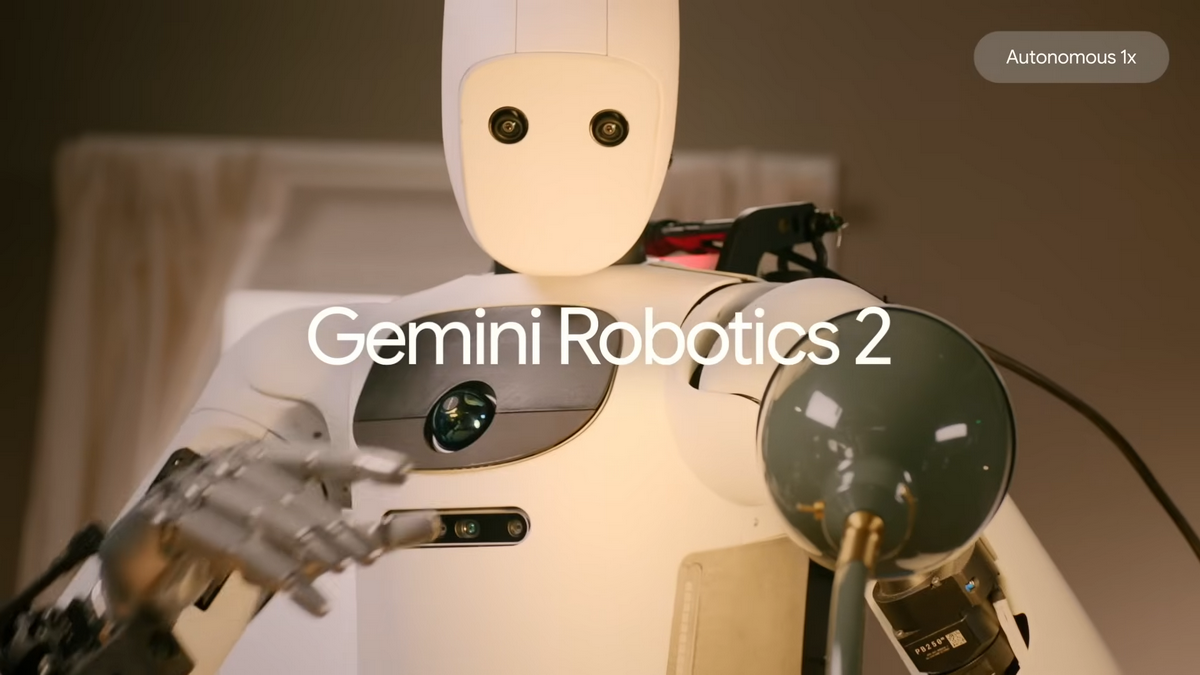
On July 30, 2026, Google DeepMind announced ' Gemini Robotics 2 ,' a suite of AI models capable of integrating and executing robotic walking, posture control, and object manipulation. It can control humanoid robots from toe to fingertips, and also supports collaborative work by multiple robots and rapid adaptation to different robotic forms.
Gemini Robotics 2 — Google DeepMind
Gemini Robotics 2 brings whole body intelligence to robots — Google DeepMind
https://deepmind.google/blog/gemini-robotics-2-brings-whole-body-intelligence-to-robots/
Gemini Robotics ER 2
https://blog.google/innovation-and-ai/models-and-research/google-deepmind/gemini-robotics-er-2/
Most conventional industrial robots are designed to repeat a limited set of pre-programmed movements. Furthermore, it is not easy to transfer the movements learned by one robot to another robot with a different shape or sensor configuration.
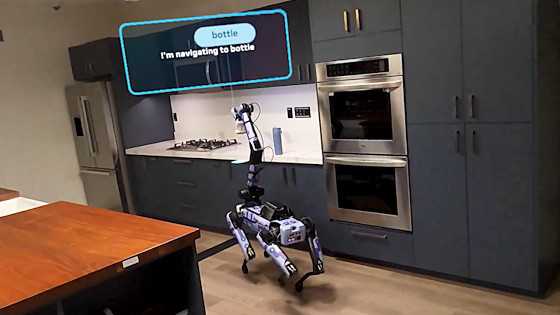
Gemini Robotics 2 is a VLA (Visual, Linguistic, and Behavioral) model that receives camera images and verbal instructions and translates them into robotic actions. Google DeepMind explains that the same model can control robots of various shapes and sizes, from desktop robotic arms to full-body humanoid robots.
The following video shows a humanoid robot actually operating with Gemini Robotics 2.
Intelligent whole-body control with Gemini Robotics 2 - YouTube
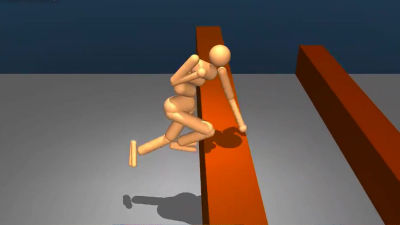
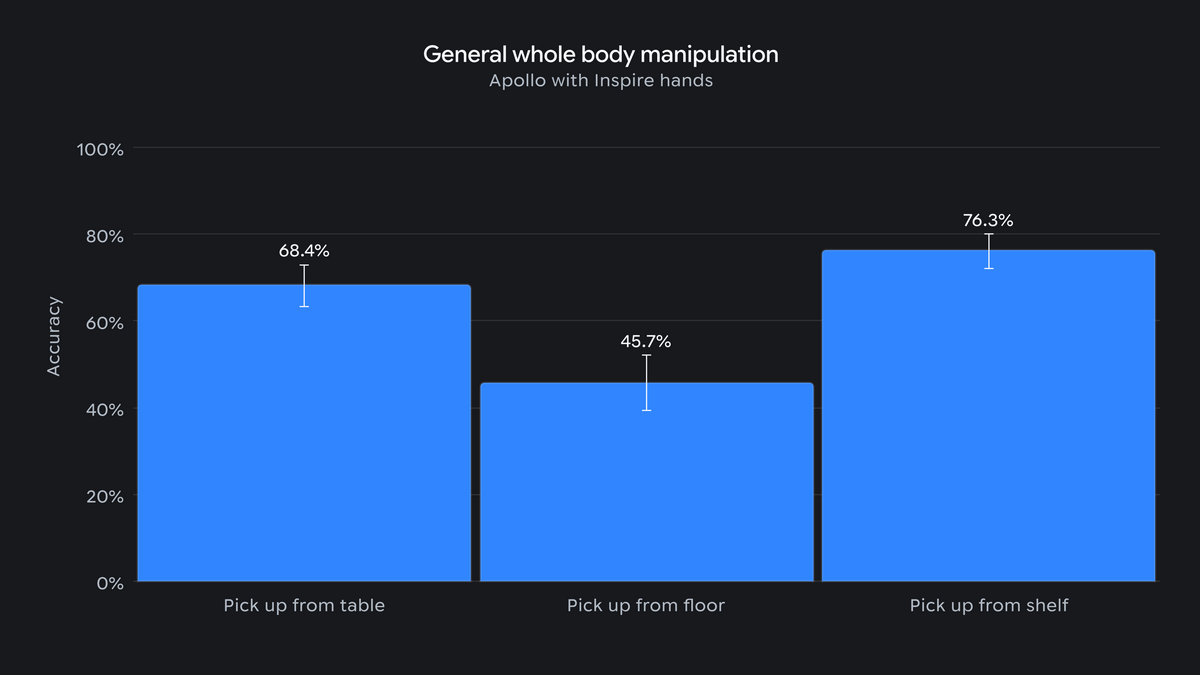
Gemini Robotics 2 can combine humanoid robots with full-body movements, including walking, crouching, stretching, and shifting their center of gravity, in addition to arm movements. In evaluations using Apollo and Inspire robotic hands, the success rate for lifting objects from a table was 68.4%, for lifting from the floor it was 45.7%, and for lifting from a shelf it was 76.3%.
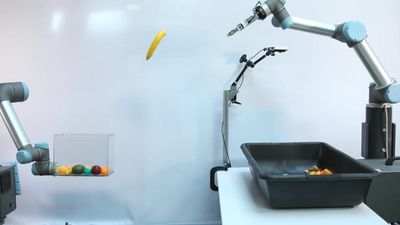
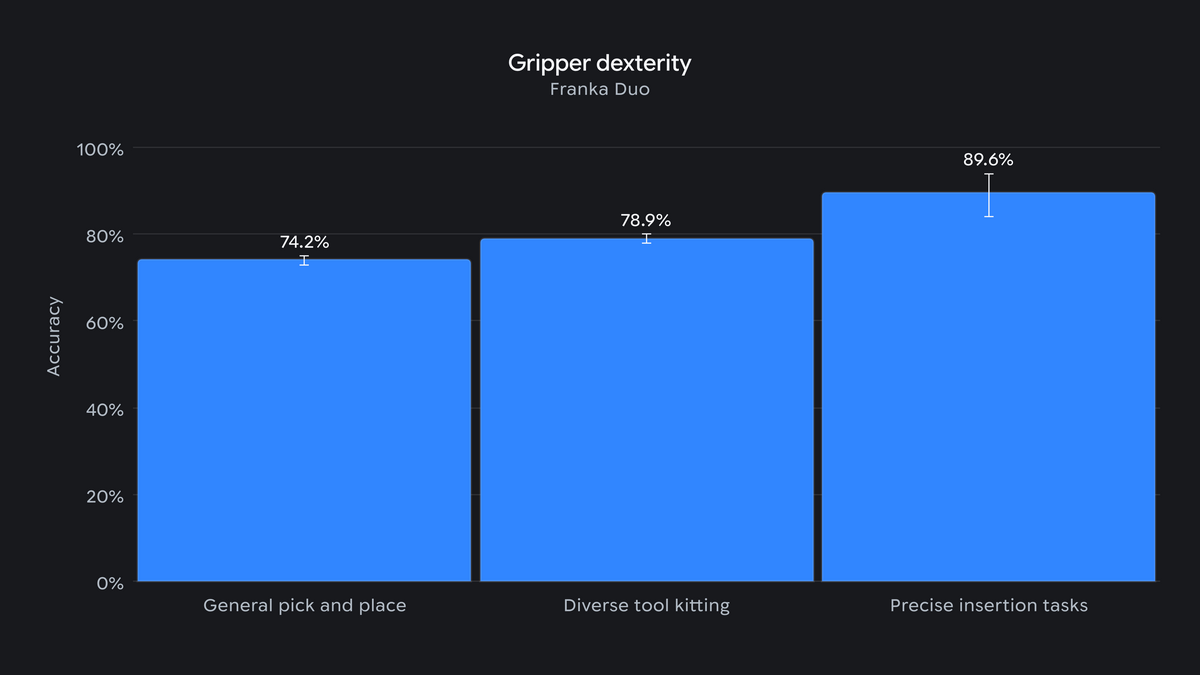
Furthermore, Gemini Robotics 2 can handle fine object manipulation using its two-fingered gripper. In evaluations using Franka Duo, it achieved success rates of 74.2% for general object movement, 78.9% for packing various tools into boxes, and 89.6% for precision part insertion.
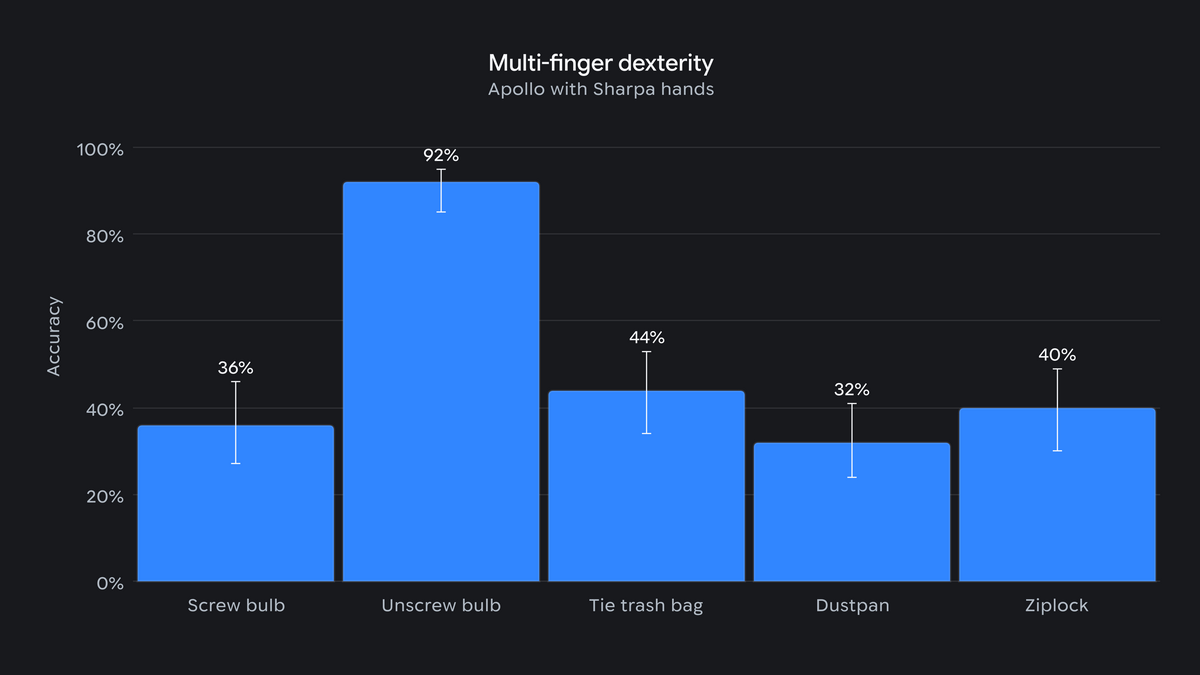
Furthermore, a five-fingered Sharpa robotic hand with 22 degrees of freedom achieved a 92% success rate in removing light bulbs. However, it still faces challenges in complex operations with multi-fingered hands, with success rates of 36% for installing light bulbs, 44% for tying garbage bags, 32% for handling dustpans, and 40% for closing zipper bags.
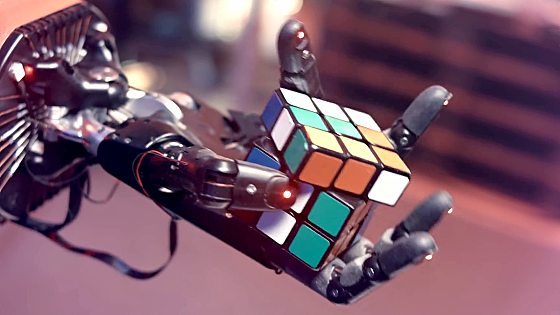
The following video shows Gemini Robotics 2 and its five-fingered robotic hand performing intricate tasks.
Advanced dexterity with Gemini Robotics 2 - YouTube
Furthermore, Gemini Robotics also announced the 'ER 2 ,' a more advanced model designed to enable robots to understand long work procedures. The ER 2 observes its surroundings, formulates work procedures, and monitors progress while instructing the VLA model to perform actions, making hundreds of decisions during tasks lasting several minutes.
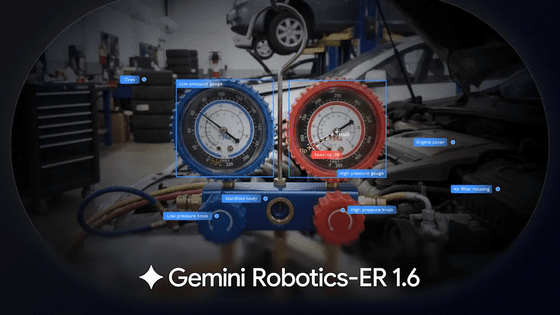
Gemini Robotics ER 2 demonstrated superior task management performance compared to the previous Gemini Robotics ER 1.6 across all three control methods: physical VLA models, simulated VLA models, and remote human control. In an evaluation classifying the progress of a task from video into five stages, it achieved an accuracy rate of 57.4%, and in an evaluation identifying the moment when a critical event occurred, it achieved an accuracy rate of 91.3%, with an average deviation from the correct frame of 0.96 seconds. This is said to have achieved an accuracy close to that of larger models, while reducing the computational load and achieving four times the execution speed. Google also explained that it surpassed ER 1.6 and other cutting-edge models in success/failure determination from video, instrument reading, answering spatial-related questions, obedience to safety instructions, and human proximity detection.
Furthermore, if a failure occurs during the process, the situation can be reviewed and the procedure corrected. It also supports 'Multi-robot collaboration,' where different types of robots exchange information and share tasks that cannot be completed by a single robot.
Examples of multi-robot collaboration involving multiple robots can be seen below.
Multi-robot collaboration with Gemini Robotics 2 - YouTube
In terms of safety, a new benchmark called 'ASIMOV-Agentic' has been introduced to evaluate whether the robot can refuse dangerous operation commands, recognize impossible tasks, and call for human assistance when unsure of what to do. Gemini Robotics ER 2 can also detect people in its surroundings and invoke safety functions to stop the robot if a person gets too close.
Furthermore, Google DeepMind also announced ' Gemini Robotics On-Device 2, ' a lightweight model that operates on the robot itself without requiring an internet connection. This model is said to be adaptable to new dual-arm robots with different shapes, sensors, and number of joints, typically with fewer than 200 real-world examples and a few hours of additional training.
Gemini Robotics ER 2 is available on Google AI Studio and as a private preview on the Gemini Enterprise Agent Platform. Gemini Robotics 2 and Gemini Robotics On-Device 2 are available to early access partners such as robot manufacturers.
Google DeepMind positions Gemini Robotics 2 as a crucial step in transitioning from automation specialized for single tasks to a versatile 'physical AI' capable of performing a wide range of jobs in the real world. However, they acknowledge that there is room for improvement in areas such as movement speed and the precision of the multi-fingered hand, and they will continue development to achieve human-level dexterity.
Related Posts: