A spider has been discovered that uses a spring-loaded trap to catch ants.
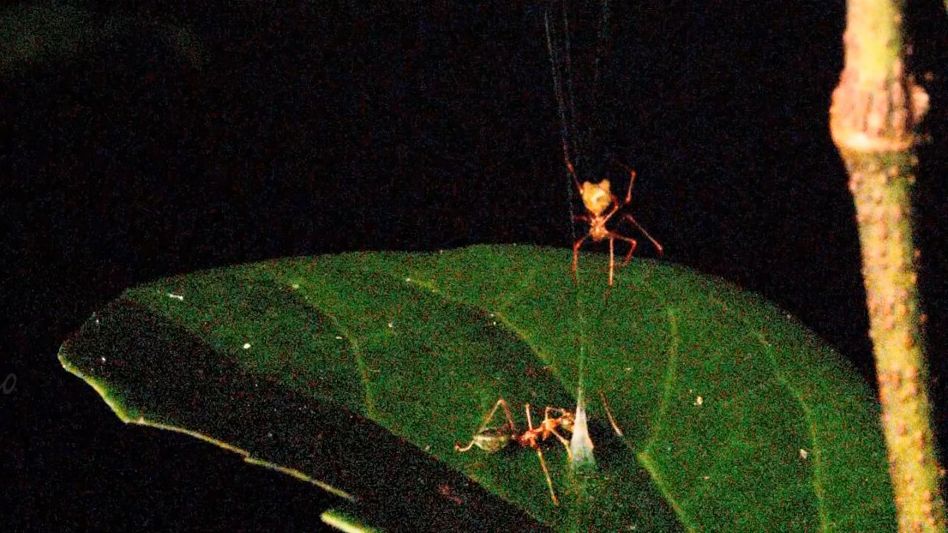
An international research team has discovered that a species of spider living in the Australian rainforest uses an ingenious
Ballistic high-powered spider webs overcome dangerous prey defenses: Current Biology
https://www.cell.com/current-biology/fulltext/S0960-9822(26)00570-1
Newly described Australian ballista spider builds a spring-loaded snare to catch a single ant species
https://phys.org/news/2026-06-newly-australian-ballista-spider-snare.html
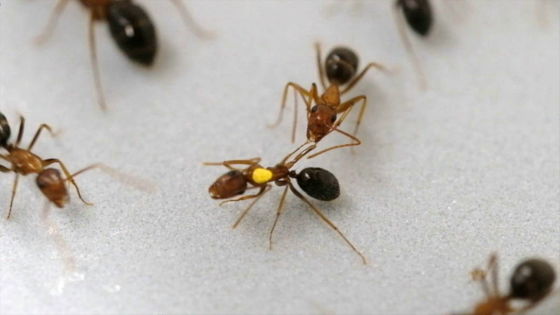
Weaver ants are arboreal ants distributed in South Asia and Australia, and are known to secrete a venom primarily composed of formic acid and to be extremely ferocious and aggressive. The Australian ballista spider, which lives on trees near the weaver ants' foraging routes, is said to set traps to capture them.
Professor Ajay Narendra and graduate student Pranab Joshi of Macquarie University spent 10 days in the rainforest of Queensland in northeastern Australia, conducting detailed observations of the Australian ball spider and observing its behavior using high-speed and infrared cameras.
The following video will give you a good idea of what kind of traps the Australian ballista spider actually sets.
Ballistic high-powered spider webs snare ants / Curr. Biol., June 22, 2026 (Vol. 36, Issue 12) - YouTube
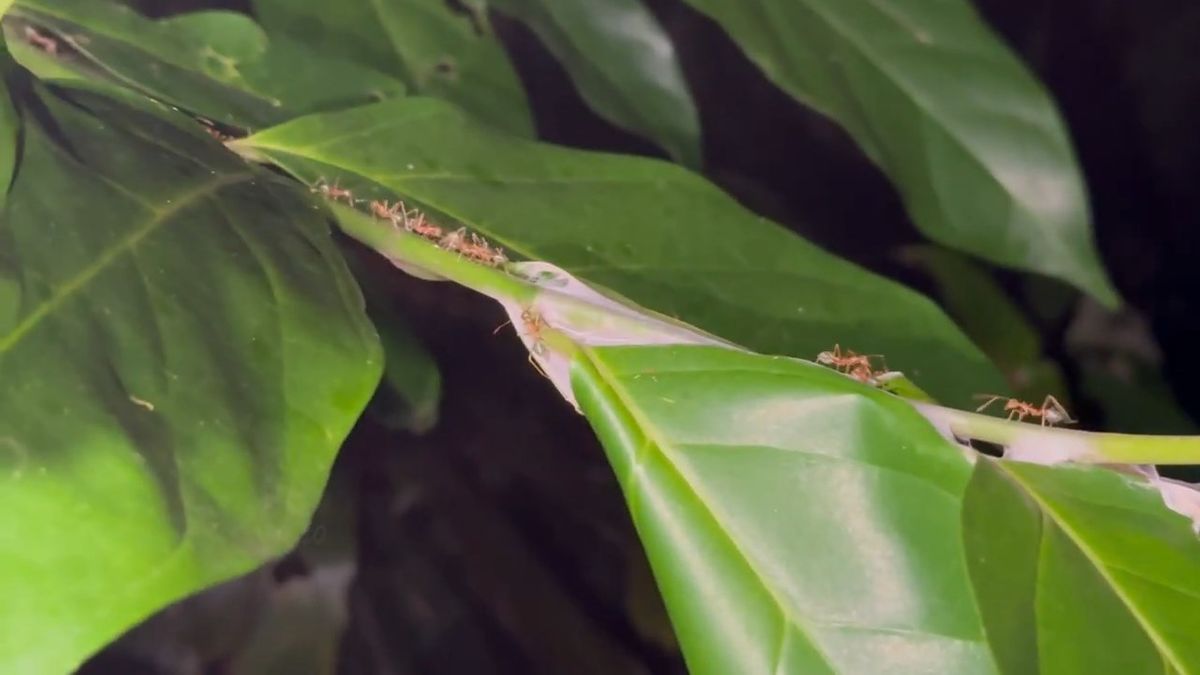
Weaver ants have a habit of building nests out of rolled-up leaves in trees and are said to be very territorial. They patrol around their nests even at night and search for food in the trees.
The Australian ball spider lies in wait, setting traps along the paths where weaver ants forage for food. The following images clearly show the relative positions of the waiting Australian ball spider, the conical snare, and the weaver ant attracted to the trap.
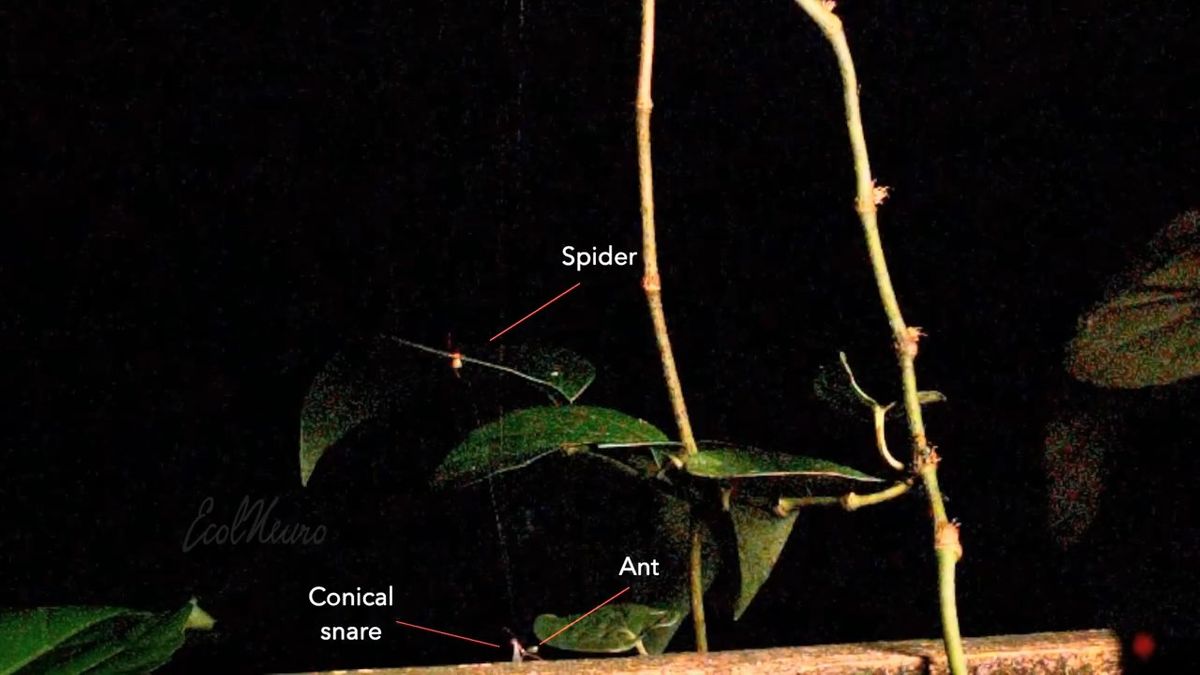
The Australian ballista spider trap elicits an aggressive response from weaver ants, who bite into the cone-shaped part. Eventually, the trap activates, and the weaver ants are launched upwards with great force. The acceleration at this time is said to exceed 1300 m/ s² .
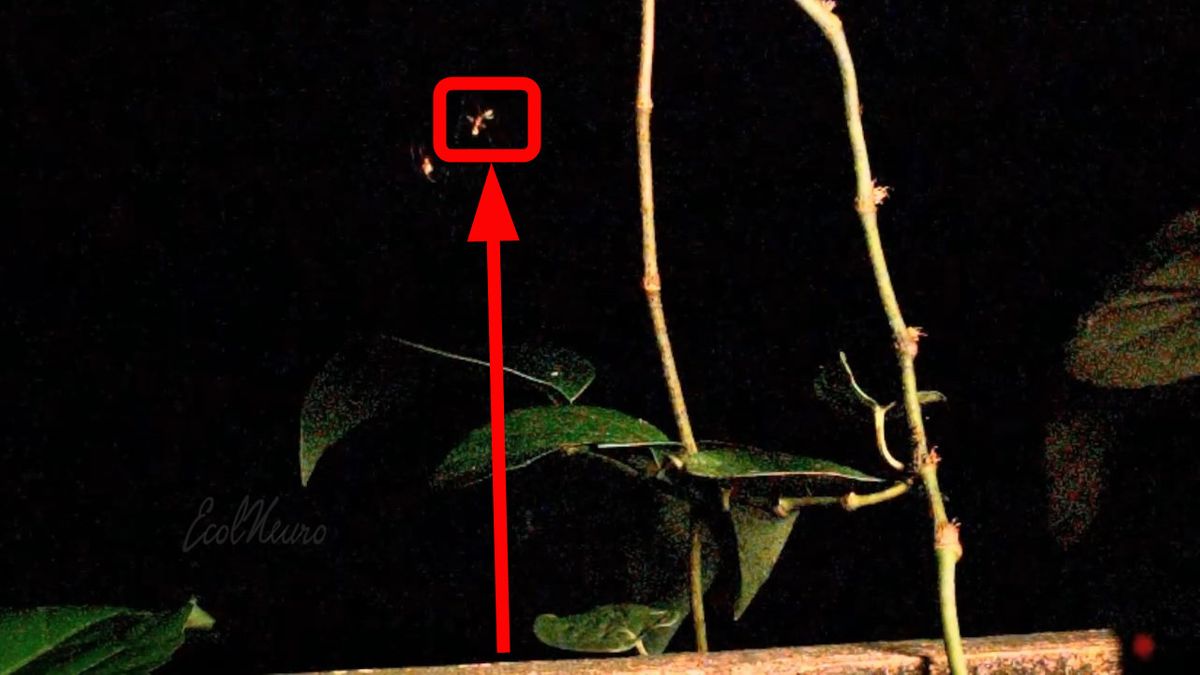
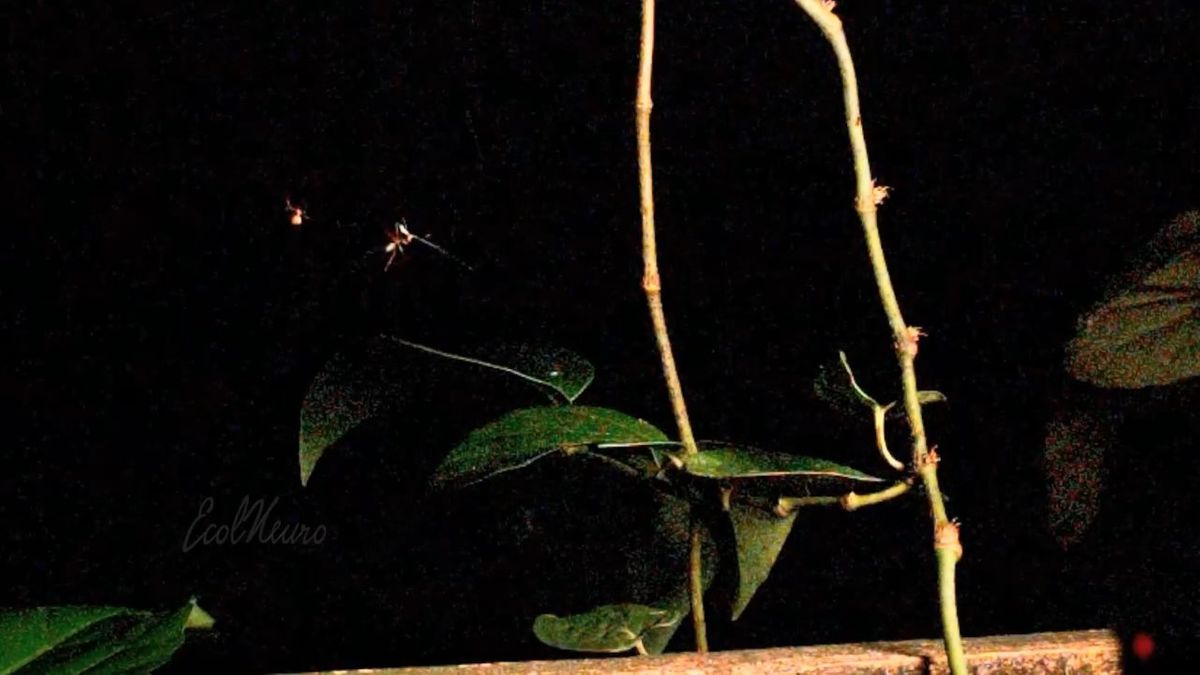
The weaver ant that jumps upward gets caught in the nest and becomes prey to the Australian ball spider.
At night, Australian ball spiders leave their hiding places and set up anchor points on leaves, branches, or the ground several tens of centimeters below their nests.
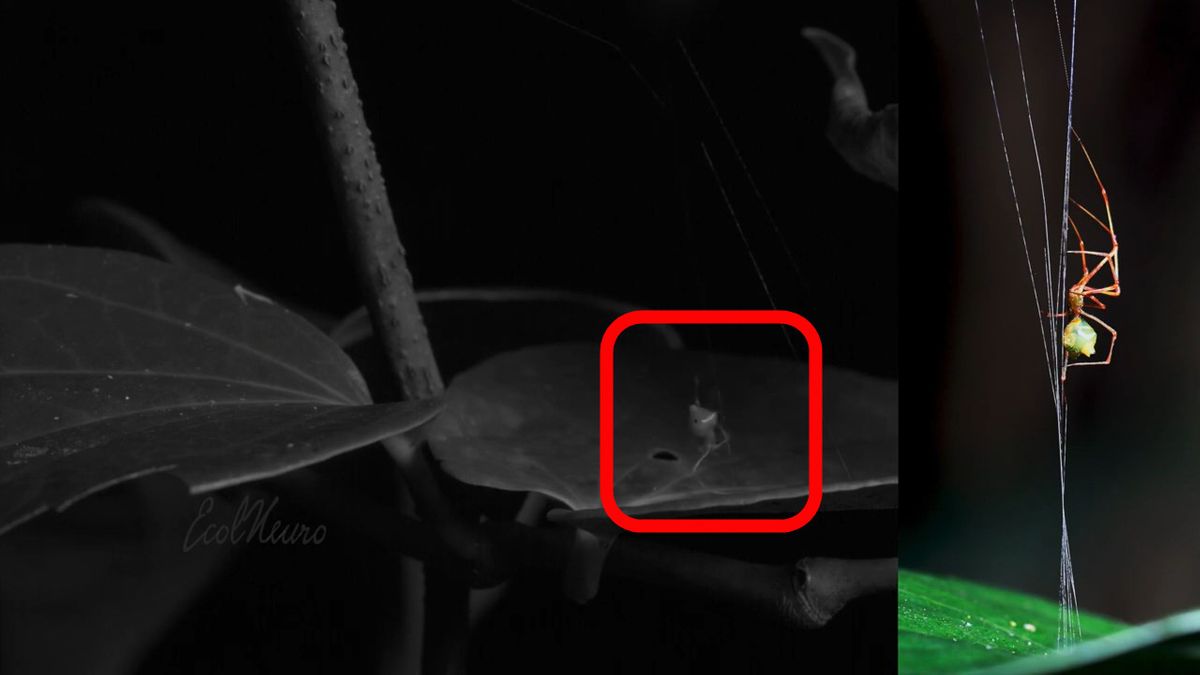
Starting from this point, a vertical structure is stretched down to the nest, and threads are layered at the anchor points to create an opaque cone shape.
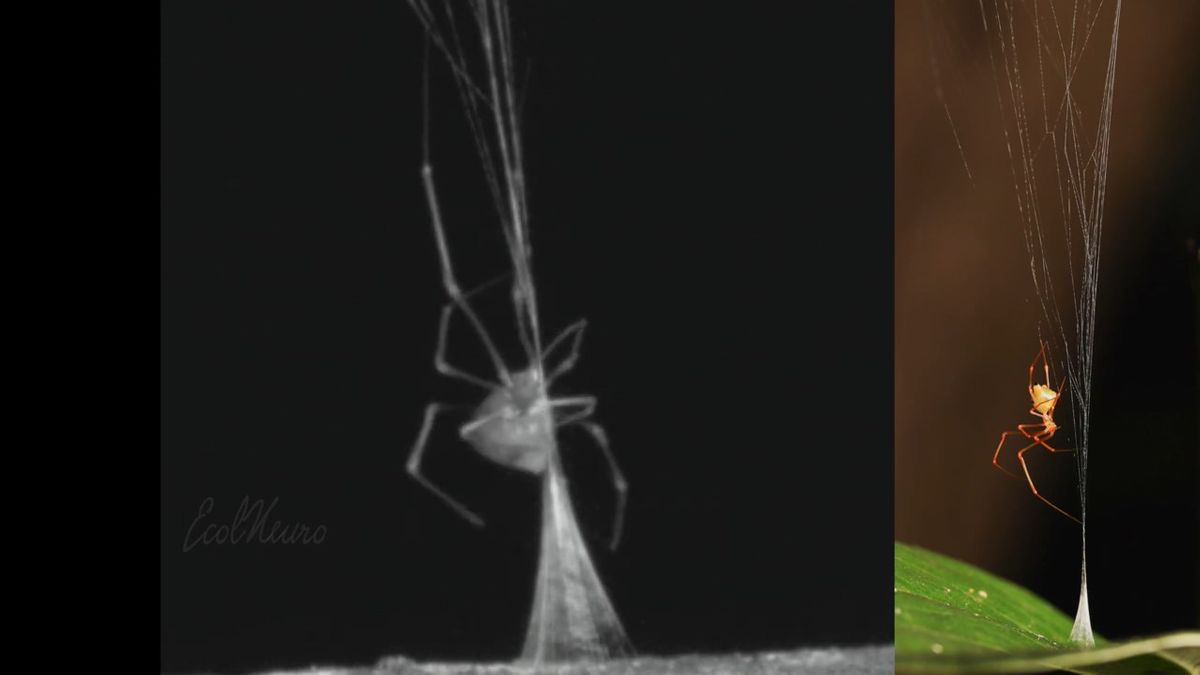
Once the cone-shaped trap is formed, the Australian ballista spider retreats upwards. It is believed that at this time, the Australian ballista spider secretes pheromones to attract weaver ants into the trap and elicit an aggressive response.
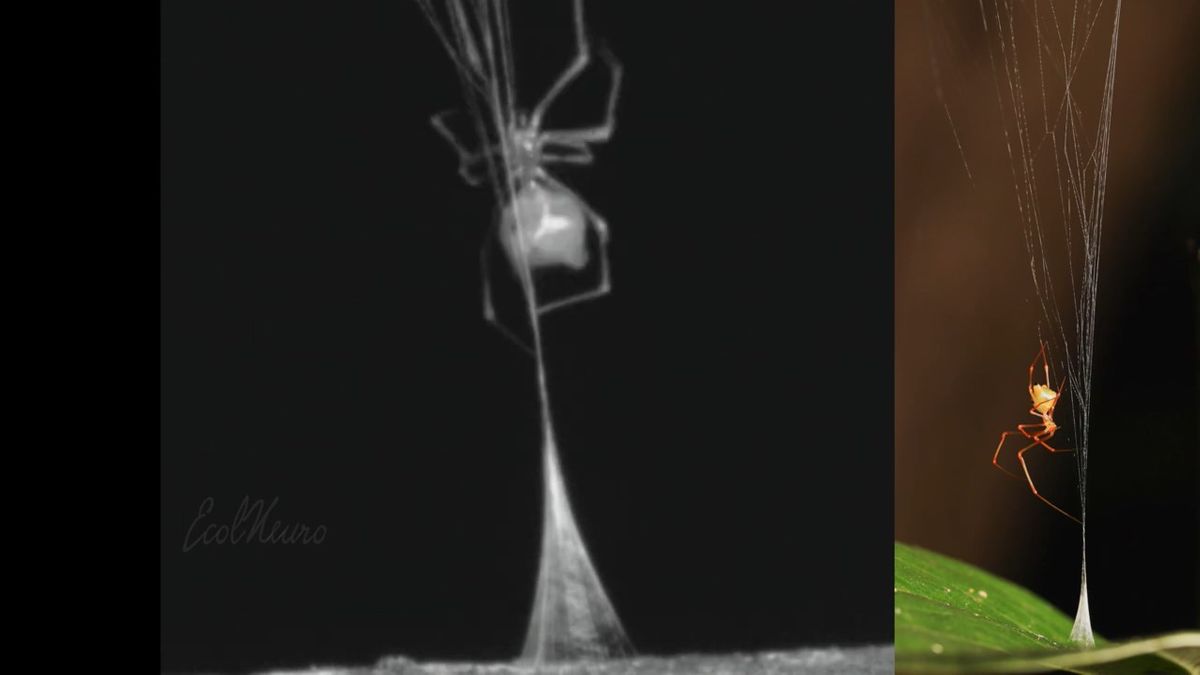
Then, within just a few seconds, the weaver ants discovered the cone-shaped trap.
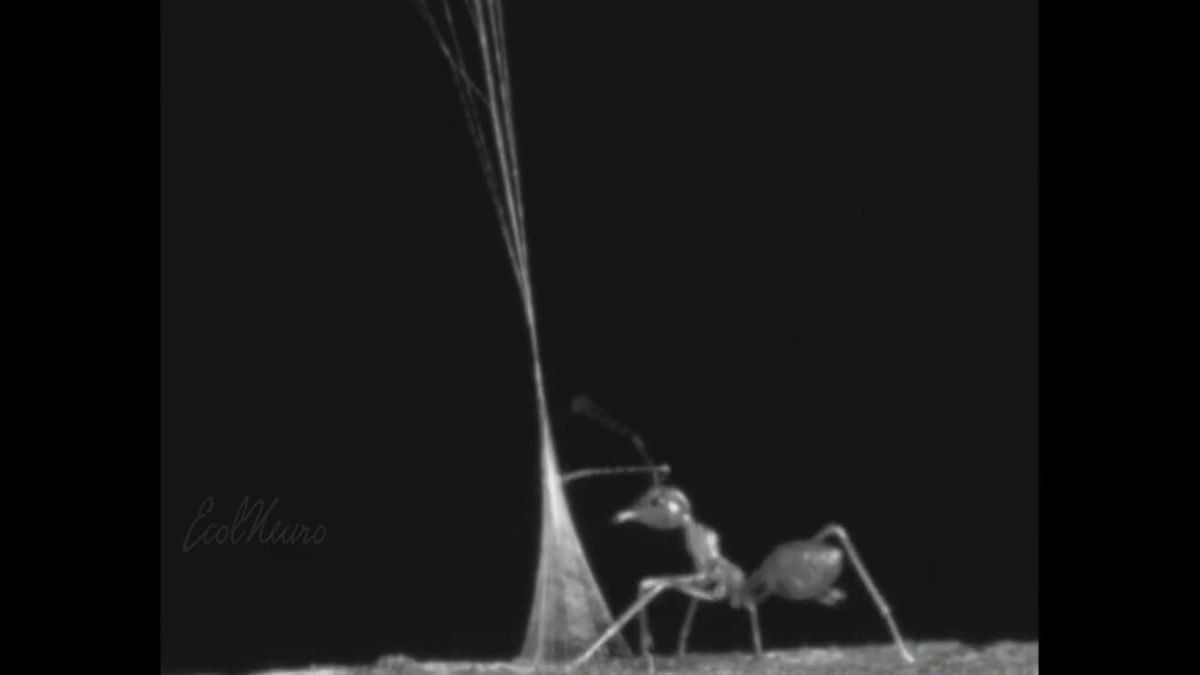
The weaver ant was quickly launched into its nest above and disappeared from the screen.
If you observe the moment the trap is activated in slow motion, you can see that the weaver ants are biting into the cone-shaped part.
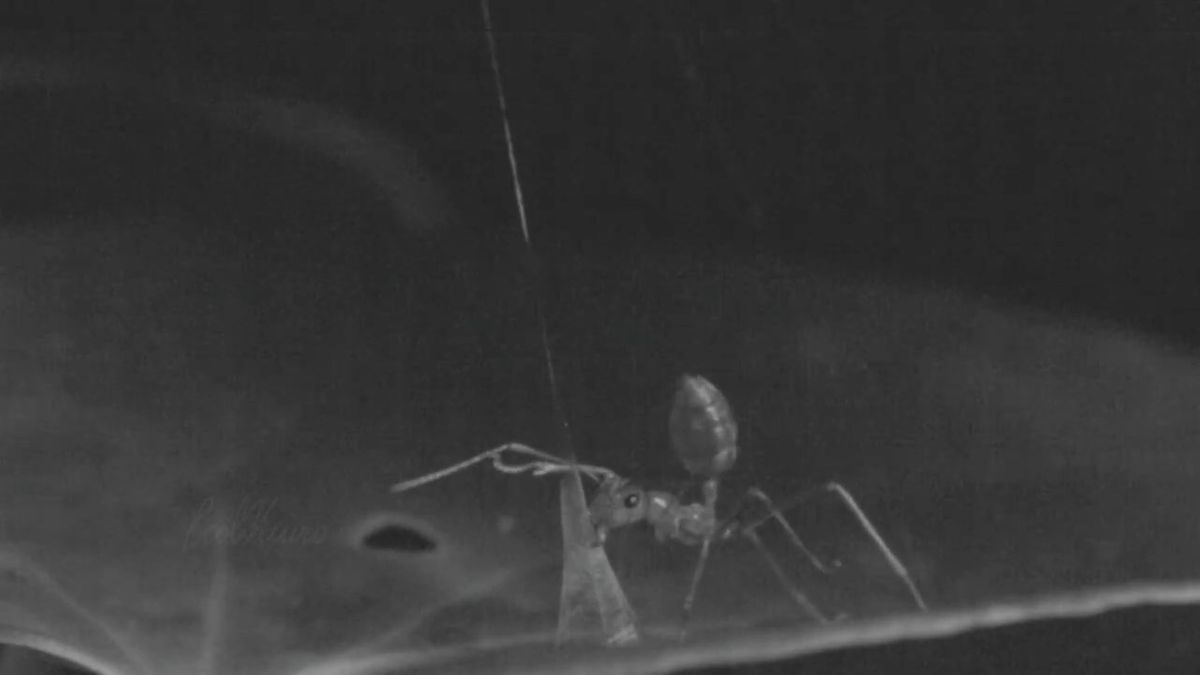
Eventually, as the conical structure becomes unstable, the thread will detach from the anchor point.
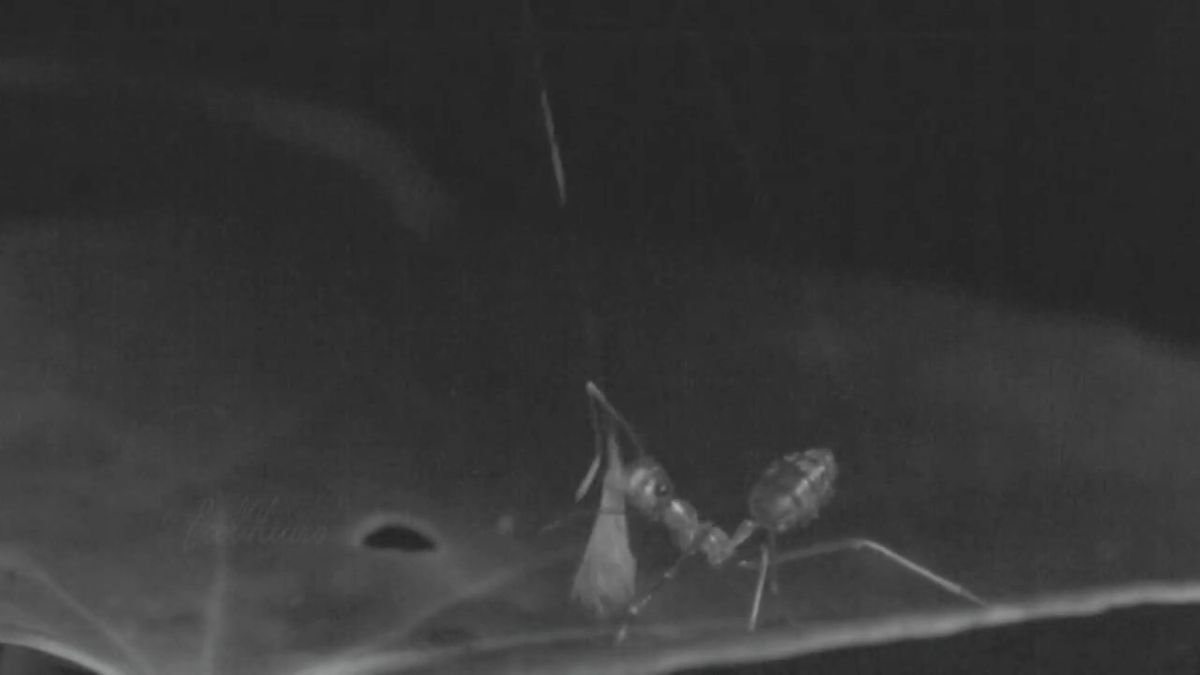
Then, the stretched thread rapidly contracts, and the weaver ant, still clinging to the trap, is launched into the air.
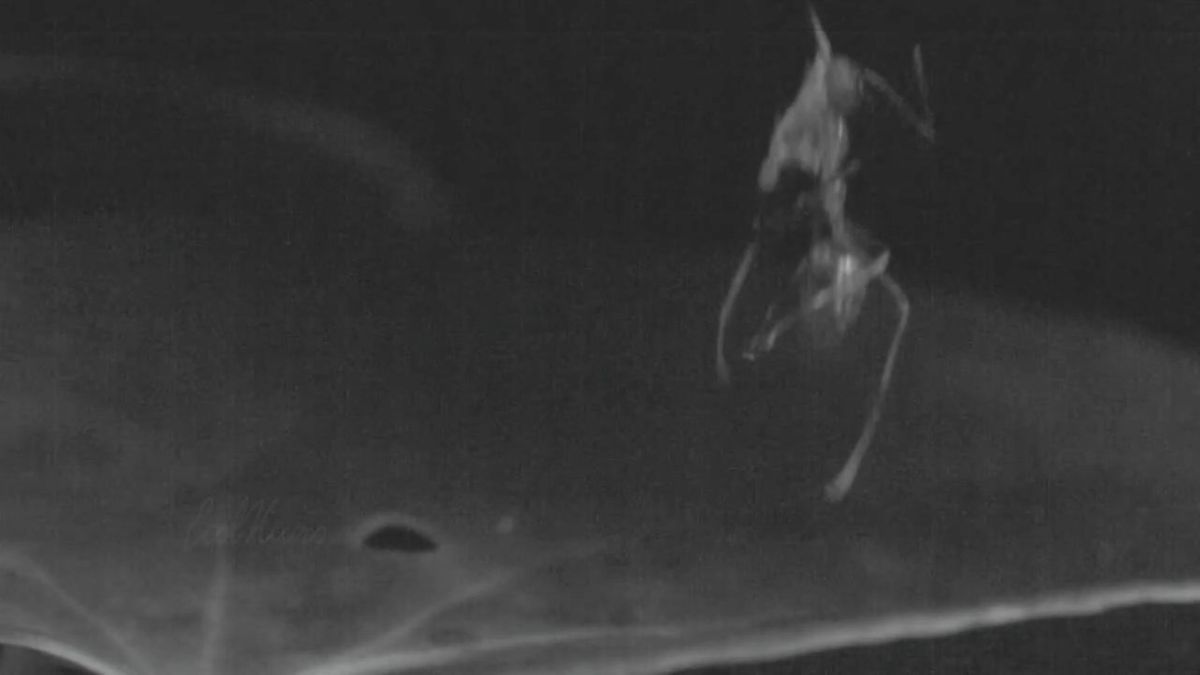
Professor Narendra stated, 'The traps of the Australian ballista spider are bioengineered to store elastic energy in the silk and release it rapidly, achieving an astonishing instantaneous power density compared to any other specialized silk-based biological catapult. The mechanism of this trap appears to have evolved as a highly specialized way for the spider to capture potentially dangerous prey one at a time and carry them to a safe distance from ant trails or nests.'
Related Posts: