The man who self-taught himself to create a writing system for the Cherokee people, who had no written language.
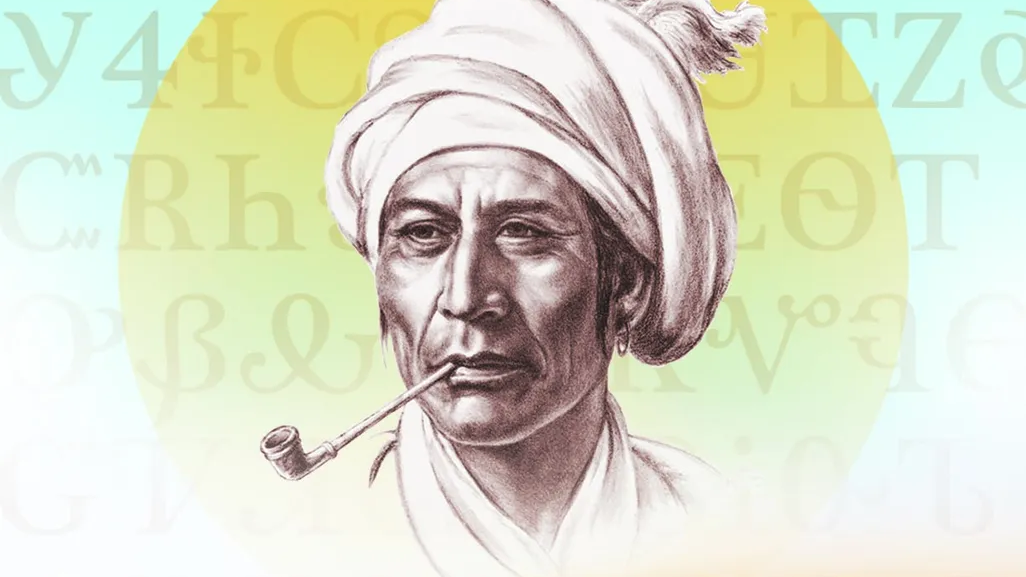
Sikwoia, who created the syllabic script for writing the Cherokee language, was suspected of practicing black magic because he kept writing strange symbols on paper. Writer and journalist Andrew Lawler has compiled a summary of Sikwoia's life and his influence on Cherokee literacy and cultural documentation.
The Man Who Created a Written Language for the Cherokee Did It So Efficiently and Elegantly, His Peers Thought It Was Magic | Smithsonian Magazine
Sikwoia - Wikipedia
https://ja.wikipedia.org/wiki/Sikwoia
Sikwoia was a Cherokee silversmith who, over the years, continued to write unfamiliar symbols on paper, which made those around him suspicious. He was eventually put on trial for 'practicing black magic.'
Sikwoia explained that what he was creating was not magic, but an invention to allow people to write the Cherokee language. To verify the truth of his claim, the elders took Sikwoia's young daughter, Ayoka, to another room and had both Sikwoia and Ayoka write symbols on pieces of paper and tell the guards what the symbols meant. When they exchanged the papers, Sikwoia and Ayoka were able to read the symbols on each other's papers aloud. This turned the elders' doubts into astonishment, and they immediately asked Sikwoia to teach them this new writing system.
The Sikwoia writing system spread rapidly, and within six months, one in four Cherokee people could read and write. Within another 25 years, the Cherokee literacy rate surpassed that of non-Native Americans.
George Sikquoia, who created this writing system, was not literate or illiterate in English. Born in the 1770s in what is now Tennessee, USA, to a Cherokee mother and a white father, Sikquoia grew up in his mother's culture. Later, while working as a silversmith and interacting with white settlers, he realized the usefulness of 'writing' and devised a method of recording customers' debts using simple pictures and designs. Also, during the War of 1812, Sikquoia fought alongside American soldiers and sometimes used the English name 'George Guess.' It is possible that Sikquoia was exposed to written language through this experience, and according to Roller, he referred to the letters written on paper as 'talking leaves.'
Roller cites the fact that Sikquoia's writing system spread rapidly because it assigned symbols to syllables rather than creating symbols for each word. Initially, Sikquoia tried an ideographic method where one symbol was assigned to each word, but this method required memorizing a symbol for each word, and the sheer number of symbols made it difficult to learn, so it was abandoned.
Later, Sikwoia developed a syllabic script, assigning symbols to each syllable that makes up the Cherokee language. A syllabic script is a writing system where one character generally represents one sound, similar to hiragana or katakana. This method allows for the representation of spoken language sounds with a relatively small number of symbols. Sikwoia initially created over 200 symbols, but eventually completed a writing system consisting of 86 characters, which was later refined to 85. While some symbols resemble Latin letters, Greek letters, or numbers, because Sikwoia could not read English, these symbols do not necessarily represent the same sounds as the original letters, even if they look similar.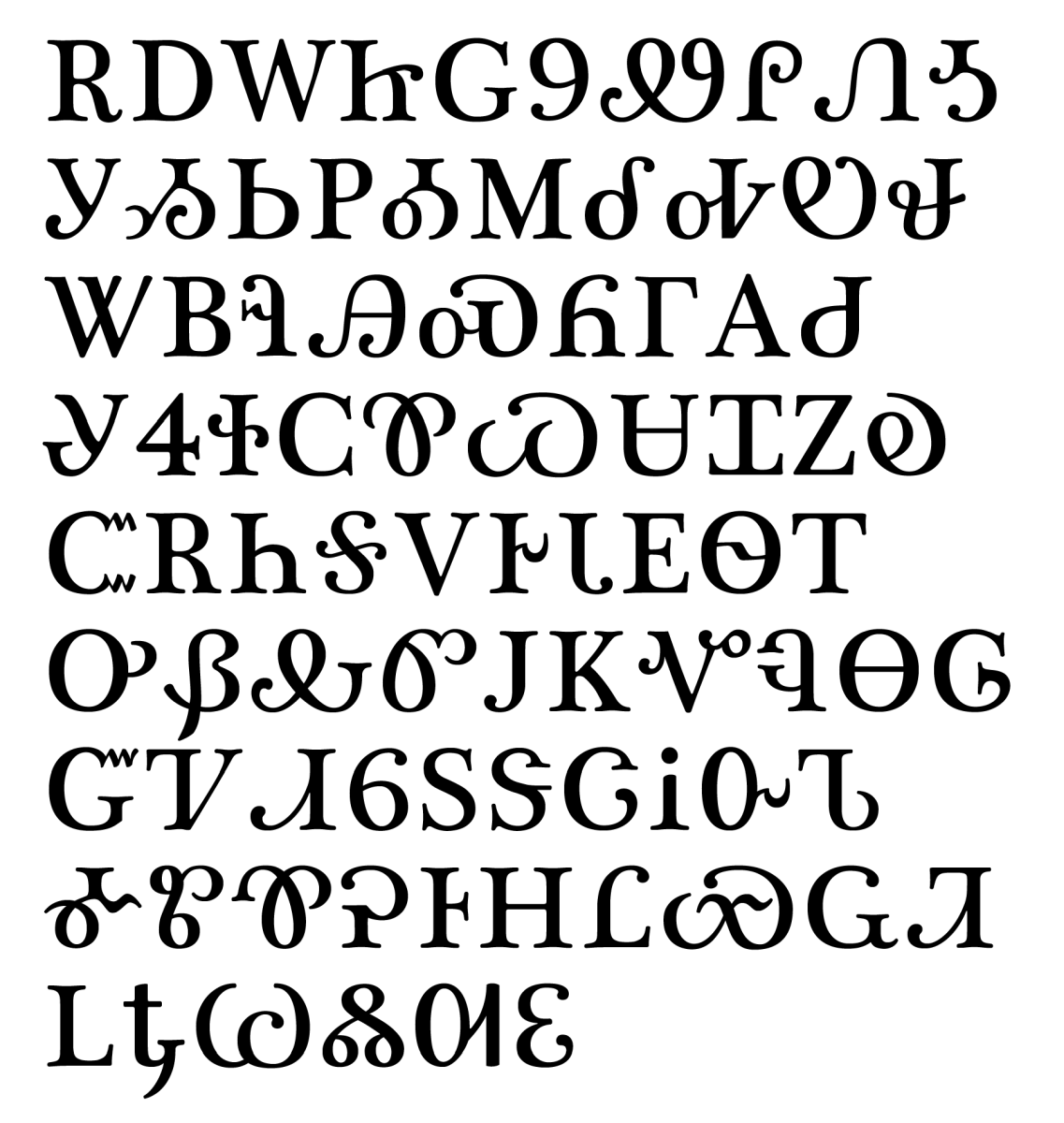
Roller explains that for the Cherokee, the Sikwoia syllabic script also served as a means of supporting self-governance and the recording of their culture. In 1827, the Cherokee adopted a written constitution , and they were able to use this writing system to record hunting guides and hymns for future generations. Furthermore, in 1828, the first Native American newspaper in America, 'Cherokee Phoenix,' was printed using the Sikwoia syllabic script, and publications using the syllabic script continued thereafter.
Albert Gallatin , who was also the U.S. Secretary of the Treasury, diplomat, and linguist, praised the Sikquoia writing system in 1836, stating that 'it takes two years to learn to read and write English, but a child could learn the Sikquoia writing system in a few weeks.'
However, even as literacy spread rapidly among the Cherokee, the U.S. government's pressure on Cherokee land did not cease. The U.S. government continued to demand Cherokee lands in North Carolina, Georgia, Alabama, and Tennessee, and shortly after Gallatin's evaluation of the Sikwoia writing system, tens of thousands of Cherokee were forcibly relocated to what is now Oklahoma.
Following this forced relocation, the Cherokee brought the Siquóia syllabic script to their new lands. According to Roller, the Siquóia syllabic script may have spread across the Atlantic Ocean, and in Liberia, the Cherokee Austin Curtis is believed to have used the Siquóia syllabic script when creating the Vai script, the writing system of the Vai people.
At the time of Roller's article's publication, only a few thousand people were fluent in the Cherokee language inherited from their ancestors, but the Sikwoia syllabic script has become an important tool for preserving Cherokee culture. Young people use this script to send messages to each other, children's books tell traditional stories, and the Sikwoia writing system is used in official documents and road signs.
Related Posts:






in Note, Posted by log1b_ok