When you turn on the smart light bulb, the 'Banned Books Library' is activated, delivering ebooks without an internet connection.
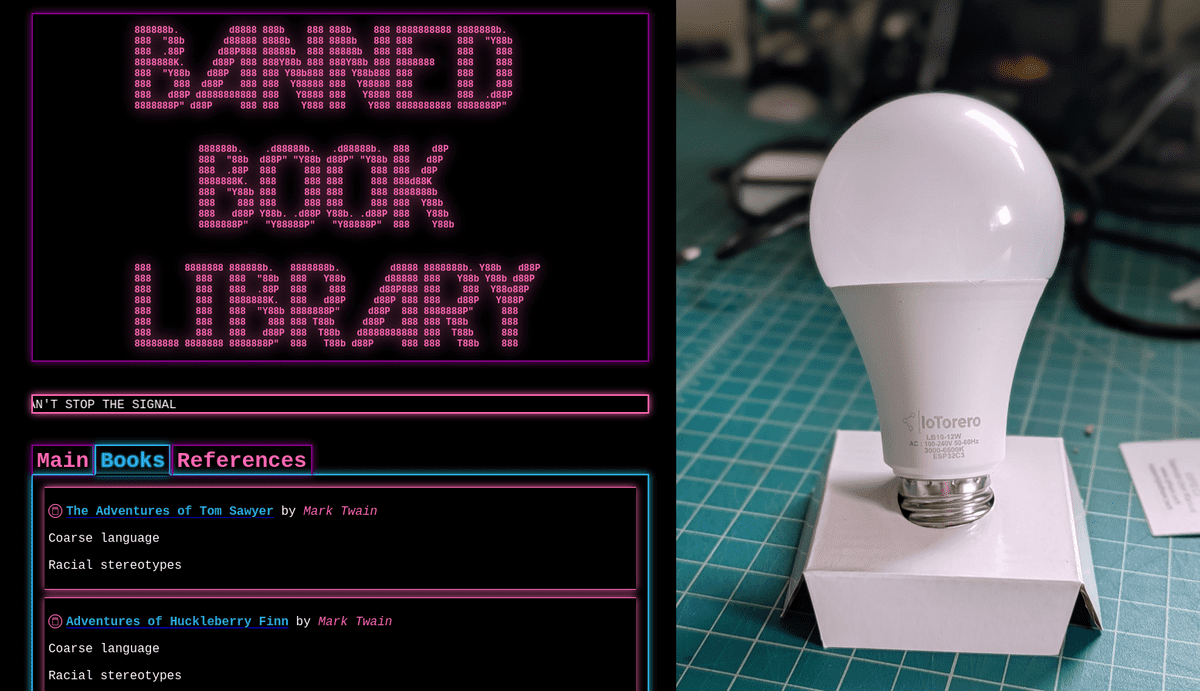
Rick Osgood has developed 'Banned Book Library,' a system that uses a commercially available Wi-Fi-enabled smart light bulb to deliver ebooks to nearby smartphones and PCs.
Banned Book Library | Rick's Blog
When websites are blocked or files are deleted from cloud storage, online information can easily become unreadable. Osgood came up with the idea of using smart light bulbs as a 'cyberpunk digital dead drop ' to share books that have been challenged or have had their access restricted in an inconspicuous place. The idea is that smart light bulbs attached to light fixtures are only powered when they are lit, making them less likely to be noticed as devices for distributing information.
The base for the modification was Athom Tech's 'Tasmota Matter 12W Color Bulb.' This light bulb is characterized by its use of 'Tasmota,' open-source firmware that enables smart home appliances to be controlled locally without the need for cloud services.
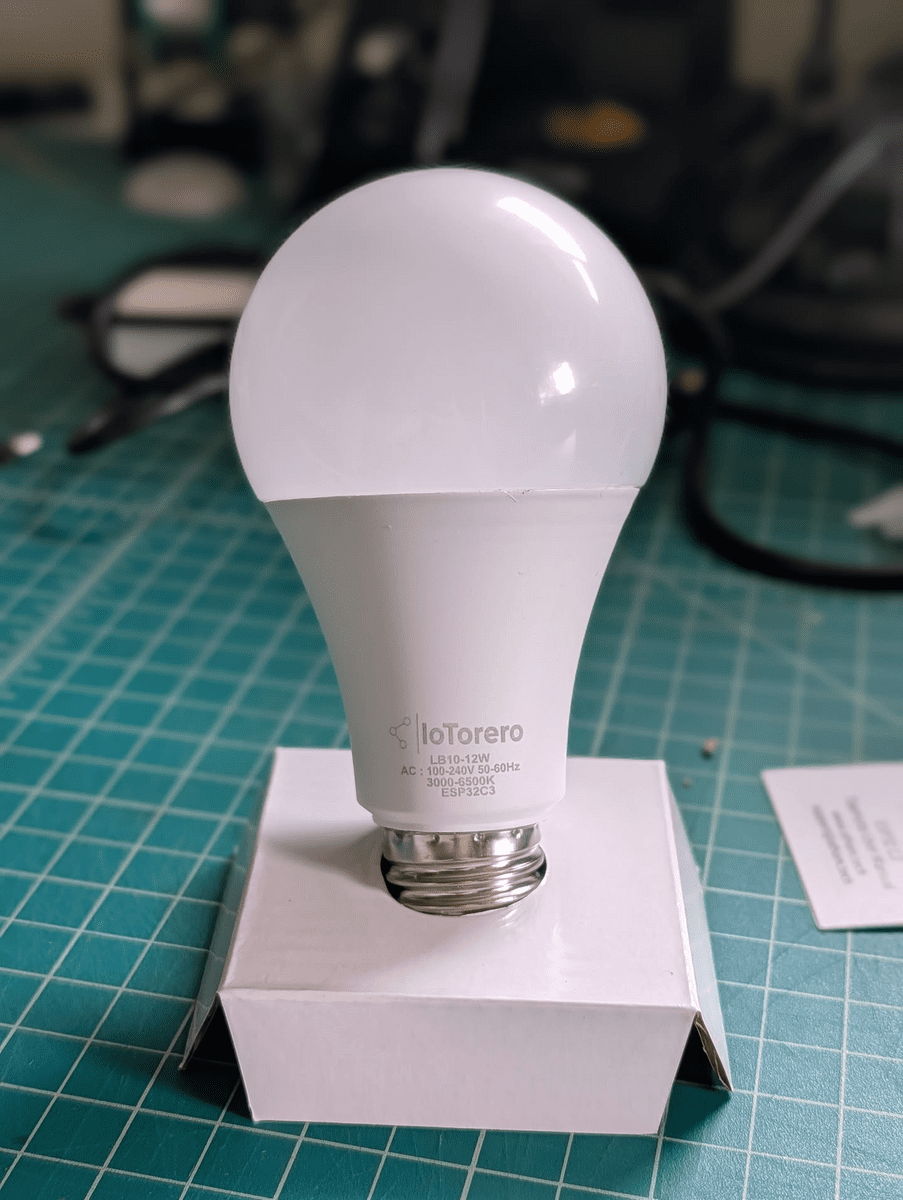
The light bulb is equipped with an ESP32-C3 microcontroller capable of Wi-Fi communication and 4MB of flash memory, and supports over-the-air (OTA) firmware updates via wireless communication.
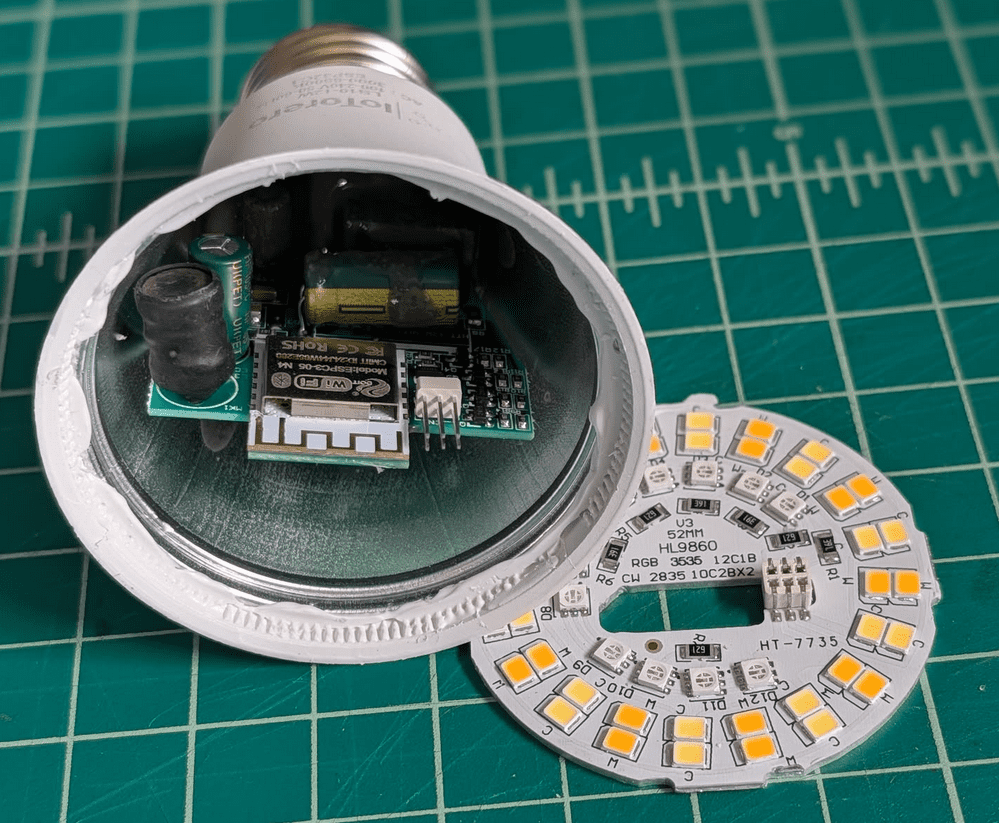
The 4MB flash memory needs to store programs that control light bulbs as well as web pages. In the original configuration, there was only 320KB of space available to store files such as web pages and ebooks, so even saving a single ebook could potentially lead to insufficient capacity.
Mr. Osgood also investigated using microSD cards, but attaching a card reader to an actual light bulb required disassembling the bulb and soldering thin wires. The internal circuit board is secured with a resinous filler, and there was no guarantee that the removed circuit board could be safely put back together. Since the goal was to create a device that anyone could easily install, he abandoned the idea of adding external storage.
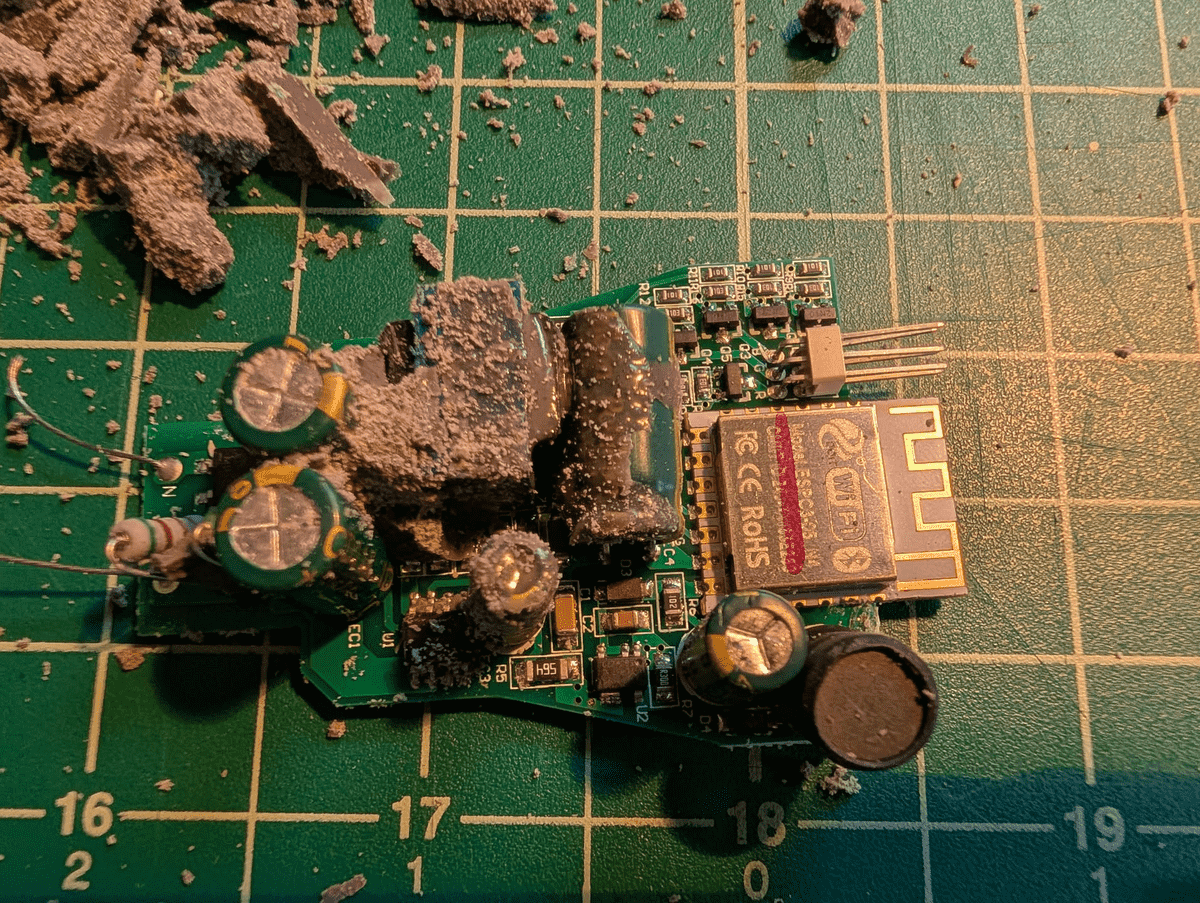
Instead, Osgood created new, dedicated firmware with only the necessary functions. Furthermore, he reduced the main firmware area, which had been allocated approximately 2.8MB for Tasmota, and increased the area for storing web pages and ebooks to 2MB. In other words, he changed the configuration to allow the limited memory to be used as a library.
Light bulbs equipped with Banned Book Library function as password-free Wi-Fi access points. When a user connects to the access point, the library's page is automatically displayed using a 'captive portal' mechanism, similar to those found in free Wi-Fi networks at hotels and airports. Users do not need to know the IP address or a dedicated URL.
The library's page includes not only the book title and author's name, but also the reasons why the book was subject to objections or a ban. Because the light bulb itself acts as a web server to distribute ebooks, it can be viewed even if external internet access is cut off.
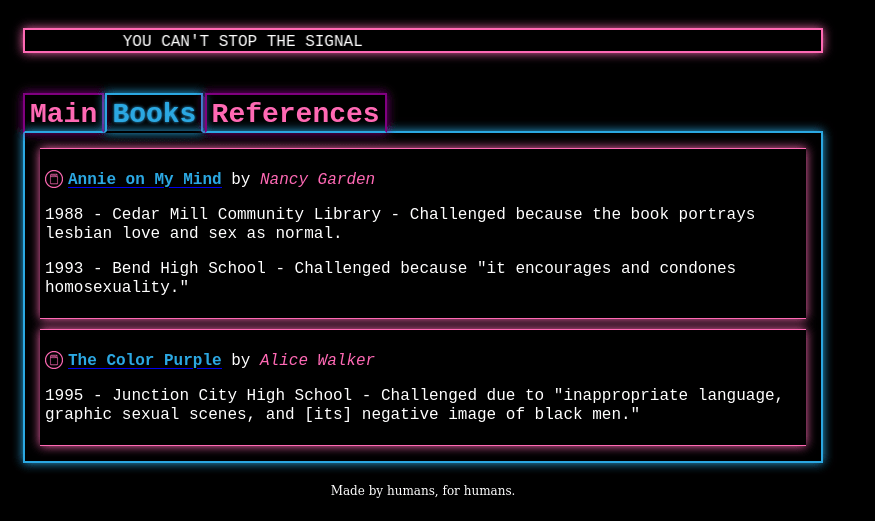
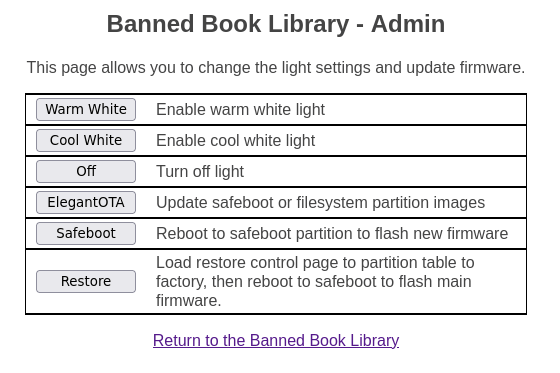
For discreet installation, a password-protected management screen is provided. The management screen allows you to switch the bulb's white light to warm or cool white, making it possible to match the color to surrounding lighting. The set color is saved even after the power is turned off and restored the next time the light is switched on.
Furthermore, in the original Tasmota environment, the Wi-Fi network name and password were stored without encryption. The Banned Book Library firmware erases the existing settings area, ensuring that even if the installed light bulb is removed, the Wi-Fi information, such as that of the user's home, cannot be read.
A small, proprietary firmware called 'Safe Boot' has been created for performing OTA updates, and by switching to Safe Boot from the management screen, a different firmware can be written. However, it is explained that this function does not completely restore the original Tasmota partition configuration.
Each EPUB ebook is approximately 350KB in size, meaning only a few books can be stored in a single light bulb. Initially, Osgood considered the inability to store a large number of books a drawback, but he came to believe that by allowing installers to select books they deem important from the limited number available, each light bulb would create its own unique library.
Because each light bulb functions as an independent library, there's a possibility of encountering different books depending on where it's installed. On the other hand, a future idea is to connect multiple light bulbs in a mesh network, allowing access to all the books in the network simply by connecting to a nearby light bulb. Osgood explains that this concept could allow each Banned Book Library to reflect individual preferences and personalities, and that users could enjoy exploring and discovering what remains in each Banned Book Library they find.
Related Posts: