Zed has announced 'DeltaDB,' a new version control system that saves even instructions given to AI as a history.

Zed, the developer of the code editor 'Zed,' has announced 'DeltaDB,' a development history management tool for the age of AI agents. Unlike Git, which records changes on a commit-by-commit basis, DeltaDB records conversations and editing operations along the way the code is created, making it easier for humans and AI agents to follow the workflow.
Software Is Made Between Commits — Zed's Blog
When you ask an AI agent to 'add error handling' or 'fix the tests,' multiple files may be rewritten at once. Even if you try to check later, it becomes difficult to understand 'which instruction caused the changes' and 'why the code was rewritten' from just the final differences. In situations where you are developing with AI, not only the code but also the conversations that produced the code become part of the development history.
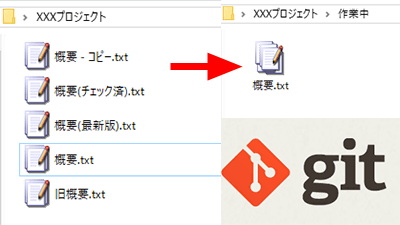
In traditional development, Git commits have been used as milestones in the work process. Git is a system that records the state of a set of files, and developers create commits when they have completed a significant portion of their work. However, in development with AI agents, short instructions and edits are repeated many times, so there are times when commits alone cannot keep track of the workflow.
DeltaDB, announced today, is a new version control system that manages both the working tree (a set of files under development) and the ongoing development conversations together. A key feature of DeltaDB is that it continuously records small changes that occur during development as 'deltas.' A delta is a term that means the difference in changes, and each operation is assigned a stable identifier.
By recording even minor changes, you can later refer to the state of the code immediately after the AI agent rewrote a specific line, as well as its state after further modifications. In other words, it becomes possible to track not only 'see the latest version of the code,' but also 'see the code as it was when the agent first wrote it.'
DeltaDB also records messages to agents and the edits made as a result of those messages side by side. The goal is to ensure that you don't lose track of 'which instruction led to which change.' When code and conversations are in separate locations, you have to search for the reason behind changes during reviews. DeltaDB keeps the links between changes and conversations, making it easier to trace the context of the code.
Furthermore, DeltaDB includes a mechanism that allows multiple humans or AI agents to edit the same file simultaneously. Because files are treated as physical files, agents can manipulate them via terminals, and developers can mount the entire work tree to disk as needed. It is designed to be used in conjunction with existing development tools, rather than being a closed environment on its own.
Zed explains that its aim is not to replace Git or continuous integration (CI), but rather to make collaborative work before code is committed easier. As of the time of writing, DeltaDB is not yet available, and Zed says it will provide a beta version to early users within a few weeks.
Related Posts: