A Chinese-made AI model, 'MiniMax M3,' has appeared, a high-performance open-source model that competes with GPT-5.5 and Claude Opus 4.7.
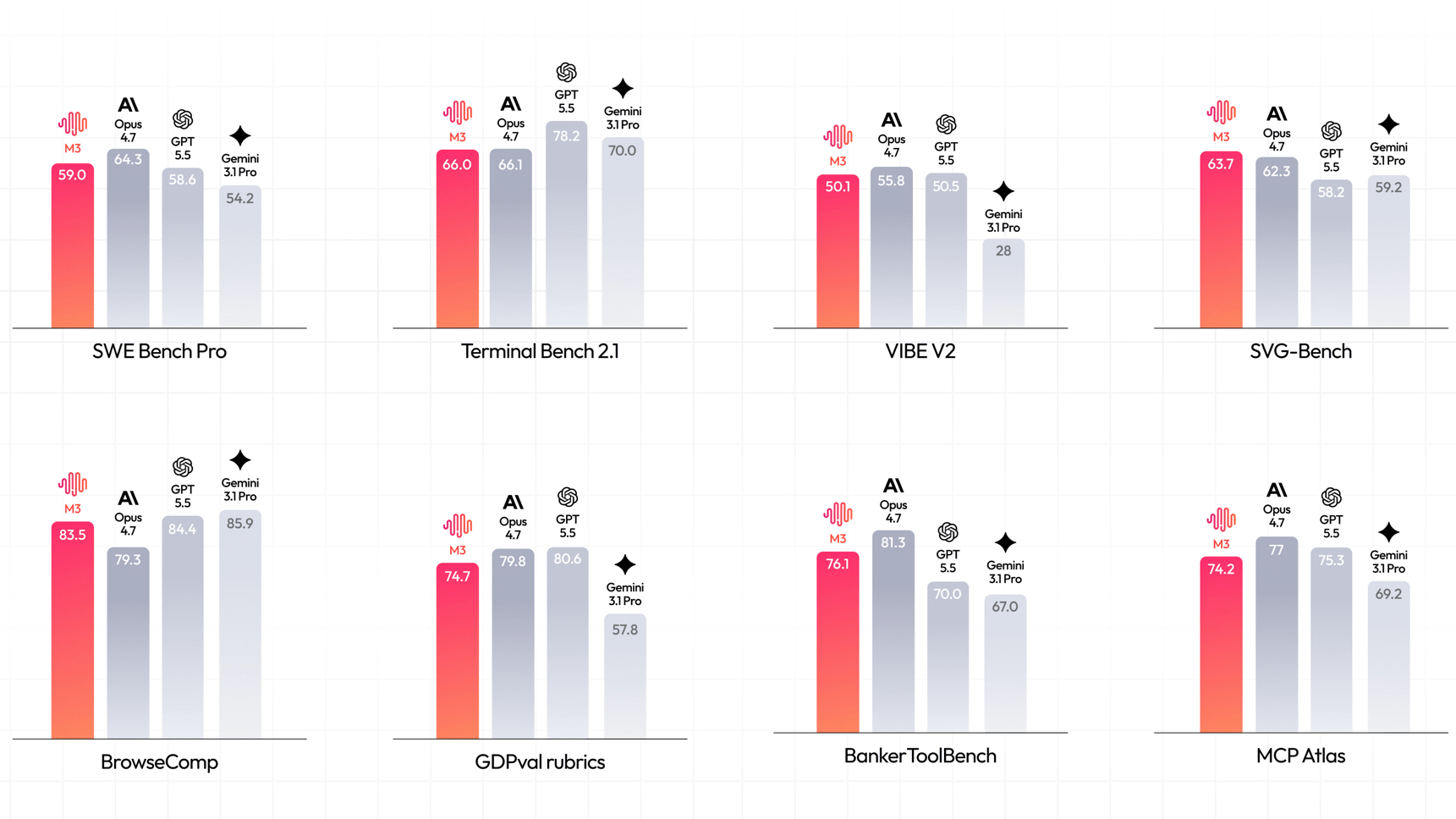
MiniMax, an AI development company based in Shanghai, China, has announced its AI model, ' MiniMax M3 .' MiniMax M3 has achieved benchmark scores that compete with GPT-5.5 and Claude Opus 4.7, and the company has stated that it will be distributed as an open model within 10 days of its announcement.
MiniMax M3 - Coding & Agentic Frontier, 1M Context, Multimodal | MiniMax
MiniMax M3: Frontier Coding, 1M Context, Native Multimodality — All in One Model - MiniMax Research | MiniMax
https://www.minimax.io/blog/minimax-m3
The MiniMax M3 is a model that boasts 'excellent performance in coding and agent tasks,' 'support for context windows of up to 1 million tokens,' and 'a multimodal model that allows input of images and videos.' MiniMax promotes that 'these three features are essential requirements for state-of-the-art closed models. The MiniMax M3 is the first open model to combine all three features.'
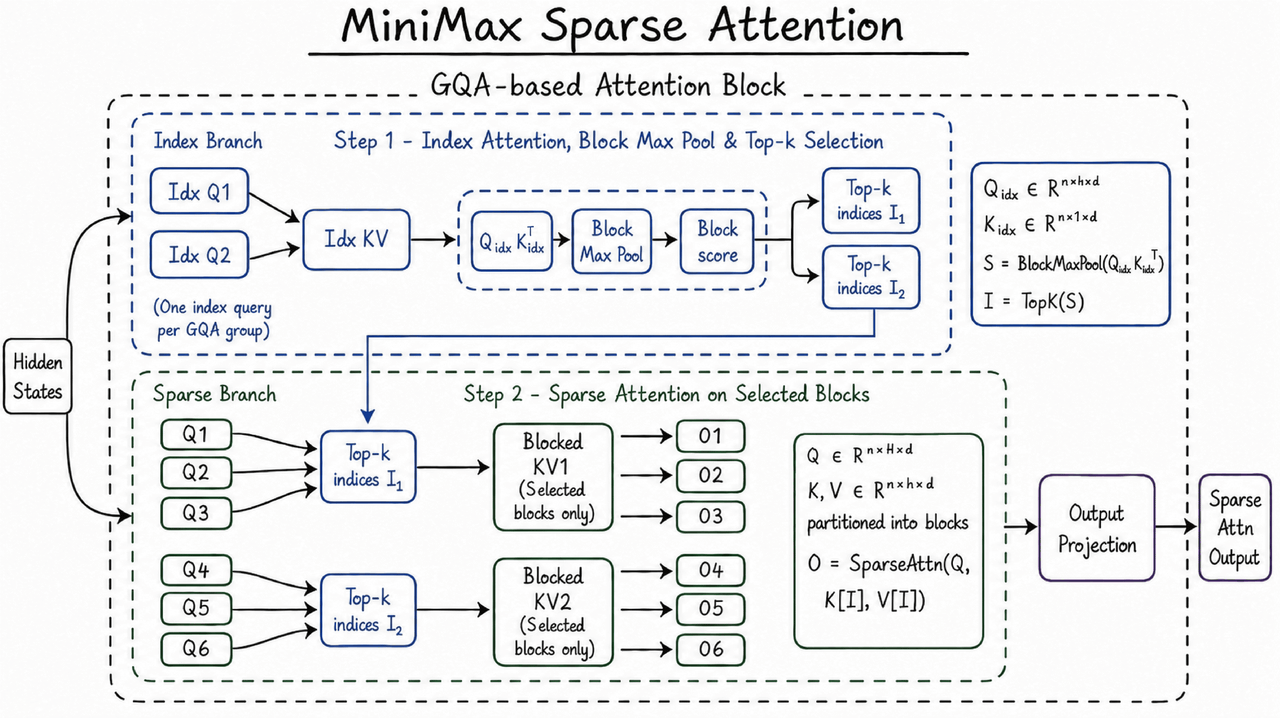
The MiniMax M3 is trained on an architecture called 'sparse attention,' which successfully improves computational efficiency. When processing 1 million tokens, the MiniMax M3 can do so with 1/20th the computational effort of the previous generation model. Computation speed has improved by more than 9 times during the prefilling phase and more than 15 times during the decoding phase.
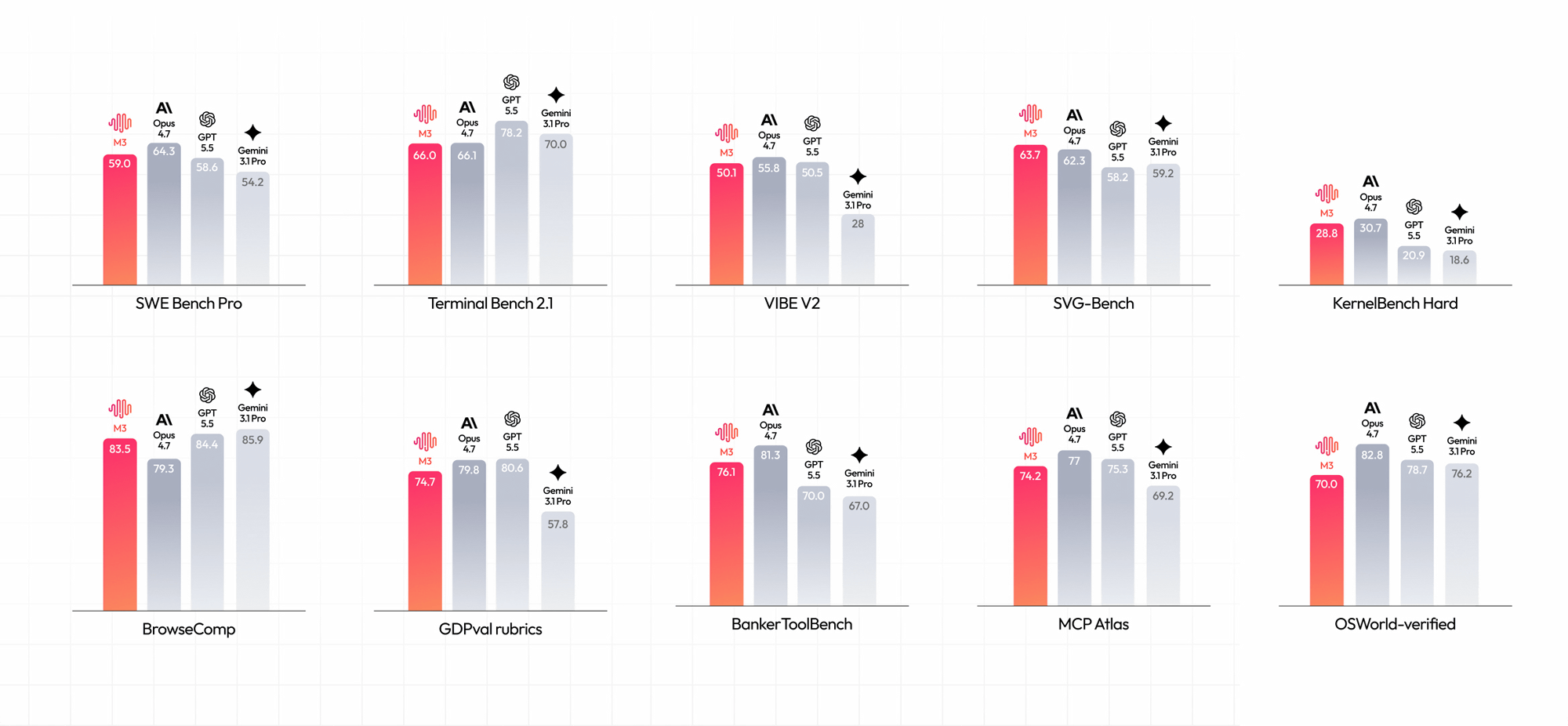
The benchmark results for 'MiniMax M3,' 'Claude Opus 4.7,' 'GPT-5.5,' and 'Gemini 3.1 Pro' are shown below. The MiniMax M3 recorded a higher score than the GPT-5.5 and Gemini 3.1 Pro in the SWE Bench Pro, which measures coding ability. In addition, the MiniMax M3 came out on top in the SVG Bench, which measures SVG image generation ability, surpassing the Claude Opus 4.7.
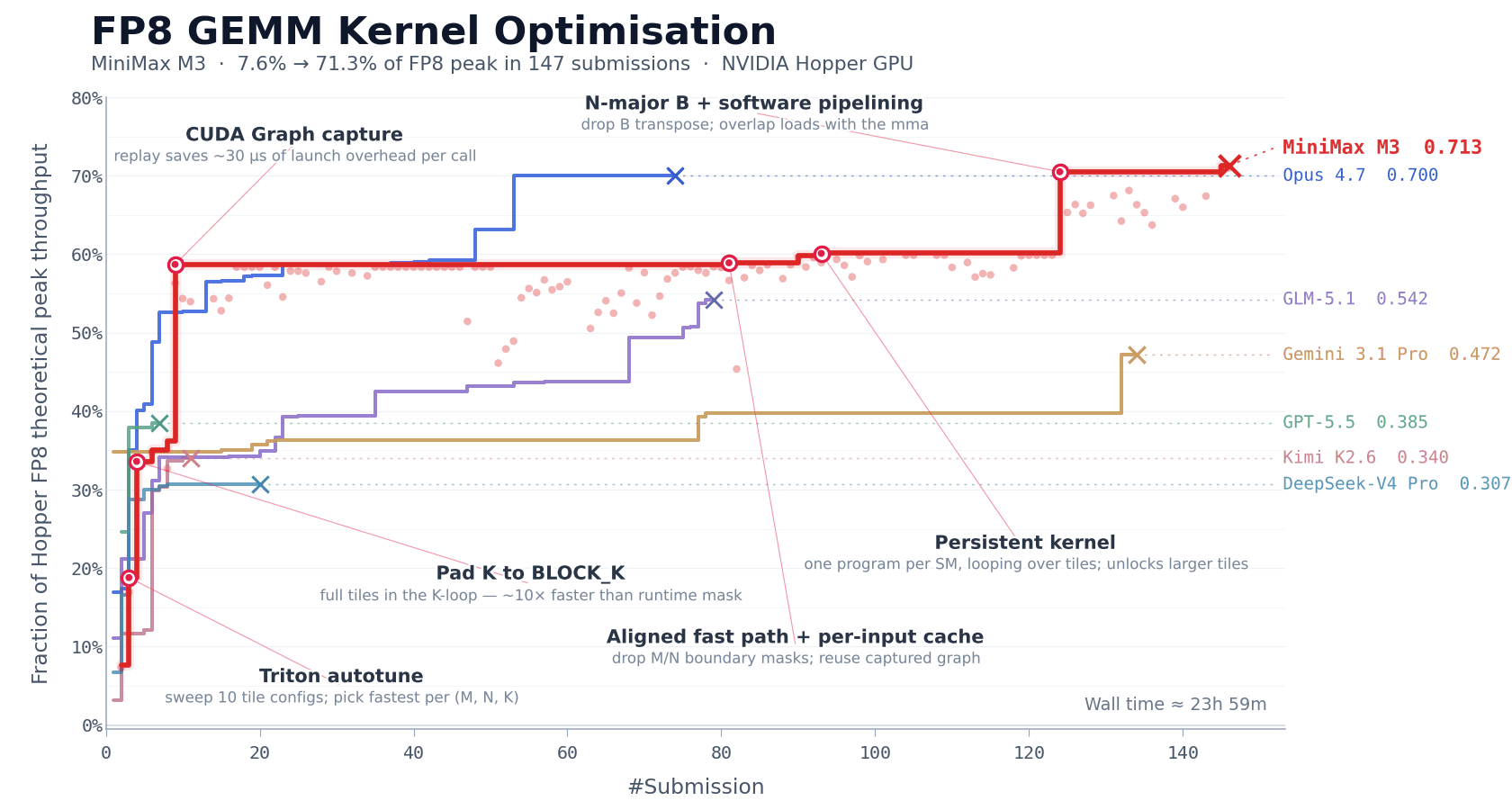
The graph below shows the results of a test to perform CUDA kernel optimization, with the horizontal axis representing the number of iterations and the vertical axis representing the peak hardware utilization (degree of optimization). MiniMax M3 continued optimizing even after other open models reached their limits, ultimately achieving optimization that surpassed Claude Opus 4.7. However, MiniMax M3 required approximately twice the effort of Claude Opus 4.7 to complete the optimization.
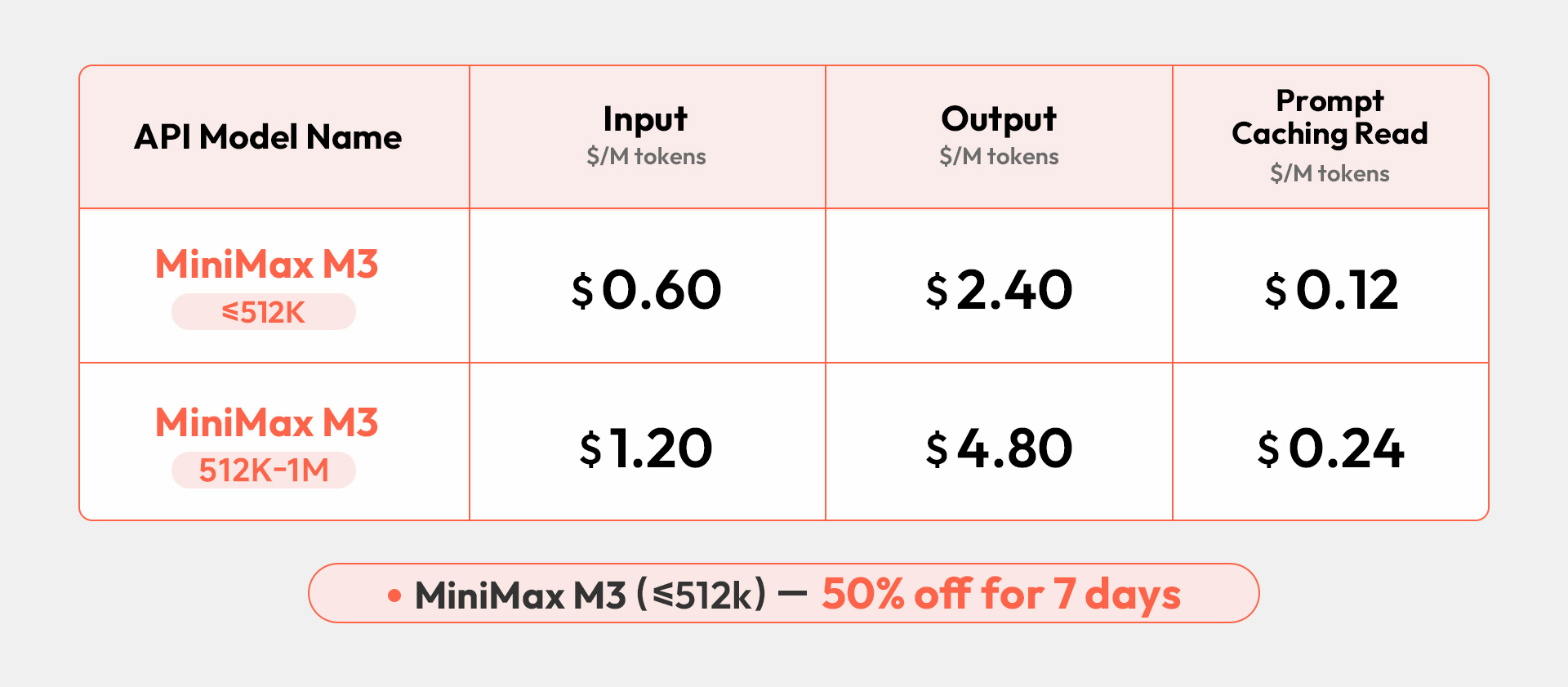
MiniMax M3 is slated to be released as an open model within 10 days of its announcement. It will also be available via API. The API fees per million tokens are $0.60 (approx. 95.8 yen) for input, $2.40 (approx. 383.2 yen) for output, and $0.12 (approx. 19.2 yen) for cache reading for up to 512,000 tokens. For processing exceeding 512,000 tokens, the fees are $1.20 (approx. 191.6 yen) for input, $4.80 (approx. 766.4 yen) for output, and $0.24 (approx. 38.3 yen) for cache reading.
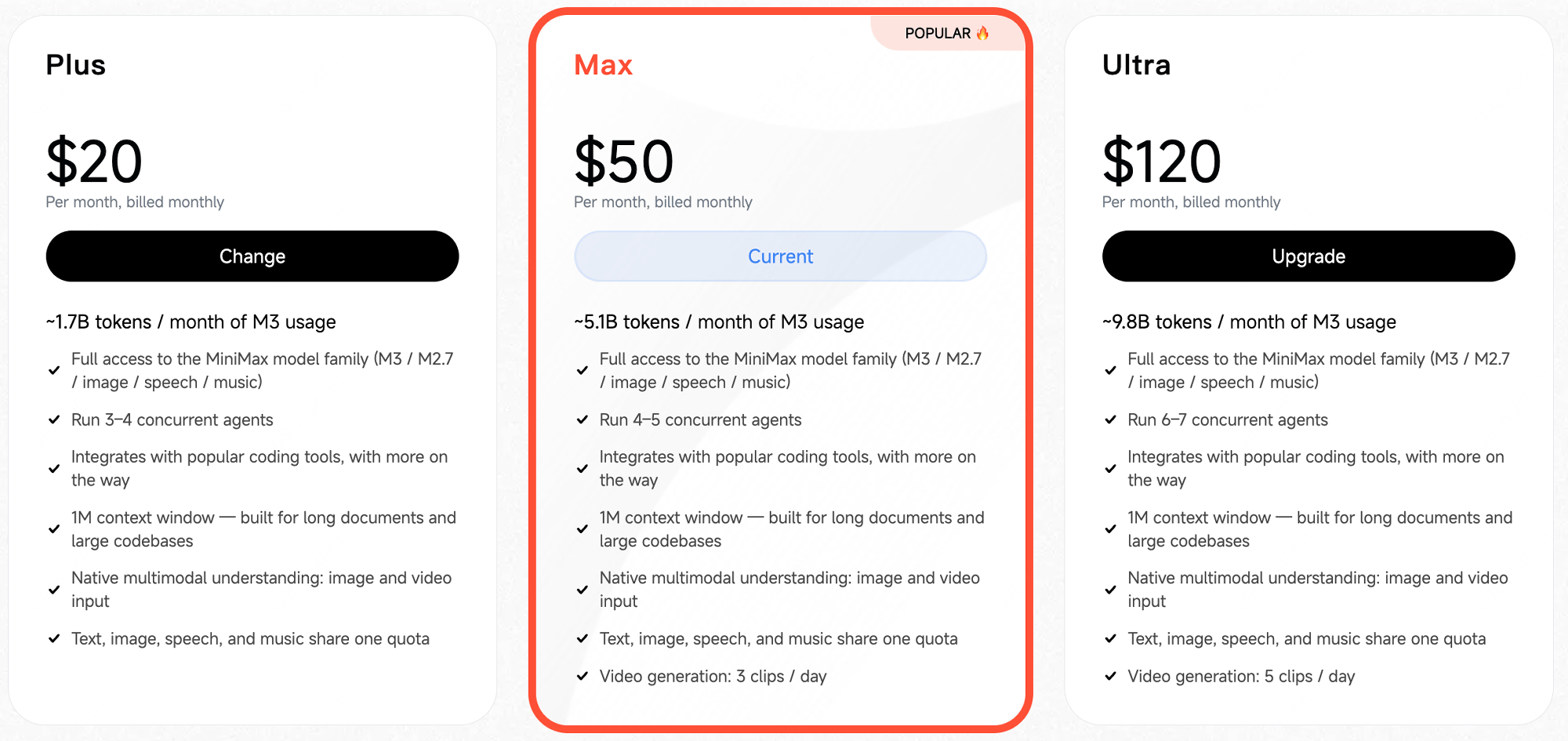
Subscription options are also available. The Plus plan at $20/month (approximately 3193 yen) provides access to 1.7 billion tokens per month, the Max plan at $50/month (approximately 7984 yen) provides access to 5.1 billion tokens per month, and the Ultra plan at $120/month (19,161 yen) provides access to 9.8 billion tokens per month.
Related Posts:

in AI, Posted by log1o_hf