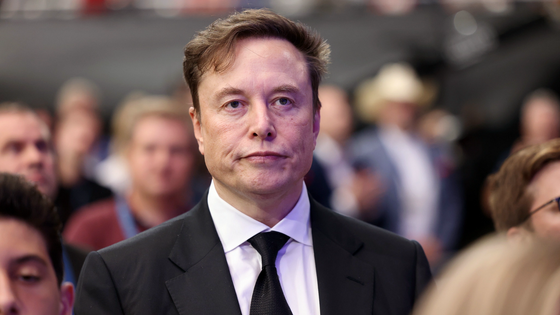
SpaceX has officially filed for an initial public offering (IPO), with CEO Elon Musk holding 85.1% of the voting rights.
by
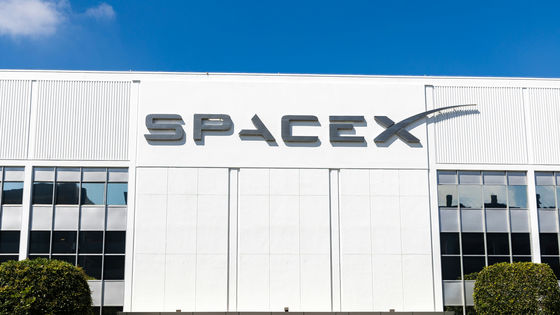
SpaceX, the space company led by Elon Musk, has filed its 'Form S-1' registration statement for an initial public offering (IPO) with the U.S. Securities and Exchange Commission (SEC). The company plans to list on the Nasdaq under the ticker symbol 'SPCX,' and Musk is expected to remain at the core of the company as CEO, CTO, and Chairman of the Board after the IPO.
Space Exploration Technologies - S-1
https://www.sec.gov/Archives/edgar/data/1181412/000162828026036936/spaceexplorationtechnologi.htm
Elon Musk's SpaceX files for IPO
https://www.axios.com/2026/05/20/elon-musk-spacex-ipo
The SpaceX IPO filing is filled with AI bets, Starship dreams, and Elon Musk at the center | TechCrunch
https://techcrunch.com/2026/05/20/the-spacex-ipo-filing-ai-bets-starship-dreams-elon-musk/
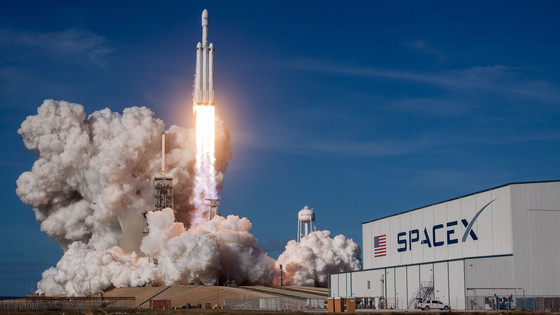
SpaceX is a space company founded by Elon Musk in 2002, focusing on the development of reusable rockets. As of the time of writing, SpaceX is a major partner of NASA and has become a diversified technology company with services such as the satellite internet service 'Starlink,' the 'Falcon' rocket and the 'Dragon' spacecraft, the next-generation heavy-lift rocket 'Starship,' and even an AI business through the integration of xAI.
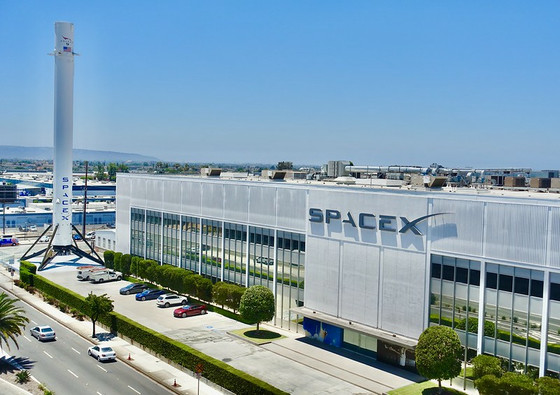
by Steve Jurvetson
The Form S-1 released this time provides the most detailed information to date about SpaceX's business operations and financial situation. According to the document, SpaceX is expected to begin trading on the Nasdaq in late June 2026, but the number of shares to be offered and the expected offering price have not been disclosed at the time of the release.
The IPO is reported to be the largest in history, with TechCrunch reporting that it could raise approximately $75 billion (approximately 11.91 trillion yen) and value the company at approximately $1.75 trillion (approximately 278 trillion yen). On the other hand, the S-1 filing also includes 36 pages of risk factors, indicating that $530 million (approximately 79.5 billion yen) is expected to be spent on legal disputes related to the integration of xAI and X.
Elon Musk's SpaceX officially acquires xAI - GIGAZINE

Financially, the company projected revenue of $18.67 billion (approximately 2.96 trillion yen) and a net loss of $4.9 billion (approximately 778 billion yen) in 2025. In the first quarter of 2026, it reported revenue of $4.69 billion (approximately 745 billion yen) and a net loss of $4.27 billion (approximately 678 billion yen), and the financial structure has become more complex due to the recent merger of xAI and X.
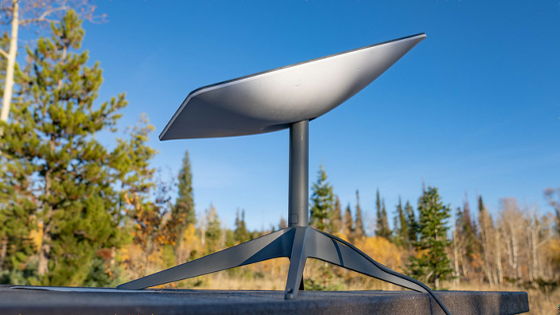
Starlink is at the heart of SpaceX's operations. According to TechCrunch, Starlink's satellite internet business is projected to generate approximately $11 billion (approximately 1.74 trillion yen) in revenue by 2025, accounting for more than half of the company's total revenue.
On the other hand, the integration of xAI, the AI company founded by Musk, is bringing both new growth expectations and significant spending to SpaceX. xAI is projected to have revenues of $3.2 billion in 2025 and an operating loss of $6.4 billion, while SpaceX's AI division is projected to have capital expenditures of $12.7 billion in 2025 and $7.7 billion in the first quarter of 2026 alone.
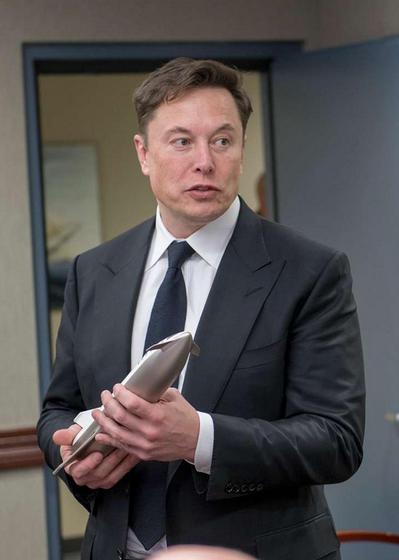
SpaceX has indicated plans to expand its AI chatbot 'Grok' to a scale of trillions of parameters. Furthermore, xAI's 'Colossus' and 'Colossus II' data centers are said to provide a combined computing power of approximately 1 gigawatt, and the company envisions deploying an on-orbit AI data center in the future.
Elon Musk's SpaceX and Jeff Bezos' Blue Origin are competing over the development of 'space-based AI data centers' - GIGAZINE

In the space business, the success or failure of Starship will greatly influence future growth. SpaceX plans to begin transporting payloads into orbit using Starship in the second half of 2026, use it to launch Starlink satellites in the second half of the same year, and utilize it for launching next-generation V2 mobile satellites in 2027.
The development of Starship is receiving massive funding. According to S-1, SpaceX's space division will spend $3 billion (approximately 477 billion yen) on Starship research and development in 2025 and $930 million (approximately 148 billion yen) in the first quarter of 2026, and SpaceX claims that Starship will reduce orbital insertion costs by more than 99% compared to the average launch cost in the past.
In its S-1 document, SpaceX lists future markets such as exploration of the Moon and Mars, space tourism, high-speed intercity travel between Earth cities using Starship, manufacturing facilities in orbit and on the Moon and Mars, and even asteroid mining. However, many of these are positioned as 'future markets,' and the specific timelines for commercialization and the details of the risks are not explained in as much detail as the core businesses.
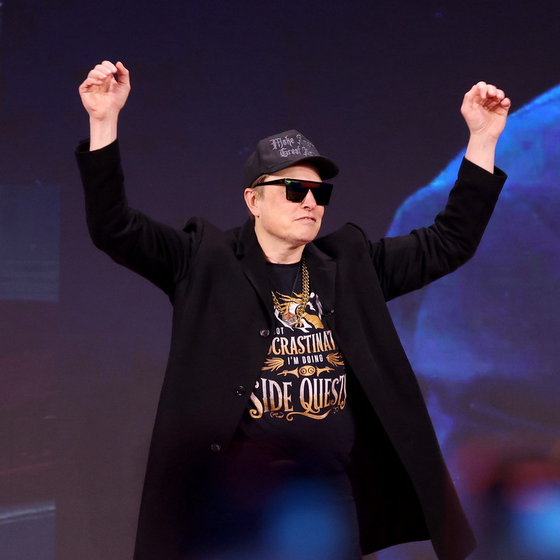
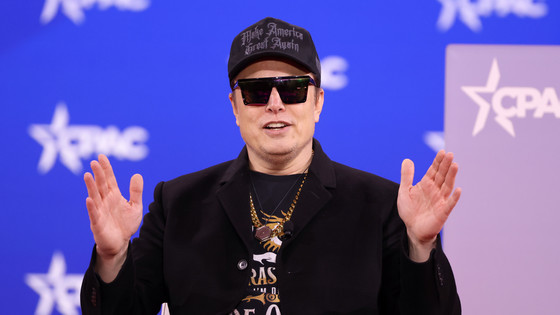
Elon Musk's influence is also a major focus of this IPO. According to Form S-1, Musk owns 93.6% of Class B shares, each with 10 voting rights, giving him 85.1% of the voting rights at SpaceX. While this percentage is expected to decrease after the IPO, it is still highly likely that he will retain more than 50% of the voting rights, meaning that Musk's influence will remain extremely strong even after the company goes public.
by Gage Skidmore
Furthermore, Musk has been offered a compensation package that could include up to 1 billion Class B shares, contingent on increasing SpaceX's valuation to $7.5 trillion (approximately 1,200 trillion yen) and establishing a permanent Martian habitat for 1 million people. He may also receive additional stock-based compensation if the space-based data center can provide 100 terawatts of computing power per year.
Related Posts:



in Note, Posted by log1i_yk