Why are some PC manufacturers ending support for H.265 (HEVC), and why is H.265 licensing so complex?

There are various codecs for compressing and decompressing videos, with H.264 (AVC), H.265 (HEVC), and AV1 being among the most common. Of these, H.265 has faced licensing fee issues, leading some PC manufacturers to discontinue support. Ars Technica, an IT news site, has compiled information on H.265 licensing fees and royalties.
Clarifying HEVC licensing fees, royalties, and why vendors kill HEVC support - Ars Technica
https://arstechnica.com/gadgets/2026/04/lawsuits-licensing-and-royalties-are-complicating-4k-video-support-in-gadgets/
H.265 is a codec that was announced as the successor standard to H.264 and was approved by the ITU (International Telecommunication Union) in 2013. A key feature of H.265 is its high compression ratio, which allowed even high-definition videos to be compressed into smaller file sizes than with H.264.
Furthermore, while H.264 only supports up to 4K and 60fps, H.265 supports up to 8K and 300fps, making it a more modern codec as video resolution and frame rates continue to increase.
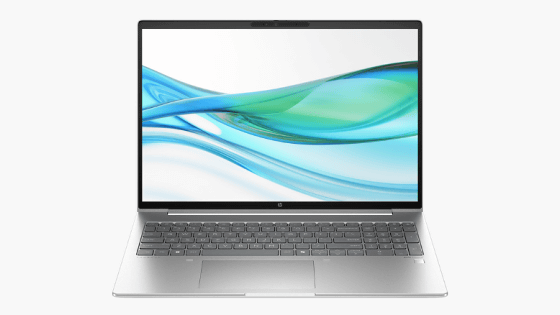
However, it has been revealed that the H.265 hardware encoder and decoder is disabled on some Dell and HP laptops. Reports indicate that these PCs are unable to hardware decode H.265 encoded video content, resulting in limited functionality and reduced performance in some applications.
H.265 hardware encoder and decoder are disabled on some Dell and HP PCs, even though the processor itself supports it; the manufacturers intentionally disable it - GIGAZINE
H.265 is widely used for 4K and HDR video streaming, and is common not only for high-resolution playback on Netflix and Apple TV+, but also for videos shot on smartphones and in mobile apps. Therefore, if the H.265 hardware encoder/decoder function is disabled on the PC side, 4K and HDR videos may not be playable in browsers and desktop apps, and H.265 videos shot on iPhones may be difficult to play in some apps and Windows media players.
Furthermore, video editing software like Adobe Premiere Pro increasingly relies on software processing for decoding and encoding, which can potentially slow down editing and exporting.
In such cases, users can sometimes enable hardware acceleration by purchasing the HEVC extension from the Microsoft Store for 120 yen. Another workaround is to use an app with built-in software decoding, such as VLC Media Player, but this is not a fundamental solution, as it cannot be used, for example, to play Netflix 4K content.

The root of this problem lies in the fact that the technologies required for decoding and encoding H.265 are protected by patents held by multiple companies, including Ericsson, InterDigital, and Nokia. Product vendors must either contract directly with the patent holders or obtain licenses through patent pool management companies and pay royalties or usage fees. In other words, it's not enough for CPUs and GPUs to simply support H.265; those selling the final product also need to handle legal and commercial matters.
In the United States, Access Advance and Velos Media are notable non-patent holders that handle HEVC patent licenses. Since acquiring the Via Licensing Alliance's HEVC/VVC program, Access Advance is said to operate a patent pool that covers approximately 80% of the world's HEVC patents, with the number of patents covered increasing from 500 in 2015 to approximately 29,000 today. Velos Media, on the other hand, handled HEVC-related patents but closed its HEVC patent pool in 2023.
Of particular interest is the increase in royalty rates for Access Advance's HEVC Advance patent pool. The new rates were originally scheduled to begin in January 2026, but the start date has been postponed to July 1st. The contracts are for 10 years, and while the rates will remain unchanged for the first five years, they could be increased by up to 20% thereafter. Dell and HP are currently in the middle of their 10-year contracts, so they will not be directly affected by these new rates until at least 2030.
The important point here is that just because there is a CPU manufacturer does not mean that the company will automatically cover the licensing fees. Access Advance explains that they license not the Intel CPU itself, but finished consumer products such as laptops equipped with that CPU and H.265 functionality. There was a time when Microsoft and Intel could cover a certain number of customer companies in the H.264 patent pool, but that kind of system is not maintained for HEVC.
Furthermore, the reasons why companies are hesitant to adopt H.265 are not limited to patent pool payments. For example, Nokia holds the standard-essential patent for HEVC, and in Germany, Acer and Asus PCs were found to be infringing on Nokia's patent, resulting in both companies being unable to sell PCs in the country since January. In the United States, Nokia has also sued HP, Hisense, Amazon, Paramount, and Warner Bros., with HP, Hisense, and Amazon subsequently entering into licensing agreements, while the lawsuits against Paramount and Warner Bros are ongoing.
Therefore, some believe that the removal of H.265 support is less about reducing the burden of payments to the patent pool and more about reducing the risk of being sued by patent holders outside the pool. Nokia explains that 'the goal is to receive fair compensation for the use of our technology and to maintain fairness with companies that are already making payments, and litigation is only a last resort.' They also state that the royalties received will be reinvested in the development of next-generation multimedia technologies.
However, Ars Technica points out that 'the users are the ones who will bear the brunt of the consequences.' In fact, there are reports that on new laptops where H.265 has been disabled, users will need to change settings related to Microsoft Media Foundation and disable hardware acceleration in their browsers, resulting in the inability to use background blur in meeting apps and even a decrease in overall system performance. Video codecs are fundamental technologies that ordinary users should be able to use without being aware of them, but with H.265, that premise is starting to break down.
As an alternative to the heavily licensed H.265, there is AV1, a royalty-free codec developed by AOMedia, which is used by YouTube and Netflix. However, AV1 has also been involved in patent infringement lawsuits, raising questions about its royalty-free status.
Dolby sues Snapchat over video codec; AV1's 'open and royalty-free' status is being questioned - GIGAZINE
Related Posts:




in Software, Posted by log1i_yk