The music streaming service Spotify started out due to copyright infringement.
Rasmus Fleischer Skriver en bok om Spotify
https://www.di.se/digital/han-skriver-en-bok-om-spotify-det-var-fran-borjan-en-pirattjanst/
Spotify's Beta Used 'Pirate' MP3 Files, Some From Pirate Bay * TorrentFreak
https://torrentfreak.com/spotifys-beta-used-pirate-mp3-files-some-from-pirate-bay-170509/
In a past interview, Spotify founder Daniel Ek stated that he created Spotify around 2002 after realizing that 'it's impossible to eliminate copyright infringement by law' and that 'the only way to solve the problem is to create a service that is better than copyright infringement and also compensates the music industry.' One of Spotify's goals was to eliminate piracy users through its free, ad-supported model and subscription service.
However, Rasmus Fleischer, an early member of the Swedish anti-piracy group ' Piratbyrån ,' which was active from 2003 to 2010, revealed some secrets about Spotify's history in his 2019 book, 'Spotify Teardown: Inside the Black Box of Streaming Music.' Fleischer is also one of the main operators of ' The Pirate Bay ,' one of the most visited torrent sites in the world, and has written a doctoral dissertation on the topic of 'the political economy of music.'
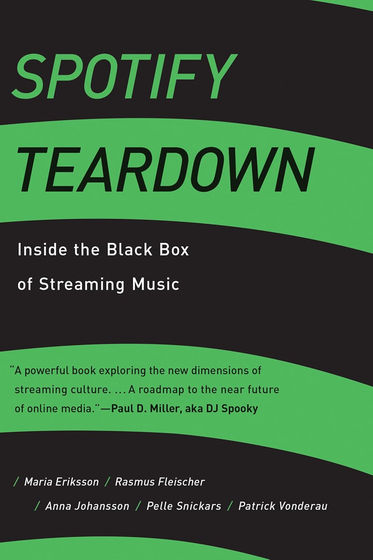
In 2017, while writing his book, Fleischer revealed to Swedish media that 'when Spotify was in its early beta stage, we were using unlicensed music to launch the platform.' He added, 'In the beta version of Spotify, we were distributing MP3 files that employees happened to have saved on their hard drives.'
Fleischer cites his own experience as the reason for his conviction. During his time in a band, Fleischer distributed music through Pirate Bay instead of the usual distribution channels. He says that an album he distributed through Pirate Bay appeared on Spotify's beta service, and when he inquired with Spotify about how they obtained it, they replied, 'During the testing period, we use music that we find.' Therefore, Fleischer points out that 'Spotify was distributing content downloaded from torrent sites like Pirate Bay, rather than music that had been legitimately purchased or acquired.'
In fact, rumors that early versions of Spotify used pirated MP3s are somewhat well-known, with some early users reporting that they 'downloaded tracks that contained labels, tags, and formats indicating content that was not officially obtained.'
In connection with the attention garnered by Spotify's copyright infringement lawsuit , past articles about the early days of Spotify have become a hot topic on the social news site Hacker News. One user on Hacker News commented, 'The fact that Spotify initially attracted users by distributing pirated content is similar to Facebook, which grew huge by siphoning messages and content from its predecessor, MySpace , and to YouTube, which is rumored to have had its team members illegally upload Hollywood movies when it lacked content. Both Facebook and YouTube are now on the side of strictly cracking down on such rule violations, just like Spotify. It's the ethics of giant IT companies that they break the rules in every way, but once they become successful, they use the know-how gained from breaking the rules to close loopholes and prevent others from doing the same thing.'
Related Posts:





in Web Service, Posted by log1e_dh