Why Ghostty, a free, fast, feature-rich, and cross-platform terminal emulator, is so appealing.

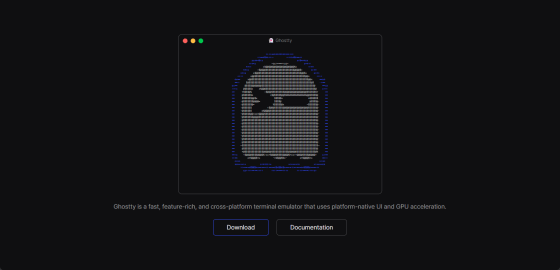
Ghostty , a fast and feature-rich next-generation terminal emulator developed by
Ghostty
https://ghostty.org/
◆General evaluation
Ghostty is known to have many fans, especially among NeoVim users and AI coders. The advantages that enthusiasts cite for Ghostty include its terminal speed and ease of use, but a deeper look reveals the following points:
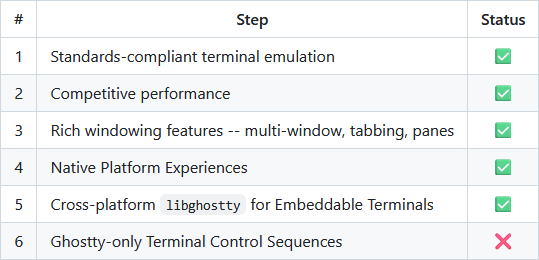
• High Performance : Developed in the Zig language , it is lightweight and fast, and further utilizes GPU acceleration to minimize rendering latency.
• Ease of setup : The configuration file is very easy to understand and can be used without complex customization.
• Native Design : It employs a native design optimized for macOS and Linux platforms, resulting in a seamless user experience.
• Modern features : It incorporates modern features such as image display within the terminal, integration with Apple Shortcuts, and split-screen functionality.
◆Hashimoto's View
On March 1, 2026, shortly before the release of Ghostty version 1.3, Mr. Hashimoto posted on the social news site Hacker News, in which the developer himself shared his views on the features of Ghostty.
I'm the original creator of Ghostty. It's been a few years now! I don't know why... | Hacker News
https://news.ycombinator.com/item?id=47207472
libghostty ecosystem
libghostty , the core component of Ghostty, is intended to be used by terminal projects other than Ghostty, and Hashimoto believes that the ecosystem formed by libghostty is what will carry Ghostty's future. In other words, the project's goal is to build a diverse ecosystem of terminal emulators on a shared, stable, and high-performance core foundation. In fact , many apps are already built using libghostty , supporting Hashimoto's vision. According to Hashimoto's predictions, by mid-2027, the number of users accessing Ghostty via libghostty will far exceed the number of Ghostty users itself, and there is an expectation that feedback from the libghostty ecosystem will ultimately improve Ghostty's stability.
• Current status and future development of the Ghostty application
Ghostty as an application continues to grow steadily. Version 1.3, released in March 2026, implemented important features such as a full scrollback search function and a native scrollbar, as well as various enhancements to GUI and VT functions. As a result, Ghostty for macOS records approximately 1 million downloads per week (the number of downloads for the Linux version is unknown). Although Ghostty itself does not have telemetry functionality, an investigation of telemetry data from third-party TUI applications suggests that Ghostty may have the largest user base, especially among new TUI users. Hashimoto mentioned that further improvements are needed based on these findings.
Support from non-profit organizations
As of March 2026, Ghostty is supported by a non-profit organization and has signed contracts with four contributors, enabling it to pay them. The finances of the Ghostty project are fully public and transparent online, a necessary measure to keep Ghostty non-profit and gradually reduce its dependence on Mr. Hashimoto.
- The resurgence of terminal emulators
Hashimoto describes the renewed increase in terminal usage, driven by the rise of AI coding tools like Claude Code , as 'interesting.' After all, he never predicted such an increase in terminal usage just a few years ago, nor did he ever imagine that he would be regularly conversing with cutting-edge AI coding companies that are the largest terminal users.
Development using Zig
Hashimoto describes developing Ghostty in the Zig language as a 'very good' experience. While major version upgrades of Zig can sometimes be burdensome due to language specification changes, he states that the changes were well worth it, as they also included beneficial API changes, such as the overhaul of std.Io.Writer in version 0.15. He also mentioned that the burden of version upgrades was not too painful thanks to the use of LLM agents. The biggest concern when using the Zig language was the lack of contributors, but this was not a major problem because it was relatively easy to learn for those with system programming experience, and many people were eager to use the Zig language.
Related Posts:





in Software, Posted by log1c_sh