Experiments by seismologists have revealed that over-tilling the soil can actually have a negative impact on it.
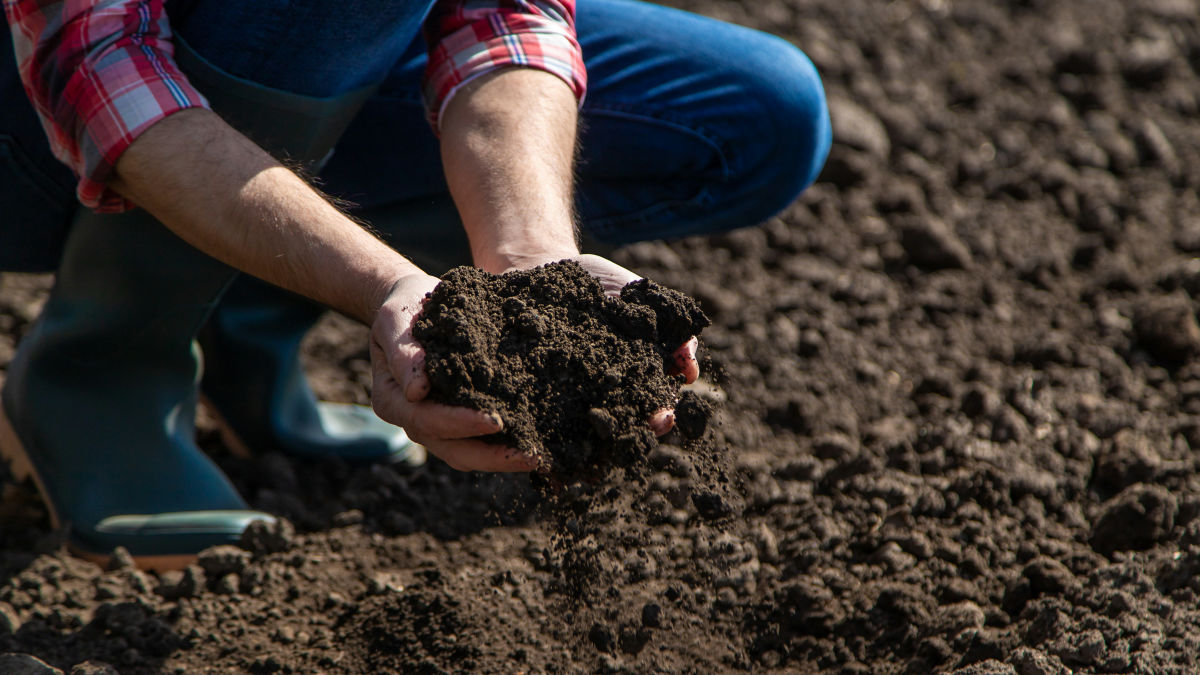
Generally, before planting vegetable or crop seeds, the soil in the field is
Agroseismology and the impact of farming practices on soil hydrodynamics | Science
https://www.science.org/doi/10.1126/science.aec0970
Earthquake scientists reveal how overplowing weakens soil at experimental farm – UW News
https://www.washington.edu/news/2026/03/19/earthquake-scientists-reveal-how-overplowing-weakens-soil-at-experimental-farm/
Deep Plowing Can Disrupt Soil's Porous Network, Study Finds----Chinese Academy of Sciences
https://english.cas.cn/newsroom/cas-in-media/202603/t20260323_1153176.shtml
Deep plowing shown to weaken soil resilience, new study finds — Fertilizer Daily
https://www.fertilizerdaily.com/20260327-deep-plowing-shown-to-weaken-soil-resilience-new-study-finds/
The purpose of tilling is to soften the soil by tilling the surface soil, allowing air to enter the soil, which in turn converts organic nitrogen into inorganic nitrogen that is more readily available to plants, and also helps prevent diseases.
However, the risks of soil nutrient leaching and excessive soil drying due to tillage have been pointed out, and its effectiveness has long been debated. For this reason, some farmers deliberately practice no-till farming, which involves not tilling the soil.
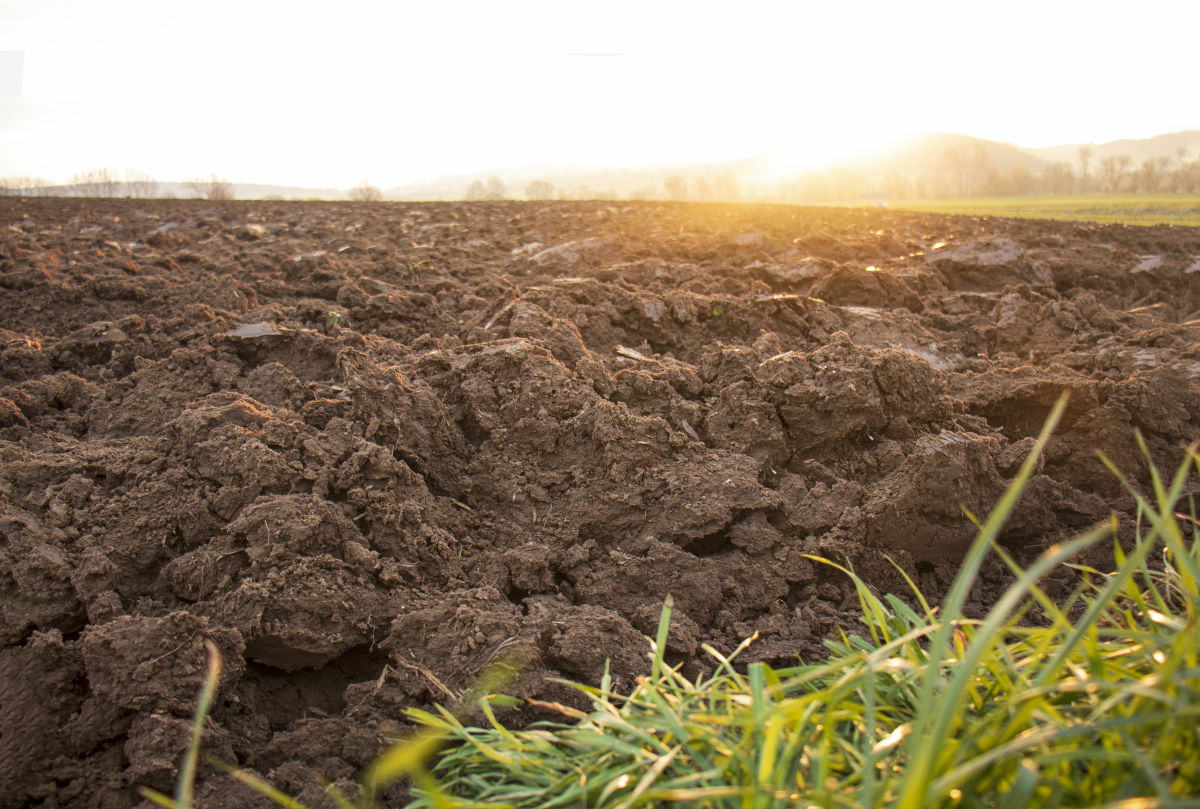
In this study, an international research team from institutions such as the University of Washington and the Chinese Academy of Sciences observed the effects of tillage on soil using a novel method: 'sound wave soil monitoring.' The method employed by the research team is called 'distributed acoustic sensing technology,' which uses a fiber optic cable network to detect minute vibrations in the ground. By transmitting laser pulses through the cables and analyzing the reflected waves, it is possible to track how water moves through the soil in real time.
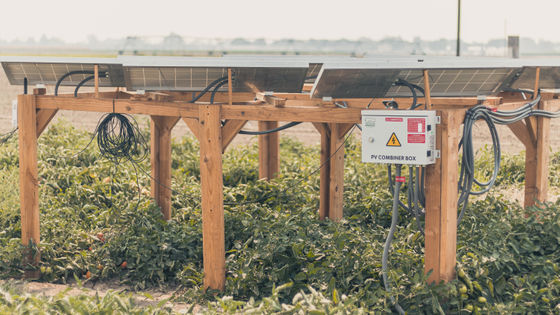
The research team introduced distributed acoustic sensing technology to a 160m wide experimental farm in the UK and continuously collected data over 40 hours while varying conditions such as the amount of tillage and soil compaction by tractor tires.
Analysis of the data revealed that healthy soil contains capillary-like structures consisting of tiny pores and channels, which function as a natural water distribution network. This network allows rainwater to penetrate deep into the soil and be stored in a state where plant roots can utilize it even during dry seasons.
However, repeated deep tillage and soil compaction by tractors have been found to disrupt the complex water distribution network within the soil, making it difficult for water to penetrate deep into the soil. As a result, water tends to accumulate near the surface and evaporate more easily, the research team reports.
Qi Bing Xi of the Chinese Academy of Sciences, the lead author of the paper, said, 'Soil is not just a collection of particles, but a porous medium that functions like capillaries to maintain water circulation. Preserving these natural structures will be crucial for crops to adapt to the increasingly harsh weather conditions brought about by climate change.'
This issue has also been discussed on the social news site Hacker News. One user commented that experiments conducted by Charles Dowding , an expert in no-till farming, reported that, with the exception of some crops such as potatoes, carrots, and cabbage, no-till farming resulted in higher yields.
Earthquake scientists reveal how overplowing weakens soil at experimental farm | Hacker News
https://news.ycombinator.com/item?id=47517606
Related Posts:

in Science, Posted by log1h_ik