Data centers are transitioning from AC to DC, and 800-volt DC power supply will enable next-generation AI data centers.
Data Center DC Embraces 800V Power Shift - IEEE Spectrum
https://spectrum.ieee.org/data-center-dc
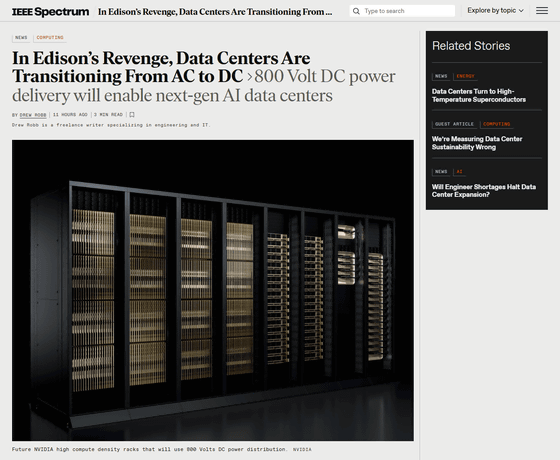
At the NVIDIA GTC 2026 AI conference held in March 2026, new chip architectures supporting AI attracted considerable attention. However, as chips become faster and more powerful, attention is also shifting to infrastructure such as data centers.
In the power industry, companies like Delta, Vertiv, and Eaton have announced new designs for the AI era. Complex and inefficient AC-DC power conversion is gradually being replaced by DC configurations, at least in hyperscale data centers .
Regarding this, Chris Thompson, Vice President of Advanced Technology and Global Microgrids at Vertiv, said, 'AC power distribution remains firmly established, but advances in power electronics and the growing demand for AI infrastructure are accelerating interest in DC architectures.'
Almost all existing data centers are designed with AC power supply in mind, and the power is converted multiple times before it reaches the computing load (computers such as servers).
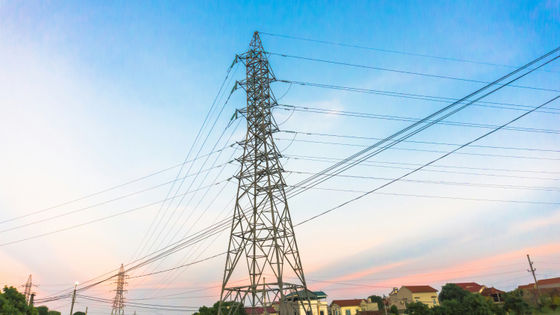
In a typical voltage conversion process, power is supplied to the data center as medium-voltage AC (1-35kV), then stepped down to low-voltage AC (480V or 415V) by a transformer. It is then converted to DC for battery storage within an uninterruptible power supply (UPS), and then converted back to AC. Finally, it is converted back to low-voltage DC on the server side before being supplied as the DC power required by the computing chips.
Luis Fernando Wet de Basselaer, Vice President of Engineering and Technology at Eaton, explains, 'The dual conversion process ensures that the output AC power is clean and stable, making it suitable for data center servers.'
Conventional transformer processes are sufficient to handle the power requirements of a typical data center, as
At this scale, the energy loss, current loss, and copper usage during the AC-to-DC conversion process become significant issues that cannot be ignored. Specifically, a certain amount of loss occurs with each power conversion, and as the amount of power to be supplied increases, the size of the converter and the connection requirements for copper busbars (conductors for branching power) become impractical. According to NVIDIA, a rack with a power consumption of 1 MW requires up to 200 kg of copper busbars, and this increases to 200,000 kg for 1 GW.
However, changing the '13.8kV AC power' supplied to existing data centers to '800V DC power' eliminates most of the conversion process. This makes it possible to reduce the number of fans and power supplies, improve system reliability, reduce heat generation, improve energy efficiency, and reduce the equipment footprint.
In power distribution, converting 415V AC power to 800V DC power increases the amount of power that can be transmitted with the same conductor size by as much as 85%. This is because higher voltage reduces current demand, lowers resistance losses, and improves transmission efficiency. Since the same load can be handled with thinner conductors, copper usage can be reduced by 45%, energy efficiency improves by 5%, and in the case of gigawatt-scale facilities, total cost of ownership can be reduced by nearly 30%.
Vertiv's Thompson explained the use of high-voltage DC: 'In a high-voltage DC architecture, power from the power grid is converted from medium-voltage AC to approximately 800V DC and distributed throughout the facility via a DC bus. Small converters in the racks step down the voltage for GPUs and CPUs.'
According to
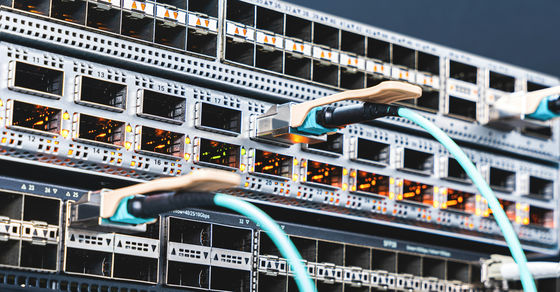
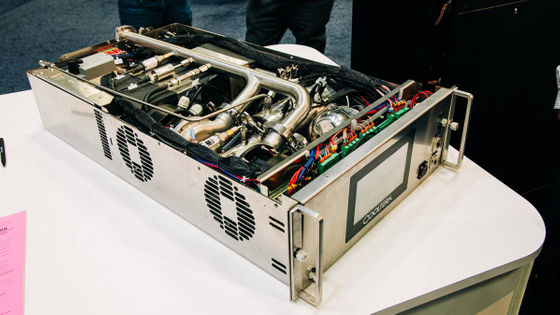
Some vendors are already getting ahead of the curve, with Vertiv announcing an 800V DC ecosystem integrated with NVIDIA's NVIDIA Vera Rubin , aiming for commercialization in the second half of 2026. Eaton has also developed a medium-voltage solid-state transformer (semiconductor transformer) that will be the core of DC distribution systems. Delta has released an 800V DC rack with a total of 480kW of built-in battery backup units.
However, much of the industry is lagging behind. Patrick Hughes, senior vice president of strategy, technology and industry at the American Electrical Manufacturers' Association , said that a clear and long-term demand forecast is needed to justify restructuring of DC-only equipment manufacturing capacity, expanding semiconductor and materials supply chains, and massive capital investment across the entire value chain.
In response to this report, a comment was posted on the social forum Hacker News stating, 'DC power supplies have been an option for data center equipment since I was young and working with hardware rackmounting and stacking. Countless manufacturers, including Cisco, Dell, HPE, and IBM, have offered DC power supply options . The same goes for PDUs . The good old days are coming back into the spotlight.'
Related Posts:

in AI, Posted by logu_ii