We succeeded in transporting antimatter by truck for the first time in the world.
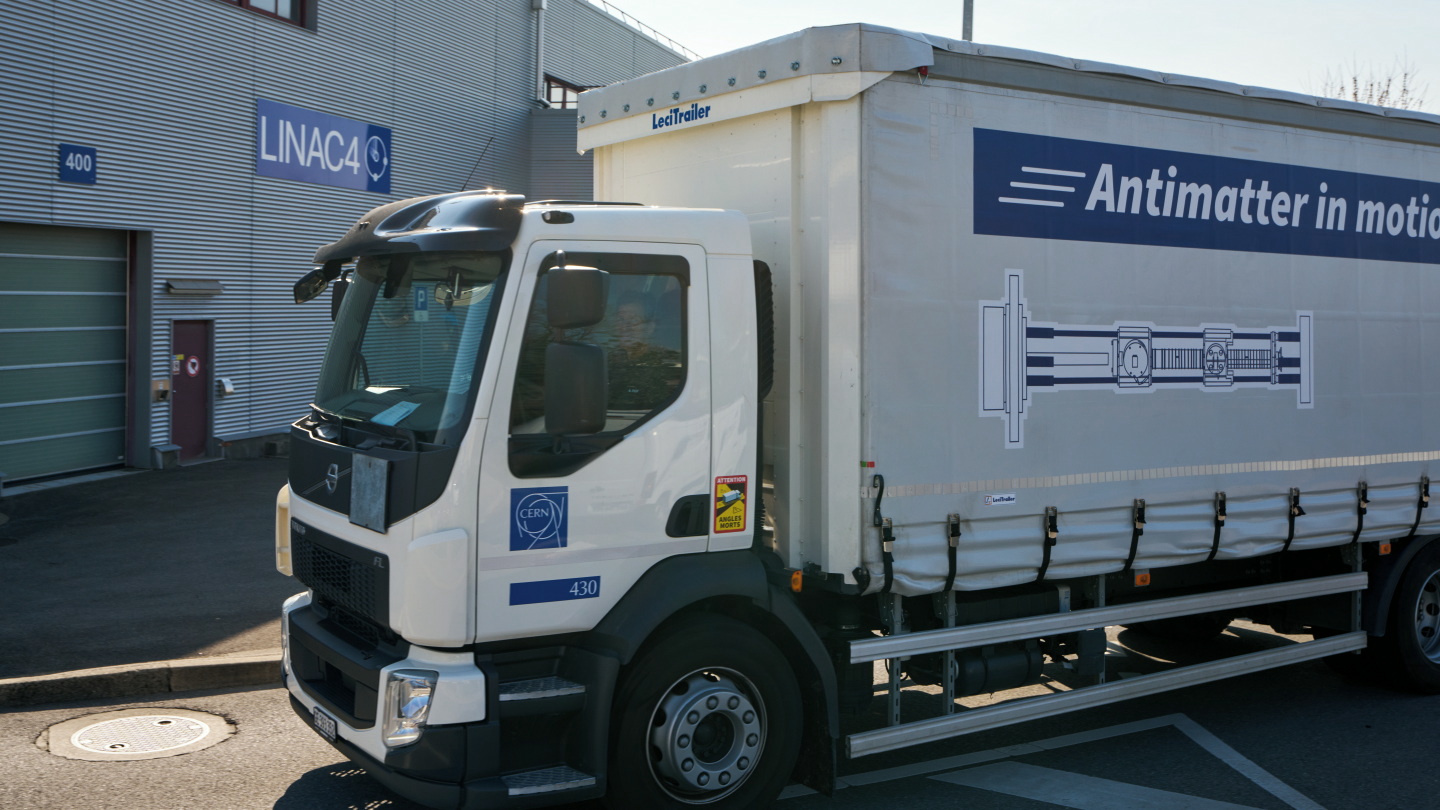
On March 24, 2026, the BASE experiment team at the European Organization for Nuclear Research (CERN) announced that they had successfully detached a portable device containing 92 antiprotons from the experimental facility, loaded it onto a truck, transported it within CERN's main site, and continued experimental operation afterward. The transport took approximately 30 minutes and covered more than 8 km, reaching a maximum speed of 42 km/h within the site. CERN considers this a world-first achievement, as it involves 'actually transporting a portable trap containing antiprotons by vehicle and maintaining its operational condition after transport.'
BASE experiment at CERN succeeds in transporting antimatter | CERN
Antimatter has been transported for the first time ever — in the back of CERN's truck
https://www.nature.com/articles/d41586-026-00950-w
Antimatter has almost the same properties as matter, except for the opposite charge and magnetic properties, but it does not exist in nature on Earth. CERN is the only place in the world where antiprotons can be generated, stored, and studied, and it supplies low-energy antiprotons to each experiment using decelerators called AD and ELENA. The BASE experiment team aims to measure the properties of these antiprotons with high precision, and by comparing them with protons, they are trying to get closer to solving the fundamental mystery of why there is so much matter in the universe and so little antimatter left.
The reason this transport became necessary is that inside CERN's antimatter plant, the equipment and machinery generate very weak fluctuations in the magnetic field, which act as noise and limit precise measurements. The BASE experiment team wants to measure the intrinsic magnetic moment of antiprotons with greater precision, but to do so, they need to take the antiprotons outside the building and measure them in a quieter environment. This experiment is the first step in establishing the technology to transport antiprotons to a laboratory outside the plant for that purpose.
The key to this success was a portable cryogenic Penning trap called BASE-STEP. This device was developed to confine antiprotons produced at CERN's antimatter plant using magnetic and electric fields, and then transport them to another location. It integrates a superconducting magnet, a cryogenic cooling system using liquid helium, a backup power supply, and a vacuum chamber. The current device weighs approximately 1000 kg and is equipped with a detection system to monitor the state of the antiprotons during operation.
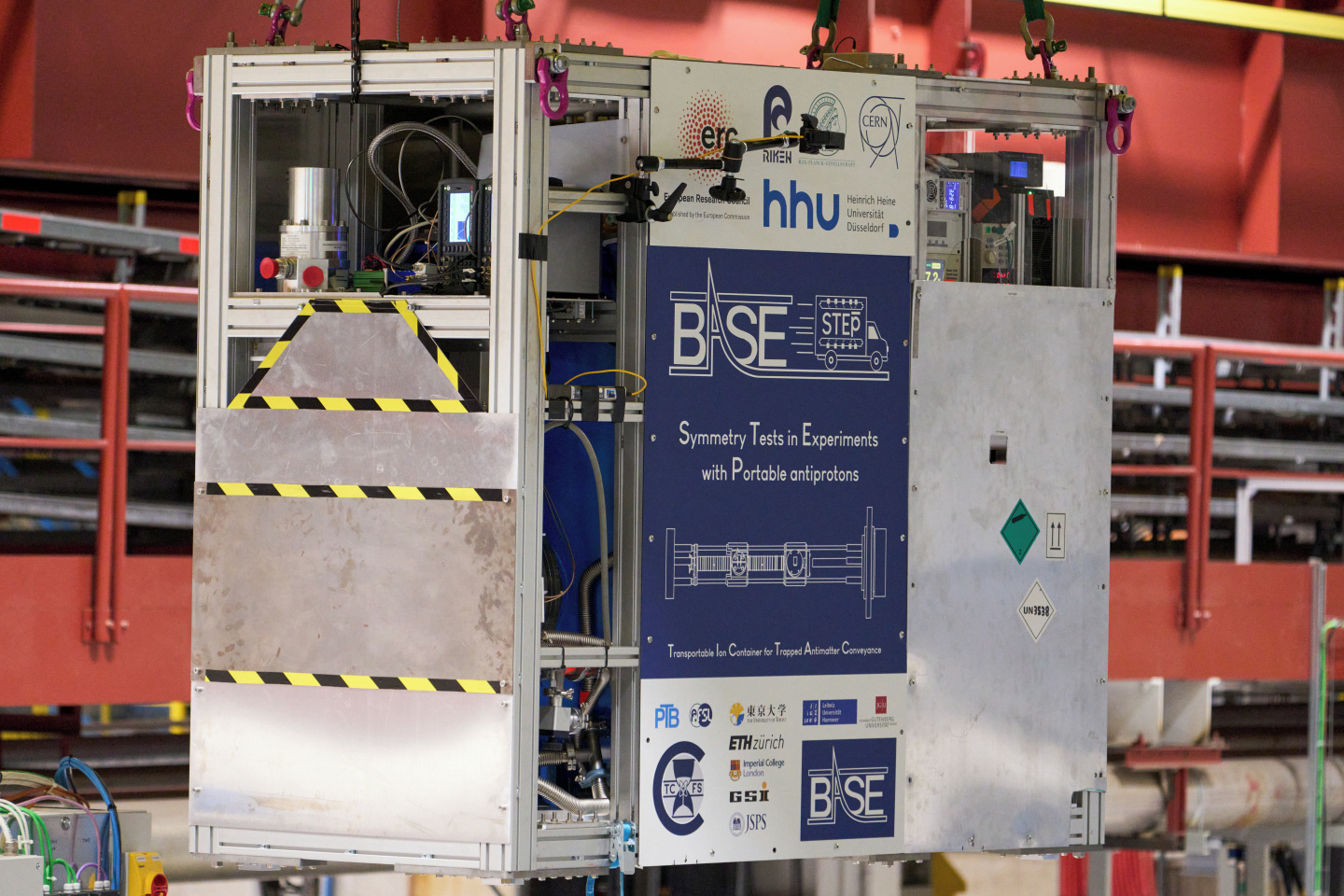
Because antiprotons annihilate upon contact with matter, it is necessary to maintain a high vacuum and extremely low temperatures during transport. BASE-STEP meets these conditions, is miniaturized to a size that can be loaded onto a truck, passes through typical laboratory doors, and is designed to withstand vibrations during transit.
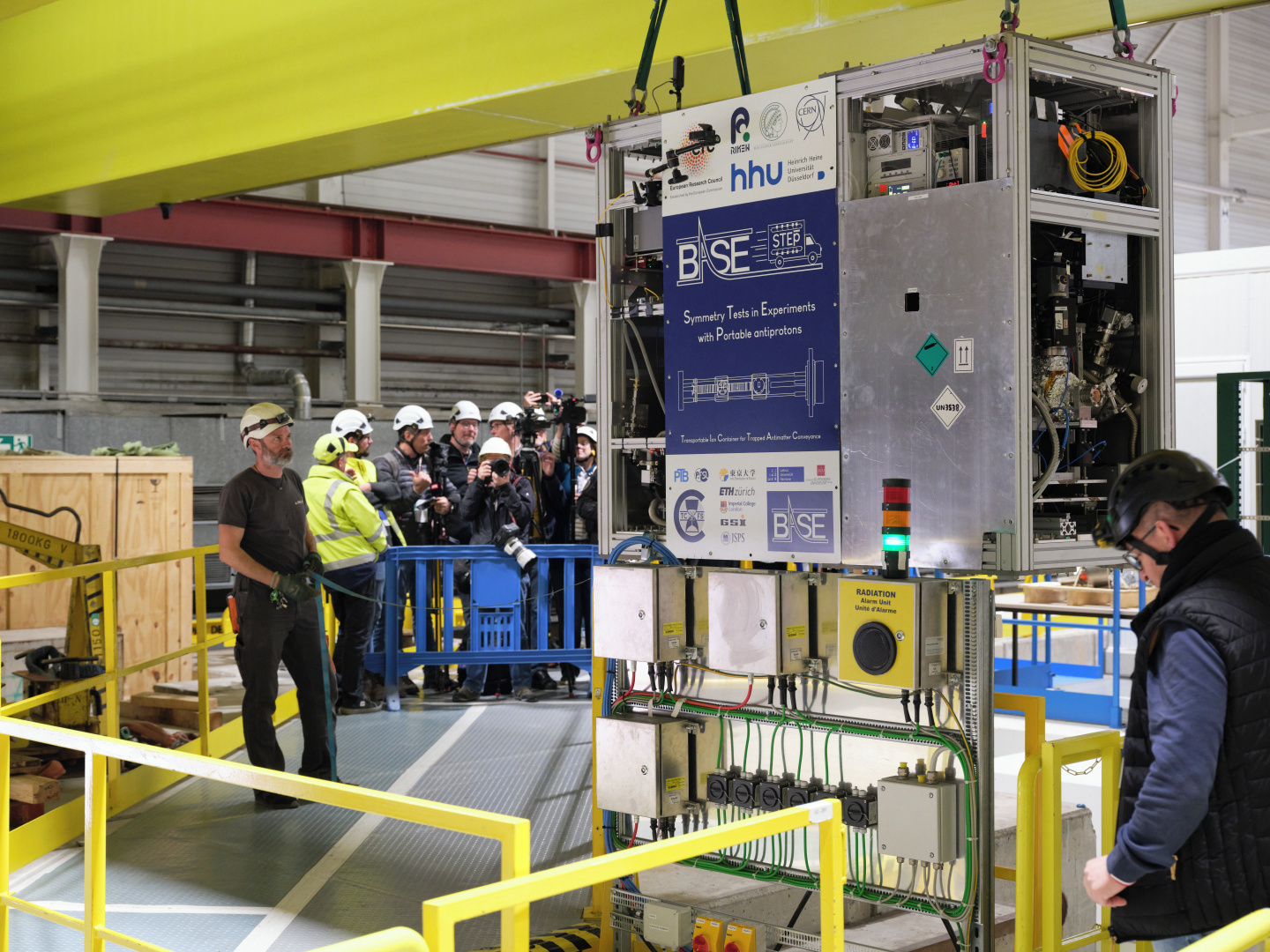
The BASE experimental team successfully conducted an experiment in 2025 to transport 100 protons by truck using BASE-STEP. This time, they demonstrated the same process with antiprotons.
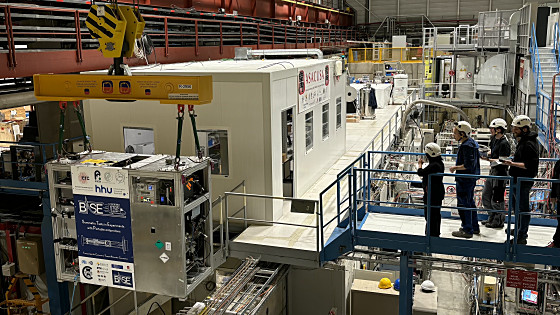
This is a picture of BASE-STEP being loaded onto a truck. In this experiment, we successfully transported antiprotons over a distance of more than 8 km in about 30 minutes, at a maximum speed of 42 km/h.
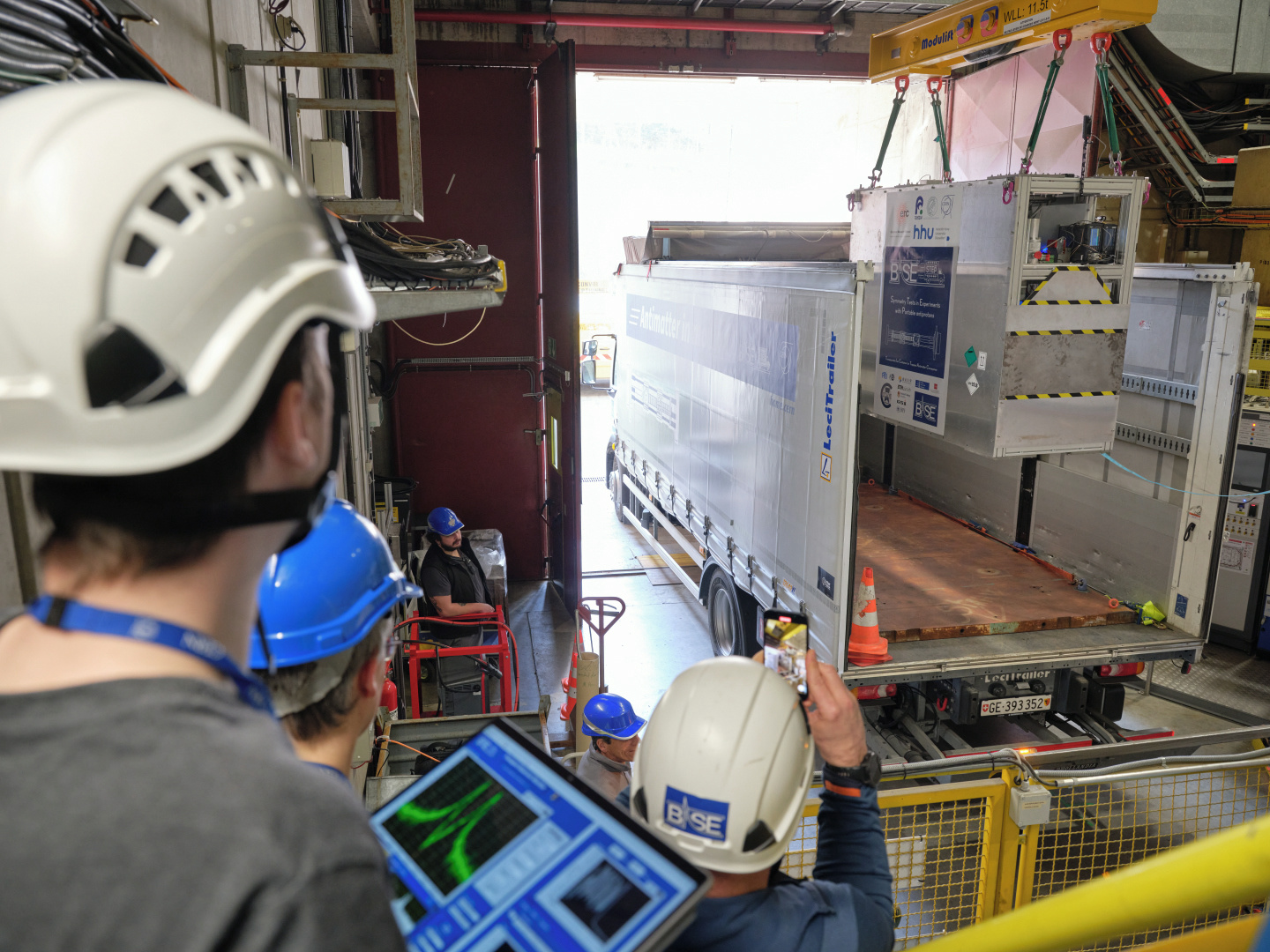
The plan for the future is for the project to move to the next phase, the BASE-STEP phase, where they will practice transporting the antiprotons to another building within CERN and transferring them between traps. The goal is to transport them over a distance of approximately 700 km to a new laboratory at Heinrich Heine University Düsseldorf (HHU) in Germany around 2029.
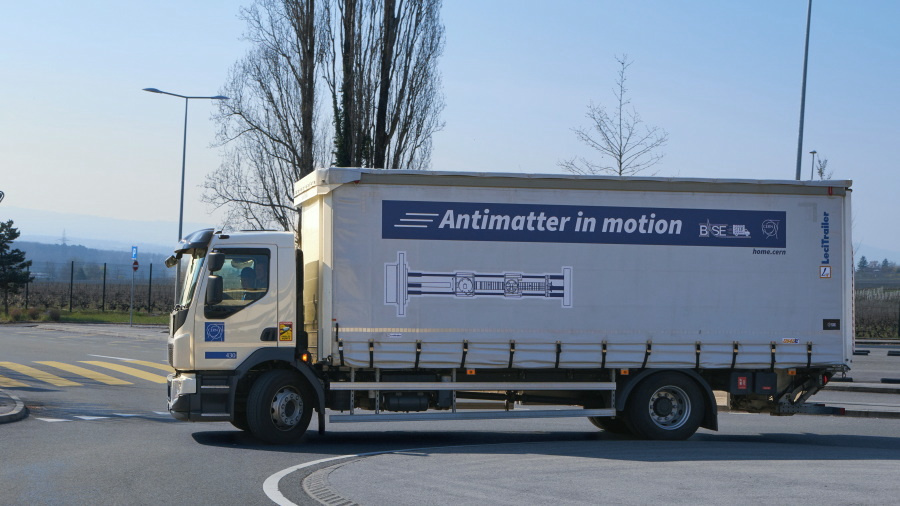
Since the 700km journey is expected to take more than 8 hours, challenges such as loading a generator onto the truck and keeping the cooling system running at a constant temperature of 8.2K or lower to maintain the superconducting magnets used in BASE-STEP are being considered. If this technology is established, it is expected that precise experiments to approach the fundamental mysteries of the universe will become possible at research institutes around the world.
Gautier-Amel de Montchenaud, Director of Research and Computation at CERN, said, 'Antimatter transport is a pioneering and ambitious project, and we celebrate this remarkable achievement in collaboration with the BASE experiment team. We stand at the beginning of an exciting scientific journey that will allow us to further deepen our understanding of antimatter.'
Related Posts:




in Science, Posted by log1i_yk