Child protection must not be reduced to internet access control.

Devuan founder Yaromil has pointed out that 'child protection should not be turned into internet access control.'
Do Not Turn Child Protection Into Internet Access Control
https://news.dyne.org/child-protection-is-not-access-control/

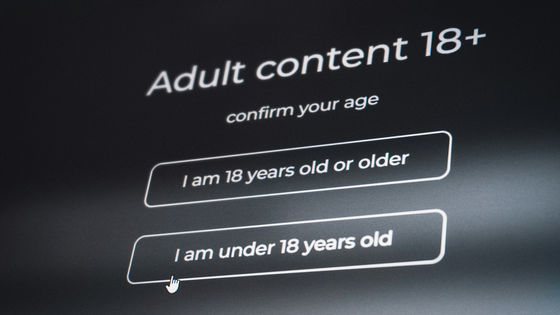
In several countries and regions, including Europe , the United States , the United Kingdom , and Australia , so-called 'age verification laws' are being promoted, which mandate age verification for users of social media, messaging apps, games, search engines, and other mainstream services, under the pretext of child protection.
To comply with these laws, some social media platforms are already working on developing age verification technologies, and Apple is rolling out APIs that allow developers to check users' age ranges and updating how to change the content displayed to children.
Apple announces new ways to protect children's safety, including an API that allows developers to check the age range of users and a way to change the content displayed to children - GIGAZINE

These age verification systems are supposedly in place to protect children from harmful content, recommendation systems, malicious behavior, and compulsive platform designs.
Documents have been submitted to court showing that Google, TikTok, Meta, and others designed their platforms to be addictive, knowing the negative impact on the health of children and young people - GIGAZINE

However, from a technical and political standpoint, age verification systems are more than just a child safety measure, Yaromil points out. Age verification systems are access control architectures that change the default state of a network from open access to permissioned access.
Yaromil says the changes will become even clearer when age verification systems extend to the operating system. Some age verification systems proposed in the United States are larger in scale, where age verification is performed by the OS rather than just a one-off check on a website. Yaromil argues that if such a system becomes mandatory, age verification will transform from a 'limited security measure' to a 'comprehensive ID layer for the entire device.'
California introduces law requiring user age verification during OS setup, including Linux and SteamOS - GIGAZINE

Regarding such regulations, Yaromil pointed out that they 'confuse content moderation with (child) protection.' Content moderation is about classification and filtering, determining whether certain content should be blocked, labeled, or handled differently.
Protective, on the other hand, is something entirely different. Protective is a situational responsibility of parents, teachers, schools, and other trusted adults to determine what is appropriate for a child, what exceptions are reasonable, and how supervision should evolve over time. 'Content moderation is partly technical, but protective is rooted in relationships, locality, and specific situations,' Yaromil argues.
Furthermore, she stated, 'I understand the anxieties behind the proposals regarding child protection, as I am also a parent. I believe that children certainly face serious risks online. However, just because we recognize this does not mean that we are obligated to accept every solution offered. Solutions that shift responsibility away from families, schools, and those who are actually responsible for introducing children to digital life, and that infringe on everyone's privacy, are completely unacceptable,' expressing concern about the excessive demands being made under the guise of child protection.
Furthermore, Yaromil points out that there are countless ways to circumvent age verification systems, including VPNs, borrowed accounts, purchased credentials, fake credentials, and tricks against age estimation systems. He also notes that the high cost of implementing these measures, despite their ease of circumvention, is a problem.
In addition, Yaromil points out that another problem is that age verification laws are being promoted through corporate lobbying. In fact, it has been revealed that Meta has invested a large amount of money in promoting age verification laws.
A report detailing Meta's massive lobbying efforts to pass legislation that would shift the responsibility for age verification to app stores - GIGAZINE

Furthermore, Yaromil points out that the introduction of age verification systems will lead to increased identity verification, more metadata, more logs, more intermediaries, and further friction for people who do not have the appropriate devices, documents, or digital skills. He argues that this is not a measure to protect children, but rather an addition of a new layer of control to the network.
Yaromil argues that once this control layer is established, it will not be limited to age alone. He points out that it is clear that the next demands will arise, such as location, citizenship, legal status, and platform policies, and that this risks transforming limited checks into generic gates.
Yaromil argues that to reduce the harm children suffer online, we should stop trying to identify every internet user and instead strengthen local controls.
Related Posts:







in Note, Posted by logu_ii