A 'smartphone-touch compatible clear nail polish' has been developed that makes it easy to operate smartphones even with long nails.
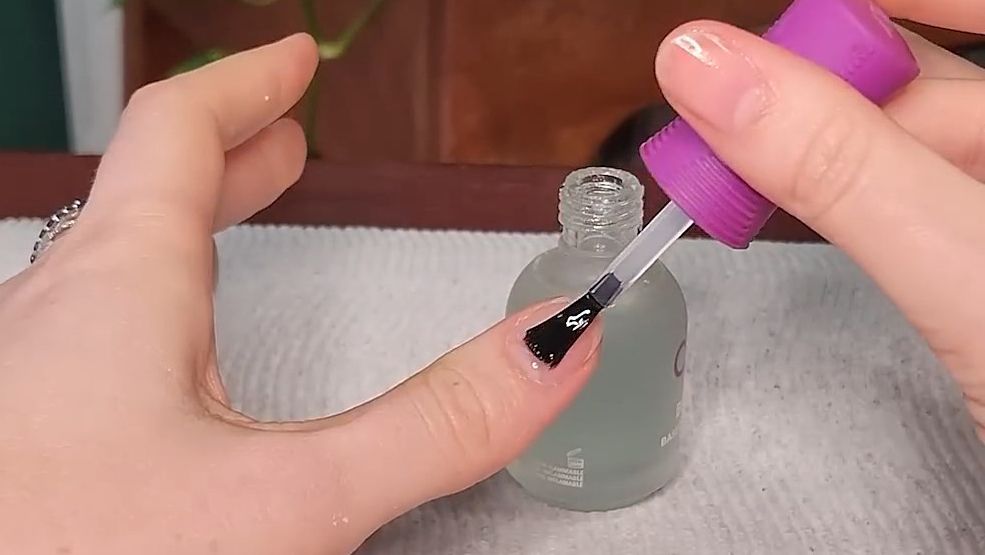
If you have long nails or are wearing long nail tips, your nails may touch the screen when you try to operate your smartphone, preventing it from responding. To solve this problem, a research team in the United States has developed a nail polish that allows your nails to respond to smartphone touches.
Modification of nail polish formulations for conductivity to operate capacitive touchscreens | Poster Board #943 - American Chemical Society
An end to the battle between touchscreens and long fingernails is on the horizon - American Chemical Society
https://www.acs.org/pressroom/presspacs/2026/march/end-to-the-battle-between-touchscreens-and-long-fingernails.html
Chemistry student develops clear polish that turns your fingernail into a touch-screen stylus | Live Science
https://www.livescience.com/chemistry/chemistry-student-develops-clear-polish-that-turns-your-fingernail-into-a-touch-screen-stylus
Manasi Desai, an undergraduate student at Centenary College in Louisiana, was interested in cosmetic science and was looking for a suitable research topic under the guidance of her advisor, Joshua Lawrence.
One day, Desai saw a blood collection technician struggling to operate a smartphone with her long fingernails and asked if it would be convenient to have touchscreen-compatible nails. The technician reportedly replied enthusiastically, 'Absolutely!' and Desai began researching 'manicures that make long nails or nail tips touchscreen compatible.'
Most screens in modern smartphones and tablets operate using a mechanism called a capacitive touch panel , which recognizes the touch location by utilizing the change in capacitance when a conductive finger touches the screen. Therefore, if you tap the screen with a non-conductive material such as a fingernail or eraser, the capacitance will not change, and the touch will not be detected.
Previously, other researchers developing touchscreen-compatible nail polish had attempted to achieve conductivity by incorporating conductive carbon nanotubes or metal particles into the polish. However, these substances are dangerous if inhaled, and the additives limit the range of nail polish colors available. Therefore, Desai and his colleagues pursued research aimed at developing a transparent nail polish that is non-toxic to both users and manufacturers.
You can see what the 'touchscreen compatible nail polish' developed by Desai and his colleagues is actually like in the video below.
A chemist wanted her nail polish to work on a touchscreen | Headline Science - YouTube
The object being held with tweezers is a lump of nail polish developed by Mr. Desai and his colleagues.
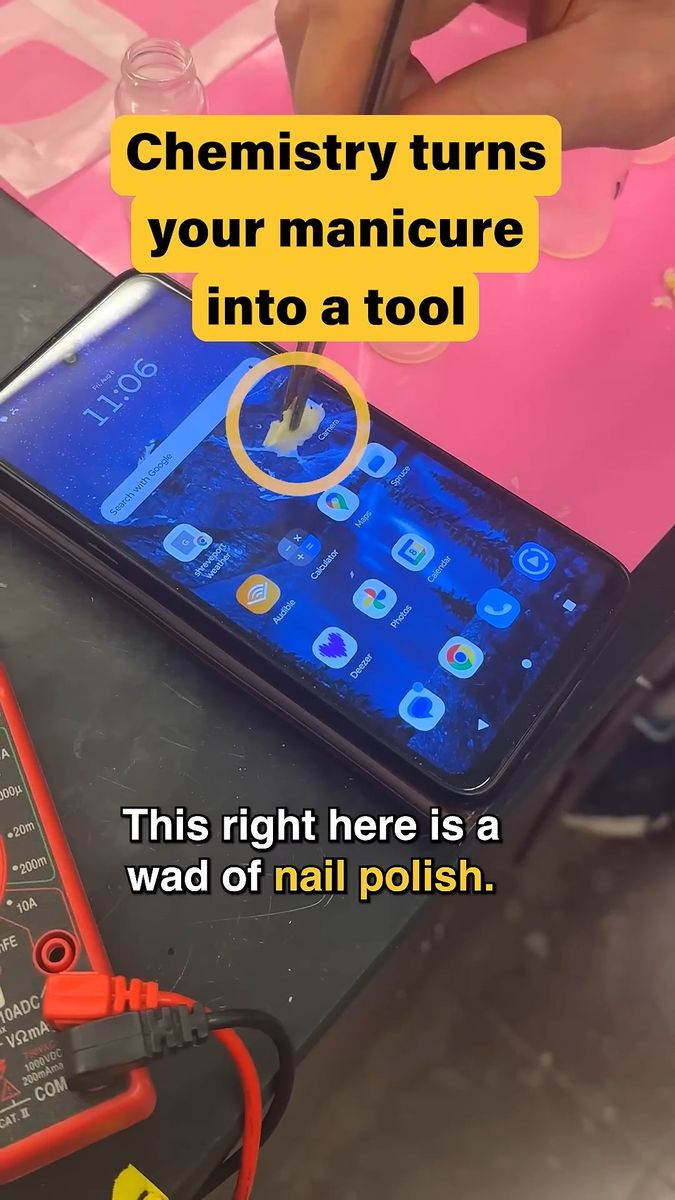
By tracing the screen with a lump of nail polish, I was able to operate my smartphone as if I were swiping or tapping with my finger.
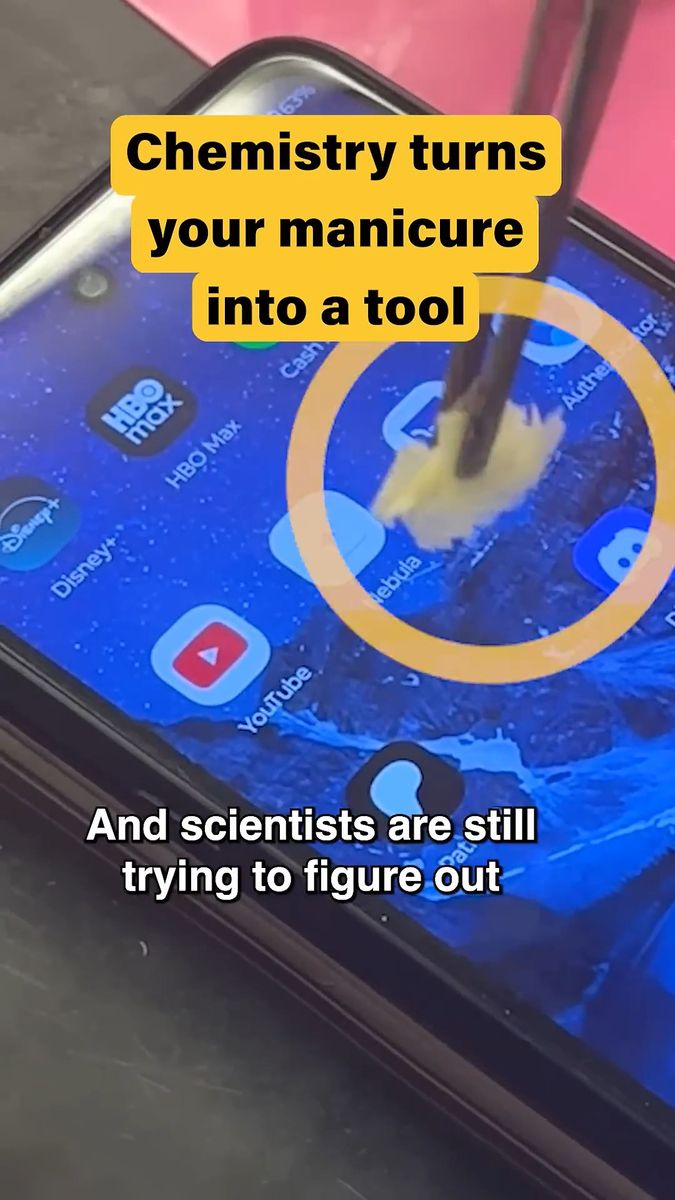
During development, Mr. Desai experimented with combining 13 types of commercially available clear nail polish and 50 types of additives to find the optimal combination that would give the nails conductivity.
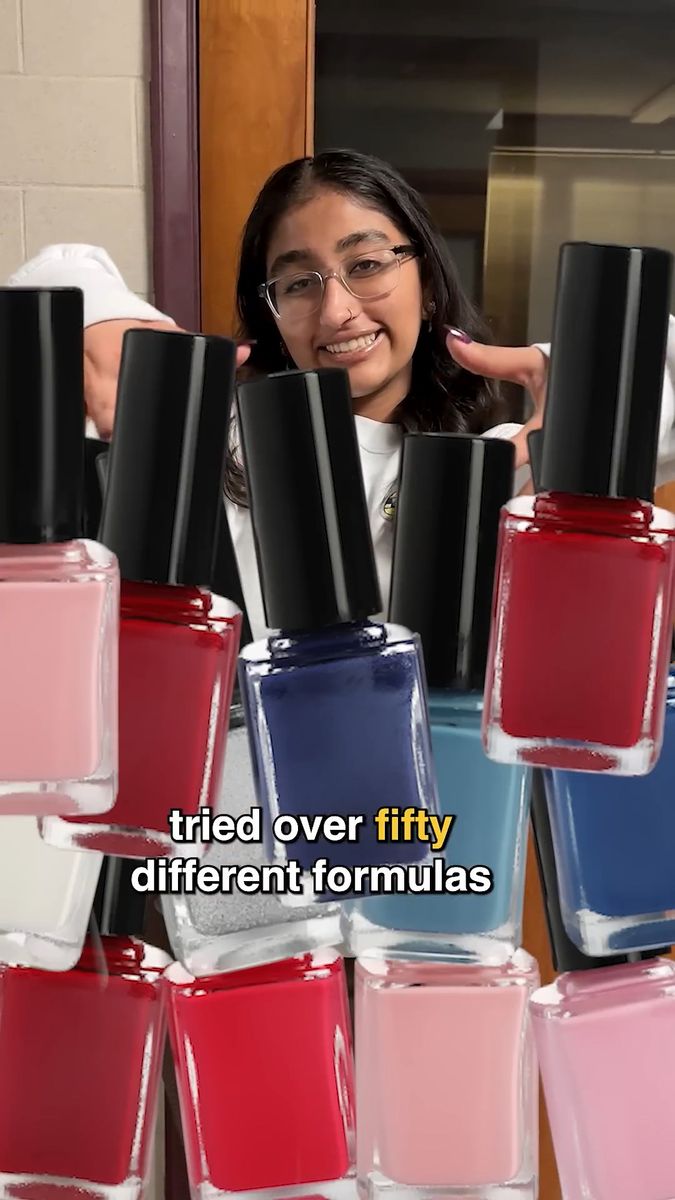
As a result, the combination of
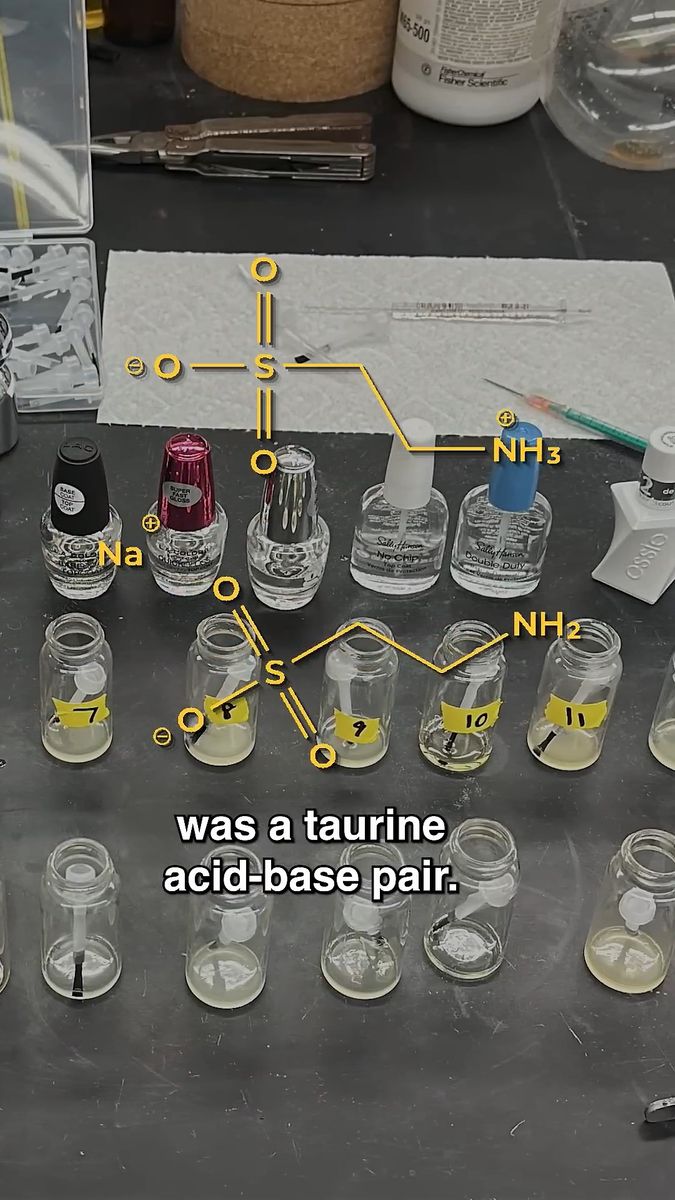
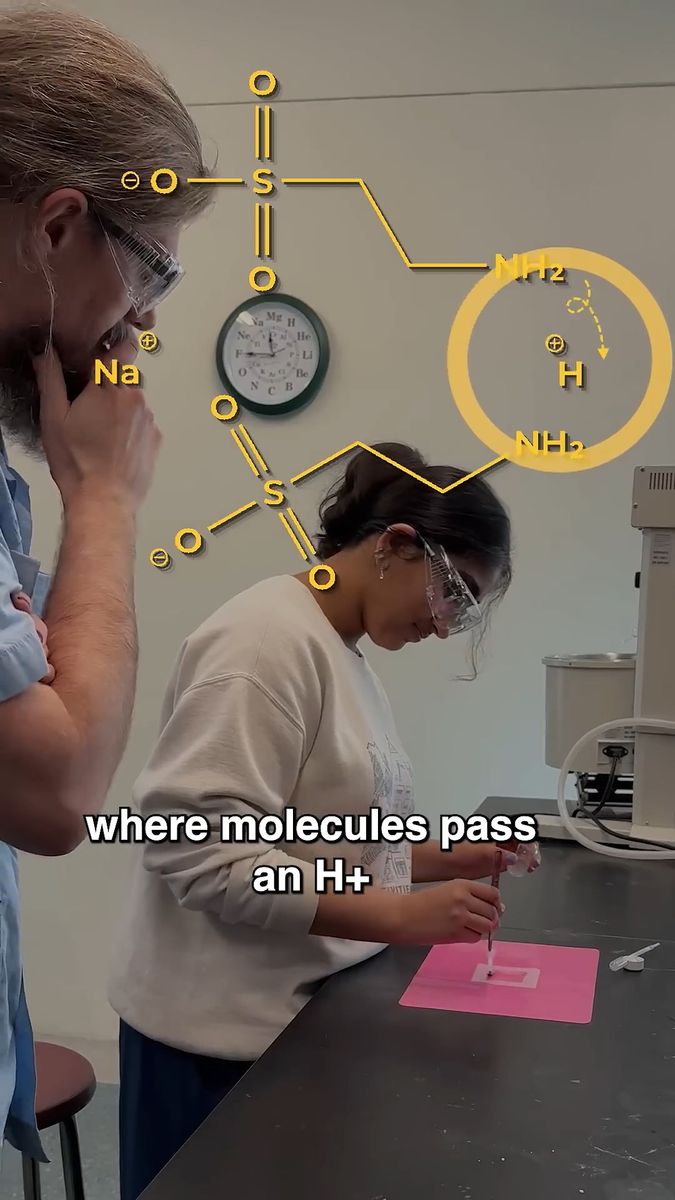
The newly developed nail polish is thought to work using acid-base chemical reactions rather than adding metal additives to make it conductive. In an email to the science media outlet Live Science, Lawrence said, 'We think the material we are developing works by the movement of protons from acidic groups to basic groups. Proton exchange is taking place between acidic and basic groups on the surface of the nail polish, and this is thought to play the same role as ion movement in the skin.'
Furthermore, the nail polish developed by Desai and his colleagues only lasts for a few hours to a few days, and there are problems such as the toxicity of ethanolamine. In addition, the least toxic formula they devised results in a rough, mottled finish, which is a drawback in terms of its fashion appeal.
Desai and his colleagues have filed a provisional patent application for this research and are continuing testing to find the best-performing combination. Lawrence commented, 'We are engaged in the painstaking work of finding what doesn't work. If we keep at it long enough, we will eventually find what does.'
Related Posts: