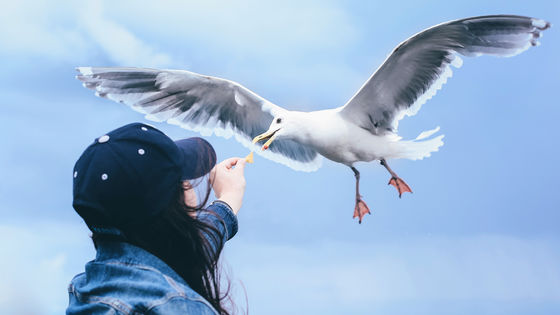
Drawing 'eyeballs' on food packaging can deter seagulls from stealing food.
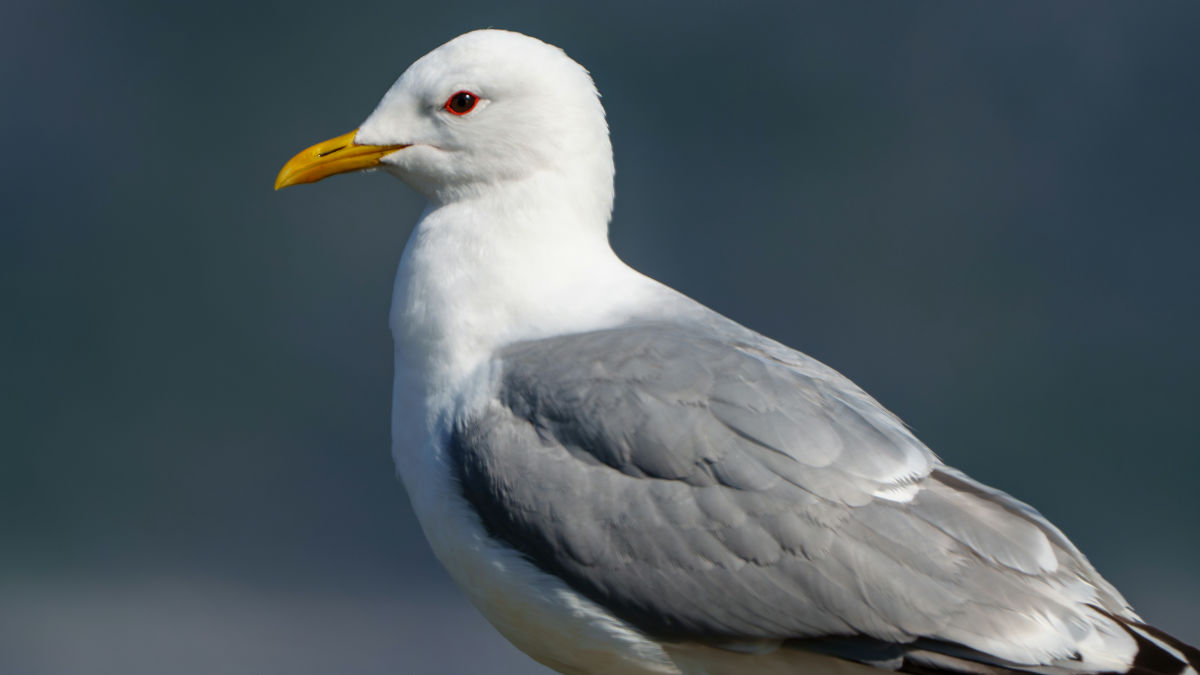
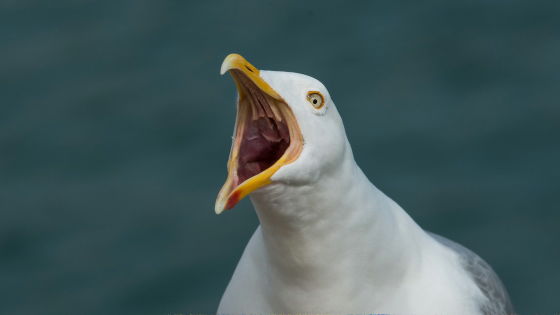
In recent years, seagulls have begun to venture into urban areas in the UK and other parts of Europe, and incidents of them stealing human food are becoming increasingly common. An experiment conducted with
Evaluating Aversion to Eye‐Like Stimuli as a Foraging Deterrent in Urban European Herring Gulls - Kelley - 2026 - Ecology and Evolution - Wiley Online Library
https://onlinelibrary.wiley.com/doi/10.1002/ece3.73202
Why drawing eyes on food packaging could stop seagulls stealing your chips
https://theconversation.com/why-drawing-eyes-on-food-packaging-could-stop-seagulls-stealing-your-chips-278269
The conflict between seagulls stealing food and humans is becoming serious. In the summer of 2025, Laura Kelly, an associate professor of behavioral ecology at the University of Exeter in the UK, witnessed seagulls rummaging through a person's bag on a beach in Cornwall , swiping away with a bag of potato chips.
Kelly and his colleagues have long studied ways to prevent seagulls from stealing food. In 2019, they published research showing that 'when humans keep a watchful eye on the seagulls, they are significantly slower to approach the food.'
Scientists have discovered a way to prevent seagulls from stealing food - GIGAZINE
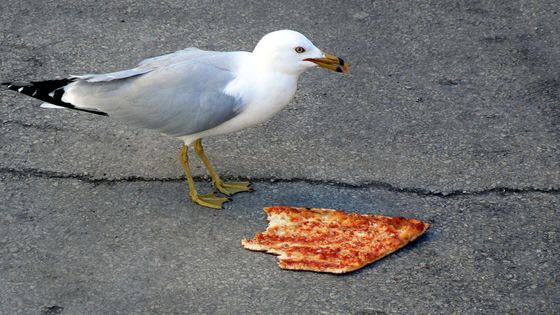
Many animals, including wild and domesticated animals, are highly sensitive to their eyes. Eyes not only serve as indicators of the presence of predators, but they are also used to communicate intentions. Direct eye contact is a signal of aggression, and many animals react defensively when stared at, Kelly explains.
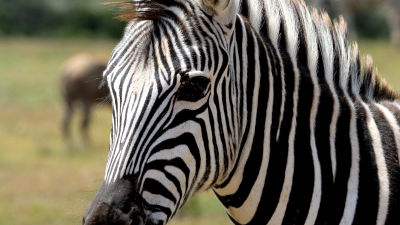
Some animals have developed eye-like patterns called ocelli to take advantage of this reaction. How ocelli deter predators has been debated for over a century, but it is thought that they may increase vigilance or divert attacks by mistaking them for the eyes of predators.
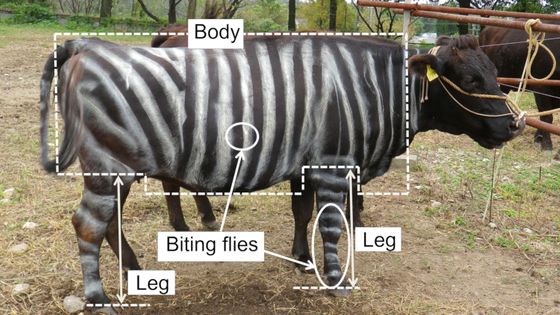
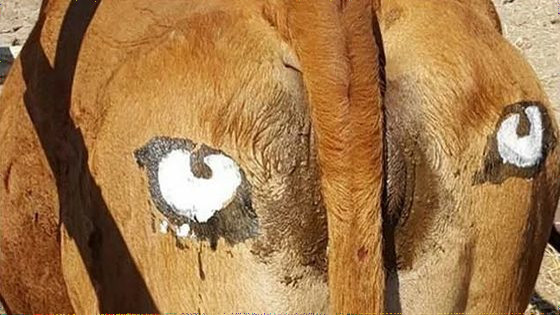
They are also exploring ways to utilize animals' reactions to eyes, and in Botswana, where the killing of livestock by wild carnivores is a problem, an experiment was conducted in which eyes were drawn on the hindquarters of domesticated cows. The results showed that drawing eyes on the hindquarters significantly reduced attacks by lions.
Experiment shows that drawing 'eyes' on a cow's rear end prevents it from being eaten by lions - GIGAZINE
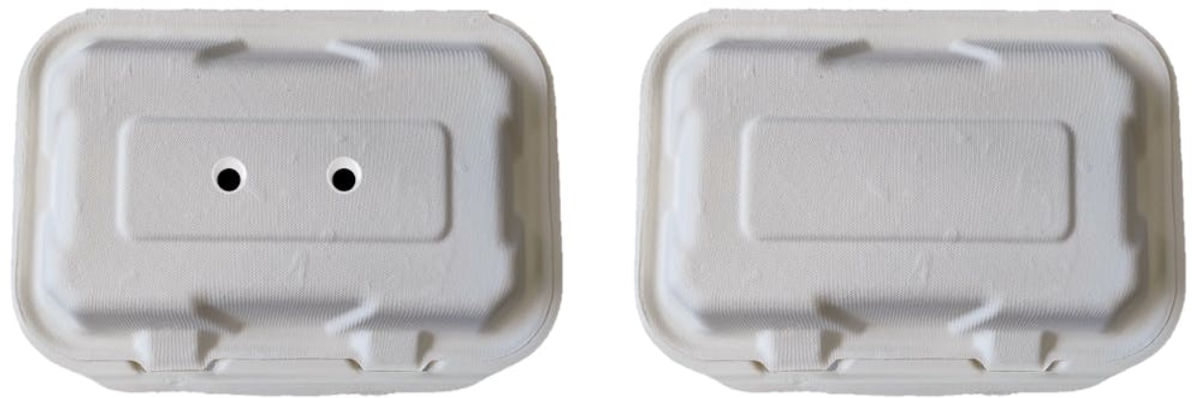
In this study, Kelly and his research team conducted an experiment in the coastal area of Cornwall, where seagulls are known to steal food from humans outdoors. In the experiment, they placed two takeout containers, one with eye stickers attached and the other without, 2 meters apart, and investigated which one the seagulls would choose.
The image below shows a takeout container with eye stickers on the left and a takeout container without stickers on the right. The experiment showed that seagulls avoided the takeout container with eye stickers, taking longer to approach it and reducing the likelihood of being pecked compared to the container without eye stickers.
Furthermore, to investigate whether seagulls become accustomed to the eye stickers over time, an experiment was conducted with 30 seagulls, showing them three takeout containers with eye stickers attached and three takeout containers without stickers. Approximately half of the seagulls immediately pecked at the takeout containers with eye stickers, while the other half did not peck at them at all. This result suggests that the effect of the eye stickers lasts for a long time for some seagulls.
The research team plans to work with food retailers to ask them to use 'takeout containers with eyes' to test the effectiveness of the eyes in deterring seagulls on a more realistic scale. Eye patterns are already used to keep birds away from crops, fishing nets, and airports.
Interestingly, humans, like other animals, are known to respond to images of the eyes, and it has been found that images of eyes can reduce bicycle theft , strengthen cooperation , and increase donations .
Related Posts: