It has been revealed that Epstein was carrying out a large-scale manipulation of public opinion by manipulating Google search results and falsifying Wikipedia articles.
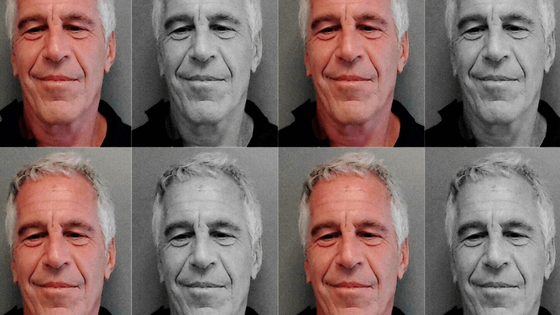
Jeffrey Epstein, who was arrested in 2019 on suspicion of child sexual abuse and human trafficking and later died in prison, allegedly engaged in a large-scale manipulation of public perception, including rewriting Google search results and Wikipedia articles, in an attempt to erase his past arrest in 2008, according to the New York Times.
Inside Jeffrey Epstein's Push to Cleanse His Past Online - The New York Times
https://www.nytimes.com/2026/03/18/business/media/jeffrey-epstein-online.html
The New York Times, after scrutinizing thousands of pages of emails and financial records released by the Department of Justice, discovered an email from September 2010 that was one of the starting points of the scandal. In this email, Epstein was offered the option of 'essentially erasing troublesome information that appears in Google searches,' and he replied 'Yes' to the email in less than two hours.
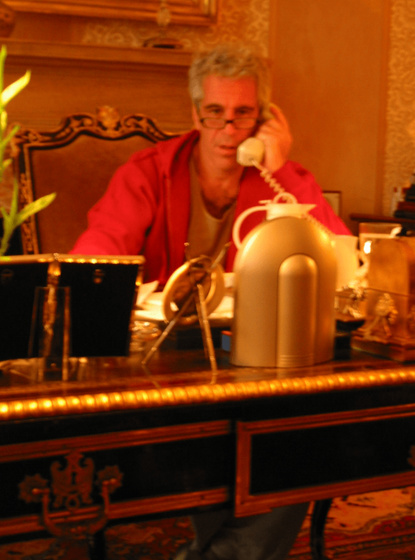
Epstein was arrested in 2008 for sex crimes involving minors, and immediately afterward, Google search results were filled with negative information about him. Epstein then began manipulating public perception online to create a widespread image of himself as a philanthropist and intellectual.
This scheme to manipulate public opinion reportedly involved a variety of people, including Al Seckel, who was in a relationship with the sister of Ghislaine Maxwell, Epstein's girlfriend; search engine optimization (SEO) experts; individuals claiming to be hackers; and a group of Filipino content writers. Some cooperated without pay, while others were reportedly paid tens of thousands of dollars.

According to the documents, those involved in the plan manipulated search results, stayed up all night altering Epstein's Wikipedia article, buried negative news reports, and had major media outlets publish puff pieces. Furthermore, they created multiple online profiles, pre-written interviews, and fake websites to promote a fictitious, positive image of him.
In its Google optimization efforts, the focus was on pushing articles about his criminal record down from the first page of search results. To achieve this, a large number of websites emphasizing his interest in science and philanthropy were created, and search results for other people with the same name were intentionally enhanced. The team called this 'pimping' and explained in an email that they created a false image of Jeffrey Epstein with the aim of burying negative information.
Furthermore, accounts were created on social media platforms such as Blogspot, LinkedIn, MySpace, Pinterest, and Vimeo, and the text was extensively rewritten to make it appear natural. The documents also indicate that favorable articles were posted on external contribution platforms such as HuffPost and Forbes, and that these articles were meticulously tracked to see if they lowered the search rankings of the sex crime reports. In addition, there appears to have been an attempt to reduce the number of words like 'jail' and 'pedophile' that appear alongside the name in Google's auto-completion.
Tampering with Wikipedia was also a major goal. Initially, Epstein's Wikipedia article mentioned his criminal record at the beginning and used a photo from his arrest, but Seckel reported that by November 2010, he had 'managed to change it to something considerably milder.' Furthermore, links detailing his crimes were removed, and episodes related to his charitable work were added.

However, this operation was not always successful. Wikipedia had multiple editors monitoring the page, and the team's revisions were sometimes reverted within 15 minutes. Documents indicate that they tried to circumvent the monitoring by creating multiple fake editing accounts and even attempted to interfere with other editor accounts. Ultimately, several accounts attempting to manipulate Epstein's image were blocked by Wikipedia.
However, the manipulation of public perception appears to have had some effect. The New York Times noted that the MIT Media Lab received a $750,000 donation from Epstein, suggesting that the editing of his Wikipedia page, which could be interpreted as downplaying the seriousness of the allegations, may have influenced the decision to accept the donation. In addition, some celebrities who allegedly had connections with Epstein have stated through their lawyers that they were unaware that he was registered as a sex offender, suggesting that the dilution of his past online may have helped maintain relationships and social contact.
On the other hand, the documents also revealed that Epstein himself demanded detailed expense breakdowns and would immediately express dissatisfaction if he felt the results were insufficient.
Although Epstein's criminal record was not completely erased by his re-arrest in 2019, the documents revealed that he considered the process so important that he wrote, 'Nothing for me more important,' and that those around him responded by trying to rewrite his online past, according to the New York Times.
Related Posts:







in Note, Posted by log1i_yk