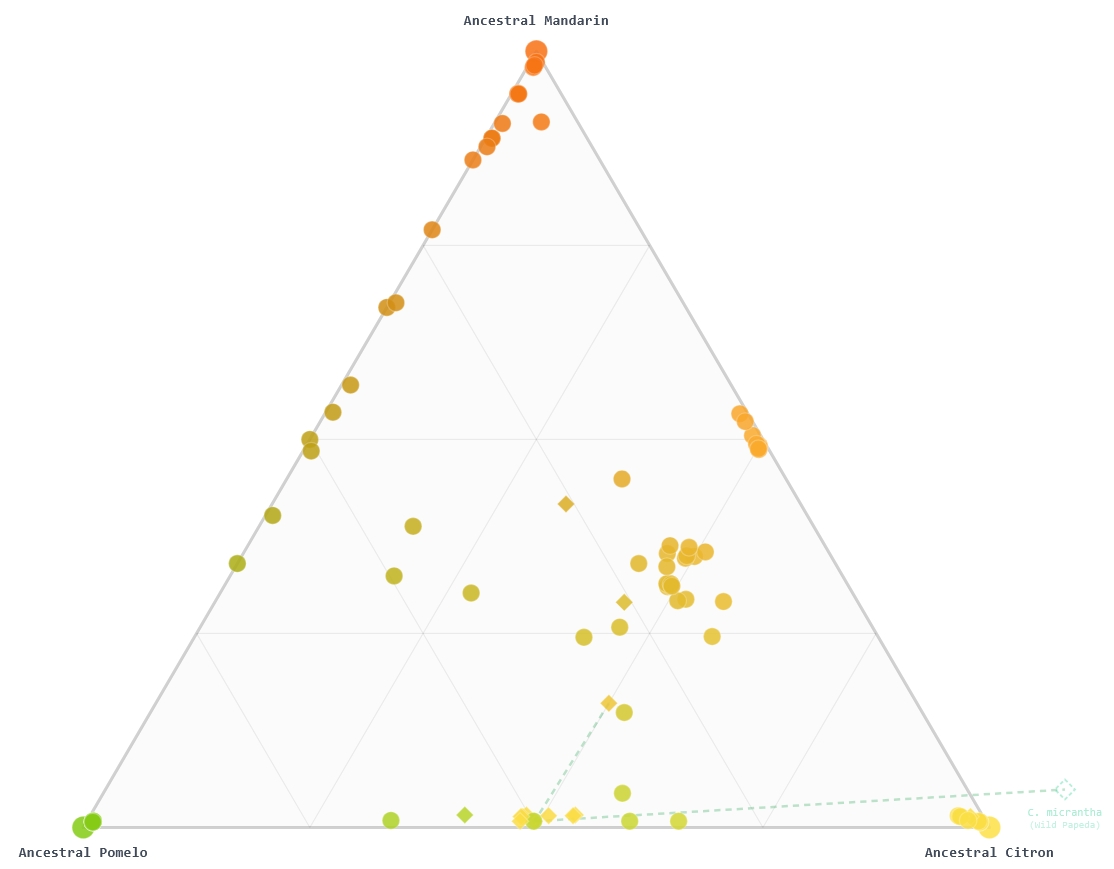
The 'Citrus Trinity Plot Diagram' makes it immediately clear that almost all citrus fruits are the result of crosses of just three original species.
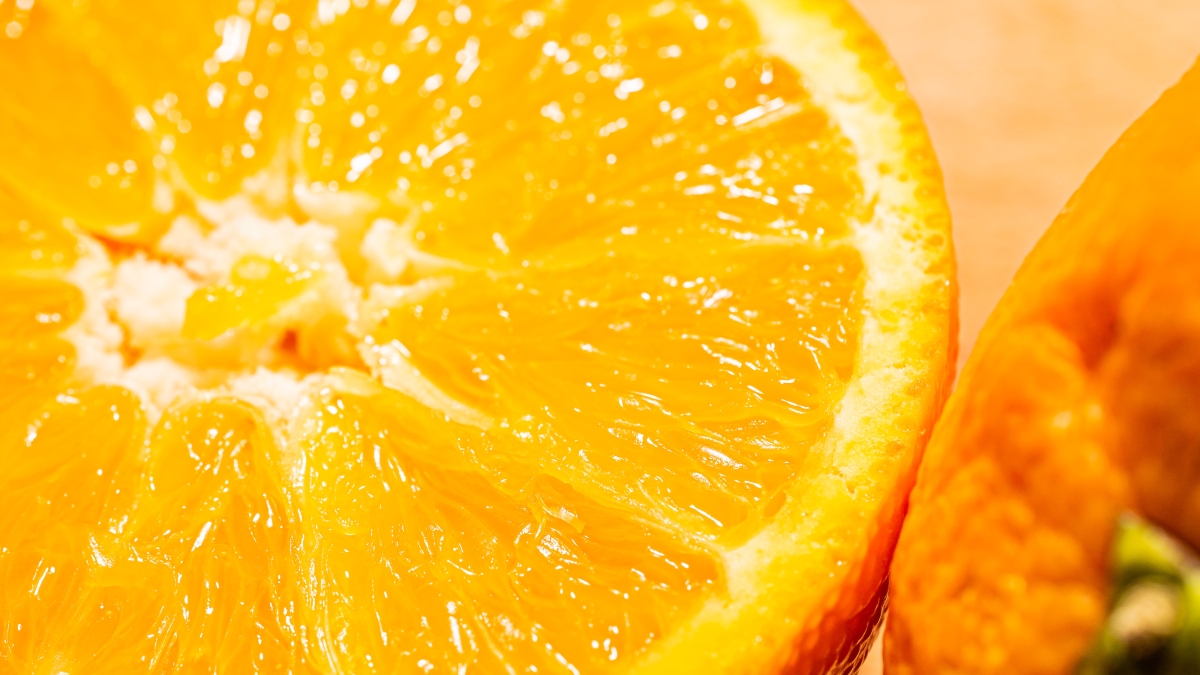
Many common citrus fruits, such as oranges, lemons, and grapefruits, are actually the result of crosses between three ancestral citrus species: pomelo, mandarin, and citron. Joe Laufer has created a diagram called 'A Ternary Plot of Citrus' that represents the complex lineage of citrus fruits not with a typical family tree, but with a ternary plot, making it easy to see at a glance which varieties have inherited which of the three original species and to what extent.
A Ternary Chart of Citrus
The three-way plot diagram released by Mr. Laufer is shown below. A three-way plot is a diagram that represents the ratio of three elements by their position within a triangle. In this case, the three original varieties, 'Pomelo (bottom left),' 'Mandarin (top),' and 'Citron (bottom right),' are placed at the three vertices of the triangle, and the relative proximity of each variety to each vertex indicates which original variety has a higher proportion.
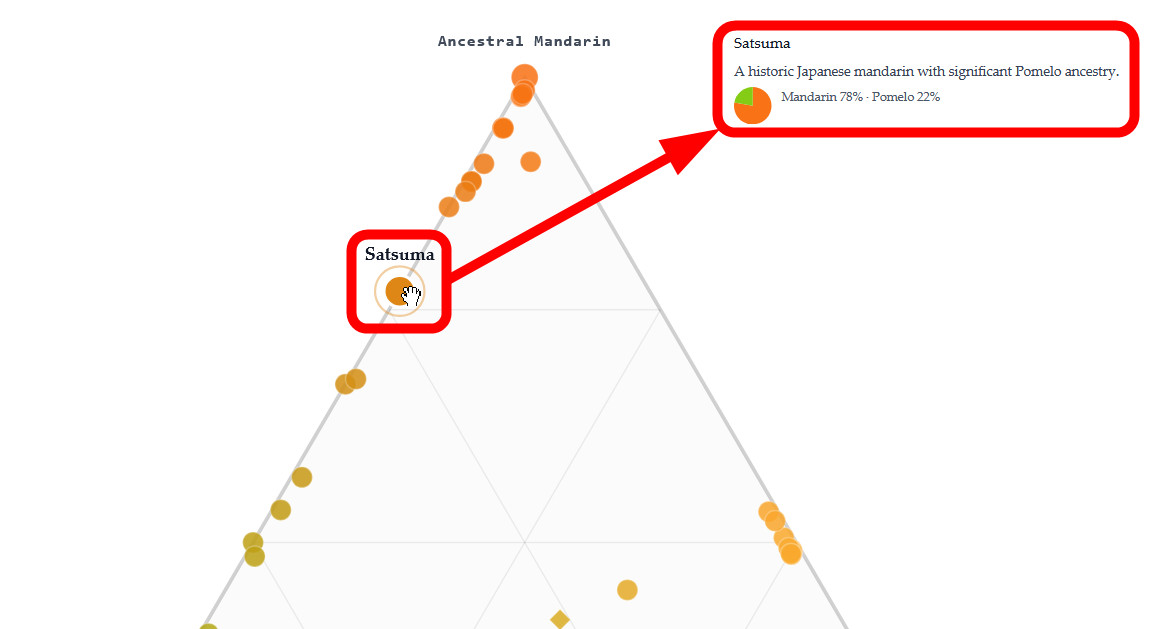
Hovering your mouse cursor over each node will display a description of that variety and its genetic breakdown. For example, the famous Satsuma mandarin is described as 'a historical Japanese mandarin that has inherited a considerable amount of pomelo lineage,' and it is said to have inherited 78% mandarin and 22% pomelo.
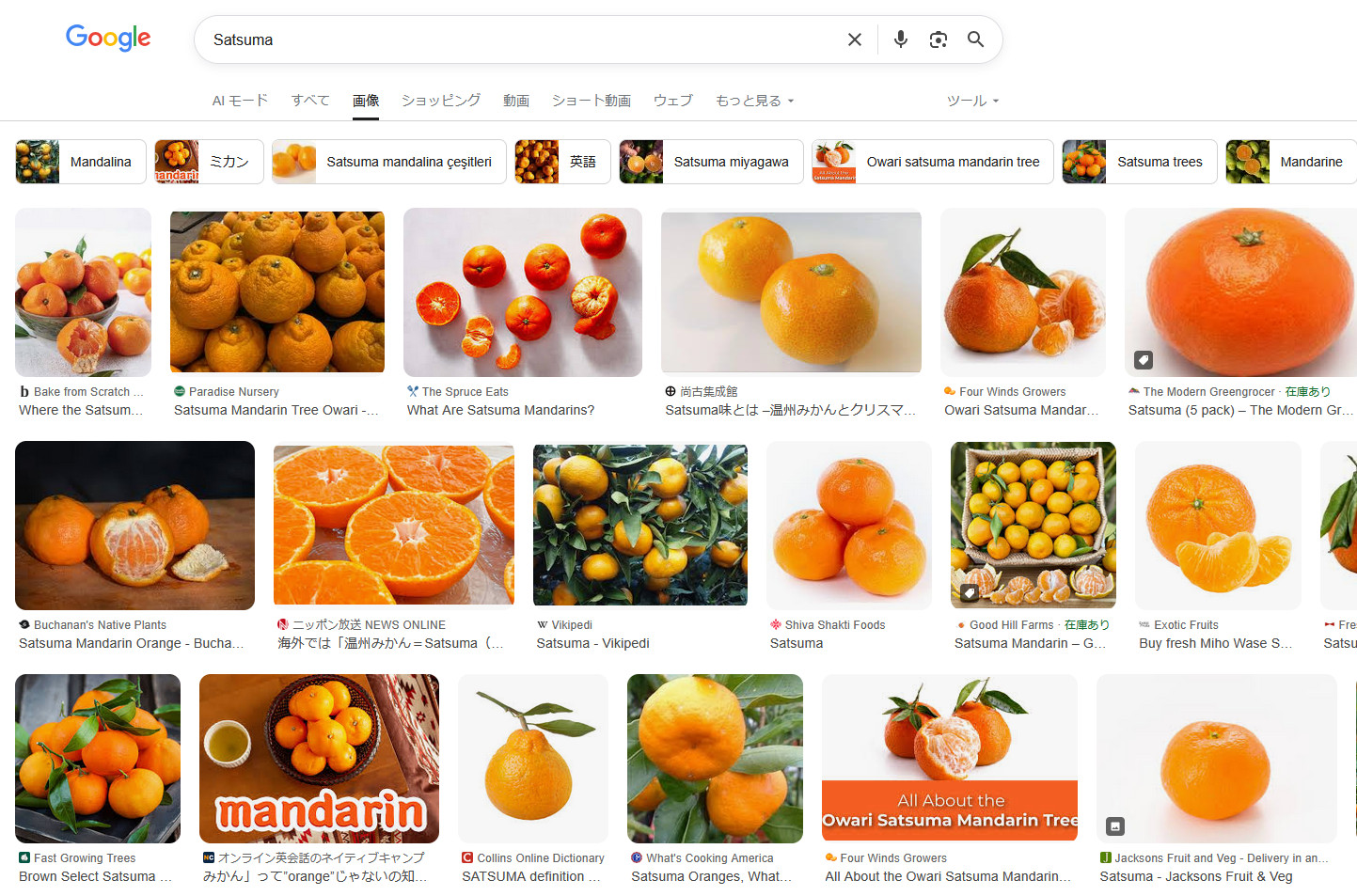
Clicking a node will take you to a search results page for that variety name using Google Images.
What's interesting about this diagram is that it reveals relationships that are difficult to see in chronological family trees. According to Laufer, because this ternary plot is not a chronological diagram, it makes it easier to visually grasp how closely each variety is related to its ancestor, and what kind of biases exist among the citrus fruits sold in supermarkets.
For example, the concentration of varieties from pomelo to mandarin suggests that the varieties cultivated by humans have shifted towards sweeter varieties similar to mandarin.
Laufer states that the complex hybridization of citrus fruits has intensified throughout the history of human cultivation and migration. Citrus fruits, which were first cultivated in Asia, spread through subsequent human migration and trade, and further selection and crossbreeding in the Mediterranean region and elsewhere resulted in familiar varieties such as sweet oranges, grapefruits, and lemons.
However, Laufer also notes that not all citrus fruits can be categorized into just three ancestor species. C. micrantha, which is frequently found in the genetic breakdown of limes, is a fourth ancestor species separate from mandarins, pomelos, and citrons, and its lineage does not fit within the axis of this ternary plot.
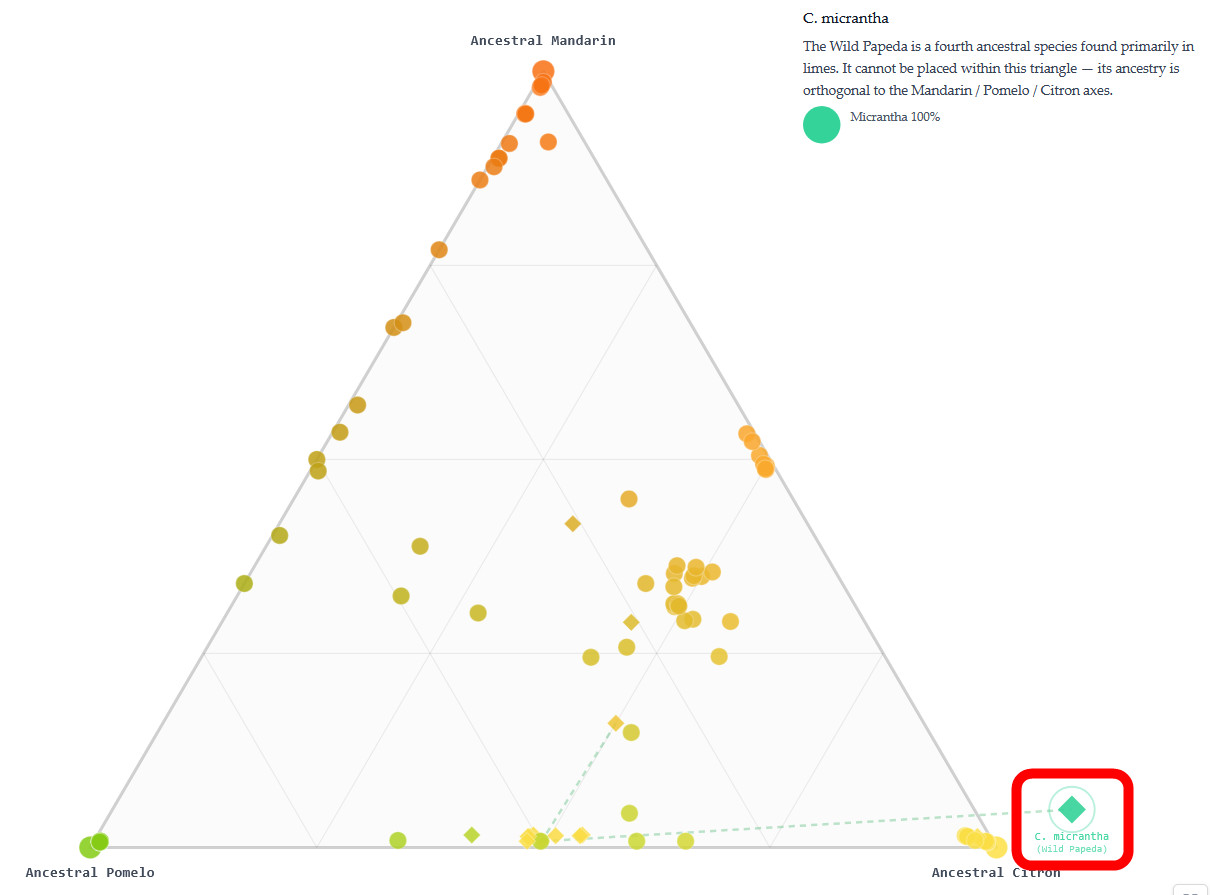
This 'Citrus Triad Plot Diagram' re-examines the complex and often difficult-to-understand lineage of citrus fruits by showing their distance from three ancestral citrus species. While it doesn't perfectly represent all lineages, it's a fairly easy-to-understand diagram for getting a general idea of the relationships between oranges, lemons, and grapefruits.
Related Posts:



in Web Service, Science, Review, Food, Posted by log1b_ok