DARPA's experimental aircraft 'X-76' has jet-like cruising performance while achieving vertical takeoff and landing capabilities independent of runways.
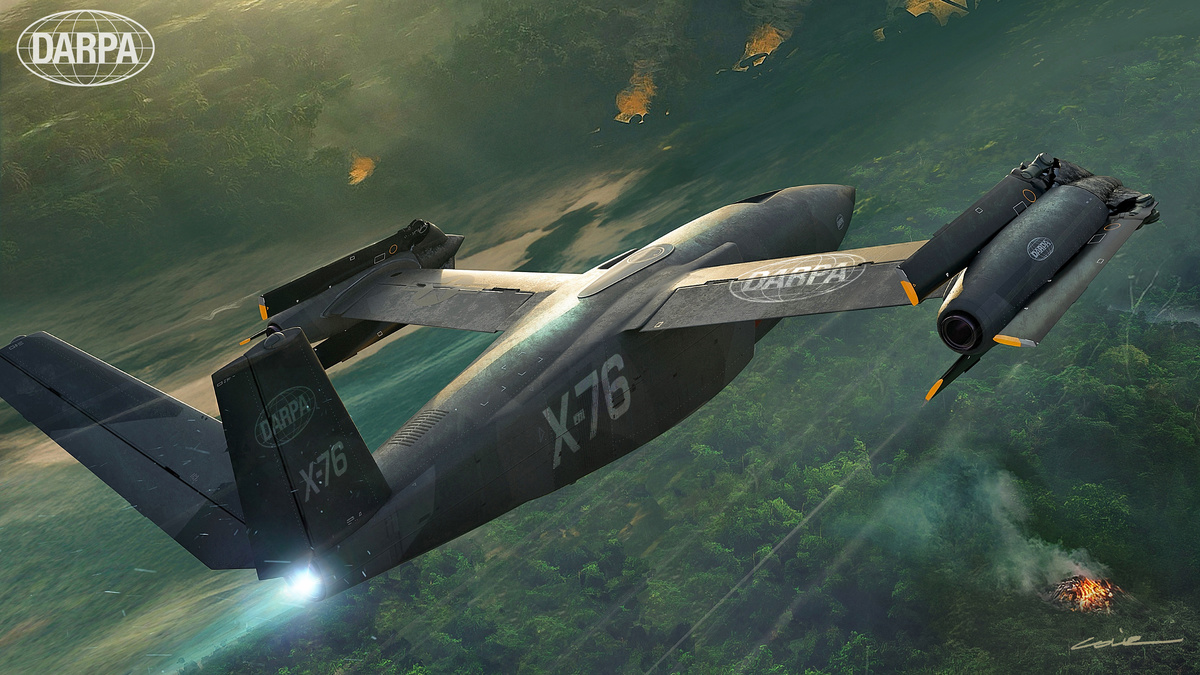
DARPA's new X-76: the speed of a jet, the freedom of a helicopter | DARPA
https://www.darpa.mil/news/2026/darpa-new-x-76-speed-of-jet-freedom-of-helicopter
Introducing our latest X-Plane, the X-76! ⚡
— DARPA (@DARPA) March 9, 2026
Part of a joint effort with @USSOCOM on the SPRINT program, this experimental aircraft is being built by @BellFlight to demonstrate runway-independent, high-speed flight. pic.twitter.com/hBnDzjcHAO
Jet planes can fly at high speeds of around 830 km/h, but require a long, well-maintained runway. On the other hand, helicopters have a maximum speed of around 300 km/h, which is slower than jet planes, but because they do not rely on runways, they are used in undeveloped areas such as front-line bases and disaster areas.
To solve this problem, the SPRINT program is a project to develop an aircraft that can fly at jet-like speeds without relying on runways. 'Runways have long been a means of providing speed, but they have also limited speed and created significant weaknesses,' said U.S. Navy Commander Ian Higgins, SPRINT program manager. 'With SPRINT, we're building a variety of options. We're working to provide surprise attacks, rapid reinforcements, and life-saving speed anywhere on the planet, without the need for runways.'
The SPRINT program entered 'Phase 1' in November 2023, giving the contractor approximately one year to complete preliminary design work on the aircraft. In June 2025, Textron, Bell Helicopter 's military division, was awarded the contract for Phases 2 and 3.
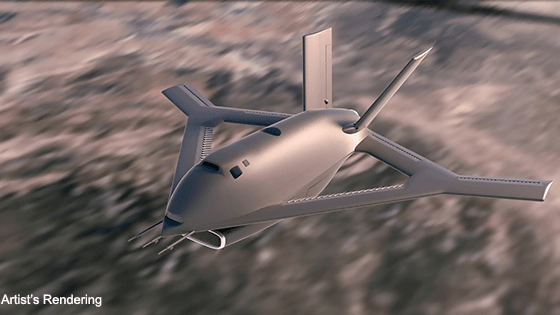
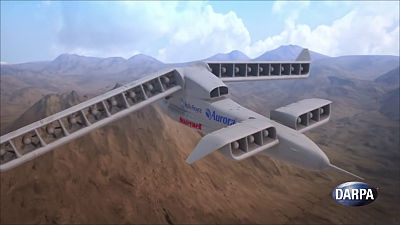
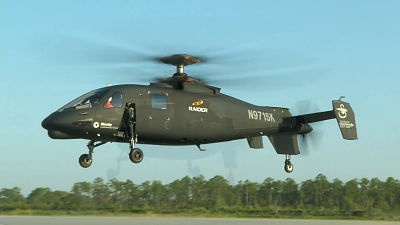
The aircraft proposed by Bell Helicopter employs a unique structure known as a 'Stop -Fold Rotor .' Conventional tilt-rotor aircraft have the problem of their large rotors creating air resistance during high-speed flight, limiting their speed. With a Stop-Fold Rotor, the rotors rotate like a helicopter to generate lift during takeoff and hovering, but once a certain speed is reached, the rotors stop and fold into the aircraft, allowing for high-speed cruising using jet propulsion. This allows for both vertical takeoff and landing using tilt rotors and high-speed cruising like a jet aircraft. Below is a rendering of a Stop-Fold Rotor aircraft that has been released in the past.
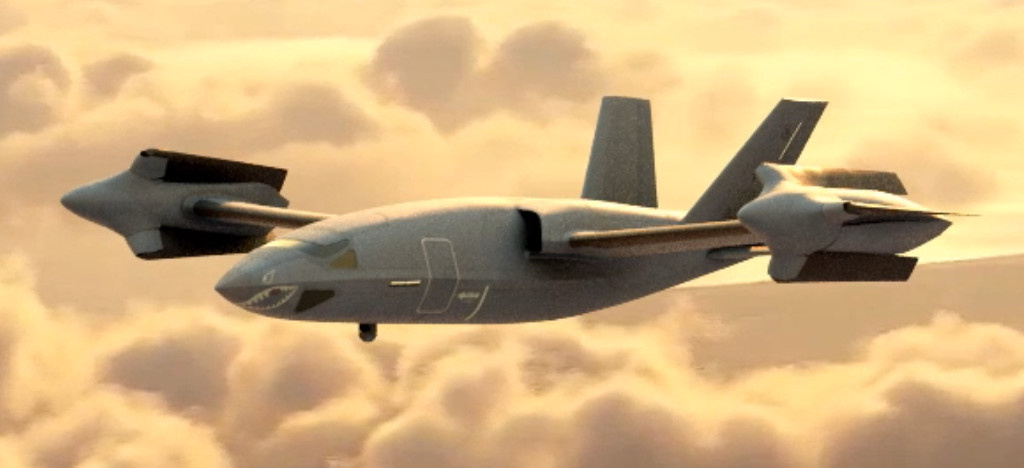
'Our advanced family of Stop-Fold systems revolutionizes the speed, range and survivability of vertical take-off and landing aircraft, enabling them to operate in challenging environments,' said Jason Hurst, executive vice president of Engineering, Bell Helicopter. 'We are excited to contribute to this next milestone in aviation history with this groundbreaking technology.'
Phase 2 will shift focus to the manufacturing, integration, assembly, and ground testing of the SPRINT program's 'X-Plane' aircraft, a series of experimental aircraft not intended for mass production but developed to demonstrate new aeronautical technologies.
On March 9, 2026, the SPRINT experimental aircraft was officially named 'X-76.' The X-76 designation comes from 1776, the year

The X-76 has already passed its detailed design review and is currently being manufactured by Textron. The X-76 aims to offer an innovative combination of capabilities, including the ability to cruise at speeds of over 740 km/h, hover in challenging environments, and operate from locations without a maintained runway.
DARPA has previously researched VTOL aircraft that combine vertical takeoff and landing with high-speed cruising, and in the 2000s developed the X-50 Dragonfly , which uses rotors that can be deactivated and act as wings, but both test aircraft crashed and the project was canceled. After Phase 2 of the X-76 is complete, Phase 3 of the flight test program is scheduled for early 2028, and its success is attracting attention.
Related Posts:

in Vehicle, Posted by log1e_dh