How are holograms recorded and viewed in three dimensions?
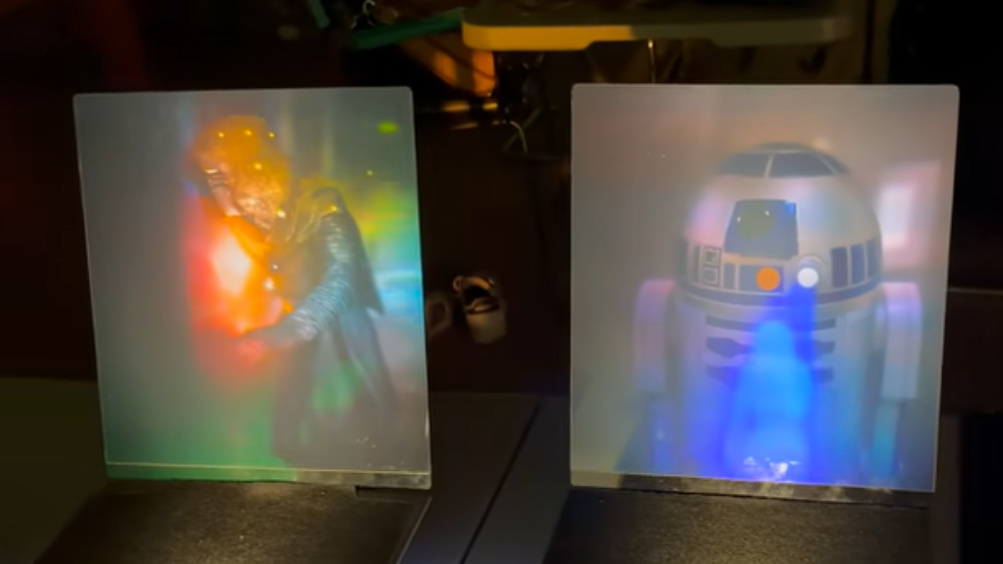
Unlike flat photographs,
How are holograms possible? - YouTube
In the image below, various objects are lined up behind a glass panel, including glass bottles shaped like Klein's bottles and boxes with geometric shapes.
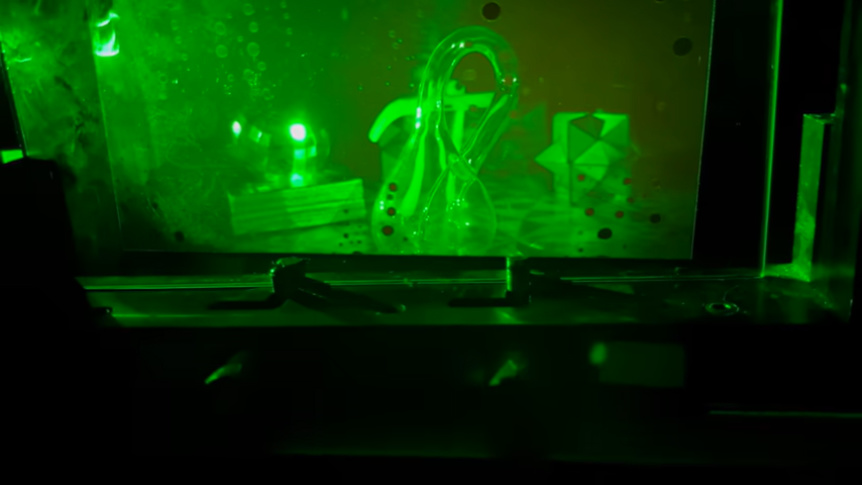
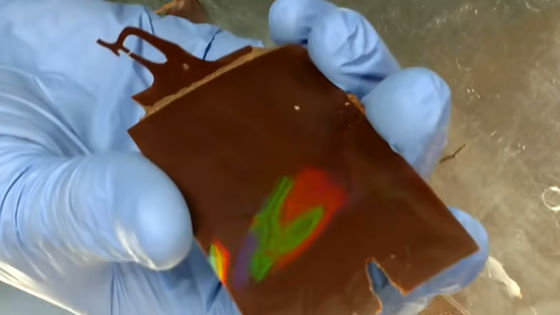
However, in reality, there is nothing on the other side of the plate; it is a hologram recorded on film, as shown below.
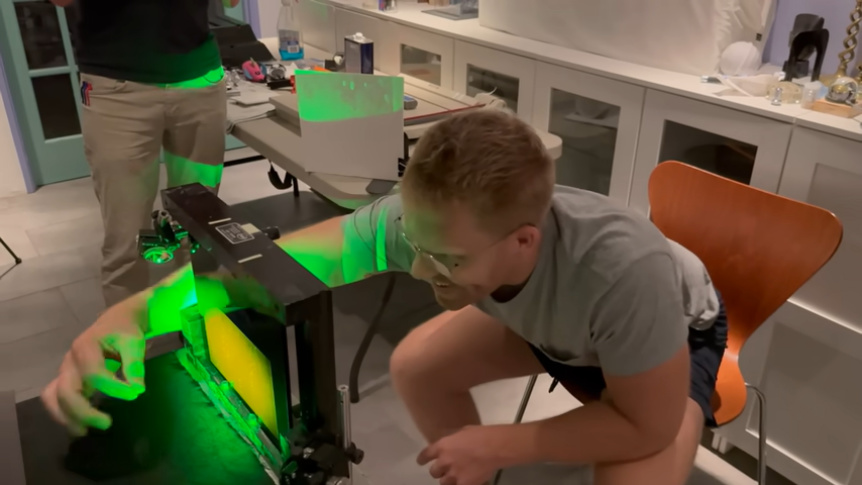
When you hear the word 'hologram,' some people may imagine a three-dimensional image projected into space.
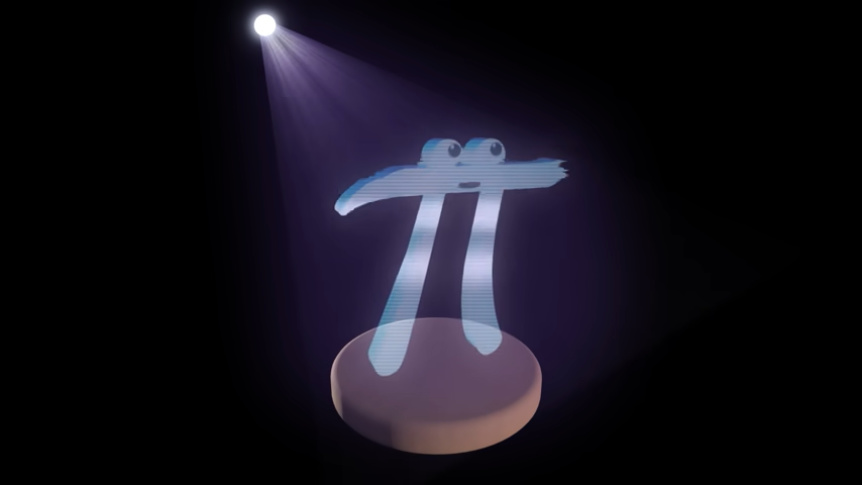
However, the original hologram was a special image recorded on a 2D film that appeared three-dimensional when viewed from a different angle. This technology, called
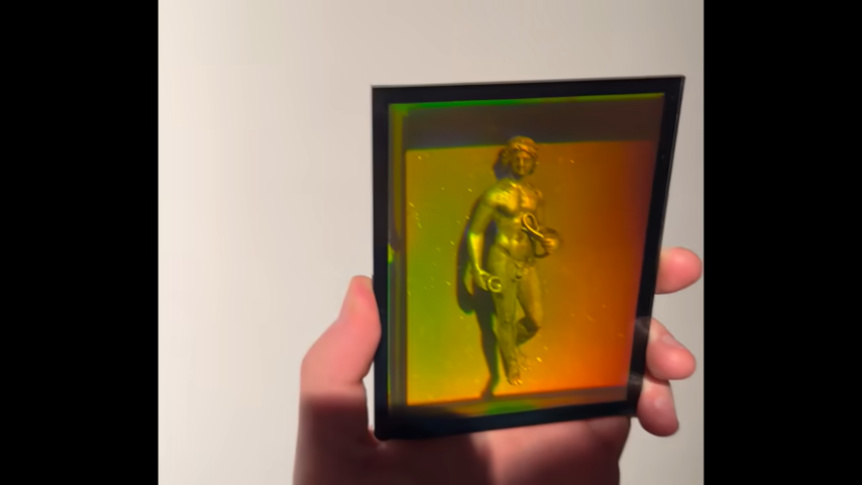
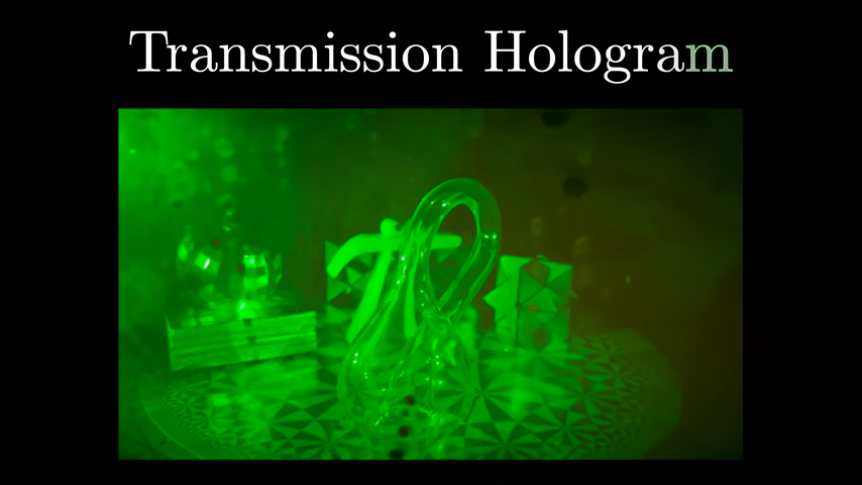
Below is a 'transmission hologram' that can be observed by shining light from behind the film. The video delves into how this transmission hologram works. Other examples include 'rainbow holograms,' which are an improved version of transmission holograms and are used on Japanese banknotes, which can be observed by shining white light on the front side, and the more advanced 'white light reflection hologram.'
First, 3Blue1Brown shows how the recording process for creating a hologram differs from photography: Below is an example of the simplest pinhole camera, but because the camera records only a single point on an object from a fixed viewing angle, information from other viewing angles is lost.
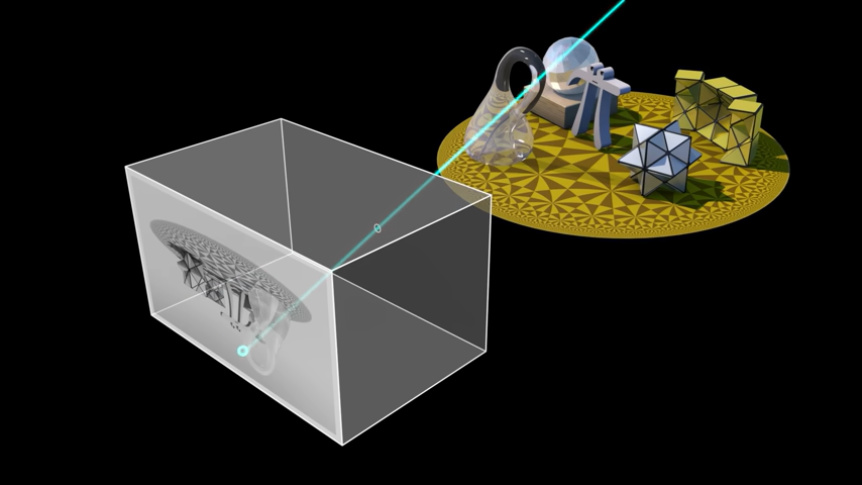
Holograms, unlike photographs, have a single viewing angle, but rather require a three-dimensional appearance that can be seen from different viewing angles when viewed from different angles. 3Blue1Brown cites two things as being necessary to achieve this: widening the field of view by removing the small hole-like lens in a pinhole camera, and 'phase.' Phase indicates how far a wave has traveled when light is viewed as a pure wave. While phase information is lost in photographs, the amplitude and phase of light are recorded in holograms.
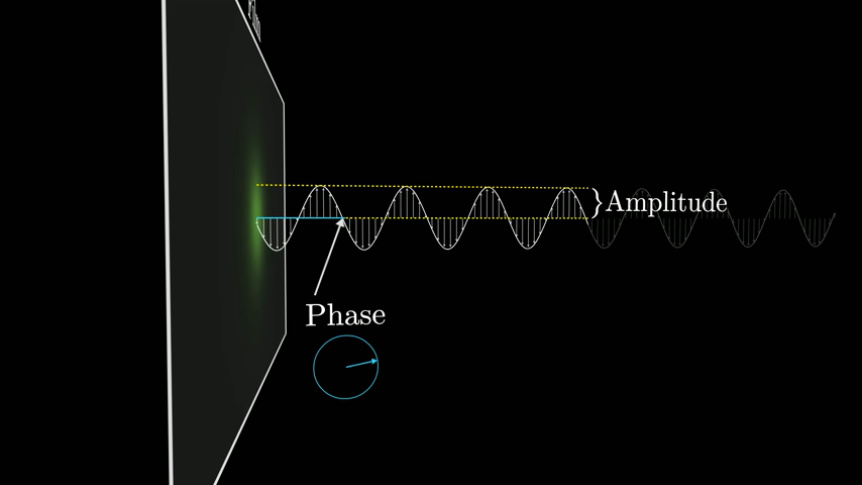
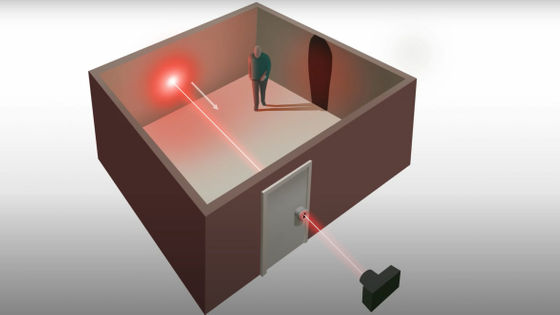
A 'reference beam' is used to record the phase. If the reference beam is in phase with the original beam, the recorded beam will have double the amplitude, but if it is out of phase, they will interfere and cancel each other out. By irradiating multiple beams with different interfering beams, it is possible to create an object beam with a reproduced phase.
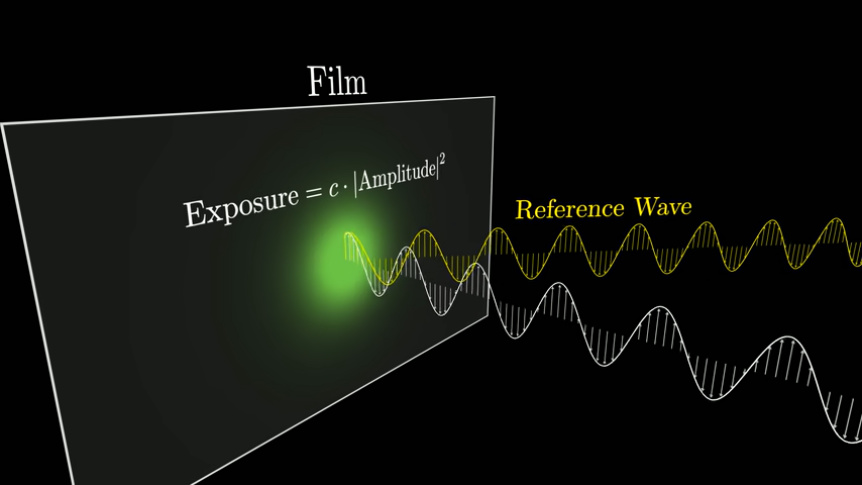
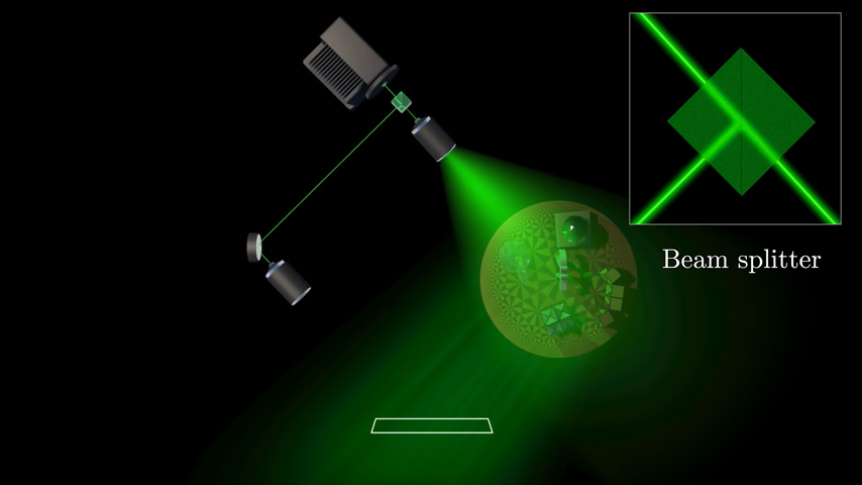
To record the phase using a reference beam, all the light must have the same frequency. Therefore, the object beam must be recorded using a laser, not white light, which has a variable frequency. Furthermore, even a slight shift in the object's position (a few nanometers, or one millionth of a millimeter) can alter the light pattern, so the object must remain motionless during recording. The video explains, 'To record the demo, we had to remain motionless for several minutes.'
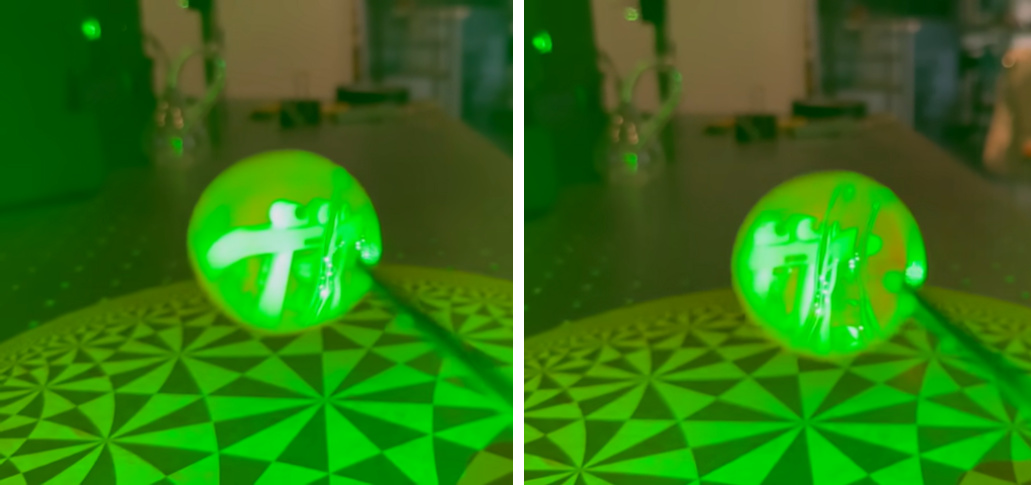
To unlock the mystery of holograms, which use phase-recorded reference light to create three-dimensional visuals, 3Blue1Brown cuts a small piece of film into the image shown below. In a photograph, only the object reflected in the cut-out area is visible. However, with holographic film, a wide range of objects can be seen by viewing the cut-out from above, below, left, and right.
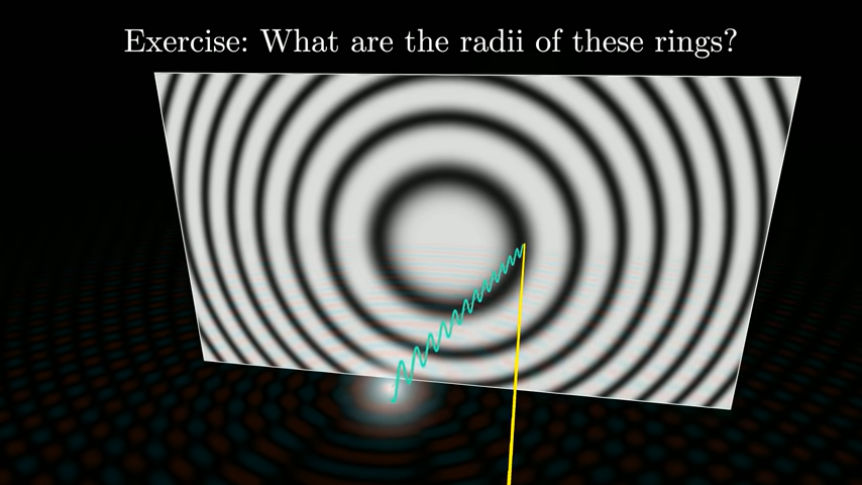
To make it easier to understand how holograms work, 3Blue1Brown uses the simplest example, recording a single point as a hologram. When the object light and reference light reflected from an object are in phase, a strong light is recorded on the film. On the other hand, when they are out of phase, they cancel each other out, resulting in a completely black image. The intensity of the light recorded on the film changes depending on the phase.
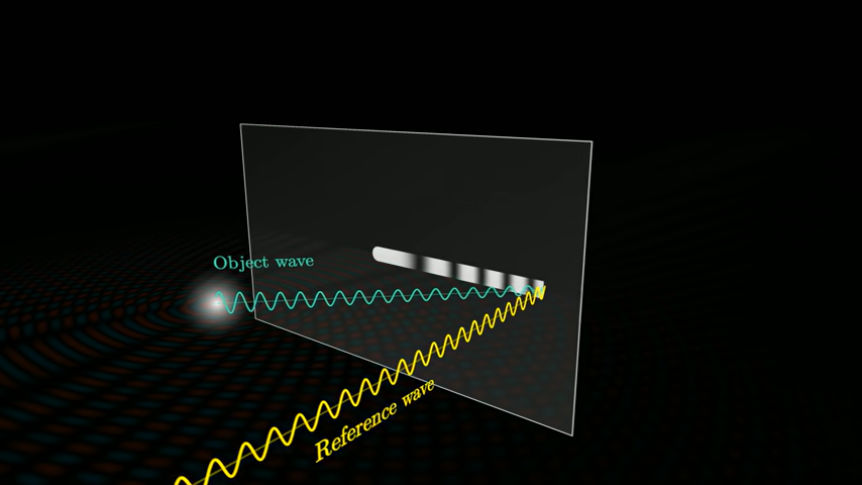
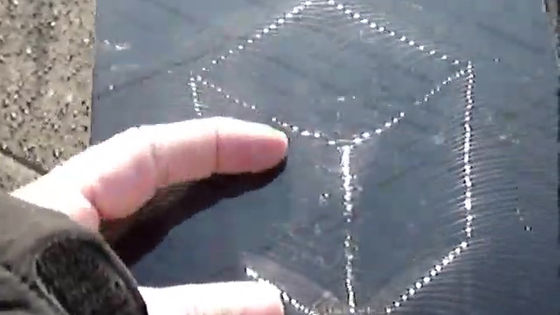
At points farther from the center, the distance to the object increases, so the phase of the object light either matches or deviates from the reference light at the center. This allows the object to appear three-dimensional when viewed from various angles, with shadows sometimes appearing and others appearing bright. This interference pattern, recorded as concentric circles on film, is called a 'Fresnel zone plate.'
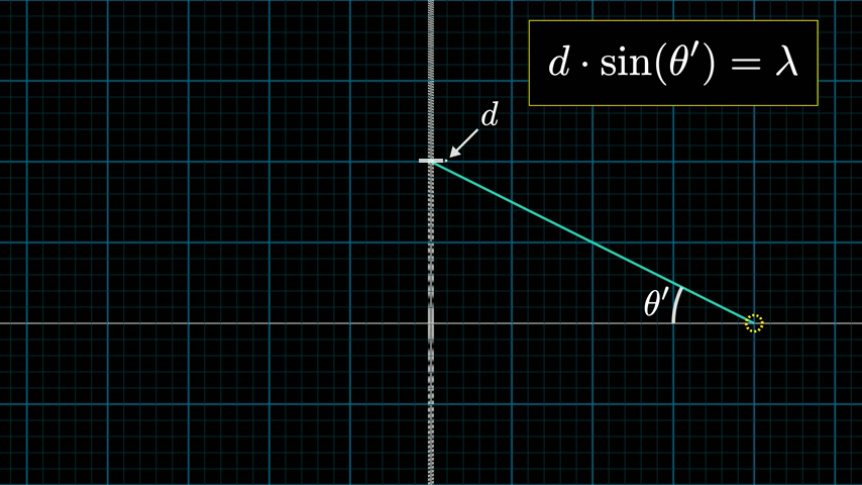
The following is a calculation formula: where 'd' represents the difference in the intensity of light appearing on a Fresnel zone plate, and 'θ (theta)' represents the angle from an object to a certain point. Multiplying the angle by the sine of the angle, 'sinθ,' equals the wavelength of light, 'λ (lambda).' This equation roughly corresponds to the 'diffraction equation' dsinθ=mλ, which describes the phenomenon in which light diffracts at different angles for each wavelength as it passes through and reflects off a lattice-like structure. The light recorded on the Fresnel zone plate—that is, 'how an object appears from various angles'—is optically accurately recorded, allowing it to be recorded as a hologram that appears three-dimensional, unlike a photograph. For a more mathematically formal explanation of holograms, see the '
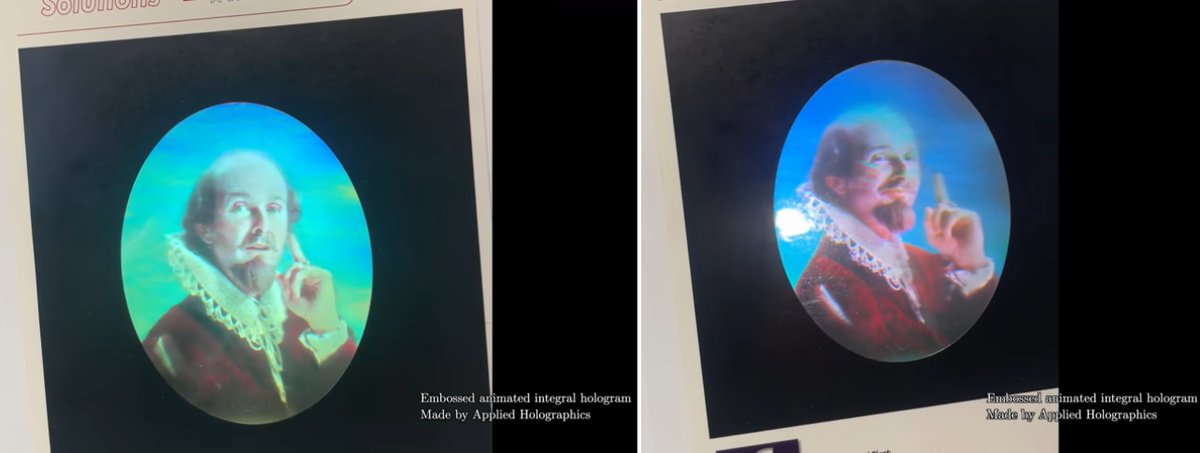
The explanation in 3Blue1Brown's video is for transmission holograms, while rainbow holograms and white light reflection holograms contain different theories. Furthermore, there are technologies that not only make a scene appear three-dimensional, but also allow you to see changes in the scene over time depending on the angle. 3Blue1Brown spoke about the value of hologram technology, saying, 'The fact that Gabor Denes won the Nobel Prize should suggest that holograms are not just a beautiful visual art.'
Related Posts: