A writer who writes 200 romance novels a year using AI talks about AI writing, and a survey result shows that about one-third of writers use generative AI in their writing, but most hide it from readers.
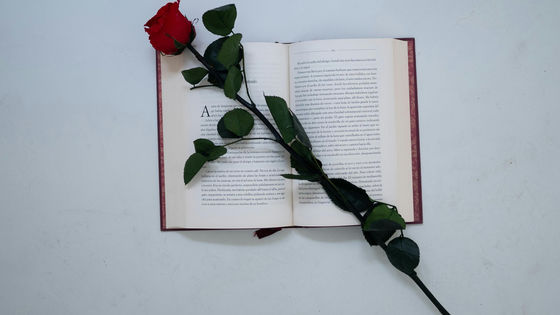
The New York Times reported on an author who uses AI to write novels at lightning speed, generating and selling over 200 romance novels in a single year. While there has been strong opposition to using AI in writing, survey results have shown that about one-third of professional authors use AI in their writing without disclosing it to readers, and many authors hide their use of AI from their readers.
Can AI Chatbots Write Emotionally Rich Romance Books? - The New York Times
How Authors Are Thinking About AI (Survey of 1,200+ Authors)
https://insights.bookbub.com/how-authors-are-thinking-about-ai-survey/
Human writers face an impossible race against chatbots that finish a book before lunch
https://the-decoder.com/human-writers-face-an-impossible-race-against-chatbots-that-finish-a-book-before-lunch/
Author Coral Hart, interviewed by The New York Times, said she began experimenting with using AI to mass-produce romance novels around February 2025. Over the course of eight months, she published dozens of novels under 21 different pen names. She said she felt there were limitations to using AI to complete her novels, including restrictions on explicit sexual content due to policy violations and the lack of emotional nuances that are crucial to romance novels.
On the other hand, Hart felt that Anthropic's Claude was the most versatile and beautifully written. Hart explained that he was able to publish novels using AI by devising ways to improve Claude's weaknesses, such as jokes with sexy nuances and the inability to portray the gradual changes in relationships, such as 'will they end up together?', a requirement of romance novels. He also revealed techniques to improve the tendency of AI-generated texts to repeat the same words. As a result, Hart, a fast writer who originally published around 10 books a year, self-published over 200 romance novels in 2025 alone. According to The New York Times, he completed one book during a 45-minute Zoom interview with Hart.
The New York Times pointed out that romance novels rely on common storylines, such as 'the two get together and have a happy ending' and 'living happily ever after,' making them vulnerable to AI. On the other hand, some romance novel lovers strongly dislike works written by AI. Fast Company reported in May 2025 that an author who discovered AI prompts had been left in her published work publicly admitted to using AI, resulting in considerable criticism from some readers.
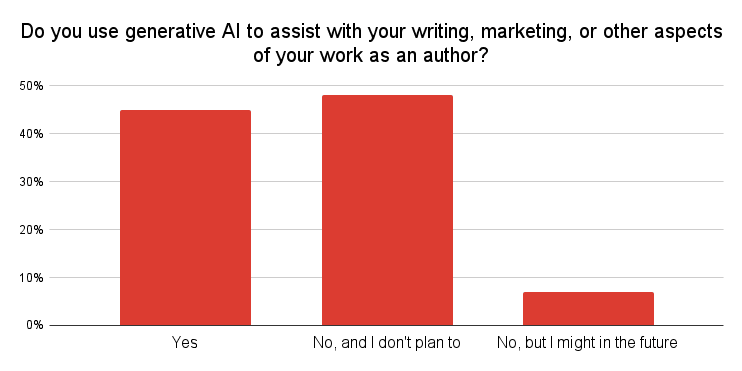
According to a survey of over 1,200 authors across a variety of genres conducted by book search service BookBub , nearly half of the respondents (45%) said they are currently using generative AI to support their work. 48% said they are not using AI and have no plans to do so, and 7% said they are not currently using AI but may consider doing so in the future.
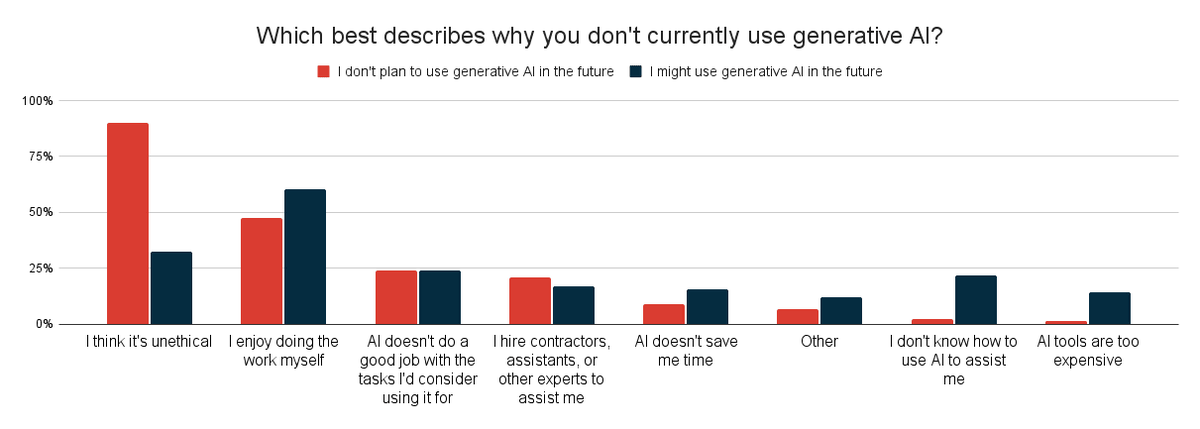
Of the authors who don't currently use generative AI, 84% cited ethical concerns as the reason. Other major reasons included 'because I enjoy working on my own' and 'because I don't think AI can handle the tasks I want them to do.'
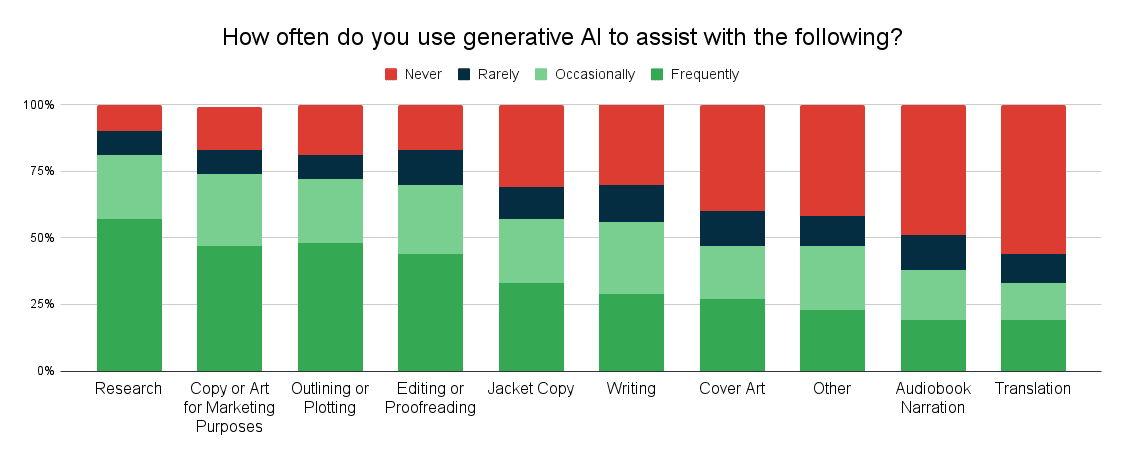
Of the authors who use generative AI, 81% said they use it for research and searches. Over 70% also use it for creating marketing materials, outlines, and plots. Approximately half of the authors who use generative AI, or roughly 60% if those who 'rarely' use it, said they 'use it for writing.' It turns out that roughly one-third of all authors surveyed use generative AI to help them write novels. Many authors who use AI say they 'feel that AI helps improve their creativity and efficiency.'
Furthermore, they revealed that nearly 80% of writers who use AI do not publicly admit to using it.
Elizabeth Ann West, a writer and co-founder of Future Fiction Press, a publishing house that produces AI-generated novels, has received extreme criticism, including death threats, on social media. She believes that AI-generated fiction will eventually become widespread and popular, and readers will eventually stop caring.
Related Posts: