Anthropic releases Claude Opus 4.6, improving performance for coding, financial processing, and document creation, and supporting context windows up to 1 million tokens
Anthropic has announced Claude Opus 4.6 , a direct upgrade to its most powerful AI model. With the launch of this new model, the company is promoting Opus 4.6 not just as a next-generation model, but as part of a suite of products aimed at all business processes, including non-technical roles, in addition to Claude Code for developers.
Claude Opus 4.6 \ Anthropic
System Card: Claude Opus 4.6
(PDF file) https://www-cdn.anthropic.com/0dd865075ad3132672ee0ab40b05a53f14cf5288.pdf
Advancing finance with Claude Opus 4.6 | Claude
https://claude.com/blog/opus-4-6-finance
Building a C compiler with a team of parallel Claudes\Anthropic
https://www.anthropic.com/engineering/building-c-compiler
Claude Opus 4.6 is an improved version of the previous generation model, focusing on the ability to continue long tasks without interruption. It allows for more careful planning, allows for longer agent-like tasks, and makes it easier to run large code bases stably. Anthropic also explains that code review and debugging have been improved, increasing the ability to find and correct mistakes.
In addition, performance has been improved not only for coding but also for everyday tasks such as financial analysis, research, and creating documents, spreadsheets, and presentations, making it easier to produce better results from the first output.
Claude for everyday work - YouTube
Opus 4.6 also introduces a 1 million token context window in beta, a first for Opus-class models, dramatically improving the ability to handle large code bases and vast document collections. Furthermore, the addition of adaptive thinking, which adjusts the depth of reasoning based on the difficulty of the task, enables complex multi-step problems to produce high-quality results the first time, with minimal human intervention required.
Anthropic also claims that Opus 4.6 has set numerous industry-leading records in performance evaluations. In the GDPval-AA benchmark, which measures the ability to perform economically valuable knowledge work, the Opus 4.6 achieved an astounding score of 1606 Elo, an increase of 190 points from 1416 Elo for the previous generation model.
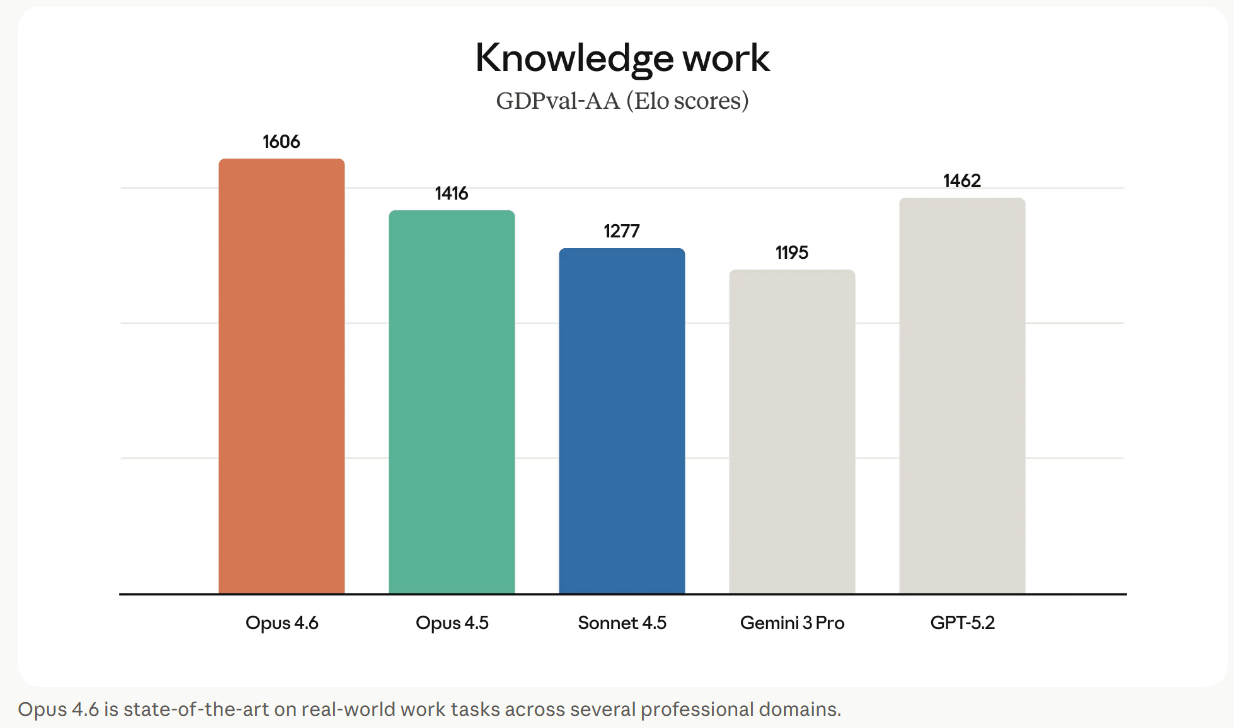
Anthropic also achieved the highest score on
Another major feature of Opus 4.6 is its specialization in the financial field.
Claude Opus 4.6 for finance - YouTube
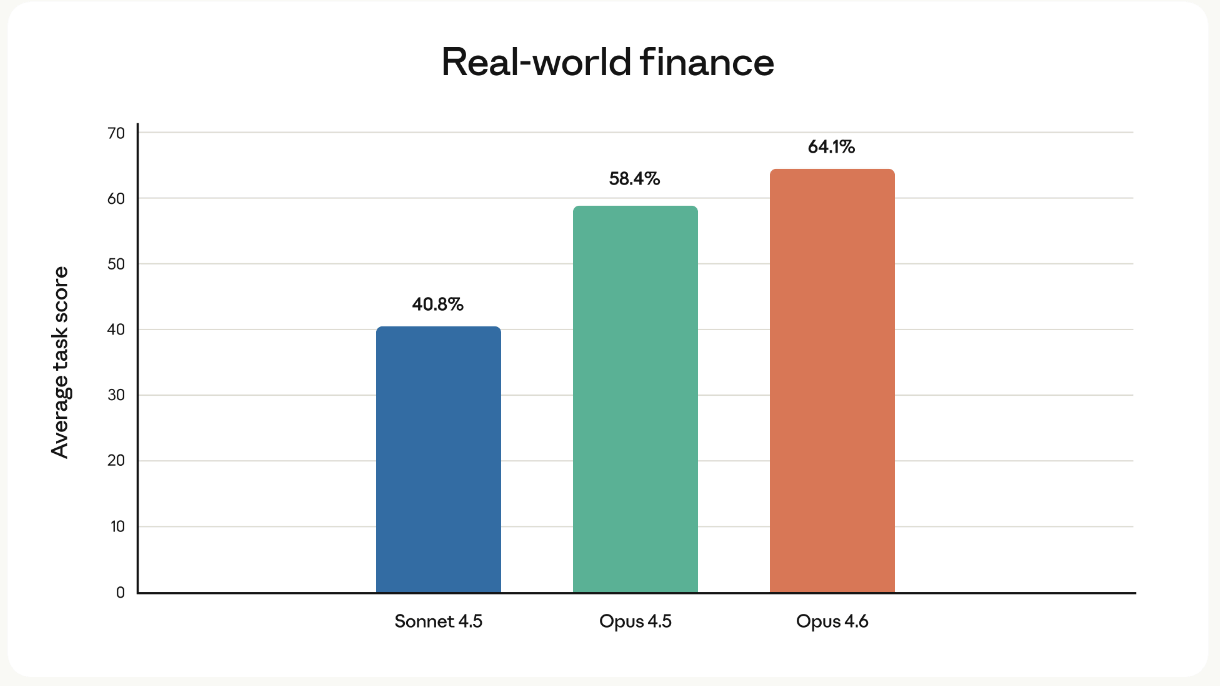
In Real-World Finance, Anthropic's proprietary evaluation metric covering approximately 50 use cases in investment and financial analysis, the model achieved a 64.1% accuracy rate, up from 58.4% for the previous model. This allows the model to more accurately handle tasks such as building financial models, creating slide decks, and reviewing complex contracts.
In particular, the integration with Excel allows users to concentrate on their tasks for long periods of time without sacrificing accuracy, even when calculation models become complex. Combined with the new PowerPoint functionality released as a research preview, this is expected to dramatically improve the work efficiency of financial analysts.
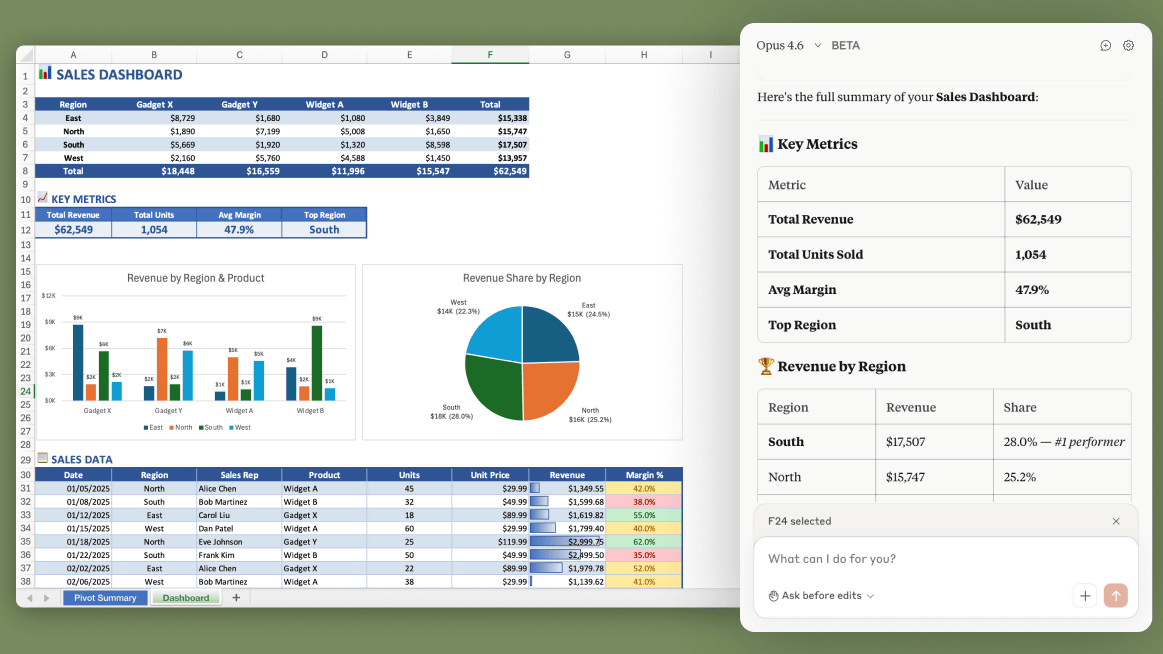
As part of a project to demonstrate the potential for autonomous software development using AI, the results of an experiment using a method called 'agent team' were published.
Anthropic ran 16 Opus 4.6 instances in parallel, allowing them to collaborate without detailed human instructions. They were able to build a 100,000-line C compiler from scratch using the Rust language. The movie shows how they successfully ran DOOM using this C compiler.
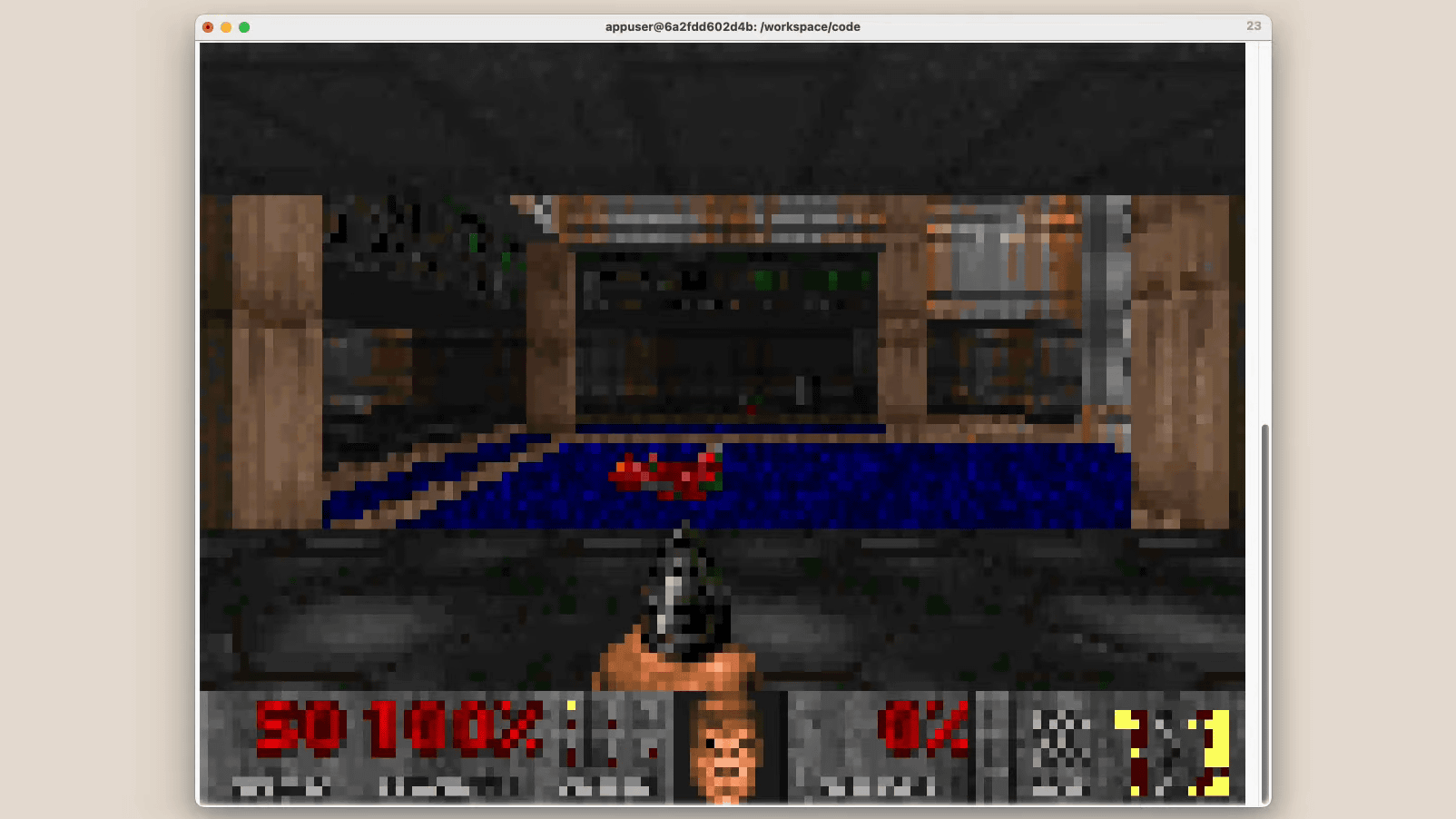
This compiler was capable of building Linux 6.9 on x86, ARM, and RISC-V, and was developed autonomously over approximately 2,000 sessions. The API costs for this process amounted to $20,000 (approximately 3 million yen), suggesting the possibility of AI being able to autonomously maintain and manage large codebases in the future.
Claude Opus 4.6 is now widely available for business and individual users, and is accessible to paid Pro, Max, Team, and Enterprise users. API pricing remains unchanged from the previous generation, Opus 4.5, with input fees of $5 (approximately ¥750) and output fees of $25 (approximately ¥3750) per million tokens.
However, when performing large-scale processing that takes advantage of the vast context window of 1 million tokens, a surcharge applies for inputs exceeding 200,000 tokens, with inputs costing $10 (approximately 1,500 yen) and outputs costing $37.50 (approximately 5,630 yen).
Opus 4.6 also maintains the high standard of AI Safety Level 3 (ASL-3), achieving both advanced intelligence and safe operation.
Related Posts: