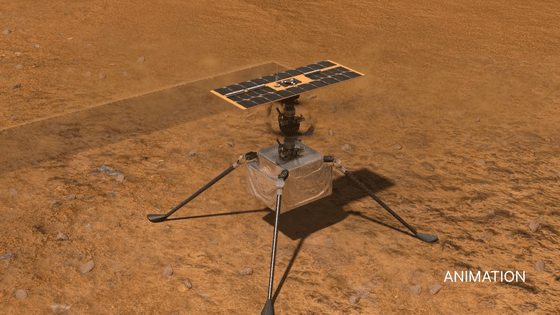
The experiment to 'specify the route of a Mars rover using AI' was successful, and Perseverance actually traveled on Mars according to Claude's plan.
NASA's Jet Propulsion Laboratory (JPL) and Anthropic collaborated to conduct an experiment to 'use AI to derive the path of a Mars rover.' The experiment was successful, and the Mars rover '
NASA's Perseverance Rover Completes First AI-Planned Drive on Mars | NASA Jet Propulsion Laboratory (JPL)
https://www.jpl.nasa.gov/news/nasas-perseverance-rover-completes-first-ai-planned-drive-on-mars/
Claude on Mars \ Anthropic
https://www.anthropic.com/features/claude-on-mars
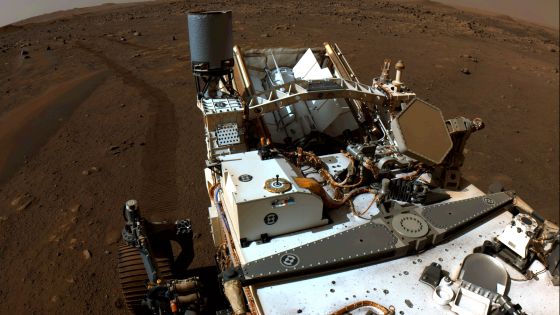
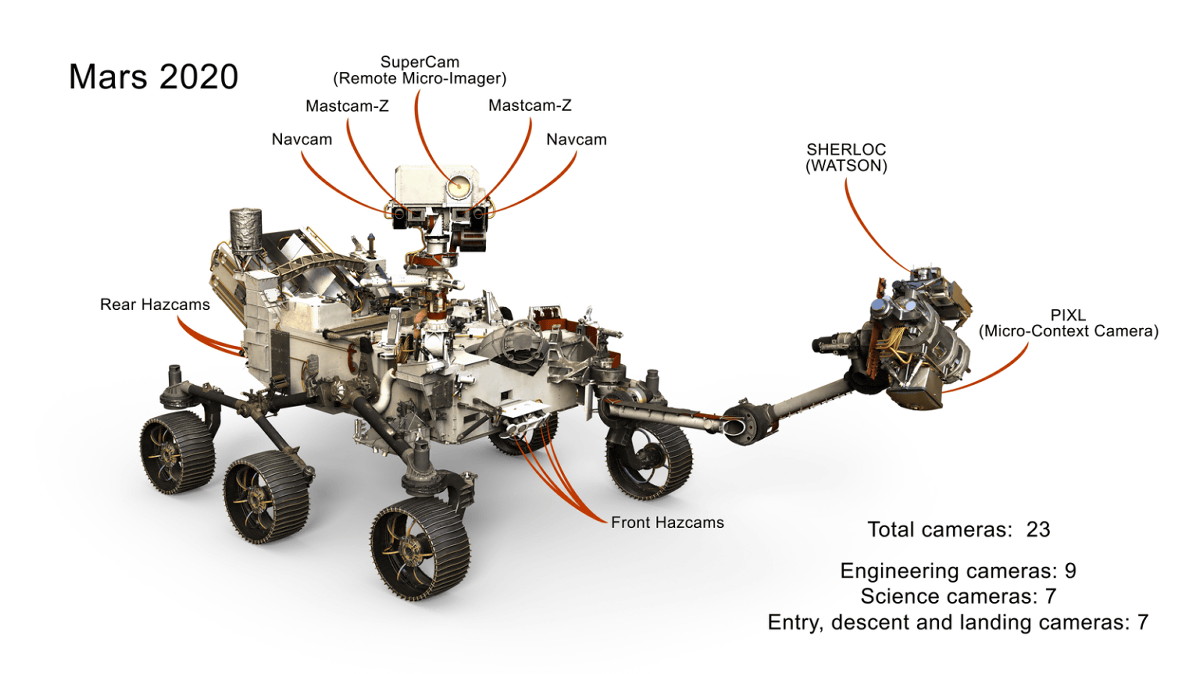
Perseverance is a Mars rover equipped with numerous cameras and sensors that has been collecting data while moving across the Martian surface since landing on Mars in February 2021. Because Mars is located 22.5 million kilometers from Earth, it is impossible to control it in real time like a radio-controlled car. For this reason, in order for Perseverance to travel, experts on Earth must determine its route in advance based on topographical data and other factors. Once the route is determined, waypoints are designated at intervals of less than 100 meters, and Perseverance travels between the waypoints on autopilot.
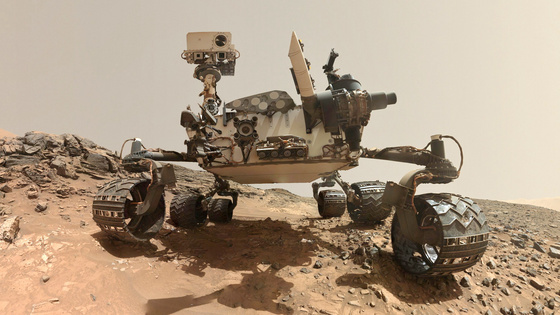
Specifying waypoints is an extremely difficult task. For example, in 2009, the Mars rover Spirit followed waypoints, but its wheels got stuck in sand, making it unable to move, and the project came to an end. This experiment was conducted with the aim of using AI to specify waypoints, making it possible to improve work efficiency and deal with difficult terrain.
JPL engineers compiled data and insights from previous missions into Claude Code, then inputted Martian terrain data and satellite imagery. Claude Code analyzed the input information to identify important terrain characteristics, such as dangerous rocks and sand conditions, and generated a path and waypoints for Perseverance. Based on the waypoints, they then wrote commands for Perseverance in a specialized markup language called Rover Markup Language.
To verify that Claude Code's instructions were appropriate for Perseverance, the project team tested more than 500,000 variables using Perseverance's digital twin. Furthermore, human engineers fine-tuned the instructions using 'surface camera imagery that was not input into Claude Code' before actually sending the instructions.
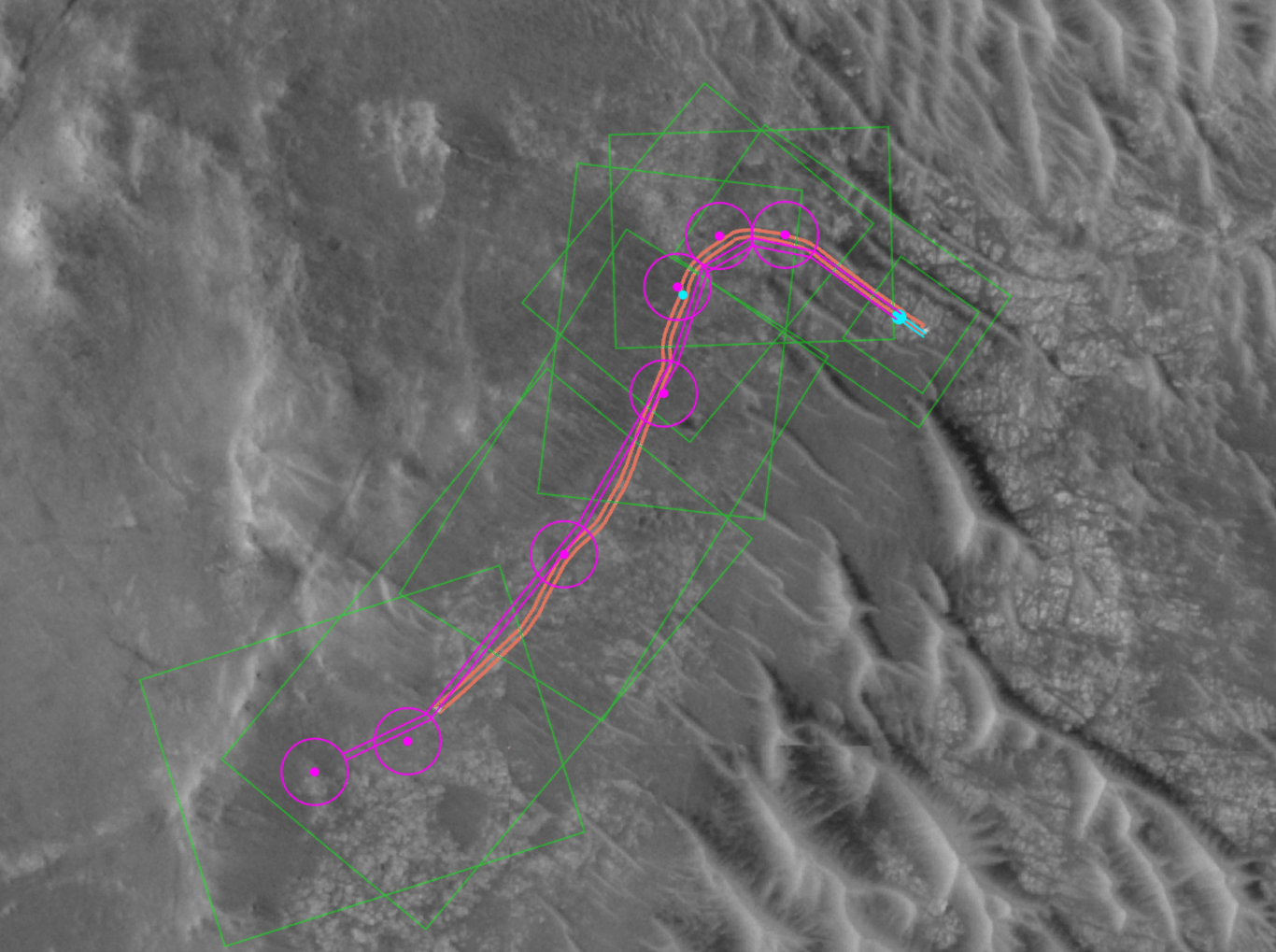
The AI-directed runs were carried out on 1707 Martian days (December 8, 2025) and 1709 Martian days (December 10, 2025) from the start of Perseverance's operations. The run distance was 210 meters on 1707 Martian days and 246 meters on 1709 Martian days. The image below shows the 'AI-planned route (red)' and the 'actual route Perseverance ran (orange)' for the run on 1709 Martian days.
The video below shows the surface captured during the 1709 Martian day run.
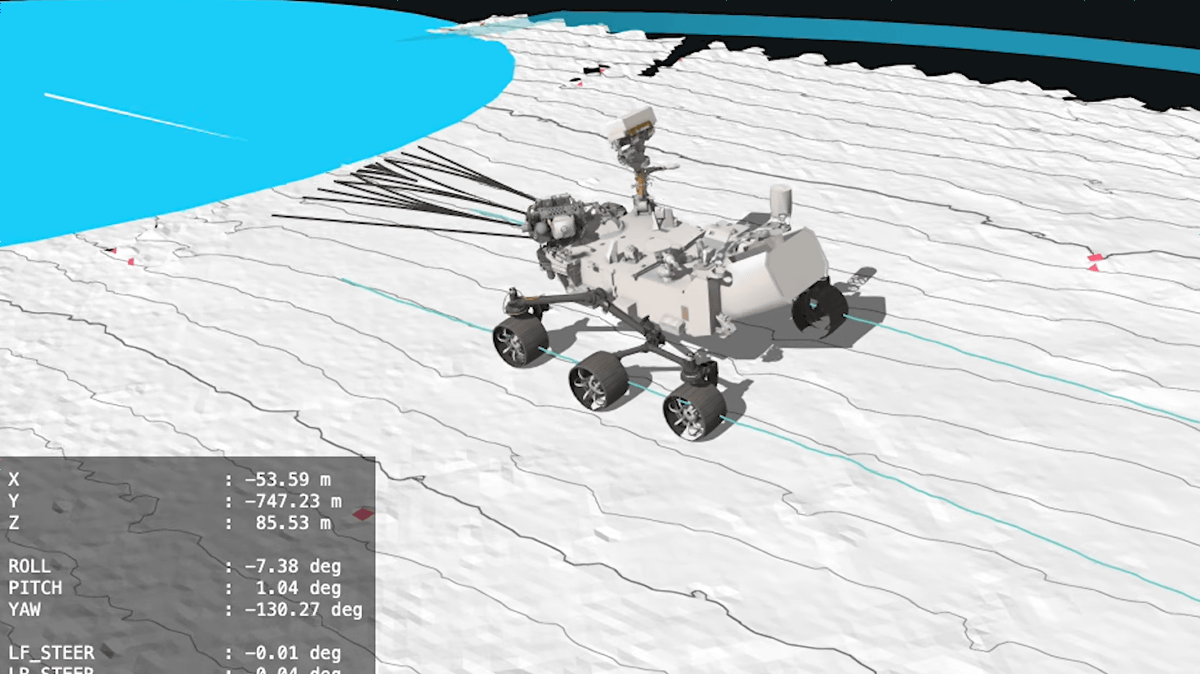
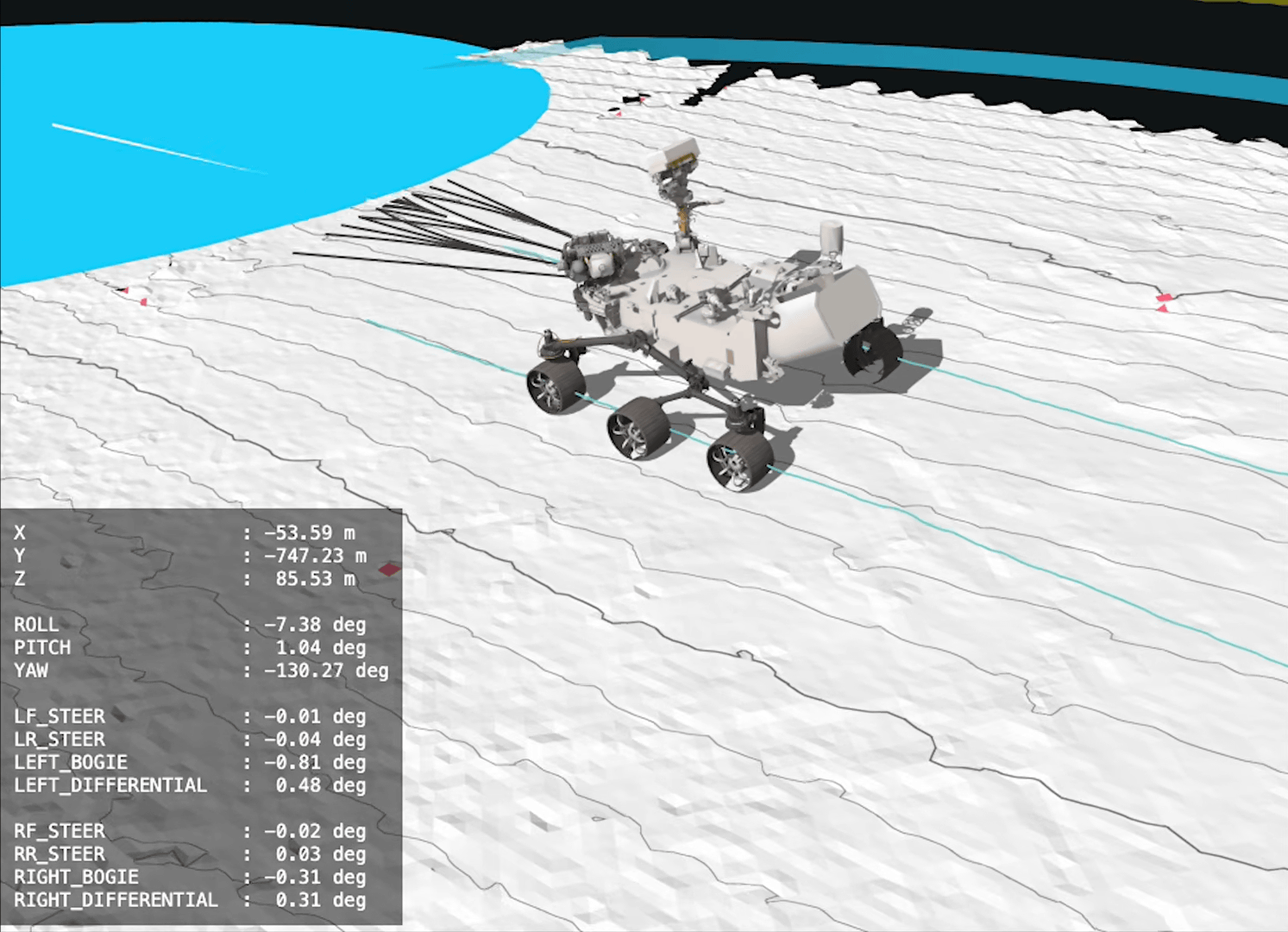
A video modeling the movement has also been released.
Visualizing Perseverance's AI-Planned Drive on Mars - YouTube
The light blue circular area in the upper left of the image is the waypoint, the light blue line extending near Perseverance's wheels is the expected route, and the black line extending ahead shows the route options derived by the autonomous driving system.
The project team estimates that by using AI for route planning, they will be able to cut the time spent on planning in half. Anthropic claims that once AI route planning is fully implemented in the future, they will be able to spend more time on exploration and data collection.
Related Posts: