It turns out that middle-aged and elderly people with low muscle strength are more likely to develop dementia

As life expectancy increases, the number of people with dementia is also increasing, placing a strain on families and the healthcare system. Identifying and preventing people at high risk of dementia is becoming increasingly important. A new study shows that middle-aged and older people with weaker muscles are more likely to develop dementia than their peers with stronger muscles.
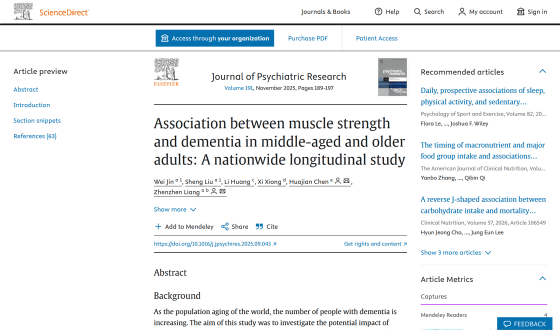
Association between muscle strength and dementia in middle-aged and older adults: A nationwide longitudinal study - ScienceDirect
Weak muscles linked to higher dementia risk in middle-aged and older adults
https://www.psypost.org/weak-muscles-linked-to-higher-dementia-risk-in-middle-aged-and-older-adults/
Sarcopenia , a condition in which skeletal muscle mass declines with age, resulting in decreased muscle strength and physical function, is one of the early indicators for detecting individuals at high risk of dementia. Previous research has shown a link between physical frailty and brain health, but most attempts to measure this link have not taken into account differences in body size between individuals.
A research team from Xinxiang Medical University in China investigated whether muscle weakness was associated with dementia risk even after controlling for body weight and volume. Furthermore, while most previous studies have used grip strength as an indicator of muscle strength, this study also focused on lower body muscle strength.
The research team used data from
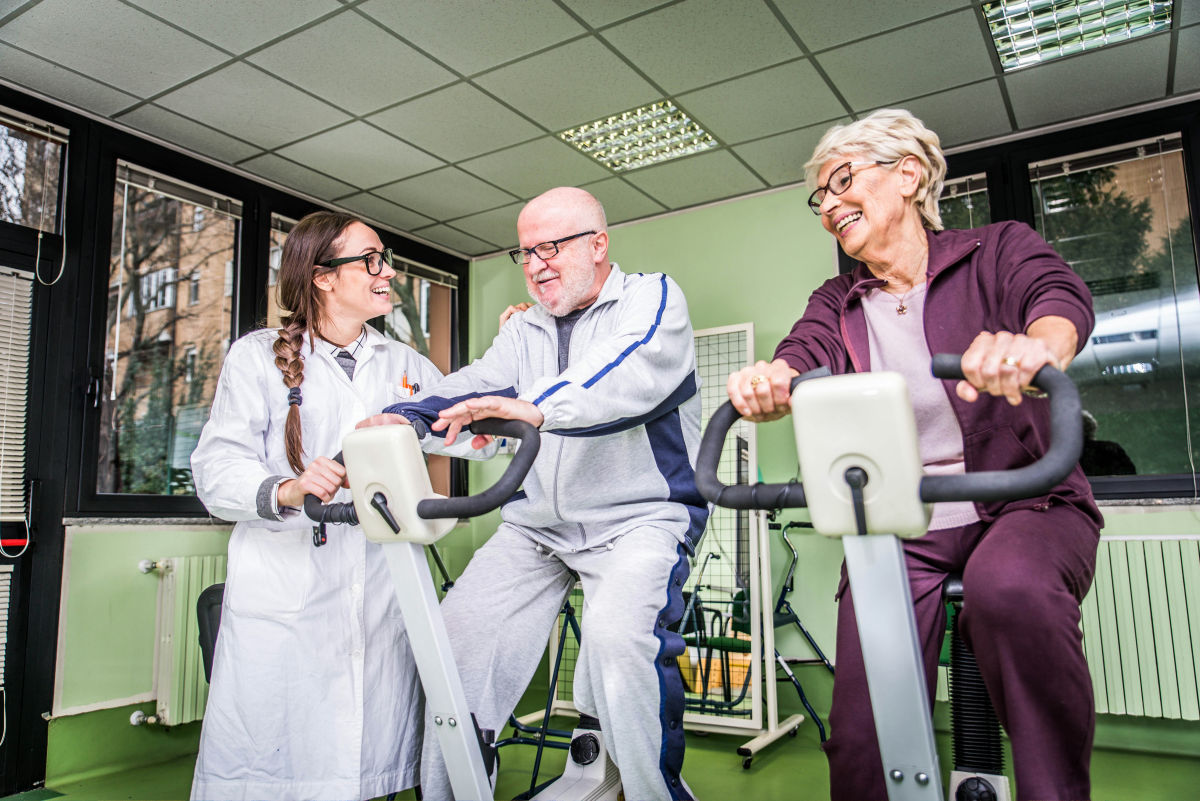
Participants measured their upper-body strength using a handheld dynamometer to measure grip strength, and their lower-body strength was measured by timing their ability to stand up from a sitting position five times. The researchers adjusted strength measurements based on participants' body mass index (BMI) and weight to ensure strength scores were fair across people of different body sizes.
The analysis revealed a clear pattern linking muscle weakness to the development of dementia. Subjects with the lowest absolute grip strength had approximately a 2.8-fold increased risk of being diagnosed with dementia compared with subjects with the strongest grip strength. This trend persisted when measuring muscle strength normalized by BMI, with subjects with the lowest muscle strength relative to their body size more than doubling their dementia risk compared with subjects with the highest strength.
The results for lower body strength were similar, with participants who took the longest time to quickly stand up from a chair five times having a 2.75 times higher risk of dementia compared to participants who took the shortest time.
The results were consistent for both men and women, and the relationship between muscle weakness and increased dementia risk was linear. Furthermore, the results were nearly identical when excluding subjects who had been diagnosed with dementia within two years of the start of the study and excluding subjects who had low muscle strength due to undiagnosed dementia.

Possible biological mechanisms that could explain these results include muscle weakness due to lesions in the brain's white matter , dementia accompanied by damage to the neural pathways that control muscles, and chronic inflammation that causes both muscle weakness and dementia.
It should be noted that this study only examined the relationship between muscle weakness and an increased risk of dementia, and does not prove a causal relationship, such as 'low muscle strength leads to dementia' or 'dementia leads to muscle weakness.' It has also been pointed out that the study participants were limited to people aged 50 or over living in the UK, and that the study did not distinguish between different types of dementia.
Still, the findings highlight the importance of maintaining muscle strength as we age and suggest that doctors could use muscle strength tests to screen for dementia risk. 'Scientists need to determine whether muscle strengthening can actively delay the onset of dementia,' PsyPost wrote. 'Interventions that focus on whole-body muscle strength may be an effective way to support brain health.'
Related Posts:








in Science, Posted by log1h_ik