How did the 'medieval settlements' that often appear in city-building games actually develop?
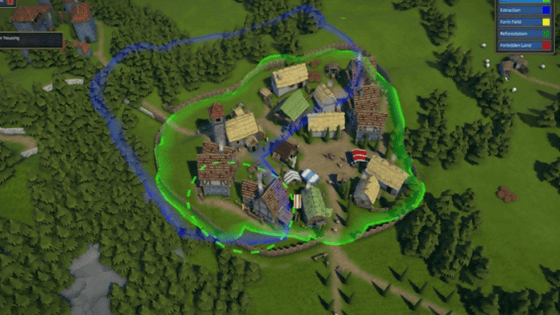
Among city-building games, games themed around medieval European settlements are a popular genre, in which players develop cities by collecting resources and human resources. However, historians have pointed out that many of these games oversimplify and are inaccurate in some respects the actual social structure and economic development of the Middle Ages.
Why medieval city-builder video games are historically inaccurate - Leiden Medievalists Blog
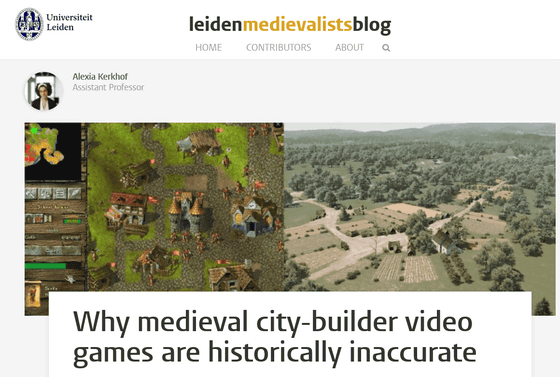
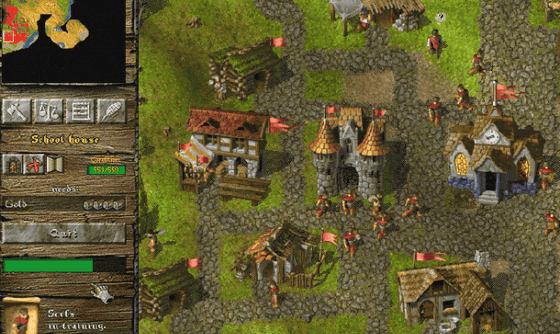
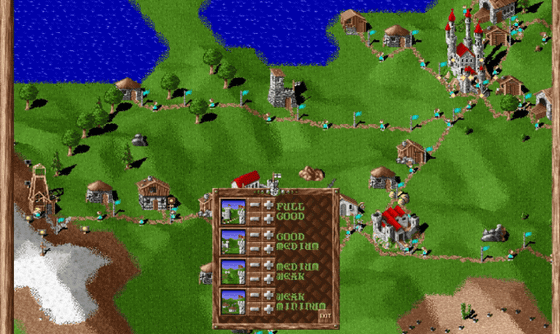
City-building games began in the 1990s as a combination of strategy and management genres, and in the late 1990s, medieval-themed titles such as The Settlers , Knights and Merchants: The Shattered Kingdom , and the Anno series appeared. Below is a screenshot of Knights and Merchants.
Many medieval city-building games begin with building a village center near a water source or other abundant resource, and then players continue to gather resources to acquire building materials to construct new homes and facilities in the settlement. Players also develop their cities by expanding production chains, such as growing and processing grain, and raising sheep to process and sell their wool.
However, according to historian Alexia Kerkhof, the 'organic growth' model in city-building games, where settlements expand naturally as resources increase, may seem rational at first glance but is not historically accurate.
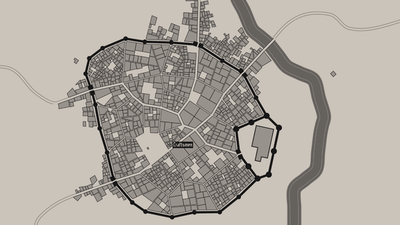
First of all, based on archaeological and historical research, it is believed that early settlements were planned and laid out according to a specific design. Below is a sketch of a circular manor in West Brabant, which developed in the southern Netherlands between 1000 and 1300 AD. It shows that a moated house was built near the river shown by the blue line, and farm plots were laid out radiating out from there. This type of manor was called a 'borch.'

Also, below is a sketch of a street village, designed with the development of nearby wetlands in mind: Farms and associated rectangular plots of uniform size are lined up in a row, separated vertically by roads.
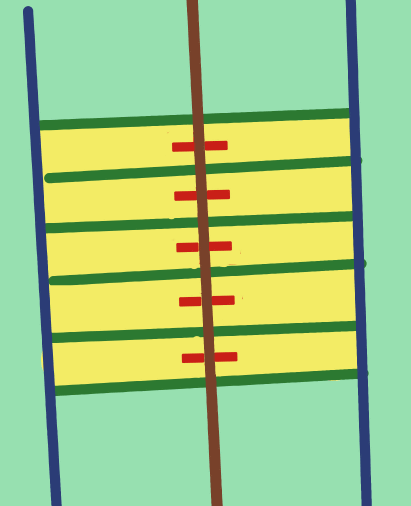
When choosing a place to live, the presence of a nearby river or other source of drinking water is an important factor, and early settlements are planned around land for cultivation and pasture. While this initial plan may be similar in games, the organic development of 'the settlement expanding naturally as resources increase' is a game element, and in reality, it is influenced more by owners such as lords and local nobles, terrain, water sources, and relationships with surrounding settlements than by resources, so 'the initial plan form often remained for a long time,' explains Kerkhof.
Kerkhof also pointed out that medieval economies constantly faced threats not often seen in games. Surplus agricultural production was gradually taken by the church and feudal lords, and settlements were at risk of being wiped out at any time by poor harvests, banditry, war, or plague. Furthermore, obligations imposed on commoners by lords and the church sometimes deprived communities of the labor needed to cultivate the land. Furthermore, we know that strict capital punishment systems were in place to punish those who attacked farms and villages, as evidenced by the fact that 'it was not uncommon for the first thing you saw when approaching a medieval settlement to be the village gallows.'
For this reason, the process of 'acquiring resources and expanding cities' in medieval city-building games revolves around something quite unusual historically, 'a significant deviation from what actually happened in the Middle Ages,' says Kerkhof.
Based on this, Kerkhof suggests what elements should be added to create a 'historically accurate medieval city-building game.' First of all, it would be more realistic if settlements did not 'organically grow' from an initially planned community. The success or failure of a settlement depends more on where to place its initial base and how it is laid out, rather than on subsequent choices.
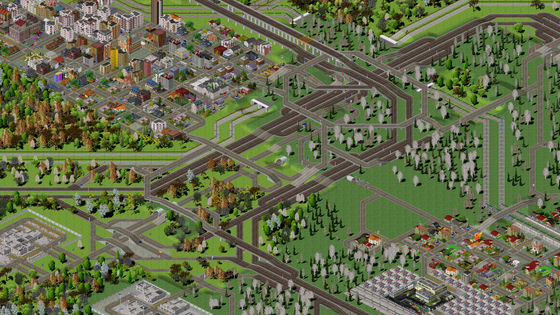
Kerkhof also cited ' Cities Skylines ' as an excellent city-building game for recreating history. A key element of 'Cities Skylines' is the ability to build both straight and curved roads. Compared to games that place objects in a grid, the flexible road drawing tools allow for the recreation of roads, which played a central role in the landscape of medieval farmland. Below is a video of YouTube channel Play Curiously recreating a medieval Croatian village using 'Cities Skylines,' which Kerkhof praises for its realistic recreation of a medieval city.
The Story of Zagreb Ep. #2 - Slavs & Avars | Cities: Skylines - YouTube
Additionally, urban planning that places great importance on waterfronts is thought to have exposed the risk of flooding. Some city-building games incorporate flood events that endanger pastures and cultivated land, and Kerkhof says that incorporating this into city-building games set in the Middle Ages would make for a more realistic portrayal of history. Finally, Kerkhof cites the introduction of taxes and rents, in which churches and feudal lords skimmed off surplus resource settlements, as the element that most enhances the realism and historical flavor of the Middle Ages.
However, Kerkhof said that the reason city-building games are designed to acquire resources and grow territory and population is to increase player satisfaction and motivation, and incorporating historical facts doesn't necessarily mean the game benefits. Still, he said, seeing the world from a realistic historical perspective is a rich experience, and it can lead to great discoveries as a gaming experience.
Related Posts:


in Game, Posted by log1e_dh