Egalitarians and non-egalitarians share similar prejudices about what the poor look like

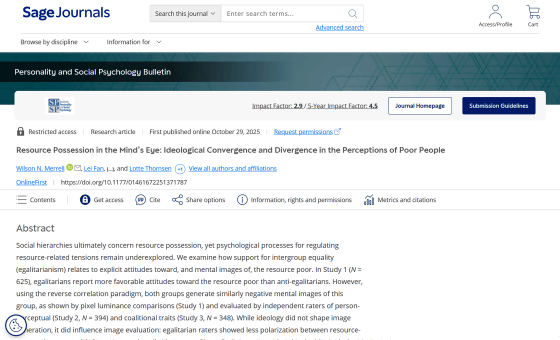
Resource Possession in the Mind's Eye: Ideological Convergence and Divergence in the Perceptions of Poor People - Wilson N. Merrell, Lei Fan, Jennifer Sheehy-Skeffington, Lotte Thomsen, 2025
https://journals.sagepub.com/doi/10.1177/01461672251371787
Egalitarians and anti-egalitarians share the same negative mental image of the poor
https://www.psypost.org/egalitarians-and-anti-egalitarians-share-the-same-negative-mental-image-of-the-poor/
Economic inequality and religious hierarchies are deep-rooted features of human history, and at the heart of these hierarchies is the tension over who has resources and who does not. Those at the top of the hierarchy generally enjoy affluence and privilege, while those at the bottom are forced to live impoverished and difficult lives.
While there are 'anti-egalitarians' who affirm this hierarchical structure and justify the unequal distribution of resources, there are also 'egalitarians' who are eager to dismantle the hierarchy and strive for a fair society. Previous research has shown that anti-egalitarians often use stereotypes to label the poor as 'lazy' and 'undeserving of a wealthy life,' while egalitarians tend to reject these labels and argue that poverty is a systemic problem.
A research team from the University of Oslo in Norway conducted an experiment to see whether these ideological differences regarding social class affect not only verbalized attitudes but also the mental image of what the poor look like.
If ideology shapes mental representations, then egalitarians should portray the appearance of the poor more positively than anti-egalitarians. On the other hand, if stereotypes about the poor are deeply rooted and shared across political lines, then people of all ideologies should have similar images of the poor.
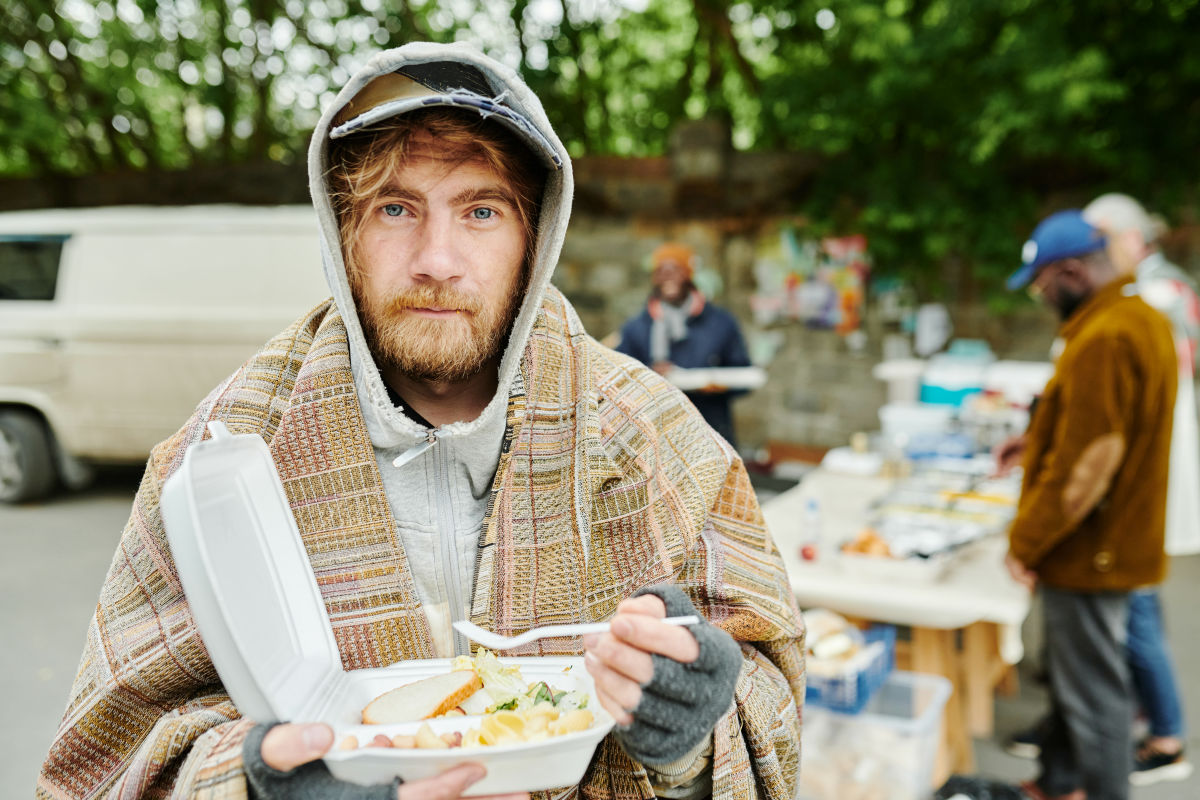
In the first experiment, 652 participants from the UK were asked to choose between two images of faces and identify them as 'poor' and 'rich' 300 times. These images were based on expressionless Caucasian male faces, with random visual noise superimposed to distort the way the brain interprets facial features. The researchers averaged the noise patterns across the selected images to create average faces that people perceived as 'poor' and average faces that people perceived as 'rich.'
After 300 trials, participants reported whether they supported egalitarianism or not, and also answered a questionnaire about egalitarianism, such as whether they viewed the poor as lazy or hardworking, and how warm or cold they felt toward the poor.
Analysis of the survey results showed that egalitarians felt more warmly toward the poor than anti-egalitarians and viewed the poor as socially connected rather than lazy.
However, when the research team analyzed the pixel brightness of the synthesized facial images to examine the objective similarity based on the patterns of light and dark in the faces, the results were different: they found a high correlation between the 'egalitarian' and 'anti-egalitarian' facial images of the poor, and that the structural features of the faces were nearly identical.
In the second experiment, 394 participants were shown the facial images created in the first study and asked to rate the facial features based on traits such as warmth, competence, dominance, aggression, and intelligence. The participants were not informed of the context in which the images were created and were asked to rate them as a neutral third party.
The results showed that egalitarians' portraits of poor people were rated just as negatively as anti-egalitarians'. Regardless of ideology, people portrayed as poor were rated as less competent and less warm than those portrayed as wealthy.
In a third experiment, to examine how these photographs were evaluated in more detail, 348 newly recruited subjects were asked to rate the 'laziness' and 'social solidarity' that they perceived from the photographs. As a result, the photographs of poor people created by egalitarians were also rated more negatively, being rated as 'lazier' and 'lacking social solidarity' than the photographs of wealthy people.
However, egalitarian raters tended to rate poor people's faces less negatively than anti-egalitarian raters, suggesting that although people share visual stereotypes about poverty regardless of ideology, egalitarians intentionally ignore these visual signals when making specific evaluations.
The researchers propose that mental representations of the poor may be a 'cognitive construct'—these mental representations emerge as visual images before people apply political and moral filters—and that resource-based stereotypes are deeply ingrained in the collective psyche.
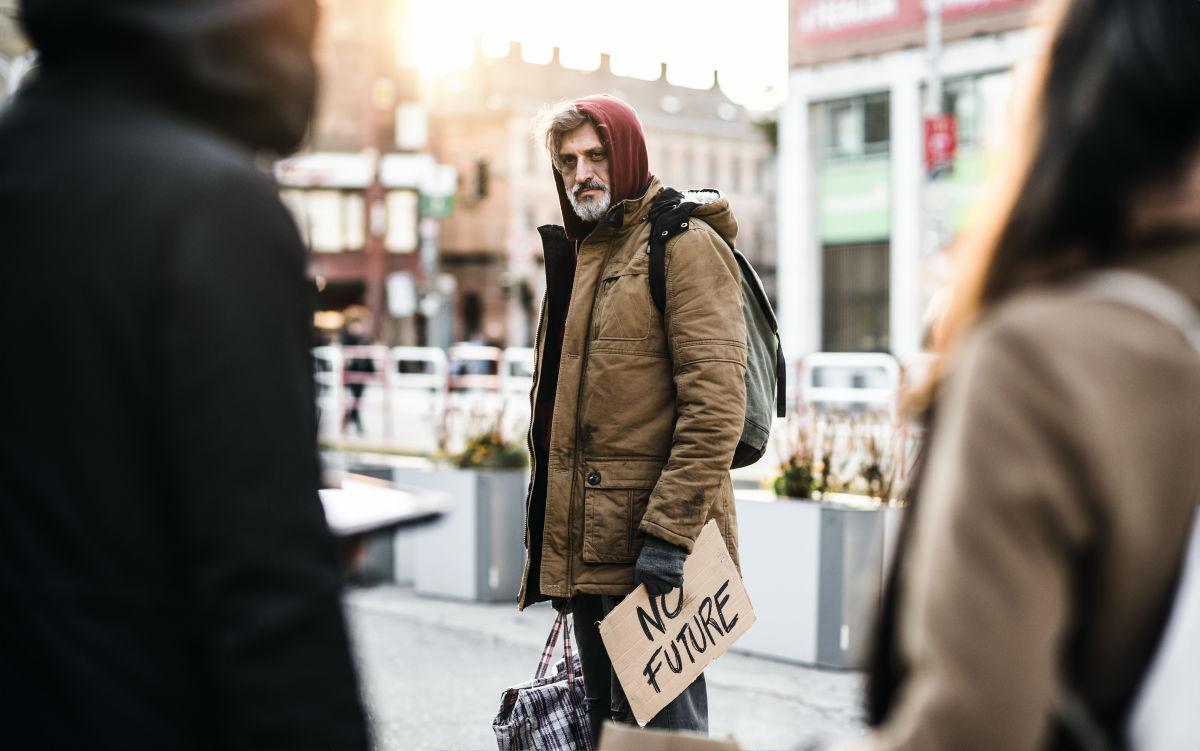
The facial photographs used in this study were based on white men, so the results may not apply to women or people of color. It's also unclear whether visual stereotypes about the poor arise from real-life interactions and experiences, or from media like movies and news. It's also unclear whether visual stereotypes about the poor affect behaviors like employment and welfare.
Future research could explore whether similar stereotypes about the poor exist in cultures with different media environments, helping to determine whether prejudice has an evolutionary basis or is learned through the media.
'Ultimately, this study highlights a disconnect between our beliefs and our visual perceptions. We may sincerely desire equality and hold positive views of those less fortunate. Yet, our brains may harbor negative visual associations that contradict these conscious beliefs,' PsyPost wrote.
Related Posts:







in Free Member, Science, Posted by log1h_ik