The mortality gap between college graduates and non-college graduates is widening

A working paper from the National Bureau of Economic Research (NBER) reports that the 'mortality gap' between those with and without a college degree in the United States has widened rapidly over the past 30 years. The research team examines the underlying causes of this change in mortality rate, focusing not only on educational differences but also on the widening regional mortality gap and the growing disadvantage of rural areas over the same period.
Explaining the Widening Divides in US Midlife Mortality: Is There a Smoking Gun? | NBER
The research team, led by Christopher L. Foote of the Federal Reserve Bank of Boston and Ellen Miara of the Harvard School of Public Health, focused their study on 'middle-age (25-64 years) mortality.' Previous estimates suggest that the difference in life expectancy between college graduates and non-college graduates was 2.6 years in 1992, widening to 6.3 years in 2019. The trend in middle-age mortality is similar, with college graduates seeing long-term improvements while non-college graduates have seen slower improvement, resulting in a widening gap between the two.
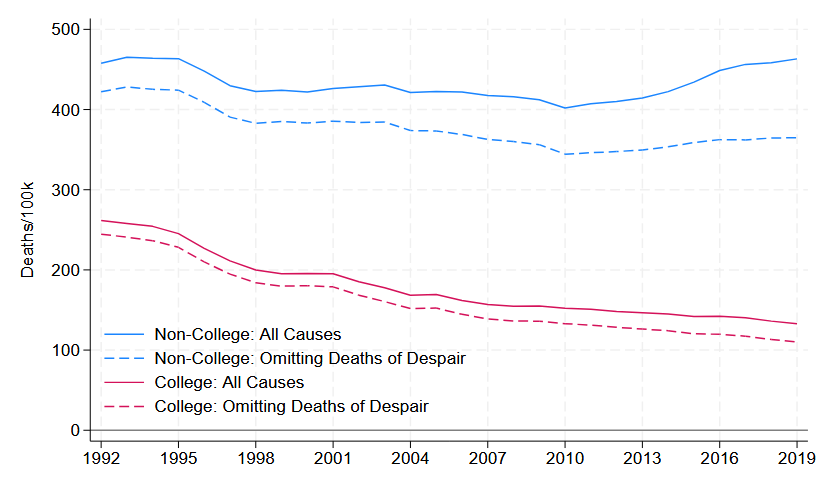
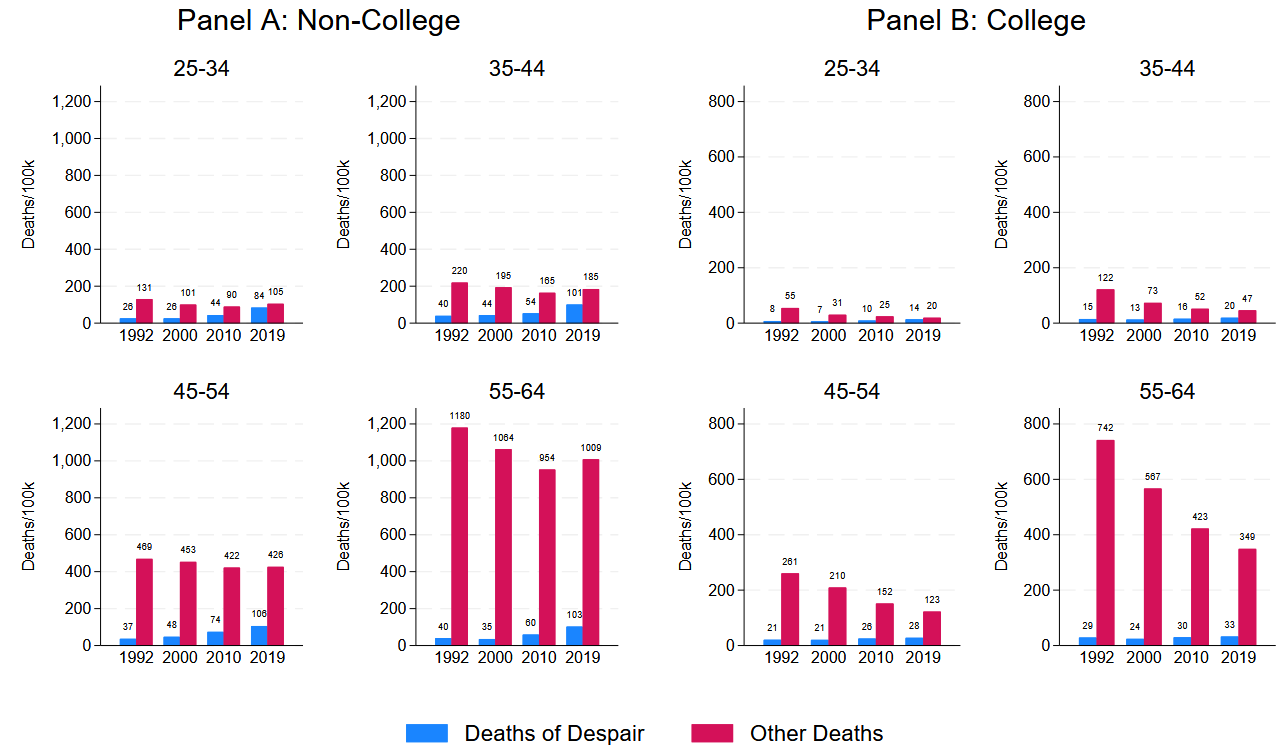
Deaths of despair, such as drug overdose, alcohol-related illnesses, and suicide, are often cited as explanations for the mortality rate disparity. However, when looking at the breakdown by age, non-college graduates also have a higher proportion of deaths other than deaths of despair, indicating that the disparity is not due to a single cause.
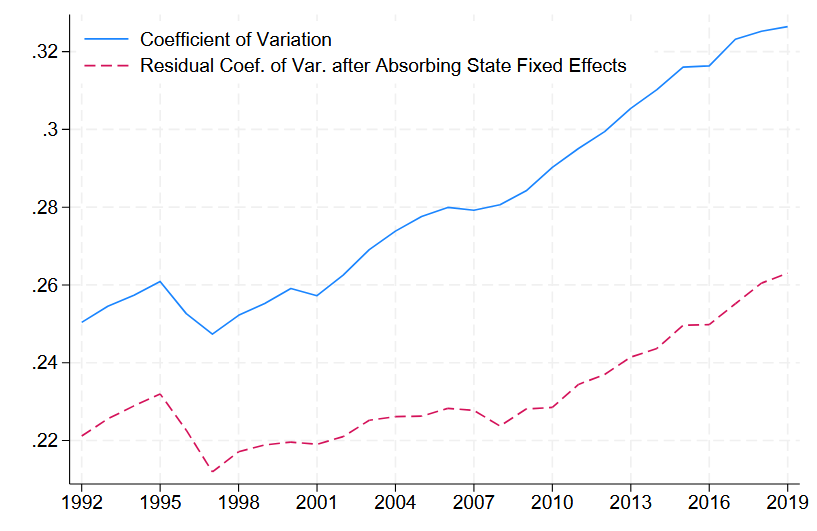
The research team focused on the fact that even among non-college graduates, the degree of improvement varied depending on where they lived. The variation in mortality rates across counties has widened over time, indicating that not only the average difference but also the regional differences themselves have become larger.
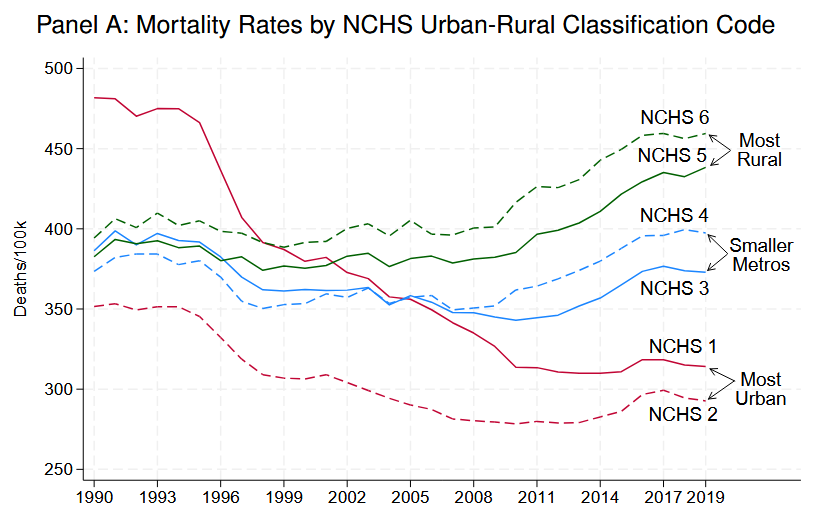
This geographical difference is between urban and rural areas, and while mortality rates are improving in cities, the improvement is slower in rural areas, putting rural areas at a disadvantage. This suggests that not only are educational gaps widening, but regional factors are also compounding the disparity and solidifying it.
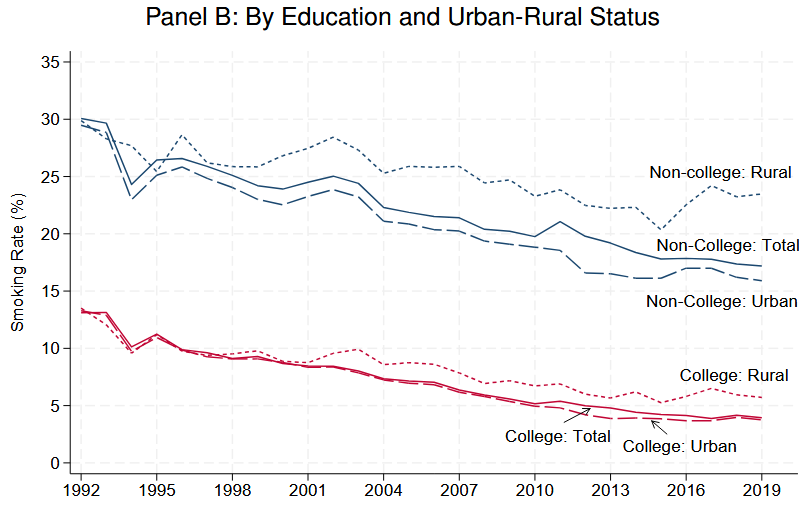
After comparing multiple possible factors that could be causing this geographical variation, the research team states, 'Regional differences in smoking rates were strongly linked to how regional differences in mortality rates widened.' When the smoking rate trends were divided by educational background and urban/rural, they found that smoking rates declined in both urban and rural areas among university graduates, while smoking rates tended to remain high in rural areas among non-university graduates, suggesting that the gap between urban and rural areas tends to remain.
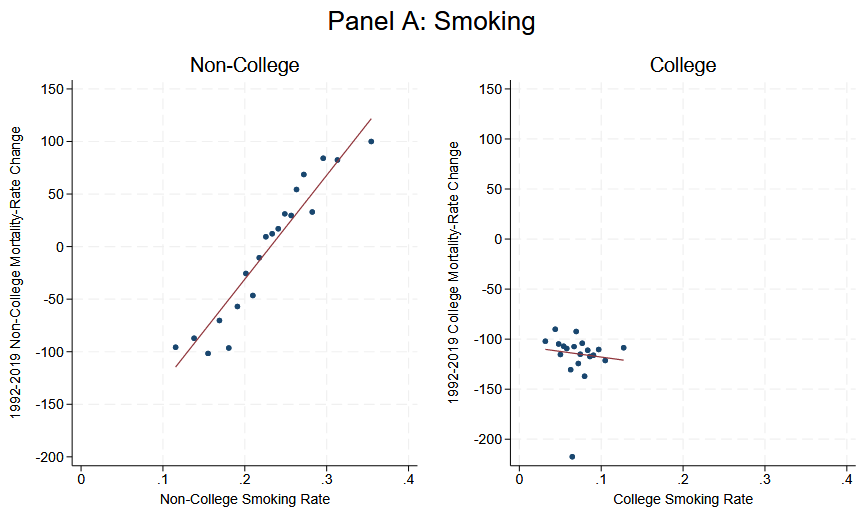
Furthermore, the tendency for areas with higher smoking rates to have worse (less likely to improve) subsequent mortality rates was more pronounced among non-college graduates. While smoking poses a health risk for college graduates as well, the degree to which it is linked to geographical variation is relatively weak, suggesting that smoking may overlap with the 'widening regional disparities among non-college graduates.'
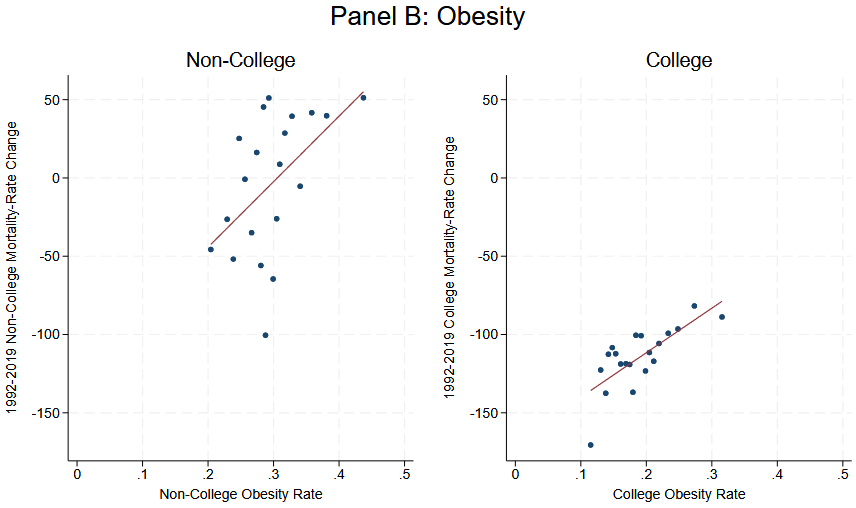
Smoking is not the only behavior that poses a health risk. The study also applied the same framework to other potential health risks, such as obesity, and compared which factors best accounted for the differences between areas where mortality rates worsened and areas where they improved. The results showed that while a certain relationship between obesity rates and mortality rates appears to exist, at least in this analysis, it does not necessarily overlap as clearly with the 'arrangement of areas where mortality rates have changed' as with smoking.
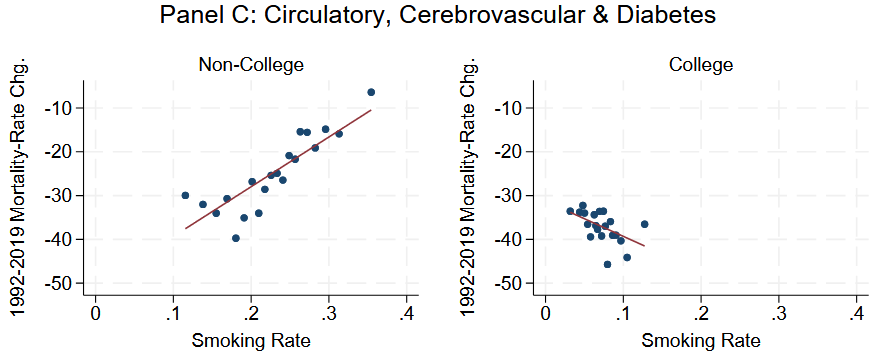
The research team does not claim that the health hazards of smoking alone can explain the widening disparity. They state that because the mortality rate disparity is large and the causes of death are diverse, smoking may be amplifying the effects of other factors. In fact, even in the areas of cardiovascular, cerebrovascular, and diabetes, there is a tendency for smoking rates and mortality rates to move in the same direction among non-college graduates, suggesting that the effects of smoking may not be limited to specific causes of death such as lung cancer.
This research has also been discussed on the social news site Hacker News, with comments such as, ' Could it be that the increase in the number of people going on to college has simply left a relatively higher proportion of high-risk individuals among non-college graduates ?', ' Can smoking alone explain middle-aged deaths ?', ' Could obesity and fentanyl be to blame? ', ' Differences in access to medical care are important ,' and ' Could changes in the gender ratio be related ?'
While the research team also found that smoking was a strong predictor, they noted that it remains unclear why the 'place effect' was so strong only among non-college graduates.
Related Posts:








in Science, Posted by log1b_ok