The RESISTORS were one of the earliest computer clubs for teenagers that emerged in the 1960s.

Even in the early days of computers in the 1960s, there were already groups of teenagers who were computer enthusiasts.
The RESISTORS Were Teenage Hackers and Computer Pioneers - IEEE Spectrum
https://spectrum.ieee.org/teenage-hackers
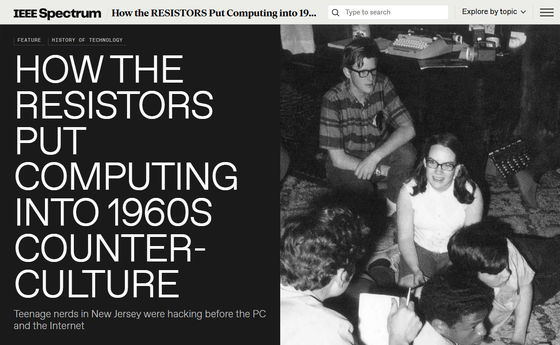
In late April 1968, a computer conference was held in Atlantic City, New Jersey, USA. However, a telephone operator strike prevented exhibitors from connecting their terminals to computers outside the conference hall, causing all of the exhibitors' displays to stop functioning.
The RESISTORS, a group of computer enthusiasts based near Princeton, New Jersey, came to the rescue. They managed to circumvent the problem by borrowing an acoustic coupler, the precursor to a computer modem, and connecting to a nearby pay phone. The name 'RESISTORS' stands for 'Radically Emphatic Students,' a group of students interested in science, technology, and research.
The RESISTORS' success was reported in the technology magazine Computerworld with the headline, 'Conference opens with students stealing the show.'
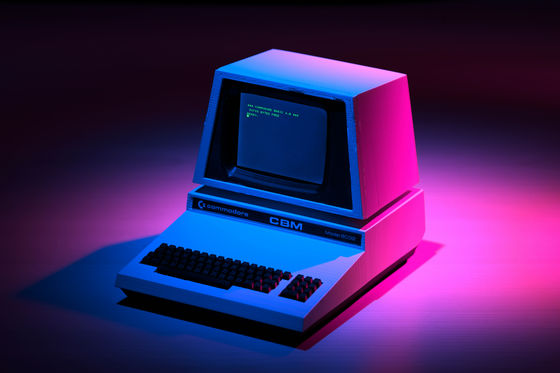
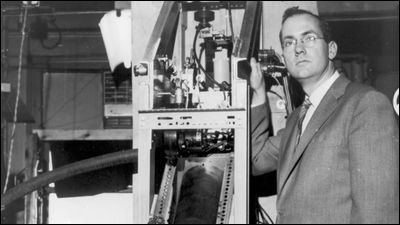
One of the central figures in the RESISTORS is engineer
Chuck Ehrlich, one of the early RESISTORS and later an entrepreneur and venture capitalist, was looking for a group of 'intelligent outcasts' in late 1966. Ehrlich wasn't interested in smoking marijuana or social protest, but he was interested in electronics.
Kagan knew the fathers of some of the 'smart outcasts' in Ehrlich's group, so he offered to lend the group his barn, where they could see Kagan's collection, which included an IBM paper tape punch, an analog telephone, and a Frieden flexowriter .
The most notable were the vacuum tube computers Burroughs Datatron 205 and Packard Bell Computer PB250 . Club members were able to get the PB250 up and running, allowing them to run programs written in TRAC . At the time, being able to operate a computer interactively and in real time was something that was out of reach for the average person.
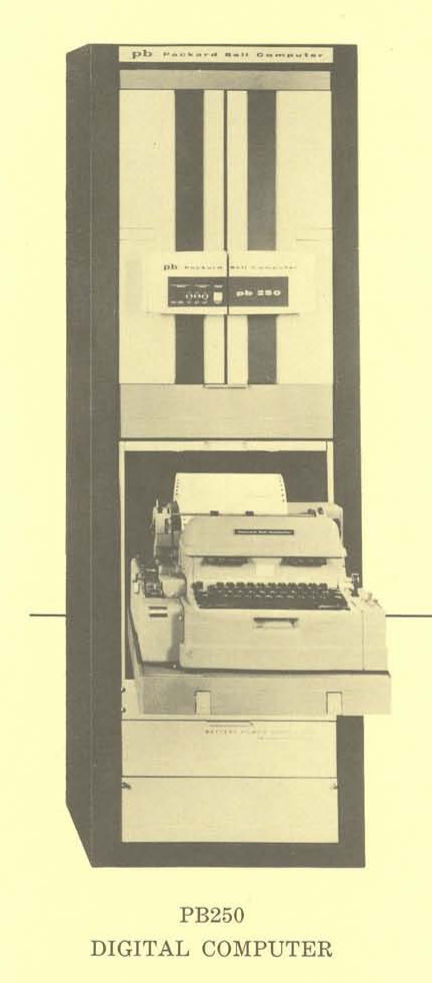
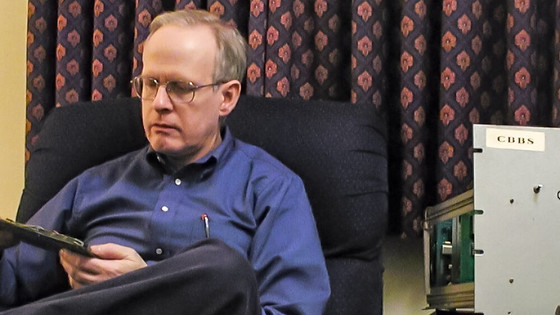
Kagan eventually convinced
The Resistors then became involved with computer pioneer Ted Nelson , who created hypertext in 1963.
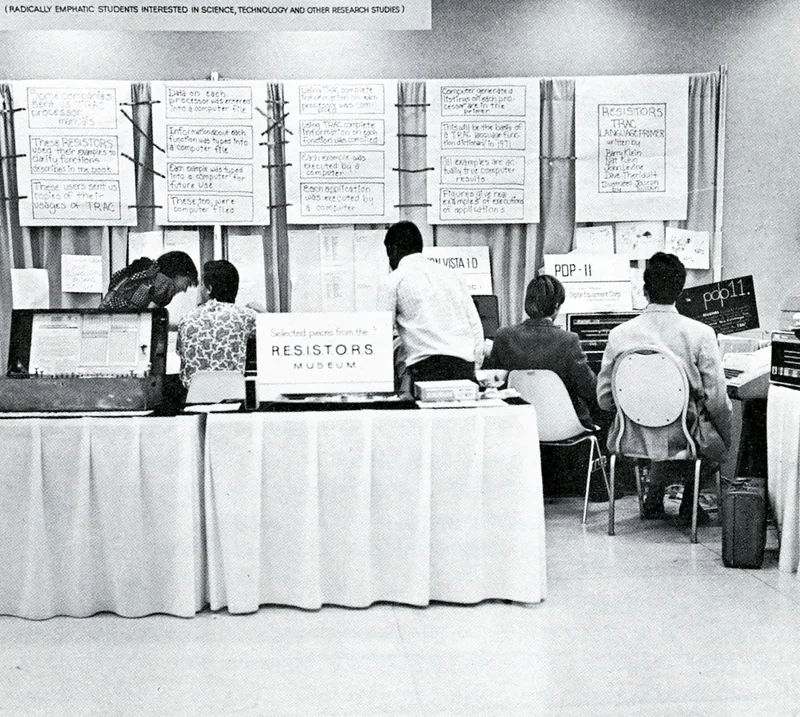
What first brought Nelson and the Resistors together wasn't computers, but an avant-garde art show. In the fall of 1970, New York's Jewish Museum opened a lavish exhibition called 'Software,' offering thousands of visitors the opportunity to try out minicomputers, teletype machines, high-speed copy machines, and closed-circuit television.
Nelson, who served as the technical advisor for the exhibition, hired RESISTORS as support staff for the exhibition. Nelson explained the reason for hiring RESISTORS: 'Some people are too proud to ask children for information. This is foolish.' Various artists exhibited art using programming at the exhibition, but it was RESISTORS who actually exhibited them.
Nelson also collaborated with programmer Ned Woodman on a project called 'Labyrinth.' Running on a PDP-8, Labyrinth was 'the first public demonstration of a hypertext system,' displaying hypertext links between information about exhibitions and their organizers.
Although the Resistors have just under 70 members, many of them are active in technology and science, including a member who has written a computer book that has sold millions of copies, and a co-founder of Cisco Systems, which grew from a manufacturer of networking hardware like internet routers into a multi-billion dollar company.
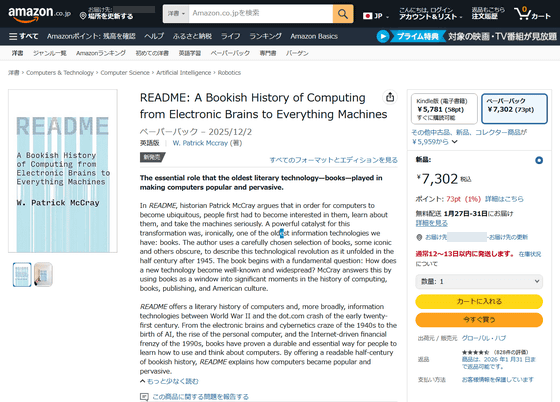
RISISTORS is discussed in detail in the README of his book by W. Patrick McCray , a professor and historian at the University of California, Santa Barbara.
Amazon | README: A Bookish History of Computing from Electronic Brains to Everything Machines | McCray, W. Patrick | Robotics
Related Posts:



in Note, Posted by logu_ii