Camera app developer releases results comparing OpenAI and Google's image generation AI with a large number of samples
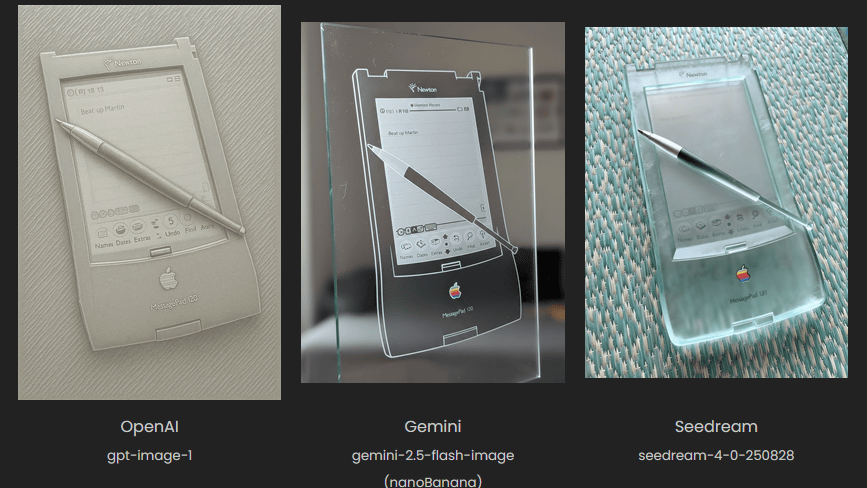
LateNiteSoft, the developer of the camera app '
We ran over 600 image generations to compare AI models - LateNiteSoft Blog
https://latenitesoft.com/blog/evaluating-frontier-ai-image-generation-models/
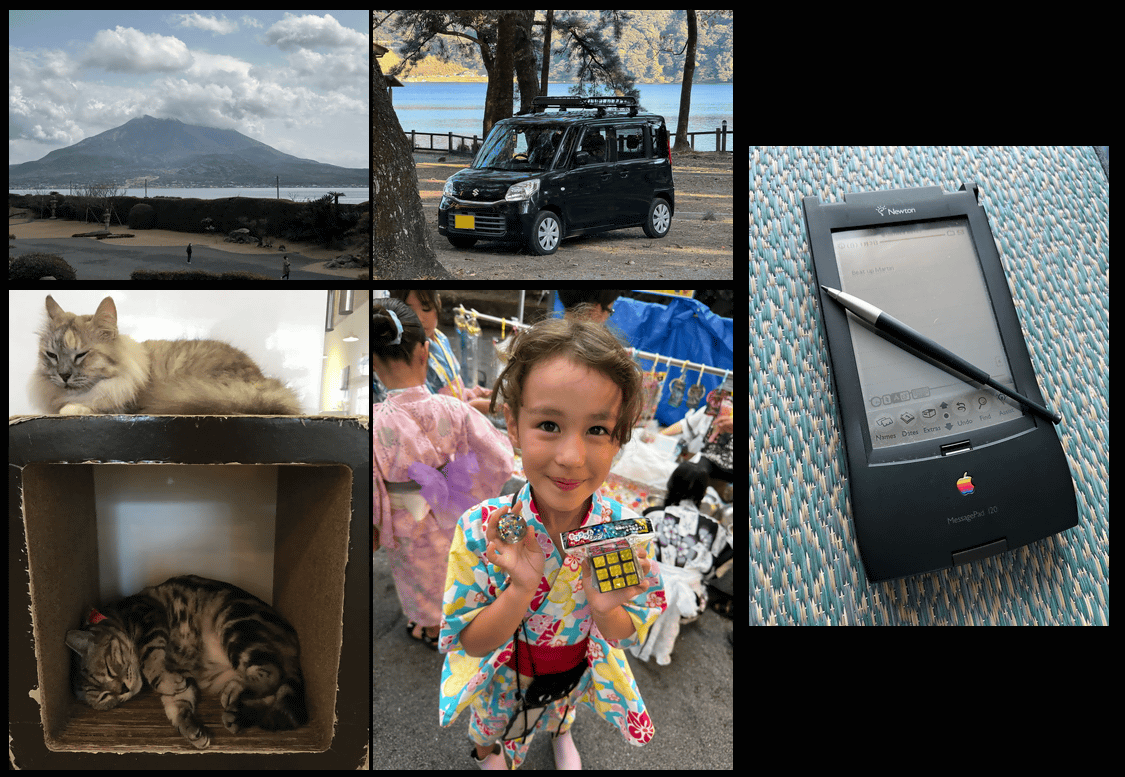
LateNiteSoft fed the following five photos into its image generation AI, edited them with various prompts, and compared the results. The AIs compared were OpenAI's 'gpt-image-1,' Google's 'gemini-2.5-flash-image (Nano Banana),' and ByteDance's 'seedream-4-0-250828.' The test was conducted on October 8, 2025, over a nominal 10Gbps fiber optic line in Japan.
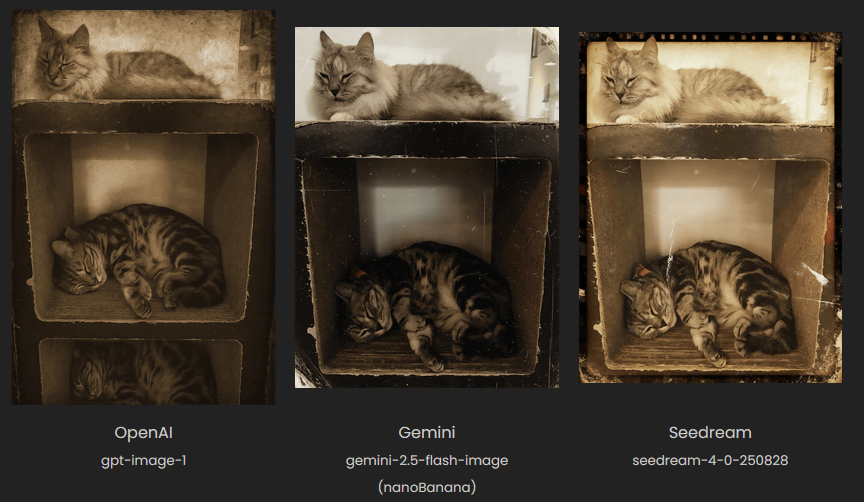
Below are the results of editing a photo of a cat with the prompt 'Grungy vintage photo.' From right to left, the edit results of 'gpt-image-1,' 'Nano Banana,' and 'seedream-4-0-250828' are listed. gpt-image-1 flexibly edits the image according to the prompt, but it is too flexible and may deviate from the original subject's composition. On the other hand, Nano Banana preserves too much of the original image information, making the prompt less effective. seedream-4-0-250828 is an intermediate result.
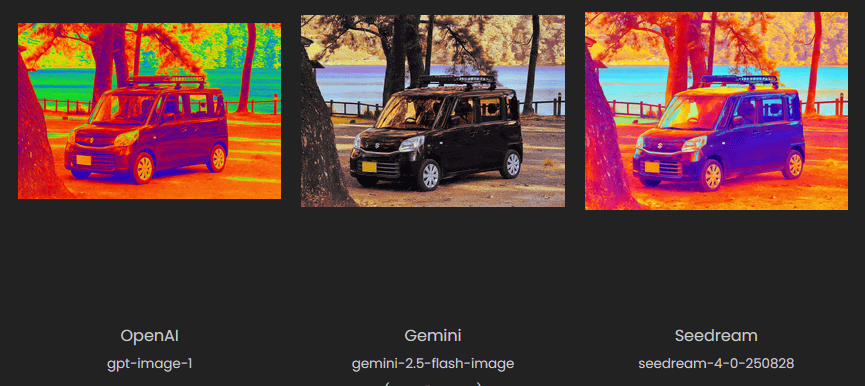
Even with the prompt 'Apply a heat map effect,' only Nano Banana did not produce a heat map-like image.
The prompt 'Pinhole camera' looks like this. The prompt was intended to create a blurry image with intense peripheral dimming, like that taken with a pinhole camera, but Nano Banana's behavior was to 'add a camera to the top left of the device.'
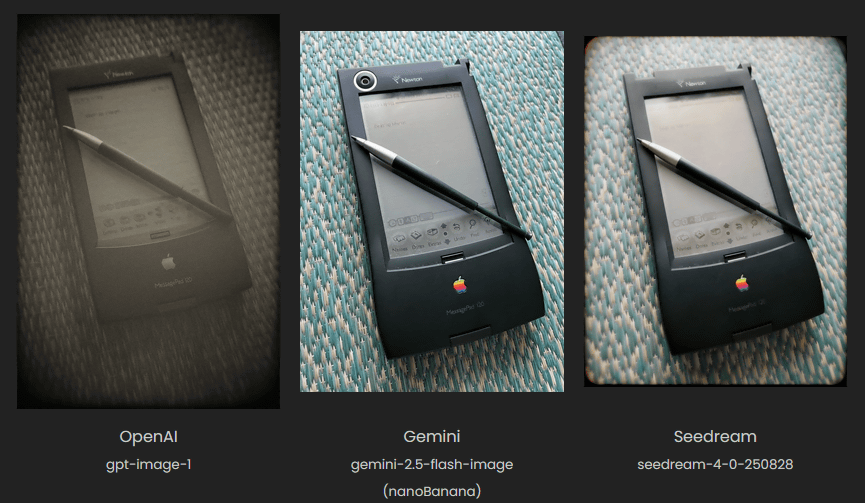
If you change the prompt to 'Pinhole camera effect', Nano Banana will also look like an image taken with a pinhole camera.
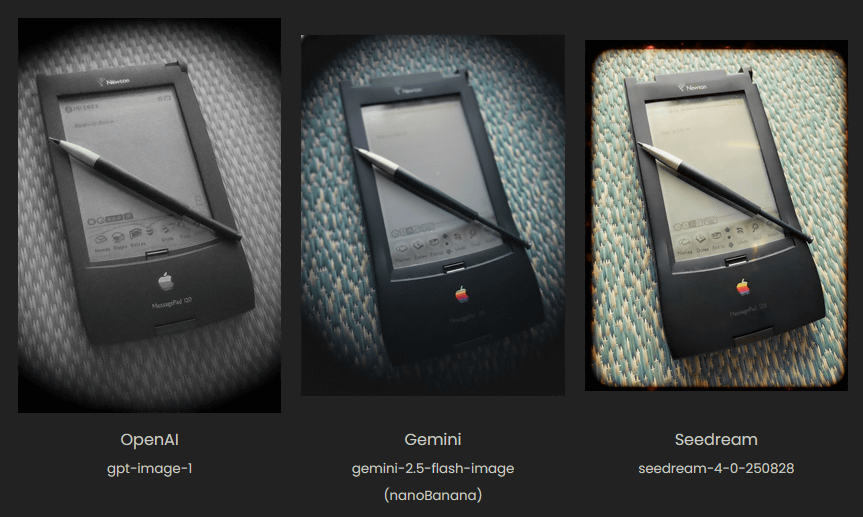
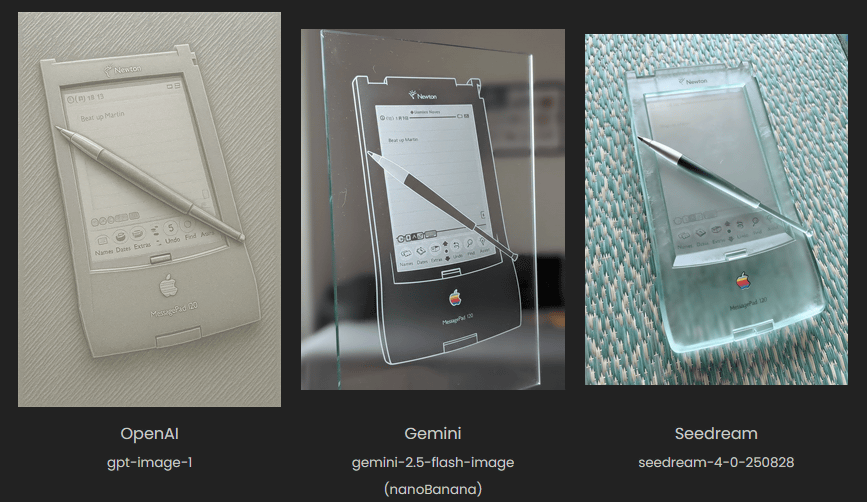
The instructions, 'Make it look like the photo
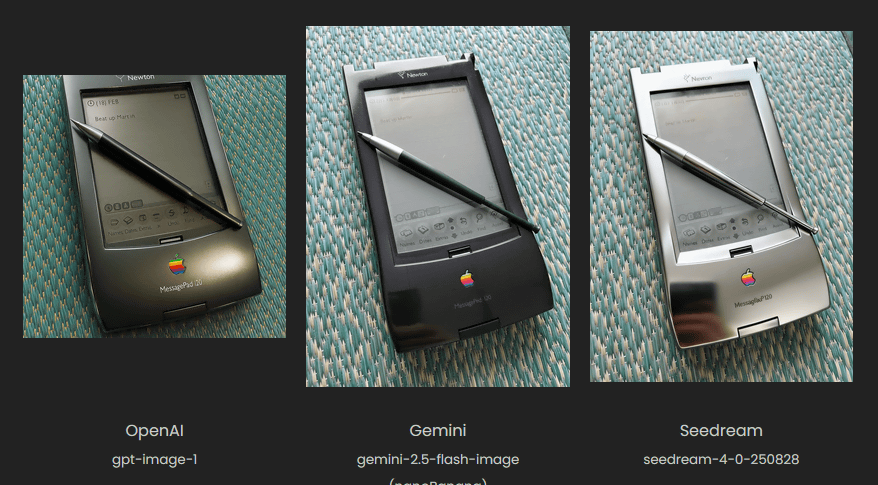
In the 'Give the object a metallic sheen' mode, seedream-4-0-250828 was able to emphasize the metallic feel the most. Nano Banana and seedream-4-0-250828 also reproduce the effect of 'the photographer's smartphone being reflected in the glossy part.'
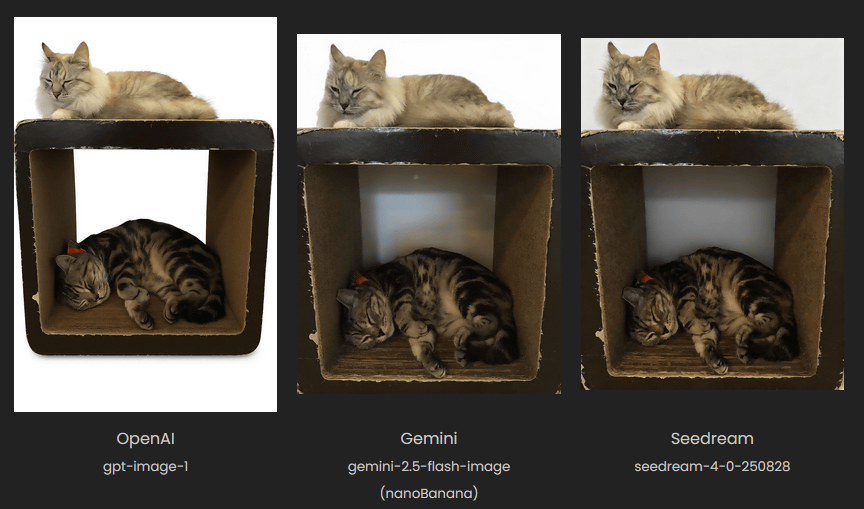
The instruction 'Remove background' made a bold change to the original composition of only gpt-image-1.
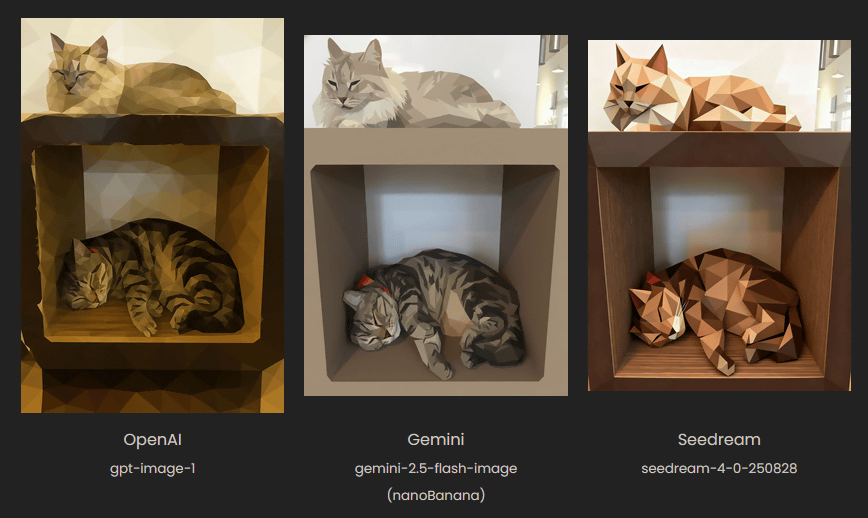
The result of 'Transform into low poly art' looks like this. seedream-4-0-250828 is an excellent result.
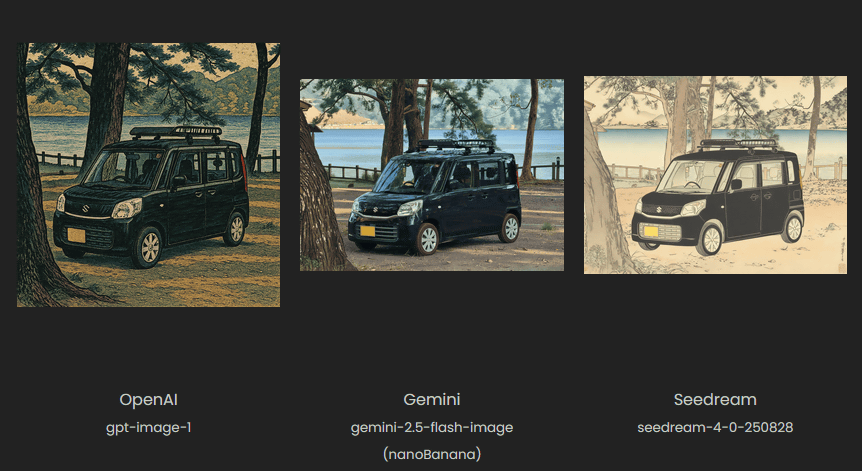
When I selected 'Apply a ukiyo-e Japanese woodblock print style,' only the Nano Banana did not look like ukiyo-e.
The 'Turn them into an action figure in the blister pack' proto produced three different results: gpt-image-1 produced a highly deformed style, while gpt-image-2 maintained the original posture and body shape.
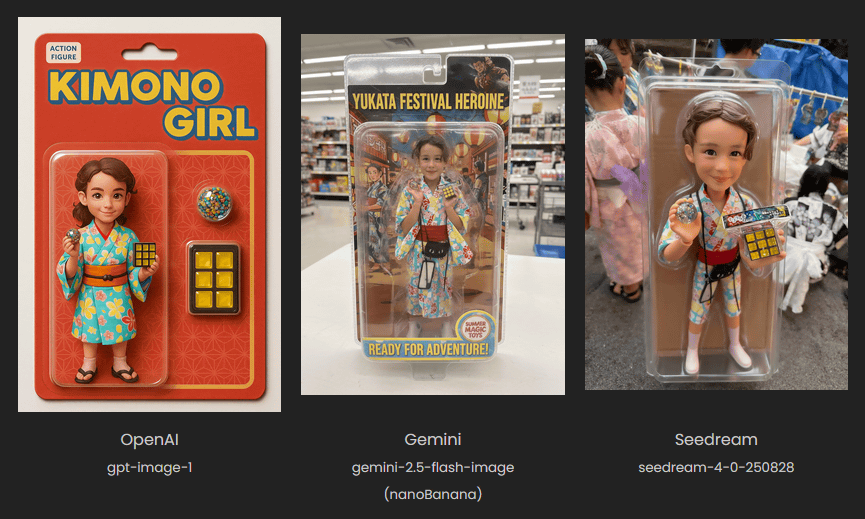
LateNiteSoft concludes, 'At least at this point, there is no universal model. gpt-image-1 is best suited for style transfer and creative generation filters, while Nano Banana is better suited for realistic editing. seedream-4-0-250828 is somewhere between gpt-image-1 and Nano Banana.'
Related Posts:
in AI, Posted by log1o_hf