Researchers reveal how brain activity, energy use, and blood flow change when we fall asleep
Massachusetts-based medical research institute Mass General Brigham has used next-generation imaging technology to reveal how brain activity, energy usage, and blood flow change as people fall asleep.
Simultaneous EEG-PET-MRI identifies temporally coupled and spatially structured brain dynamics across wakefulness and NREM sleep | Nature Communications
New Research Uncovers How the Brain's Activity, Energy Use, and Blood Flow Change as People Fall Asleep | Mass General Brigham
https://www.massgeneralbrigham.org/en/about/newsroom/press-releases/research-shows-coordinated-shift-in-brain-activity-while-asleep
Human sleep is made up of cycles of REM and non-REM sleep. Non-REM sleep is a deep, restorative sleep that plays an important role in maintaining healthy body and brain function and preventing disease. Some research suggests that this stage is responsible for 'clearing waste products from the brain.' However, the underlying process and its long-term impact on health are still not fully understood.
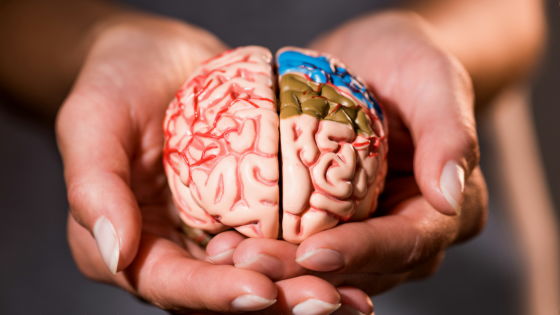
Researchers at Mass General Brigham used a new trimodal EEG-PET-MRI technique, which combines EEG (electroencephalography) to monitor brain activity with functional MRI and functional PET-FDG to monitor metabolic dynamics of blood glucose levels, to monitor short naps in 23 healthy adults.
They found that as sleep deepened, energy use and metabolism decreased, while blood flow became more dynamic, especially in the active sensory areas of the brain. Meanwhile, higher cognitive networks remained quiet, with increased cerebrospinal fluid flow.
The figure below shows the areas of increased blood flow in the brain with darker colors.

This is what it looks like when the areas where glucose metabolism has decreased are highlighted.

The researchers concluded that these results support the idea that sleep helps clear waste products from the brain while preserving sensitivity to sensory cues that may trigger awakening.
Future research should involve larger, more diverse populations and collect longer, deeper sleep records.
They also plan to use more precise methods to clearly distinguish between sleep stages.
Related Posts:





in Science, Posted by logc_nt