Pointed out that the identity verification imposed by Google on third-party apps is 'the most consumer-unfavorable move ever'
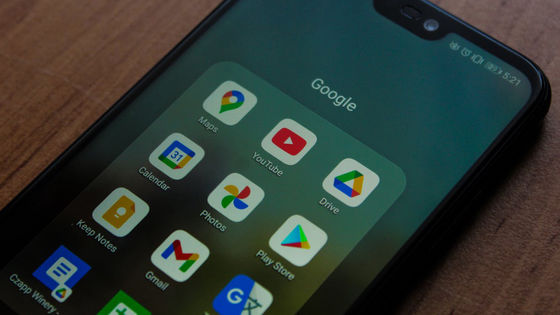
Android allows users to freely install apps from sources other than the official app store, Google Play, through 'sideloading.' However, the number of malware detected in sideloaded apps is said to be more than 50 times higher than in apps on Google Play. To address this issue, Google has announced plans to introduce a ' developer verification' feature that will verify the identity of all apps. While the developer verification feature is intended to protect users, it has sparked strong opposition in the tech media and developer community, who see it as a 'consumer-unfriendly move.'
Android's sideloading limits are its most anti-consumer move yet
https://www.makeuseof.com/androids-sideloading-limits-are-anti-consumer-move-yet/
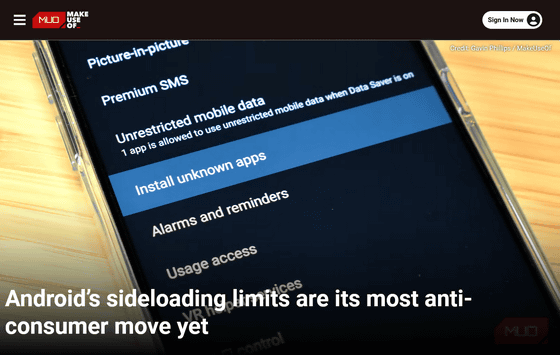
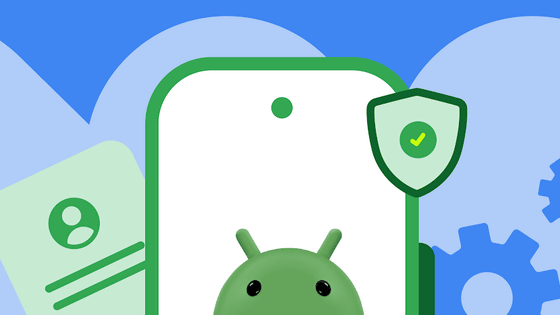
In August 2025, Google announced the 'Developer Verification Feature' to reduce the risk of accidentally installing malware on devices. Under the Developer Verification Feature, developers distributing apps outside of Google Play will be required to verify their identity by providing their address, name, email address, phone number, etc. After verification, they will be considered to have completed identity verification by registering the app's package name and signing key. The Developer Verification Feature is scheduled to be rolled out in some regions from September 2026 onwards, and globally from 2027 onwards.
Google introduces 'Developer Authentication' feature to verify the identity of all apps installed on Android - GIGAZINE
The developer verification feature is a system to verify the identity of the developer, but does not review the content or functionality of the app. App security checks are performed by Google Play Protect , which warns against unsafe installations and blocks apps from unknown sources.
Technology media outlet MakeUseOf points out that the Developer Verification feature does not protect users, but is rather 'anti-consumer.' First, while sideloading poses security concerns compared to installation through Google Play, some argue that it guarantees consumers' right to freely choose and install apps, and that the Developer Verification feature restricts this. Furthermore, there is also the concern that if restrictions are strengthened, it could lead to a monopoly that forces dedicated app stores, as Apple and Google are often accused of under the Digital Markets Act .
Furthermore, there are concerns that Developer Verification will impact the entire ecosystem centered around Android application packages (APKs) . While many of the platforms hosting apps unavailable on Google Play, such as F-Droid , operate outside of Google's control, the new sideloading restrictions could potentially prevent many apps, even if they are safe, from being used on mainstream devices. Regarding Developer Verification, F-Droid stated in a blog post, 'If enacted, this legislation would spell the end of free and open-source app distribution sources, including the F-Droid project, and deprive the world of the safety and security of thousands of apps that anyone can trust and verify. Millions of F-Droid users would be left in limbo , without the ability to install or even update existing apps.'
App distribution site F-Droid strongly opposes Google's mandatory developer registration - GIGAZINE
Another important point is that for indie and hobbyist app developers, the time, effort, and privacy required for identity authentication will be a burden, and the speed of sideloading will be compromised. Android's great advantage of not relying on a single central authority, its flexibility and the potential for innovation, may be lost.
'Ultimately, this could lead to a shrinking ecosystem, which would be detrimental to us all, consumers and developers alike. There are ways around the restrictions, but they involve various trade-offs, including technical complexity and potential security risks. One thing is certain: Android's openness is being lost. However, it's unclear whether we'll ever see a completely closed ecosystem,' MakeUseOf said.
Related Posts: