Former MIT professor and iRobot founder Rodney Brooks discusses the false expectations created by the hype around humanoid robots and AI
In recent years, huge amounts of money have been poured into fields like AI and robotics, and a wide variety of promotional activities have been carried out, but some people may be unsure of what AI and robots can actually do. Technology writer
iRobot Founder: Don't Believe The (AI & Robotics) Hype! – Crazy Stupid Tech
https://crazystupidtech.com/2025/09/29/irobot-founder-dont-believe-the-ai-robotics-hype/
◆Are people becoming 'machine idiots'?
In recent years, many people believe that the development of technology has improved the efficiency of life and work, but Malik argues that people are simply blindly following machines and becoming 'machine fools.' In fact, when Malik rode in a Waymo self-driving car, he was dropped off in a completely different place, even though the map indicated the correct location.
'When I got here in my Uber this morning, I asked the driver what street I was on and he said, 'I'm just following it,' and he had no idea where I was,' Brooks said. 'And that's the problem. Even though there's a human involved, they still don't know what to do if something goes wrong.'
Brooks' current company, Robust.AI , is developing a 'smart cart' for delivery warehouses. At the time of writing, many warehouse employees are engaged in picking tasks, but walking around the warehouse to pick up the desired items, lifting heavy loads, and moving carts loaded with loads puts a lot of strain on the body.
Robust.AI's smart cart, called 'Carta,' understands its current location, guides employees to the location of the product to be picked, and drives itself using voice control to transport the loaded products to the designated location. Employees can also manually control Carta, which reduces the burden on employees while maintaining their ability to control it compared to existing solutions that require carrying small screens or text-based software. Brooks said, 'My company has always been about human control,' explaining that Carta can also be operated by humans, so that even if a Roomba stops working, a human can lift it and move it.
Carta also uses a simple system that waits for a human to move if an aisle is blocked, and changes direction if the aisle is blocked by a stationary pallet, notifying a central system of the presence of an obstruction. Brooks said, 'This is simple intelligence that we can achieve and make reliable today. It's not flashy. It's technology that makes the worker's job easier and more efficient.'
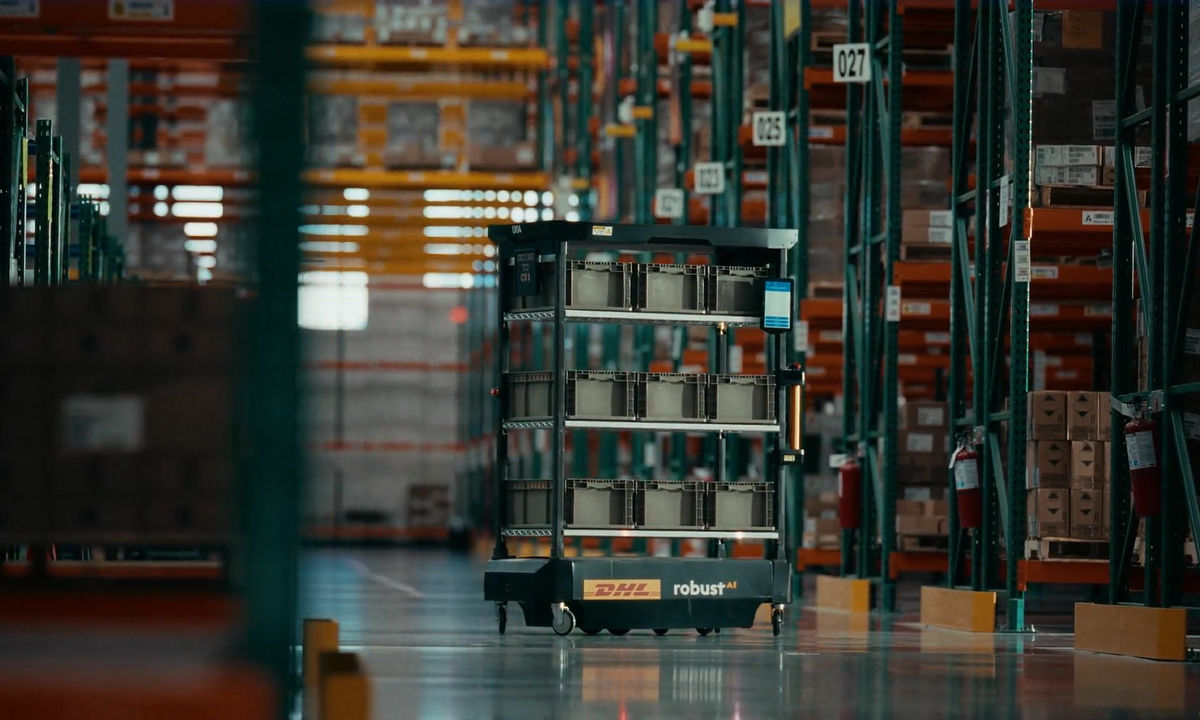
by Robust.AI
◆What are the disadvantages of the concept of 'humanoid robots'?
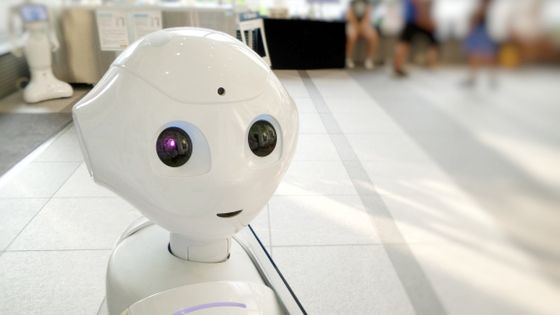
The conversation between Malik and Brooks turned to humanoid robots, with Malik saying, 'There are misconceptions about robots and robotics. The biggest misconception is that robots have a human form.' 'When we think of a robot, we don't think of a system that constantly delivers ads. That's a robot, too.'
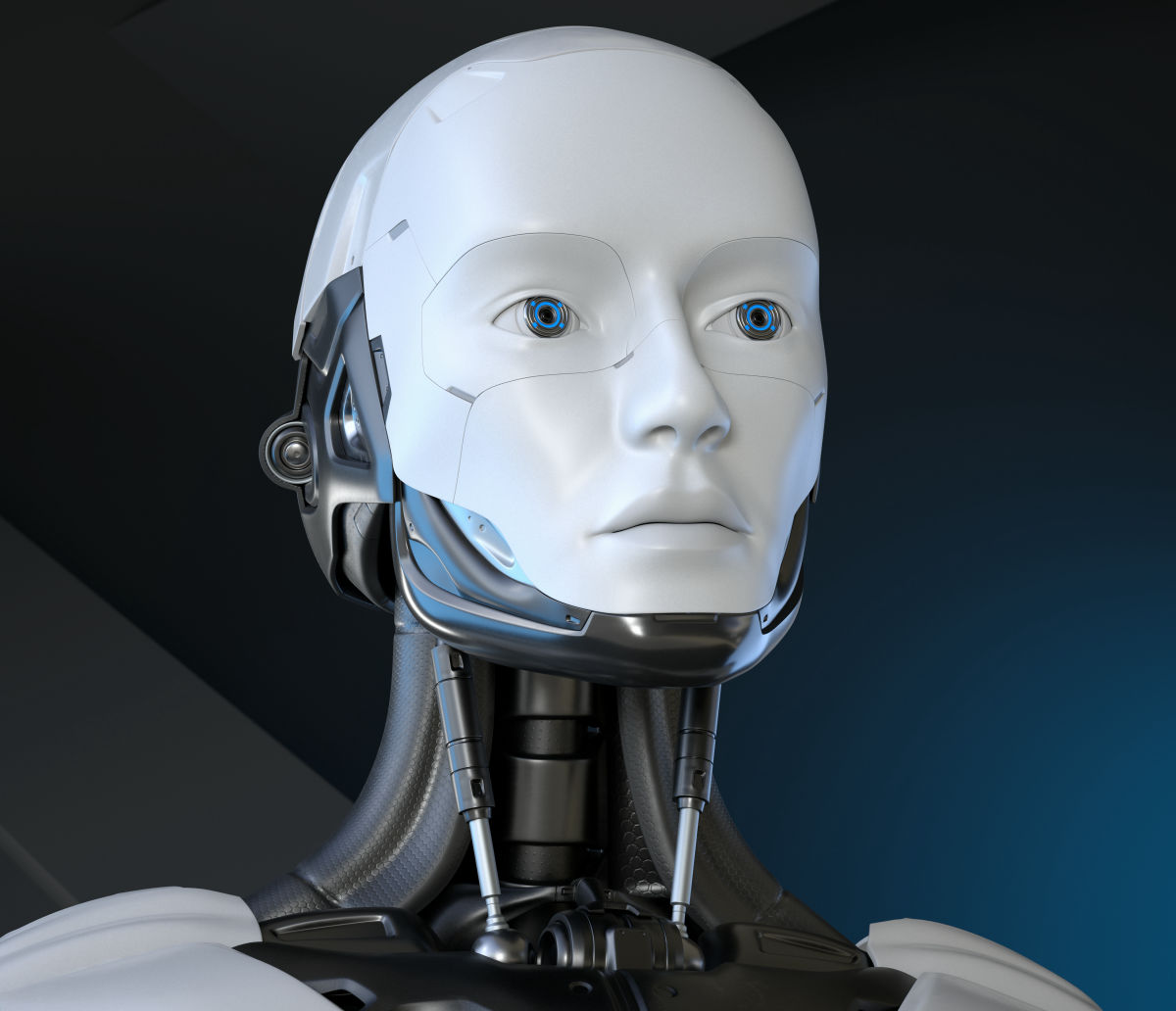
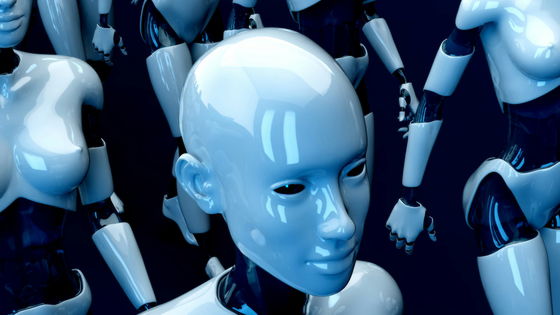
In response, Brooks said, 'What I always say about physical robots is that their appearance promises what they can do. Roomba was a small disc on the floor and didn't make much of a promise. People who saw it thought, 'I can't clean windows,' but they could imagine it cleaning the floor. But if it had a human form, it seemed to promise that it could do anything a human could do. That's why humanoid robots are so attractive to people. They sell an amazing promise.' He argues that humanoid robots create expectations that their appearance makes them seem like they can do anything a human can do.
◆What is the current state and problems of robotics?
Brooks said the current state of robotics in the United States is good news, with increased processing power thanks to massive computing resources and the development of small sensors. He also said his company has been able to obtain parts cheaply and in large quantities by using hub motors from electric scooters, which have become popular in recent years, for its robots.
While various robot-related technologies have advanced, people tend to underestimate the 'long tail of the natural environment.' For example, Brooks first attended a lecture on self-driving cars in 1979, self-driving cars ran in Paris in 1990, and the Defense Advanced Research Projects Agency (DARPA) unveiled a self-driving car in 2007. However, as of the time of writing, self-driving cars have only been deployed in select areas, and their adoption has been very slow. Brooks calls the various factors hindering the adoption of these technologies the 'long tail of the natural environment.'
'Companies tend to do flashy demos, but these demos don't correspond to the real world,' Brooks said. 'The technology has to work in a chaotic world. That's why it takes so long to get these technologies off the ground.'
◆Do we need to rethink our approach to innovation and the world?
Malik asked Brooks, 'Given what we know so far, do you think we should rethink our approach to innovation, our approach to education, and our very worldview? The 'pre-network' era worked well for 40 years, but we now live in a 'post-network' world with a new intensity and rhythm.'
In response to this question, Brooks said, 'The world is entering a new rhythm, and my fear is that everyone will jump on the 'new orthodoxy.' For the past few years, we've been told that anyone not working on neural network-based AI is behind the times, a dinosaur. But I can say with certainty that non-neural network-based techniques that have been around for many years will become increasingly important.'
Brooks points out that generative AI, which is equipped with a universal language processing machine, is seen as questioning what it means to 'understand language' and challenging human intelligence. Brooks previously made provocative remarks about AI on stage at the World Economic Forum, where he was criticized by the audience for 'disrespecting humans.' Some people feel that the emergence of superior systems and new theories has diminished the 'uniqueness of humans.'
◆Is AGI possible?
The conversation then turned to AI and robotics, with Brooks arguing that 'people often get sucked into erroneous ideas.' For example, Isaac Newton left behind many outstanding accomplishments, including the invention of calculus and the formulation of the laws of motion, but he spent more than half his life practicing alchemy, trying to turn lead into gold. Modern observers might wonder, 'Why would Newton believe in something as foolish as alchemy?' This is because Newton didn't know about nuclear reactions and didn't realize that turning lead into gold required manipulating atomic nuclei. In other words, Newton's 'fundamental model' was wrong.
Also, Elon Musk was a person in the technology world, but when he founded the space development company SpaceX, he didn't think, 'I can put a spacecraft into orbit just by writing a Python script.' This is because he understood that no matter how large a program he wrote, the spacecraft would not be put into orbit, and that he had to think about efficient fuel combustion, mass, fluid dynamics, etc.
On the other hand, modern people tend to think that 'what happens in the brain is computation,' and many believe that as AI's computational power increases, we will eventually reach AGI. However, it has not been proven that computational power alone is sufficient to create a machine that can do everything the brain does. In other words, Brooks pointed out that the idea that AGI can be achieved by developing current AI may be fundamentally wrong, just like Newton's belief that lead could be turned into gold through chemical reactions.
◆What does the future hold for manufacturing?
Malik pointed out that China's manufacturing industry is at the forefront of the world, while America's manufacturing industry is in decline. He asked Brooks about American manufacturing: 'How do we get domestic companies to manufacture robots? What will happen to American manufacturing? What will our position be in this world? How should we think about the future of American manufacturing?'
Brooks responded that China's long-standing strong position in the manufacturing industry is largely due to the power of the supply chains it has built in Malaysia and Vietnam. Considering that various machine parts will be produced using 3D printers in the future, future supply chains will likely revolve around the raw materials input into the 3D printers, potentially losing the advantage of the parts supply chain that has so strongly supported China's manufacturing industry.
◆How should we think about robotics and AI?
When asked by Malik, 'What is the right way to think about robotics and AI?' Brooks responded that there are currently challenges that are difficult to achieve with technology, but that the hype around robotics and AI is downplaying those problems.
For example, people are excited about humanoid robots using human-like hands to manipulate objects, but since humans have five fingers, which is just an evolutionary accident, there is no reason to think that human hands are best suited to performing many tasks, and perhaps manipulating objects with a sea anemone-like array of tentacles would be best.
'I don't think the best robot should be a replica of a human,' Brooks said. 'Replicating a human is never going to be the best solution or the most cost-effective solution, so the best robot is going to be different.'
Brooks also pointed out that AI has come and gone many times, and that the trends of neural networks and agent AI may eventually fade. In fact, the first paper on agent AI was published in 1959, so agent AI is by no means new.
Brooks said smart people are thinking about how to use the data centers that will be left behind after the wave of generative AI recedes. 'These data centers will just be sitting idle, waiting to be used,' he said. 'If someone, a young person, can figure out how to use them, that person, who is currently unknown and living in poverty, will eventually become a huge success.'

Related Posts:

in Note, Posted by log1h_ik