OpenAI develops 'Pando,' a backend for managing extremely large repositories with Git.
OpenAI has announced the development of Pando , an in-house backend for the Git version control system that supports large-scale monorepositories.
Scaling Git at OpenAI | OpenAI
We built Pando, a new Git backend for our monorepo, to handle more pushes and fetches without changing how our engineers and agents use Git.
— OpenAI Developers (@OpenAIDevs) November 3, 2026
Pando cut push latency by ~80% and now serves nearly a petabyte of Git data a day. We can grow Git capacity alongside agent usage. pic.twitter.com/4c0YXOfKqK
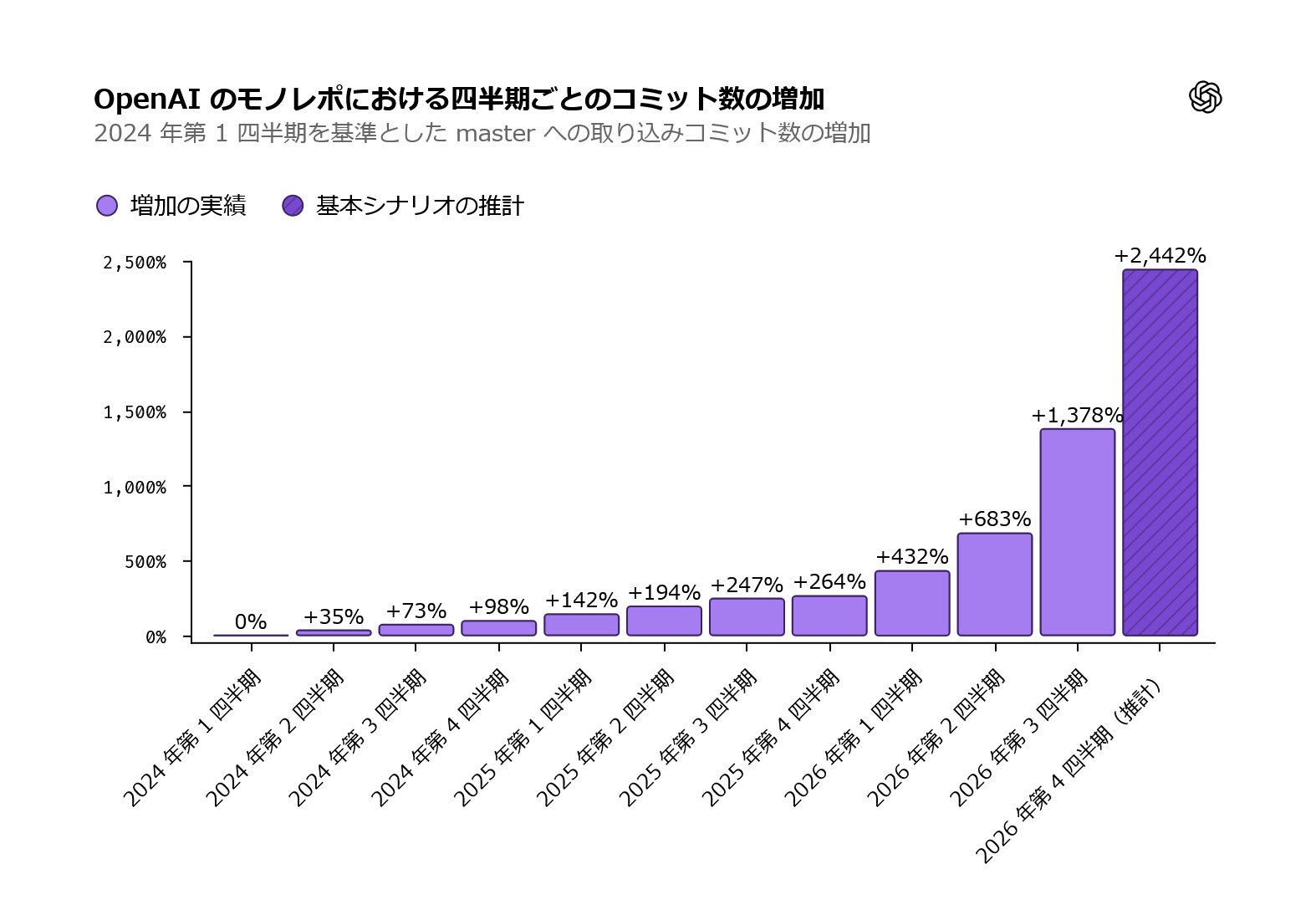
At OpenAI, code is managed internally in a massive monorepo . The increased number of commits due to the use of Codex led to push failures and merge delays in the existing Git system around the end of 2025, resulting in a reliability of less than 90%. The following shows the percentage increase in the number of commits based on the first quarter of 2024, and it can be seen that it increased by more than 14 times by the third quarter of 2026.
Anthropic, a rival company of OpenAI, is also struggling with the bloat of its monorepos and has announced that it has developed and migrated to 'Scion,' an alternative system to Git itself, as a solution.

On the other hand, OpenAI developed Pando not as a 'system to replace Git,' but as a 'backend system for Git.' As a result, they succeeded in migrating systems without changing existing workflows that used Git.
Existing Git systems adjust the update order of the entire repository when pushing. In contrast, Pando adjusts the update order for each branch. Also, existing systems generatea Packfile for each client, but Pando can reuse Packfiles. These improvements have enabled OpenAI to process approximately 1 petabyte of data per day while keeping resource requirements down.
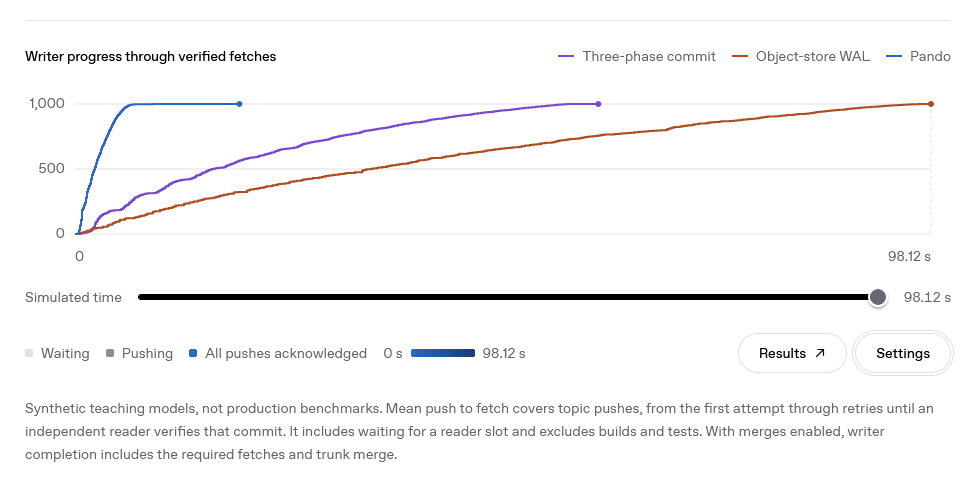
The graph below compares the time it takes for '1000 clients to push individual commits' using the 'Three-Phase Commit (3PC) method,' 'Write-Ahead-Log (WAL) method,' and 'Pando.' The 3PC method (purple) took 56.52 seconds, WAL (orange) took 96.26 seconds, while Pando (blue) completed the process in 7.71 seconds.
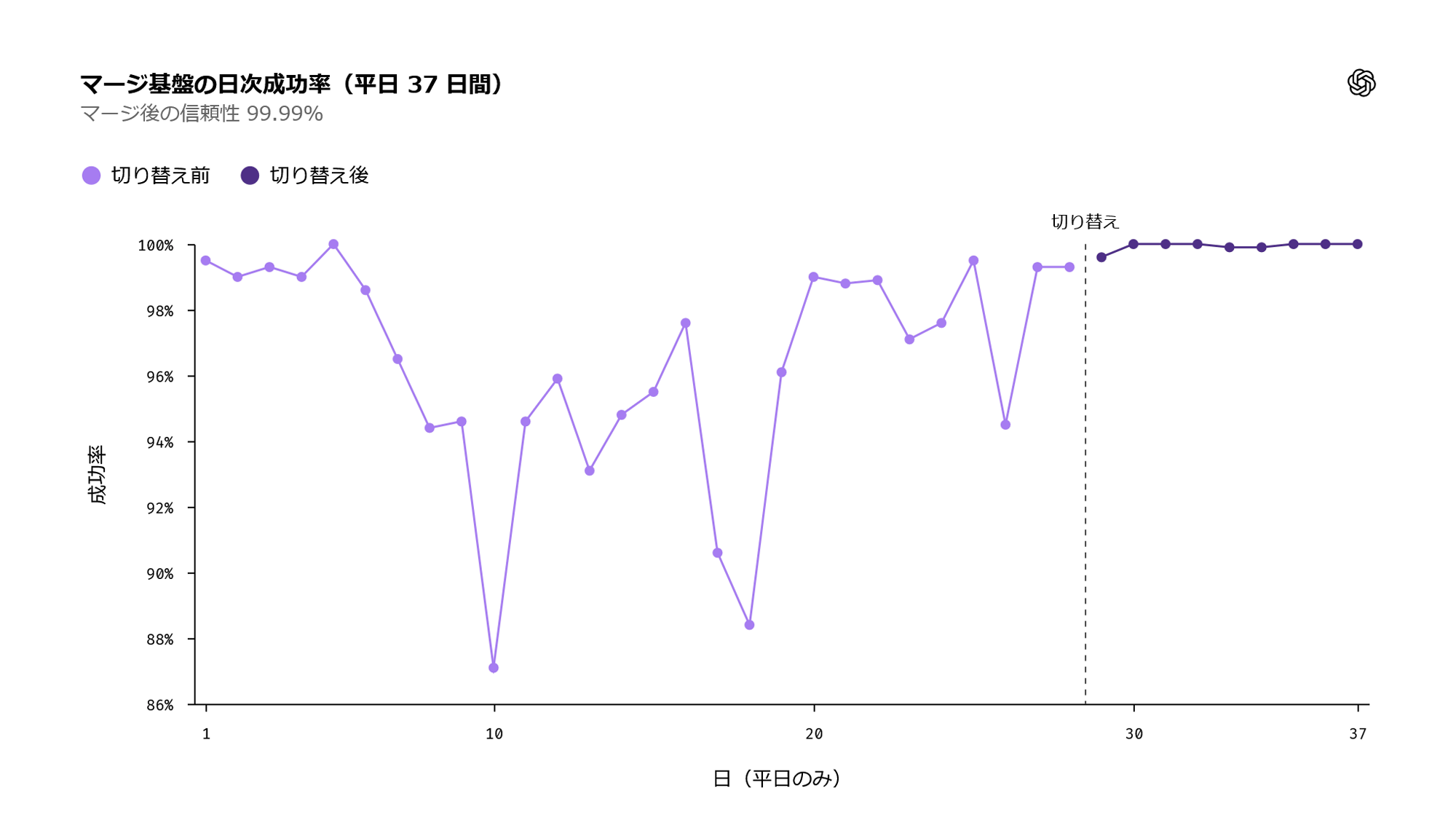
The introduction of Pando has significantly improved our merge success rate. With our existing system, there were days when the merge success rate fell below 90%, but since implementing Pando, we have been able to maintain a success rate close to 100%.
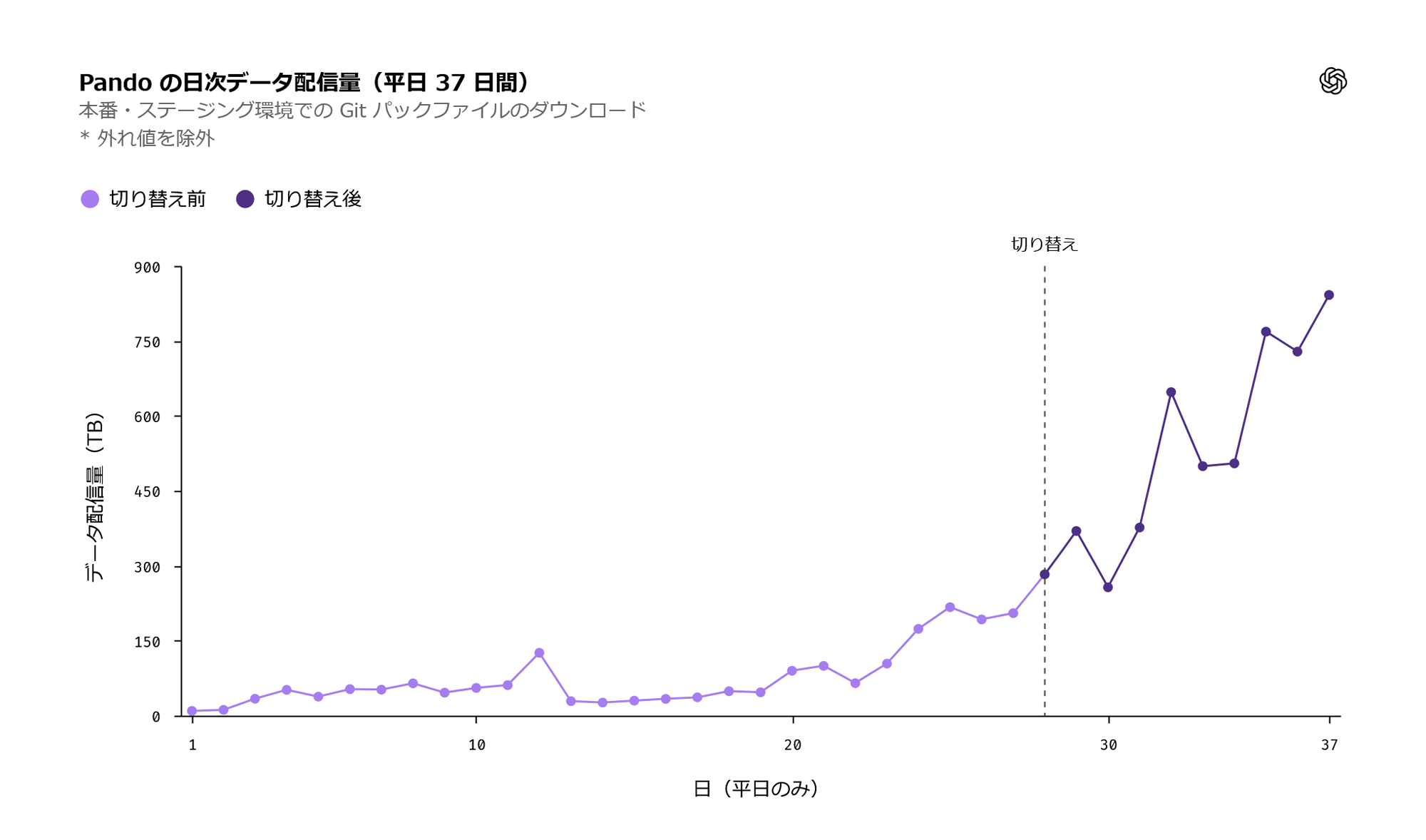
The amount of data being delivered each day continues to increase, with the company reportedly able to deliver nearly 57 terabytes of data per hour and nearly 1 petabyte per day.
Pando's core design was handled by a single engineer, and it was implemented in Rust using the Codex. It took only 10 weeks from the start of development to going live, and it went live in April 2026. In addition, formal verification was performed using GPT-6 Astra, Lean, and TLA+, and attack resistance testing was also conducted using the security AI 'Daybreak'.
While OpenAI has not open-sourced Pando, it shares the knowledge gained and bugs discovered during Pando's development with the Git development community. OpenAI's contributions to the Git development community are summarized on the following page.
OpenAI Git · patches & notes
https://oai-git.openai.chatgpt.site/
Related Posts: