Research suggests that even in near-death experiences, the spaces seen by complete strangers share commonalities in shape and color.
Frontiers | The perceptual geometry and chromaticity of near-death experience spaces
https://www.frontiersin.org/journals/psychology/articles/10.3389/fpsyg.2026.1760389/full
Near-Death Experiences Seem to Follow Strange Rules of Shape And Color, Study Reveals : ScienceAlert
https://www.sciencealert.com/scientists-asked-50-people-to-map-their-near-death-experiences-an-eerie-pattern-emerged
People who claim to have had near-death experiences often describe common elements, such as visions of 'light at the end of a long tunnel' or out-of-body sensations. However, standard scientific survey questions often fail to adequately describe the complexities of these experiences, overlooking aspects that are difficult to express in words.
A research team led by Frans Lerner, a neurophenomenologist at the University of Haifa in Israel and affiliated with the Weizmann Institute of Science, employed a visual approach to the characteristics of near-death experiences, combining structured digital questionnaires with a diagrammatic reconstruction task. According to the team, most studies rely on narratives about memories, and have rarely considered diagrammatic representation as a complementary research method.
The research team recruited 50 people who reported having near-death experiences and helped them reconstruct their memories of those experiences in online sessions, using a catalog of geometric emojis to support their recall. Participants were asked to divide their experiences into several stages and illustrate the shapes of the spaces they encountered at each stage. They were also asked if they remembered where they felt they were in those spaces, how they moved, and what colors they saw. Below are sketches of near-death experiences reconstructed by participants, with the cross indicating the participant's perceived location.
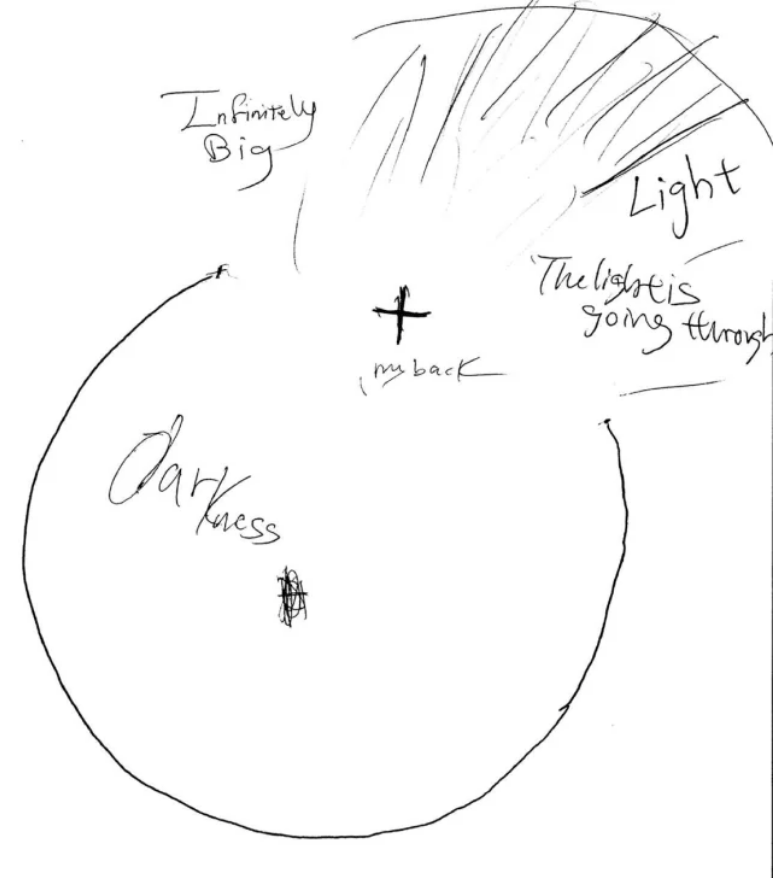
The researchers then created a database of these reconstructions and compared them to look for similarities in the shape of the space and its associated properties.
The analysis revealed that, despite each participant's experience being highly personal, common patterns were reported by multiple participants.
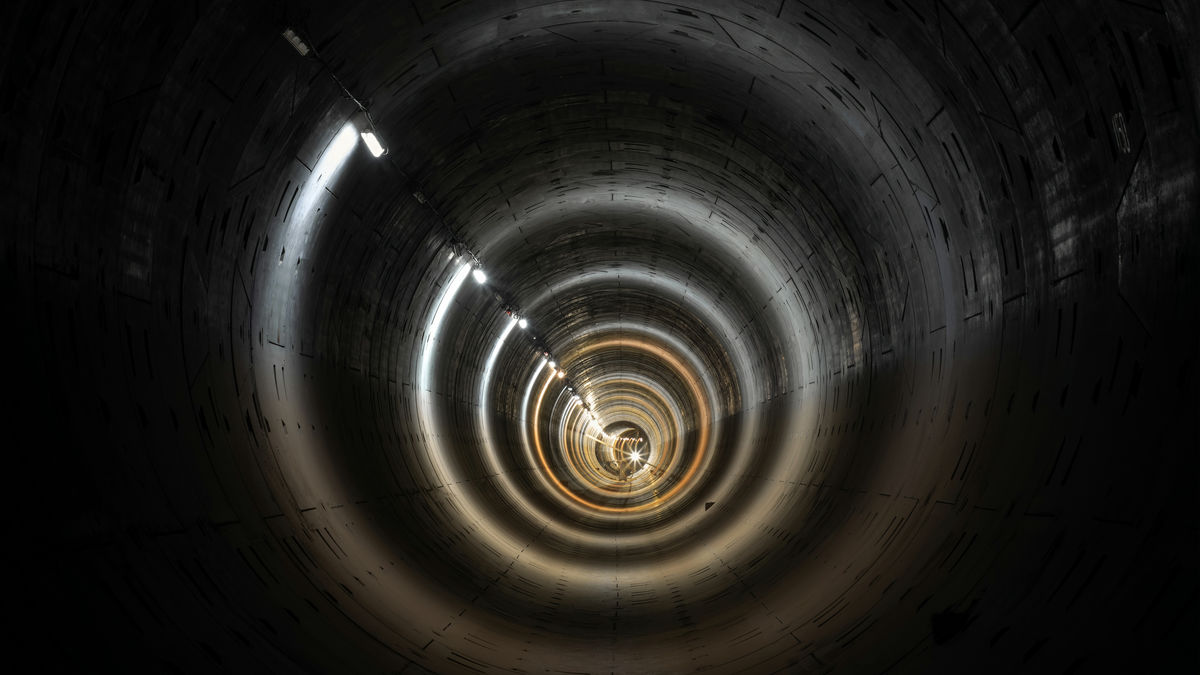
Researchers have categorized the shapes found in near-death experiences into four categories: 'tunnel-like conical spaces,' 'wide, curved spaces like archways,' 'flat, gently curving spaces,' and 'spaces that appear to completely envelop the user, like the inside of a sphere or ellipse.'
The following graph summarizes the color tones for each shape. In the conical spaces (A shapes), achromatic colors such as black, white, and gray, which cannot be distinguished, accounted for the majority (22 out of 28 reported). On the other hand, of the 31 spaces identified as curved spaces (B shapes), 27 were recognized as chromatic or with bright textures. In the other two categories, there was no extreme difference between colorful and achromatic spaces.
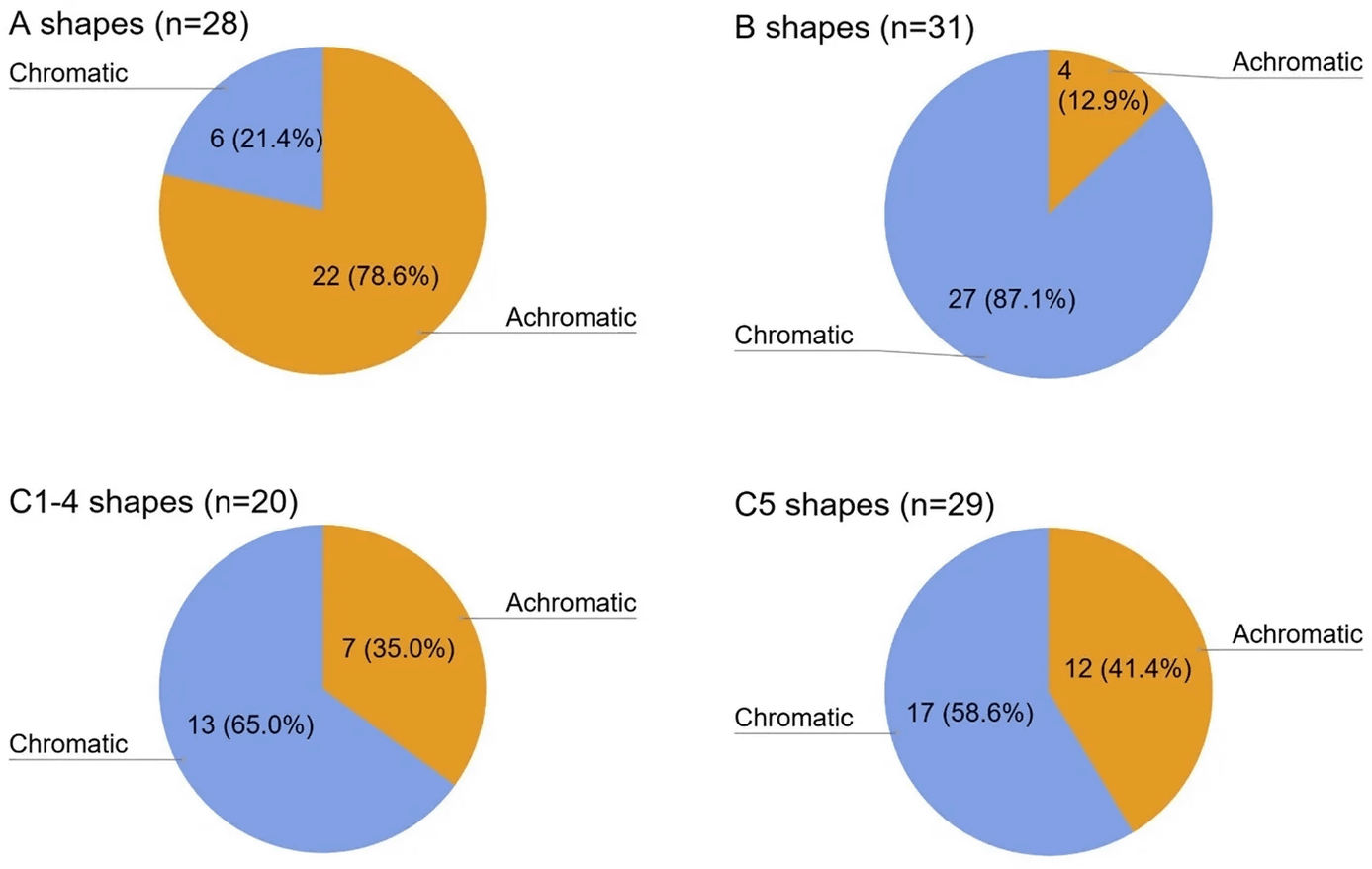
Among the many shapes reported in this study, the 'tunnel-like cone-shaped space' has been shown to have a similar visual relationship through neurological and perceptual studies, and is thought to be a symptom of narrowed visual field due to impaired oxygen supply to the retina and brain. Therefore, other commonly reported shapes and color features may also be explainable neurologically or perceptually.
A point to note about this study is that the participants were in a relatively small group, and in some cases, they reconstructed experiences from memories that were many years old. Also, although the geometric shapes presented in the study were based on previous research, presenting participants with multiple shapes may have influenced memory reconstruction, and it is possible that subtle biases arose due to the sessions conducted in this study.
The research team stated, 'This study is descriptive, phenomenological, and retrospective in nature and does not present it as universal evidence. It should be understood as an exploratory methodological approach to systematically describe, reconstruct, and compare the recurring visuospatial characteristics reported throughout near-death experiences. In the future, we expect to use the current reconstruction framework to systematically compare the visuospatial aspects of not only near-death experiences but also other extraordinary states of consciousness such as meditative states and drug-induced states through the development of 'MIST,' a 3D interactive reconstruction and mapping environment.'
Related Posts:







in Science, Posted by log1e_dh