A 30-year-old PC running a modern chess AI faces off against a modern PC running an older chess AI. Who will win 100 games?

To determine whether a 30-year-old chess AI running on a modern high-performance PC is stronger, AI security researcher Nicolas Carlini actually prepared an old PC, ran a chess AI on it, and conducted 100 games.
Could a modern chess engine on a Pentium have defeated Kasparov in 1996?
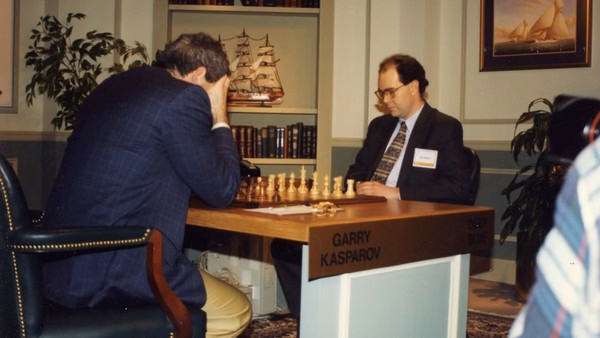
On February 10, 1996, IBM's chess computer 'Deep Blue' defeated Garry Kasparov, the then-world champion, in a chess match for the first time. Kasparov won the 1996 match, but Deep Blue won the rematch in 1997 with a score of 3.5 to 2.5.
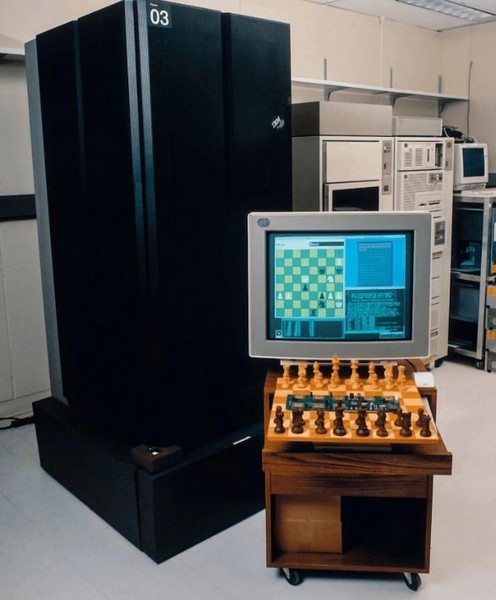
The development of Deep Blue involved research and development costs amounting to several hundred million yen at the time. The improved Deep Blue that defeated Kasparov in 1997 was equipped with 30 processors operating at approximately 120MHz and 480 dedicated processors specialized for chess position analysis, allowing it to analyze more than 200 million positions per second.
However, Karlini wondered, 'Was such a massive computer really necessary to beat Kasparov?' and 'Couldn't a modern chess AI have beaten Kasparov even on a consumer-grade PC from 1996?' He then conducted an investigation to find out.
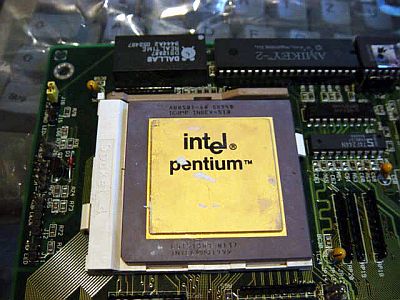
The PC that Mr. Carlini prepared was equipped with a 200MHz Pentium Pro, which was released in November 1995, had 64MB of memory, and used an Intel VS440FX motherboard. The OS was booted from a 1.44MB floppy disk, and it was also possible to connect to the internet via a network card.
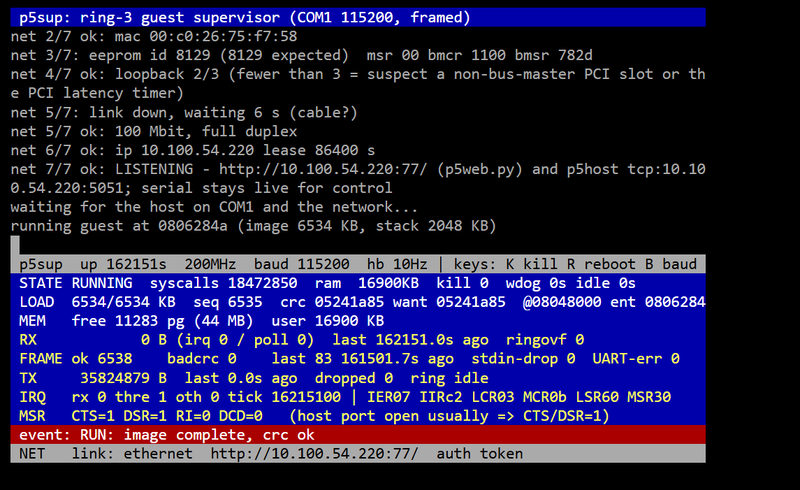
Mr. Karlini conducted his experiment using the 1996 chess AI 'Crafty 11.13' and the modern chess AI 'Stockfish 17'. He used the version of Crafty released in December 1996, and modified Stockfish 17 to run on older Pentium Pro processors.
The Elo rating (Elo) is used to compare the strength of chess AIs. A higher number indicates a stronger AI, and a difference of 200 points suggests that the stronger AI is expected to score approximately 75% of the points. According to Mr. Karlini, the Elo rating of a chess AI running on a consumer PC in 1996 was approximately 2300, Deep Blue was approximately 2700, and modern Stockfish is approximately 3700.

First, when I ran Crafty 11.13 from 1996 on a Pentium Pro, the result was 1999±90 under the condition of thinking for 1 second per move, and 2383±77 under the condition of thinking for 10 seconds per move.
When the same Crafty 11.13 was run on a modern PC equipped with a Ryzen 7 processor, the score improved to 2614±97 under the condition of 1 second per move. This shows that even without changing the program, simply improving the PC's processing power can significantly strengthen the chess AI.
Next, Mr. Carlini added various improvements to Crafty 11.13, including an improved search algorithm that skips the analysis of less important moves, and the introduction of 'NNUE,' which uses a neural network to evaluate the advantages and disadvantages of positions. With these improvements, Crafty reached 2718±34 under the condition of 1 second per move, and 2974±74 under the condition of 10 seconds per move, even on a Pentium Pro. In other words, even if you continue to use a PC from about 30 years ago, you can significantly improve your chess AI's strength simply by improving the program.
Carlini also attempted to run Stockfish 17, a modern chess AI, on a Pentium Pro. Since Stockfish 17 is designed with modern 64-bit CPUs in mind, running it on a 32-bit Pentium Pro required significant modifications, such as changing the handling of 64-bit data to two 32-bit integers, removing multithreading and some features, and replacing the 71MB neural network with a smaller one to fit within the limited 64MB of memory.
The initial port of Stockfish 17 achieved a playing strength of 2496±64 under a 1-second per move condition and 2940±76 under a 10-second per move condition on a Pentium Pro. Further performance improvements were made by optimizing the neural network processing and adjusting the search algorithm to suit older CPUs.

Ultimately, Stockfish 17 running on a Pentium Pro reached a score of 2846±35 under a 1-second-per-move condition, 3109±79 under a 10-second-per-move condition, and 3180±80 under a 30-second-per-move condition. Karlini estimates that under conditions closer to official matches with longer thinking times, it could reach a strength of approximately 3300.
Karlini also conducted an experiment where he directly pitted a 30-year-old PC running a modern chess AI against a modern PC running a 30-year-old chess AI. The former used an improved version of Stockfish 17 running on a Pentium Pro, while the latter used the 1996 version of Crafty 11.13 running on a Ryzen 7. After 100 games, Stockfish 17 on the Pentium Pro won 78 games, drew 17, and lost 5. In other words, running a modern chess AI on an older PC was overwhelmingly more powerful than running an older chess AI on a modern, high-speed PC.

Karlini also compared the contributions of hardware and software to the improvement in chess AI's playing strength. Of the 1335 points of improvement in playing strength from 1996 to the present, he analyzed that 720 points were due to improvements in the program. In other words, more than half of the progress in chess AI has been achieved not by faster computers, but by improvements in algorithms. Furthermore, since Kasparov's Elo in 1996 was just under 2800, Karlini predicted that 'an improved version of Stockfish running on an old Pentium Pro would have a very high chance of beating Kasparov.'
However, the Elo calculated from computer-versus-computer matches cannot be directly compared to the Elo used in official human matches. Also, the value of approximately 3300 is not measured by actually repeating long matches, but is an estimate based on the results of short matches. While acknowledging these differences, Karlini states that the conclusion will likely remain unchanged because there is a sufficient difference in skill level.
Related Posts: