Jailbreak a car navigation system that cannot set the time without inserting an SD card.
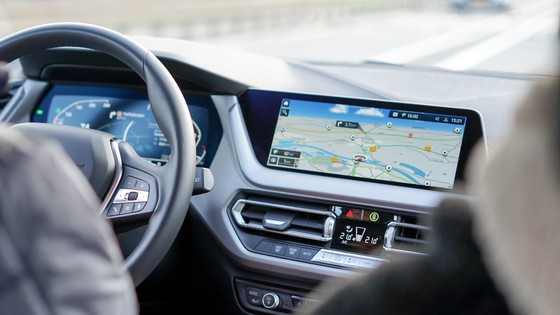
Some car navigation systems require an SD card to store map information, but there are also products where you can't even change the time without inserting the SD card. On November 2, 2026, security researcher Rasmus Moratz published details of how he jailbroke a Renault's factory-installed navigation system and changed the time settings.
Jailbreaking my car's navigation system just so I can change the time | nns.ee
https://blog.nns.ee/2026/11/02/renault-hack/
When Mr. Moratz purchased a used 2014 Renault Latitude , he was told that he needed an SD card for the navigation system to change the time on the standard-equipped car navigation system. However, Mr. Moratz thought he could change the time through the settings menu and threw away the SD card containing the outdated map data.
However, the problem became apparent when daylight saving time ended and the clock was set to one hour ahead of the actual time. Searching the car navigation system's settings screen revealed no option to change the time; one of the settings buttons only displayed options related to Bluetooth and the phonebook, while the other simply displayed an error message saying 'Map not found.'

Moratz then obtained the car navigation system's firmware and analyzed its internal structure. It was a system called 'TomTom Carminat LIVE,' which ran on a Samsung S5P6440 processor and a proprietary OS based on Linux 2.6.28.10.
Analysis revealed that menu information for accessing the time setting screen was stored on the SD card, and that the settings screen could not be accessed without the card. Furthermore, the SD card had DRM implemented to verify a unique identification number (CID) and file signature, meaning that even if the necessary files were copied to a regular SD card, they could not be used.
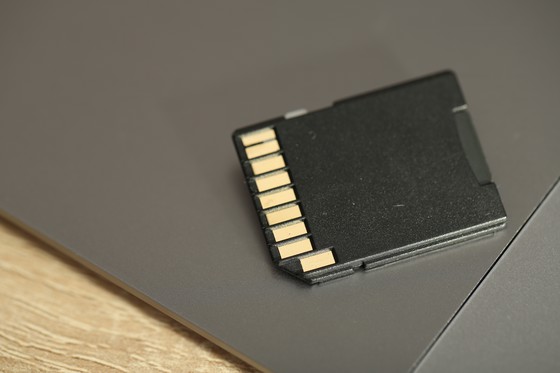
While purchasing a compatible SD card was an option, it would cost approximately 60 euros (about 11,000 yen) including shipping to Estonia, where Mr. Moratz lives. Since Mr. Moratz did not intend to use maps and considered it a waste to purchase one just to set the clock, he decided to remove the restrictions on the car's navigation system.
The first method they tried was to rewrite and update the firmware, but they were unable to install the modified firmware. So, Moratz used QEMU, an emulator that replicates another system on a PC, to create an operating environment for the car navigation system and investigate the attack method.
During our investigation, we focused on a file called 'master.script' that the car navigation system reads from the SD card when it starts up. This is a script that automates screen operations and other functions using its own commands, and it is possible to launch programs using specific commands. However, there were restrictions, such as the prohibition of executing programs on the SD card and the inability to pass arguments to the launch commands.
Further analysis revealed that master.script contains a command called 'LOG' that writes a string to a specified file, creating a potential path traversal attack that allows writing to locations other than the intended save location. However, there are restrictions on what can be written and the execution permissions, so it cannot execute arbitrary programs as is.
The breakthrough came from the 'core_pattern' setting in the Linux kernel. Normally, this specifies the location where diagnostic data generated when a program terminates abnormally is saved, but by using a specific format, it can also be used to launch an arbitrary program when a program terminates abnormally.
Moratz exploited a vulnerability in the LOG instruction to rewrite the core_pattern, causing a script on the SD card to be executed when the program terminated abnormally. Furthermore, by causing a program called 'dbus-monitor' inside the car navigation system to terminate abnormally, he succeeded in executing arbitrary code with administrator privileges.

The master.script I ultimately used consisted of just three lines of instructions, as shown below.
[code]#define LOGFILE ../../proc/sys/kernel/core_pattern
LOG |/bin/sh /media/sdcard/payload.sh
SHEX /bin/dbus-monitor[/code]
Moratz inserted the SD card, ran the script, and confirmed that the car navigation system restarted, thus verifying the success of the jailbreak.
Afterwards, I backed up the internal storage and examined the configuration files in detail, and discovered that the time settings were stored in '/mnt/flash/settings.dat'. This car navigation system does not have a mechanism for managing time zones, and only a numerical value indicating how many minutes of time difference to add to the time obtained from GPS is stored.
The time difference was initially set to 180 minutes, but it was changed to 120 minutes to match Estonia's winter time. As a result, Mr. Moratz successfully set the car's navigation system clock to the correct time without having to purchase an SD card.
This case also became a topic of discussion on the social news site Hacker News, where other inconvenient features of clocks in cars were reported. One user reported that in a 2001 luxury car, the clock could not be set manually and the time could only be adjusted by selecting a time zone. Because the rules regarding time zones were outdated, the setting had to be changed four times a year to display the correct time.
Another user pointed out that some Subaru vehicles have three clocks visible from the driver's seat, all connected to the vehicle's CAN bus network, yet the time is not synchronized. Furthermore, there have been reports of a 2025 Toyota vehicle where the manufacturer's original clock and the Android Auto clock are displayed separately, causing time discrepancies during daylight saving time changes. There have also been complaints that a 2005 car imported from Japan to New Zealand uses GPS to set the time, but the time zone cannot be changed to anything other than Japan.
Related Posts: