AI 'Ataraxos' achieves a resounding victory against one of the world's top players in the military chess-style board game 'Stratego,' winning 15 games, losing 1, and drawing 4.
A research team from Carnegie Mellon University, MIT, and other institutions has developed an AI called ' Ataraxos ' that far surpasses top human players in the military chess-like board game '
Scalable decision-making for games of imperfect information | Nature
https://www.nature.com/articles/s41586-026-11036-y
With most information hidden, the game Stratego had stumped AI—until now - Ars Technica
https://arstechnica.com/science/2026/10/ai-finally-beat-the-best-stratego-player-in-history-and-did-it-on-a-budget/
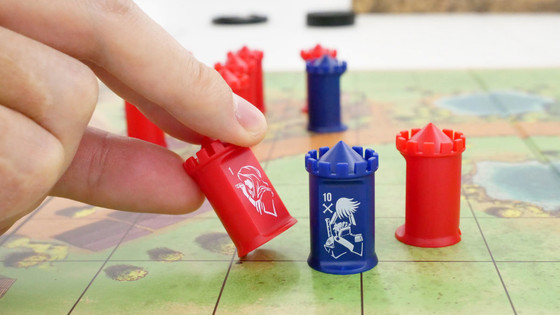
Stratego is a two-player board game where players move 40 pieces each on a 10x10 grid, aiming to capture their opponent's flag. The pieces come in various types, such as Colonel, Supreme Commander, Spy, Bomber, and Flag, but the type of piece is hidden from the opponent. Since the identity of the pieces is not revealed until they engage in combat, players must deduce what their opponent's pieces are while battling.
A play review of 'Stratego,' a board game with simple rules where players engage in psychological warfare and compete to capture flags - GIGAZINE
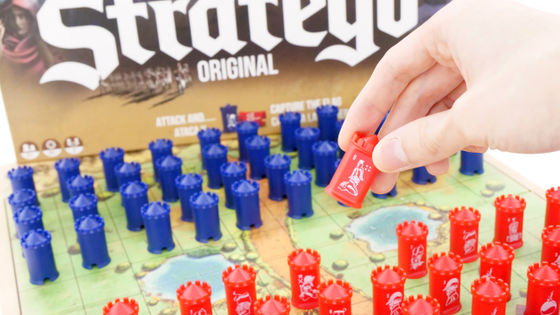
In chess and Go, all information on the board is public to both players, but in games like Stratego, each player has different information, which is why they are called ' incomplete information games .' For example, poker, where your opponent cannot see your hand, is also a type of incomplete information game, but while there are 1326 possible hands for the two cards initially dealt in Texas Hold'em, in Stratego, there are over 1033 possible initial setups. Furthermore, games can be very long, and players must make decisions including whether or not to bluff, making it an extremely difficult game for AI.
One AI that plays Stratego is DeepNash, which was released by Google DeepMind in 2022. DeepNash was evaluated on the online game site 'Gravon' and won 42 out of the 50 games that were evaluated.
DeepMind's AI 'DeepNash' masters 'Stratego,' a military chess game where the identity of each piece is hidden - GIGAZINE
by SonnyandSand
However, according to the research team, many of the top players have already stopped playing on Gravon, and the opponents DeepNash faced were far less skilled than top-tier humans. Furthermore, when DeepNash played against humans at the 2023 Stratego World Championship, it recorded a record of 19 wins and 9 losses, but it was defeated by many of the top players, including Niemeyer. For this reason, the research team does not conclude that DeepNash had reached a level of strength that surpassed humans.
Both Ataraxos and DeepNash learn strategies not by studying human game records, but by repeatedly playing against themselves ('self-play'). However, Ataraxos differs significantly from DeepNash in that it 'predicts the opponent's hidden pieces during an actual game, uses that information to explore future developments, and then chooses a move.' DeepNash did not employ a mechanism to explore future developments and improve its decision-making during a game because it had difficulty handling the vast search space of the Stratego.
Ataraxos incorporates a 'policy-value network' that selects moves and predicts the outcome through self-play, as well as a 'belief network' that infers the opponent's hidden pieces. Before making a move, Ataraxos uses the belief network to generate plausible patterns for the opponent's piece placement based on the information known so far. Then, it simulates the developments from candidate moves for each pattern, compares the results, and selects the actual move. By narrowing down the search to the most likely placements rather than exhaustively exploring all possible configurations, it makes in-game search practical even in Stratego.
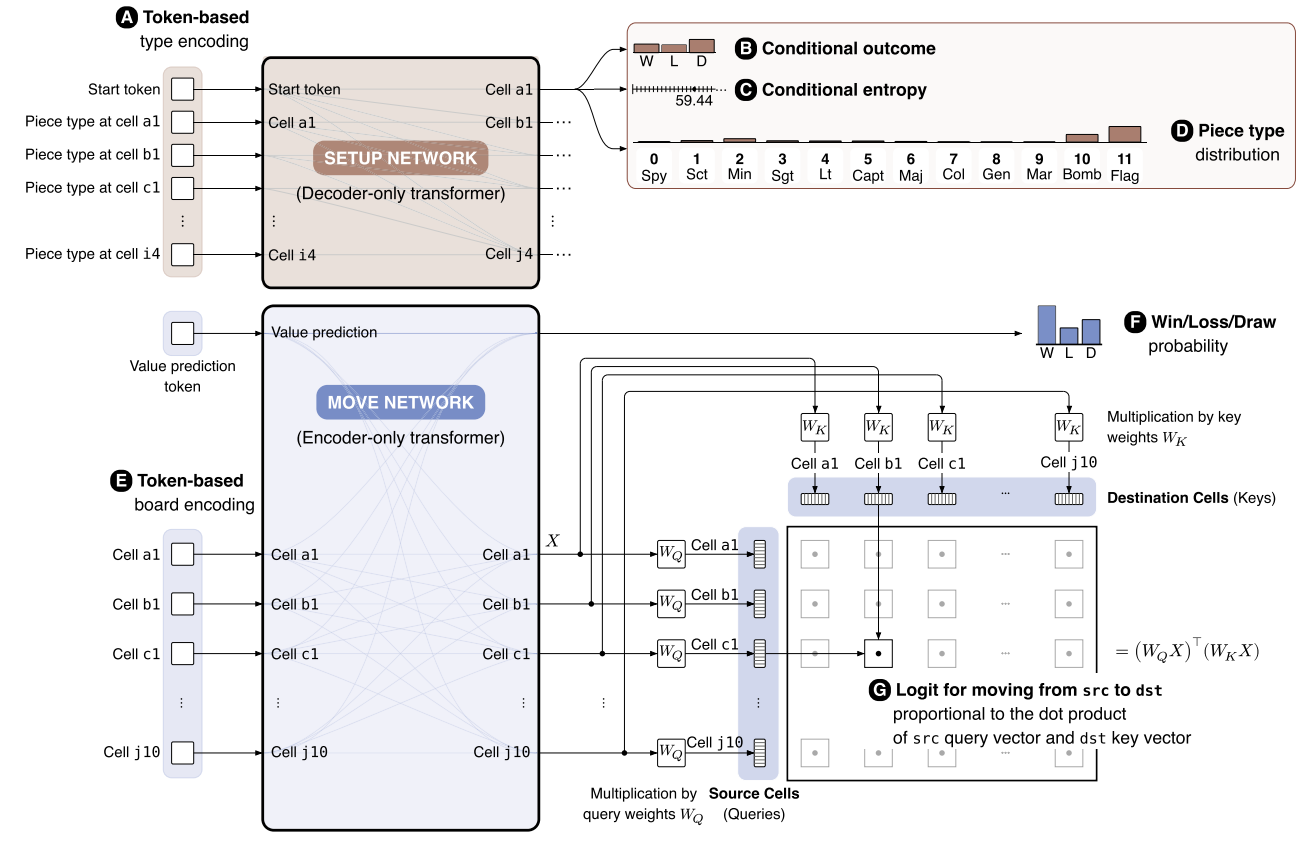
Furthermore, improvements have been made to the learning method. In imperfect information games, strategy updates through self-play tend to become cyclical or unstable, so Ataraxos employs a mechanism that significantly updates the strategy in the early stages of learning and then becomes more cautious with updates as learning progresses. In addition, the network that learns the initial placement of pieces and the network that learns the movements during a game are separated but still coordinated with each other.
Furthermore, computational cost is another significant difference from DeepNash. DeepNash reportedly used 1024 TPUs for 2-3 months of training, and the research team estimates that at 2025 prices, the computational cost would be approximately $3 million to $4.5 million (approximately 450 million to 675 million yen). It also trained on approximately 5.5 billion self-play games. On the other hand, Ataraxos's reinforcement training used 16 NVIDIA H100s for one week, and its belief network training used 4 H100s for 4 days, with a total cost of less than $8,000 (approximately 1.2 million yen). It trained on approximately 163 million self-play games, achieving a stronger AI with significantly less computational resources and training data than DeepNash.
The research team pitted Ataraxos against Mr. Niemeyer, who boasts an impressive record of four World Championships, fifteen Dutch National Championships, two Online World Championships, and a total of over 600 weeks as the world's number one ranked AI. The result was 15 wins, 1 loss, and 4 draws for Ataraxos, giving it an effective win rate of 85% (calculated with draws counting as 0.5 wins). Mr. Niemeyer was informed beforehand that Ataraxos would not change its strategy depending on its opponent, and the 20 games provided an opportunity for him to identify and exploit the AI's weaknesses.
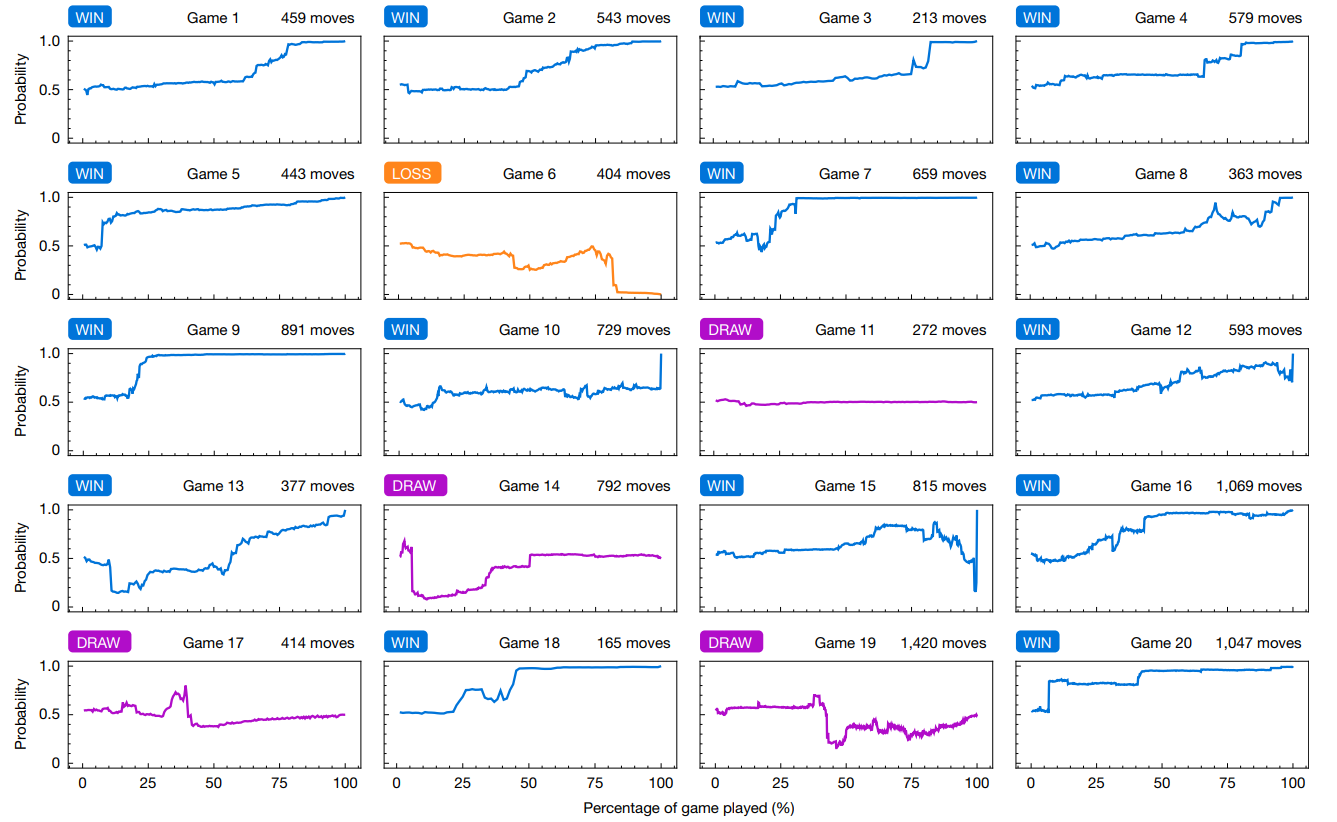
Furthermore, at the 2025 Stratego World Championship, participants played 40 games against Ataraxos, with Ataraxos recording a record of 38 wins and 2 losses. According to the research team, Ataraxos exhibited tactics different from those of humans, such as making it difficult to decipher the true nature of its pieces from their movements, using bluffs that would be too risky for humans, and demonstrating a superior ability to fight tenaciously even in unfavorable situations, ultimately achieving victory or a draw.
In addition, the research team defeated three world champions in 'Barrage Stratego,' a game with only eight pieces, and set a new record in the cooperative card game ' Hanabi .' They also surpassed the strongest AI in ' Dou Di Zhu ,' a card game widely played in China. The research team argues that even in situations where a large amount of information is hidden, sophisticated decision-making is possible by combining 'reinforcement learning through self-play,' 'models that infer hidden information,' and 'search immediately before taking action.'
The research team believes that the technology developed for Ataraxos could potentially be applied to things other than board games. Unlike strategy games, real-world negotiations, financial markets, and military conflicts do not have clear rules or predetermined winners and losers. However, co-researcher Eugene Vinitsky points out that even when dealing with real-world problems, one would first build a simplified model, stating, 'Wargames are a common practice. We can use the technology developed here to advance the situation and see how a powerful opponent reacts to our actions.'
On the other hand, Ataraxos still faces the challenge of not being able to explain to humans 'why it chose that move.' Co-researcher Gabriele Farina stated, 'I don't think we've reached the stage where we can explain its strategy to humans, not just that it's strong,' and identified this as a future research topic.
Related Posts: