Micron's CEO warned that memory shortages could continue into 2028 or beyond, stating, 'Customers will end up paying 'much higher' prices than they did this year.'
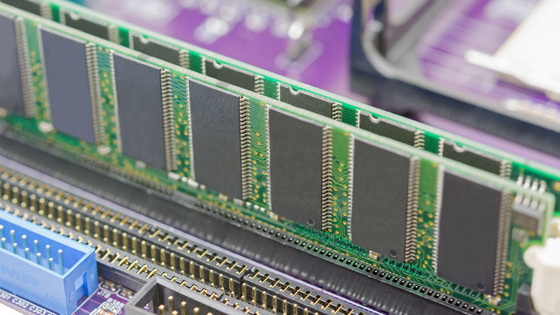
Memory manufacturer Micron has projected that shortages of memory and storage will worsen further in 2027 and 2028. CEO Sanjay Mehrahtra explained that it is impossible to predict when supply and demand will balance out, suggesting that shortages may continue beyond 2028. He also revealed that customers have signed contracts to pay significantly higher prices for high-bandwidth memory (HBM) for 2027 than they did for 2026.
RAM supply set to warming, says Micron, as CEO celebrates 'much higher' prices
https://www.theregister.com/systems/2026/10/01/ram-supply-set-to-worsen-says-micron-as-ceo-celebrates-much-higher-prices/5300346
Memory Maker Micron Sees Shortages Worsening Through 2028
https://winbuzzer.com/2026/10/01/memory-maker-micron-sees-shortages-worsening-through-2028-xcxwbn/
Memory squeeze set to tighten through 2028, Micron says – Computerworld
https://www.computerworld.com/article/4229635/memory-squeeze-set-to-tighten-through-2028-micron-says-3.html
At its Q4 2026 earnings call held on September 30, 2026, Micron discussed the future of the memory market. CEO Mehrahtra predicted that demand will exceed supply in both 2027 and 2028, resulting in a more severe supply shortage than in 2026. Although companies in the industry are planning to expand their factories, it remains unclear when supply and demand will return to balance.
$MU : 'We expect memory and storage supply-demand conditions to be much tighter in calendar 2027 and 2028 than they were in 2026.' pic.twitter.com/9OPIZmU9U6
— Eric Jhonsa (@EricJhonsa) September 30, 2026
The price increases are already reflected in contracts for the following year. Micron has secured contracts for the majority of its HBM supply in 2027, and CEO Mehrahtra explained that 'customers will be paying a much higher price' than in 2026. According to WinBuzzer, more than 75% of its total production for 2027, including HBM, has been secured, and discussions with customers are now focused on 2028.
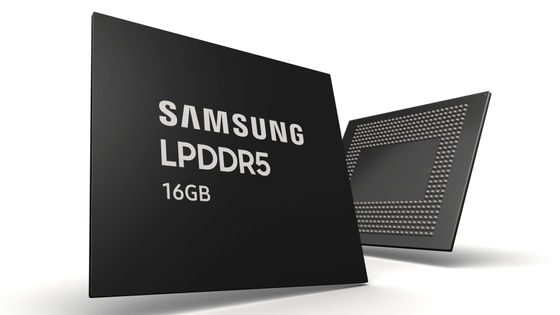
The underlying reason is the increasing demand for memory due to AI. In addition to the scaling up of AI models, the amount of information handled at once and the number of requests processed simultaneously are increasing, which is leading to an increase in the required memory and storage capacity. This demand extends not only to HBM for AI chips, but also to DRAM, which holds data being processed on servers, and NAND flash used in SSDs.
While supply itself is expected to increase, Micron predicts that industry-wide capacity-based shipments will grow by the low 20s per year for DRAM and the mid-20s per year for NAND in 2027 and 2028. However, this will not keep up with demand, and supply shortages are expected to continue in both years.

Micron is proceeding with the construction of factories to increase production, with wafer production scheduled to begin in mid-2027 at its ID1 plant in Idaho, USA, and in the second half of 2028 at its ID2 plant. The expansion of its DRAM plant in Japan is expected to begin production in the second half of 2028, and its new NAND plant in Singapore is expected to begin production in the second half of 2028. However, the company explains that the new factories will not be able to ship large quantities immediately after becoming operational, and it will take several quarters before they fully contribute to supply.
One of the future demands cited is for 'physical AI' that operates in the real world, such as self-driving cars and humanoid robots. According to Micron, autonomous vehicles at level 4 and above typically require more than 200GB of memory and several terabytes of storage, and humanoid robots are expected to require similar capacities. Several physical AI-related customers are already evaluating samples of next-generation products, and the company believes this sector could significantly boost demand for memory and storage by the end of the 2020s.
$MU says humanoid robots could need 200GB+ of DRAM and multiple terabytes of storage per unit with several physical AI customers already sampling next gen products.
— Shay Boloor (@StockSavvyShay) September 30, 2026
Micron says physical AI can become a “significant driver of memory and storage demand by the end of this decade”… pic.twitter.com/67K2xJbJWN
According to Computerworld, a media outlet familiar with semiconductor affairs, these supply shortages are also affecting companies' equipment procurement. Computerworld reports that market research firm TrendForce forecasts that contract prices for conventional DRAM in the fourth quarter of 2026 will rise by 10-15% compared to the previous quarter, while NAND flash will rise by 15-20%. Although the pace of price increases has slowed, the supply shortage has not been resolved.
According to TrendForce, memory manufacturers are prioritizing the allocation of their advanced manufacturing process capacity to high-performance server products. As a result, the supply of DRAM for PCs may decrease in 2027. Even for smartphones, supply is being constrained by the reallocation of production capacity to AI-related products, creating a situation where prices continue to rise even with weak consumer demand.
There is also a movement to reduce the amount of memory purchased. TrendForce has reported that cloud providers and equipment manufacturers are changing the configuration of some servers from 96GB or 128GB memory modules to 32GB or 64GB modules from the first half of 2026 onwards. Furthermore, they analyze that while customers with multi-year supply contracts will see price increases mitigated by their contract terms, the impact of price increases will be concentrated on customers without contracts or those who purchase additional memory beyond their contracted amount.
In an interview with Computerworld, Neil Shah of Counterpoint Research pointed out that companies need to reconsider when to replace their equipment and how to utilize existing facilities. While there is room to delay the replacement of general office PCs, he said that for core systems and equipment for engineers, the impact on productivity and failure risk should be considered. He also explained that even if companies migrate to the cloud, it is not guaranteed that they can avoid price increases, as service providers will pass on the costs of hardware and electricity to users.
He also cautions against choosing older generations of memory to save costs. He explains that DDR4 is no longer readily available and inexpensive because manufacturers are shifting production to HBM and DDR5. Before purchasing new equipment, he recommends reviewing the amount of memory allocated to virtual machines and reducing the amount of memory being wasted on existing equipment.
Related Posts:



in Hardware, Posted by log1i_yk