Anthropic has announced its AI model 'Claude Opus 5.5,' which is 40% cheaper, over 30% faster, and offers improved coding performance compared to Opus 5.
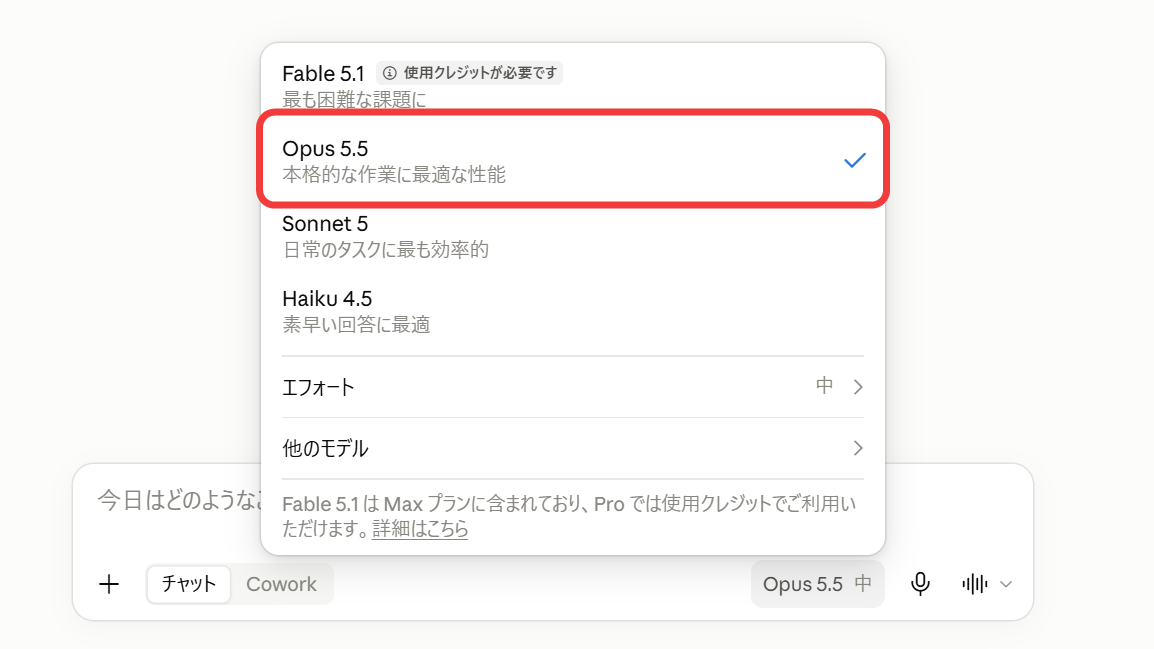
AI company Anthropic has announced a new AI model, ' Claude Opus 5.5 .' The first model in the Claude 5.5 family, it offers improved performance, efficiency, and safety compared to the previous Claude Opus 5, and is said to be available at a 40% lower cost than Opus 5 for general processing. It also boasts output speeds that are more than 30% faster than Opus 5.
Introducing Claude Opus 5.5 \ Anthropic
Claude Opus 5.5 is a new model in Anthropic's Opus series, offering improved performance in 'agent-based' tasks where AI autonomously carries out multiple steps.
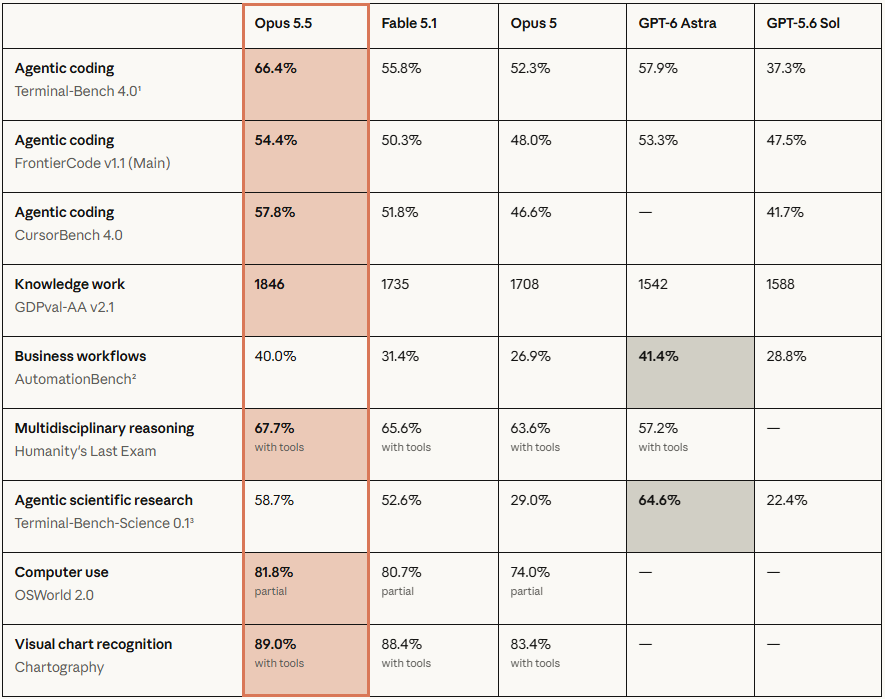
This is a benchmark comparison of Claude Opus 5.5 and major AI models. Opus 5.5 achieved high scores across a wide range of categories, including agent-based coding, knowledge processing, inference, computer manipulation, and graph recognition. On the other hand, GPT-6 Astra outperformed Opus 5.5 in AutomationBench and Terminal-Bench-Science 0.1. Anthropic also explains that small differences in benchmarks between high-performance models do not necessarily accurately reflect differences in actual user experience.
In
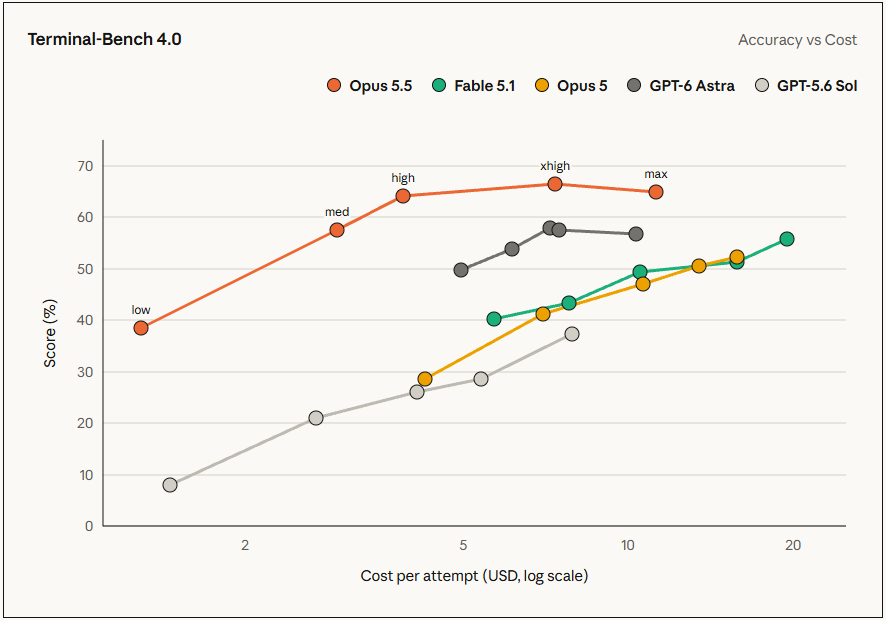
The score for measuring software development capabilities is 54.4% in '
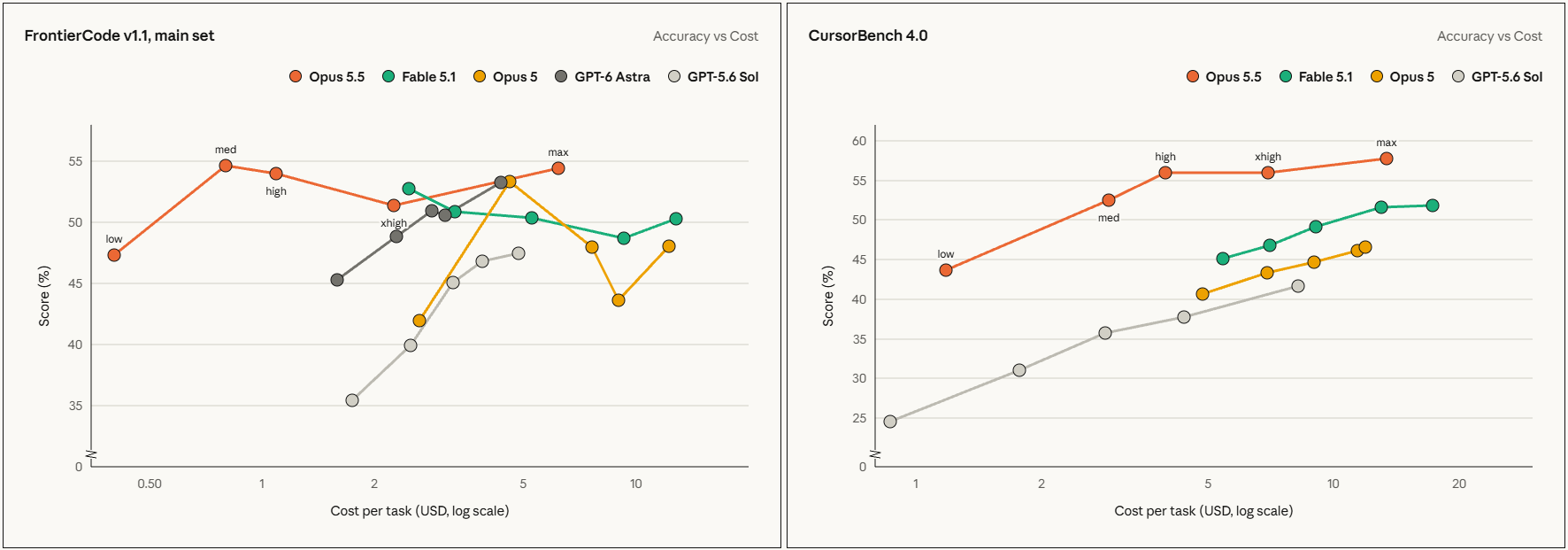
Opus 5.5 is designed for long-term processing of large codebases, and in early user testing, it was able to audit and fix 200,000 lines of code in less than 3 hours. Opus 5 took over 20 hours to do the same task and used approximately 2.5 times more tokens.
In another test conducted by Anthropic, they rewrote
In terms of efficiency, Opus 5.5 has a lower cost per token than Opus 5, and also reduces the number of tokens required for the same tasks. According to Anthropic, when performing typical processing with standard settings, the total cost is reduced by 40% compared to Opus 5. Claude Code and Claude Platform also offer a 'Fast mode' that processes up to 2.5 times faster.
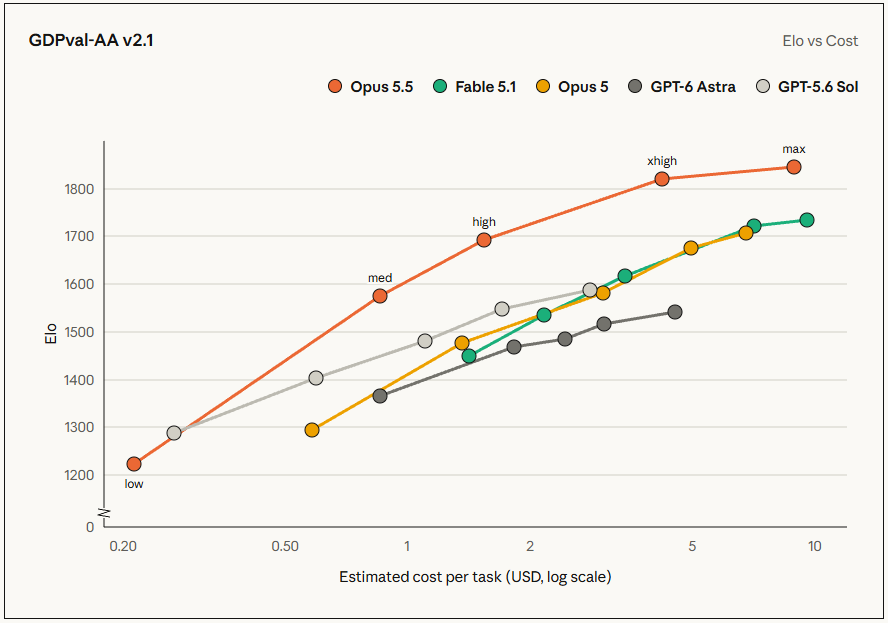
The price has also been lowered from Opus 5. The fee per million tokens has decreased from $5 (approx. 750 yen) for input to $4 (approx. 600 yen) and from $25 (approx. 3750 yen) for output to $20 (approx. 3000 yen). Writing to the cache has also decreased from $6.25 (approx. 940 yen) to $5 (approx. 750 yen), and reading from the cache has been reduced by 60%, from $0.50 (approx. 75 yen) to $0.20 (approx. 30 yen).
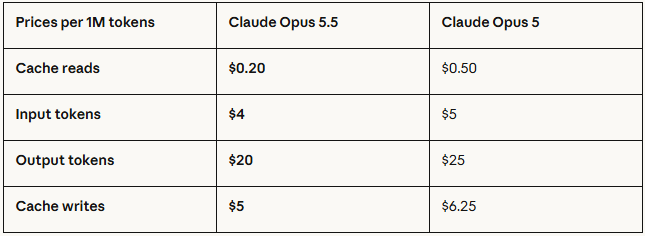
Changes have also been made to the text generation process. According to Anthropic, Opus 5.5 presents important information earlier than previous models and has been improved to make text more concise and easier to follow. An evaluation by Box, an early adopter, reports that the number of tokens used has decreased by about one-third compared to Opus 5, and the response time has been shortened by about 40% without sacrificing accuracy.
Regarding safety, Anthropic's automated evaluation, which examined model behavior using approximately 2000 scenarios, showed that Opus 5.5 performed best among recent Claude models in many inappropriate behavior indicators. A new evaluation examining the model's attempts to cross the boundaries of a given execution environment showed that it made approximately 85% fewer such attempts than Opus 5 and Claude Mythos 5.1. It was also reported to have resistance to prompt injection at a level equal to or better than Opus 5.
On the other hand, additional restrictions are in place in fields where misuse could have a significant impact, such as cybersecurity and biology. While it's possible to check for and fix code bugs during normal software development, many cybersecurity-related tasks are assigned to a different model. Security measures also apply to the field of biology, and research institutions and companies can apply for the ' Life Sciences Verification Program ,' which allows for use in a wider range of research applications, after undergoing a review process.
Furthermore, Opus 5.5 introduces 'preserved thinking' as a countermeasure against ' distillation attacks ,' which use a large number of fake accounts to extract the capabilities of a model. This mechanism prevents API users from attempting to extract inference information by rewriting the past context of Claude.
Furthermore, regarding data retention and compliance, it supports 'zero data retention,' where Anthropic does not retain inputs or outputs in the target usage scenario, just like the previous Opus series. In addition, a watermark similar to that in Claude Fable 5.1 has been introduced to comply with EU AI laws . Also, it is no longer possible to disable the 'thinking' mode in Opus 5.5.
Claude Opus 5.5 is already available on Anthropic's various platforms and is also available on Amazon Web Services, Google Cloud, and Microsoft Azure. On the Claude Platform, it is offered under the model name 'claude-opus-5-5'. Additionally, the 5-hour usage limit will be increased for the Pro, Max, Team, and Enterprise plans. Anthropic also plans to release 'Claude Sonnet 5.5' and 'Claude Haiku 5.5' in the coming weeks.
Related Posts:






in AI, Posted by log1i_yk