Project Lily, in which humans read conversations with ChatGPT, is underway, potentially allowing personal information to reach reviewers.

According to overseas media outlet 404 Media, OpenAI is working on an internal project called 'Project Lily' to improve the response quality of ChatGPT by having humans read and evaluate conversations between real users and ChatGPT. Usernames are not displayed to reviewers, and personal information is hidden, but it is possible that personal information contained in the conversation may not be completely removed and may reach the human reviewer.
Inside 'Project Lily': The Humans Reading Your ChatGPT Chats
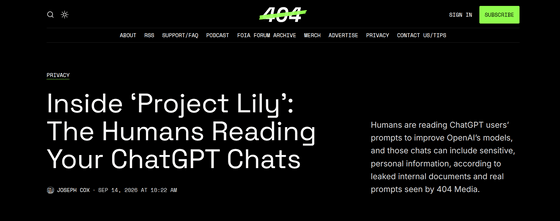
Hundreds of contractors are reportedly reading real ChatGPT conversations
https://thenextweb.com/news/chatgpt-human-reviewers-gdpr
Improving generative AI like ChatGPT requires not only training it with a large amount of text, but also human evaluation of whether the generated responses were appropriate. Project Lily has hundreds of contract staff members who read actual human-to-ChatGPT conversations to evaluate the quality of the responses and any problems.
ChatGPT is used not only for work and writing, but also for personal topics such as family relationships, health, and personal problems. 404 Media points out that 'there is a significant privacy risk in that conversations between actual users are being evaluated.' According to The Next Web, which also reported on the same issue, while usernames are anonymized on the review screen, a summary of the memory held by ChatGPT may be displayed, which may include information about past usage and general location.
OpenAI uses the 'OpenAI Privacy Filter' to reduce personal information before reviewing products. As shown in the image below, an example of how the Privacy Filter works, published by OpenAI, information that could identify an individual, such as name, address, email address, and phone number, is replaced with a label.
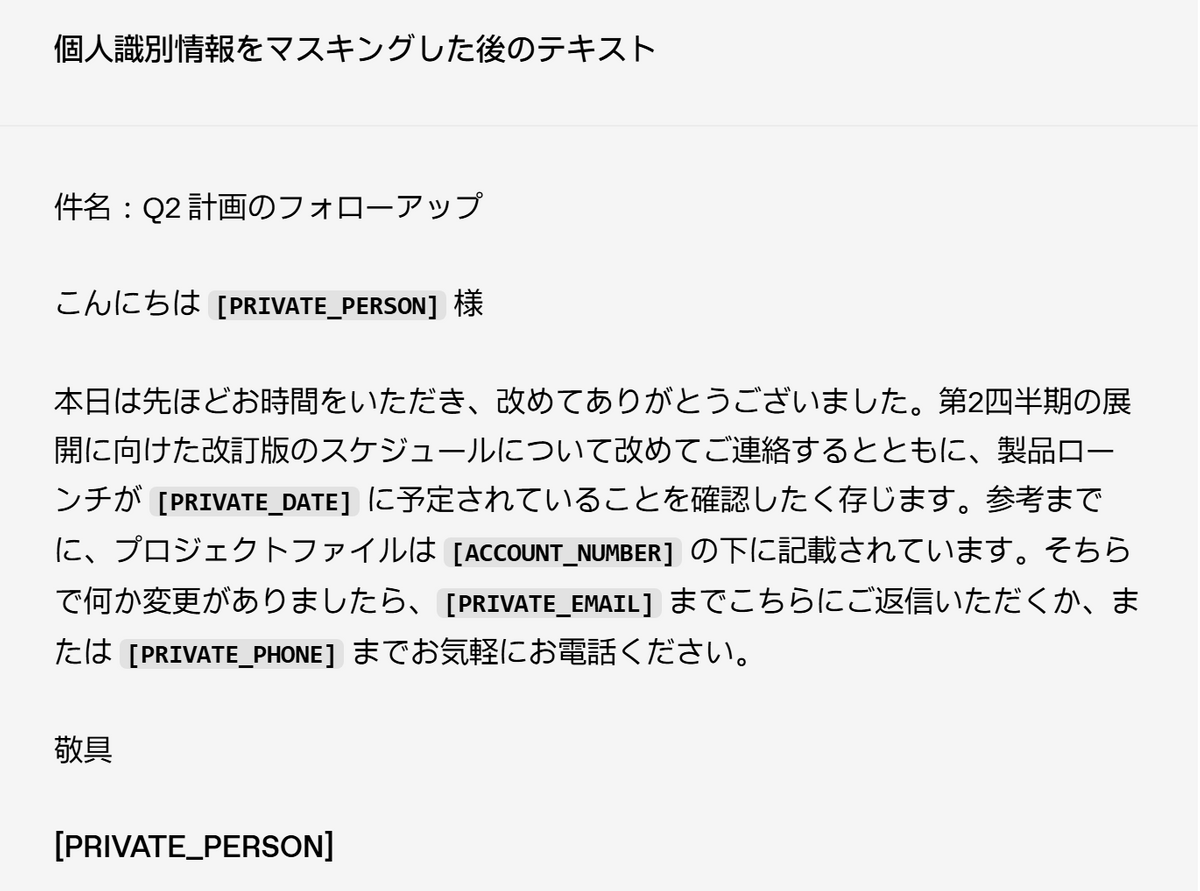
However, the Privacy Filter cannot remove all personal information. OpenAI itself has explained that 'it may overlook uncommon identifiers or personal information whose meaning changes depending on the context,' and 404 Media has reported that 'OpenAI has acknowledged the possibility that highly sensitive information may remain and reach reviewers.'
OpenAI's privacy policy states that vendors and service providers may process personal data to the extent necessary for the operation and improvement of the service. Furthermore, in the personal version of ChatGPT, conversations are used for model improvement by default.
Depending on your settings, you can prevent conversation data from being used to improve the model. Open 'Settings,' go to 'Data Control,' and turn off 'Help improve the model.' Subsequent new conversations will not be used to train the model.

On the other hand, ChatGPT Business, Enterprise, and Edu are configured by default not to use conversations for model improvement. Additionally, 'temporary chat' conversations are not used for model improvement and are usually deleted after 30 days.
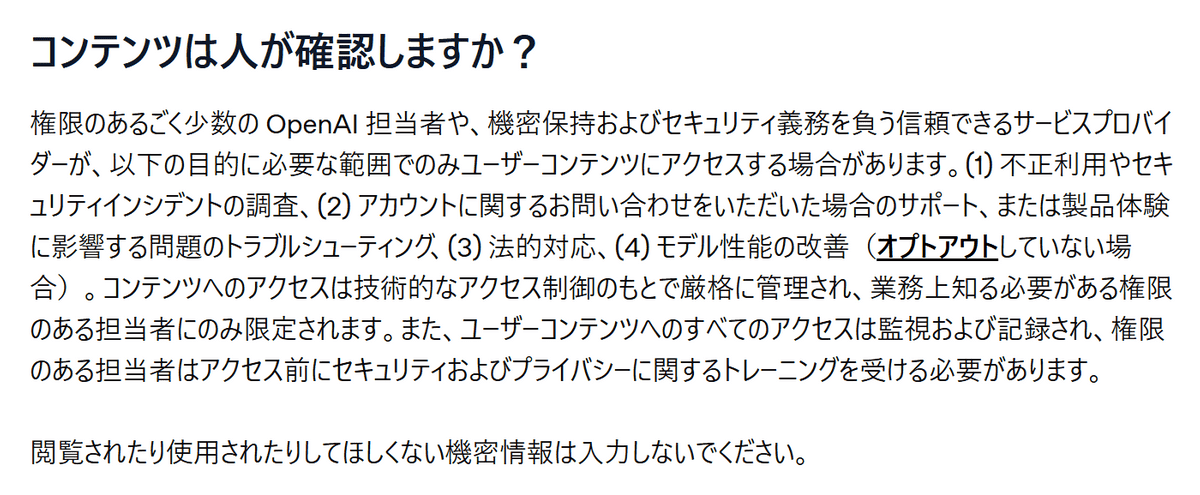
404 Media contacted OpenAI regarding Project Lily to ask where they inform users about the possibility of humans reading their conversations with ChatGPT. OpenAI reportedly directed them to
Related Posts:







in AI, Posted by log1d_ts