The Swiss Federal Government has launched a program to replace Microsoft 365 with open-source alternative software on 3,000 computers.
The Swiss Federal Government has launched a plan to provide its approximately 3,000 employees with an independent work environment centered on open-source software by the end of 2027, aiming to reduce its reliance on Microsoft 365 and strengthen its digital sovereignty.
Microsoft: l'administration fédérale teste des alternatives | RTS
https://www.rts.ch/info/suisse/2026/article/microsoft-l-administration-federale-teste-des-alternatives-29346805.html?ref=itsfoss.com
Switzerland's Federal Government is Replacing Microsoft on 3,000 Computers
https://itsfoss.com/news/switzerland-replace-microssoft-pilot/
Microsoft products such as Word, Excel, Teams, and Outlook are widely used in the Swiss Federal Government. However, this reliance on a specific foreign company is considered problematic from a digital sovereignty perspective, as it could pose a risk to maintaining administrative functions if the service becomes unavailable. The Swiss Federal Council enacted the 'Federal Act on the Use of Electronic Means for the Performance of Government Duties (EMBAG)' and has been conducting a 'PoC BOSS' project to investigate whether there is a realistic option to move away from Microsoft 365 by using open-source software.
Switzerland mandates that all software created by government agencies for government use be open source - GIGAZINE

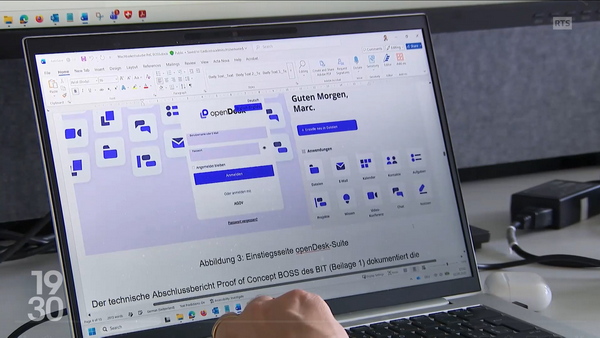
PoC BOSS adopted 'openDesk,' an open-source work environment whose development is led by ZenDiS, Germany's digital sovereignty center. 172 employees from multiple ministries participated, testing functions necessary for daily work, such as document editing, file saving, collaboration, email, and calendar.
openDesk is not a single application, but rather a work environment that combines multiple open-source software programs. PoC BOSS utilizes Open-Xchange for email and calendar, Nextcloud for file management, OpenProject for project management, XWiki for wikis, Jitsi for voice and video conferencing, Element for instant messaging, and Univention for identity and access management. While primarily accessible via a web browser, Windows and Linux desktop environments are also being tested to verify offline functionality.
The test results showed high marks for document processing, file storage, collaboration, email, and calendar, leading the Federal Cabinet to conclude that it is 'usable in principle for major standard business operations.' It was also evaluated as a viable emergency work environment to be used in the event of a Microsoft 365 outage. On the other hand, performance limitations were observed in video conferencing with many participants.
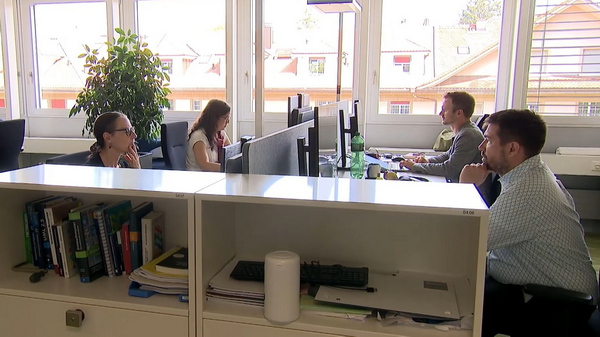
Following these results, the Federal Council will move forward with building a larger-scale 'work environment that ensures digital sovereignty' than the PoC. The target will be employees in each ministry and the Federal Council who are responsible for particularly important work processes, and the plan is to create an environment that can be used by approximately 3,000 people by the end of 2027. The cost for the first phase is estimated at approximately 9 million Swiss francs (approximately 1.73 billion yen).
However, these 3,000 people will not be completely migrated from Microsoft 365. The new open-source environment will be built as a separate system, but it will run in parallel with Microsoft 365. Through this plan, we will investigate the costs and operational challenges required for a full-scale implementation, and based on the results, we will decide whether to conduct a larger-scale migration in the future.
A major obstacle to a full transition is the large number of specialized applications and systems used within the Swiss Federal Government. Many of these are closely tied to Microsoft's architecture, and even if it is confirmed that an open-source environment can be used, a full transition from the Microsoft environment would require extensive modifications, security testing, and personnel training. For this reason, the Federal Council has not yet decided whether to replace the entire work environment in the future, as of the time of writing.
The federal government defines digital sovereignty as the ability to perform critical tasks without relying on external suppliers or foreign countries. The goal is not to eliminate all Microsoft products at once, but rather to ensure alternative means of continuing administrative functions even if Microsoft 365 becomes unavailable, and to gradually reduce reliance on a single company.
Related Posts:






in Software, Posted by log1i_yk