More than 80% of smartphones violate EU repair information display rules.
Smartphones sold within the EU are required to clearly display information about repairs and replacement parts, and
One Year Into EU Ecodesign Rules, 80% of Smartphones Still Lack Required Repair Information - Right to Repair Europe
https://repair.eu/news/one-year-into-eu-ecodesign-rules-80-of-smartphones-still-lack-required-repair-information/
As an example of a smartphone that adheres to the rules, let's check the energy label of the iPhone 17. The label shows the following information: 'Energy efficiency: A', 'Battery life: 41 hours', 'Drop resistance score: B', 'Repairability score: C', 'Charge cycles to 80% of original capacity: 1000 times', and 'Dust and water resistance rating: IP68'. Also, scanning the QR code in the upper right corner will give you access to device information posted on the EU website.
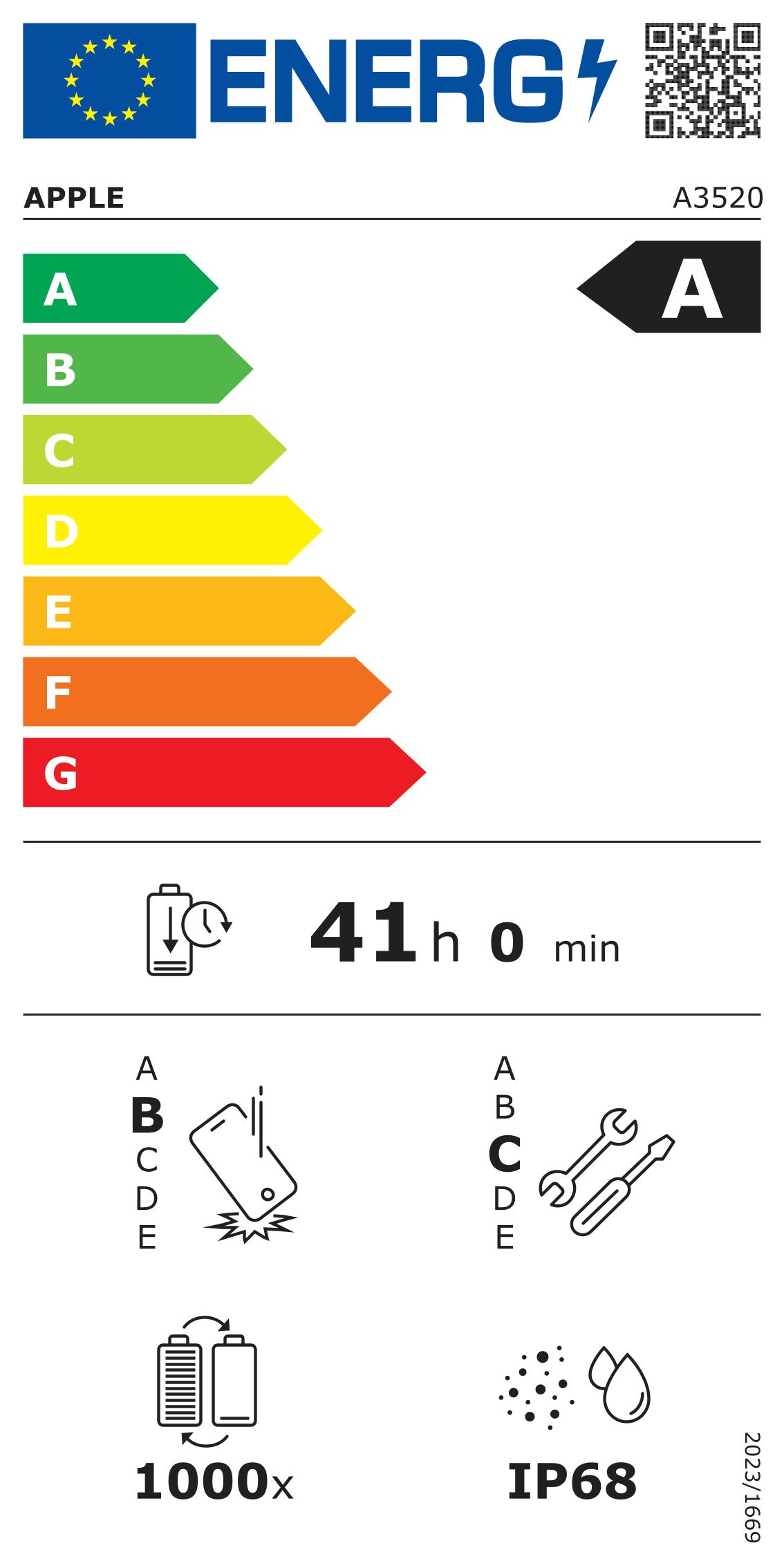
This is what
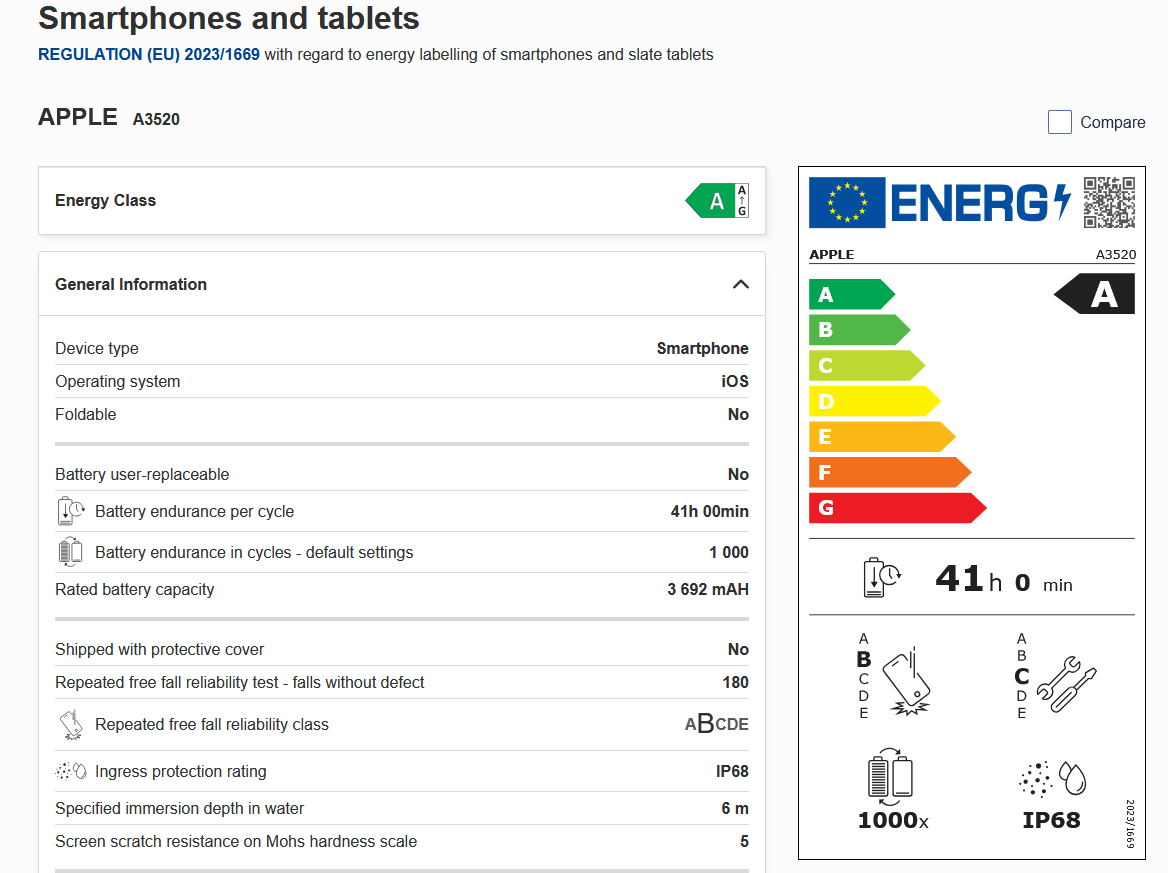
At the bottom of the page, there is also a link to the manufacturer's repair information page.
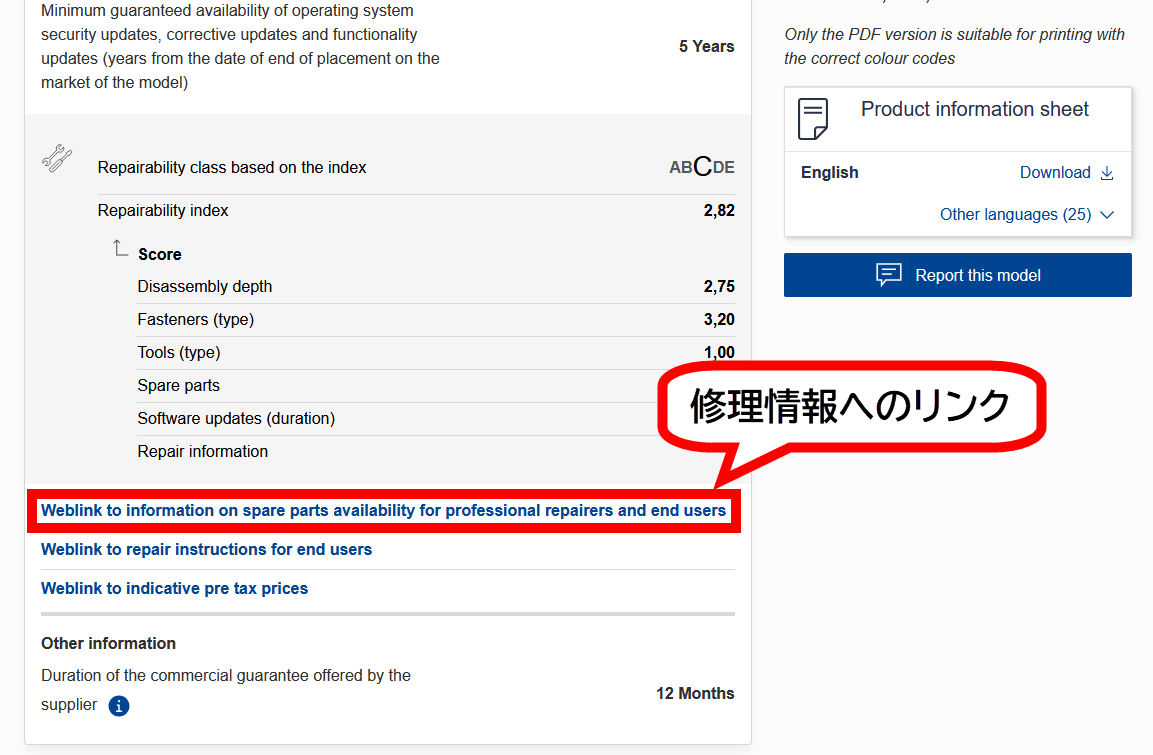
In the case of the iPhone 17, it was possible to access
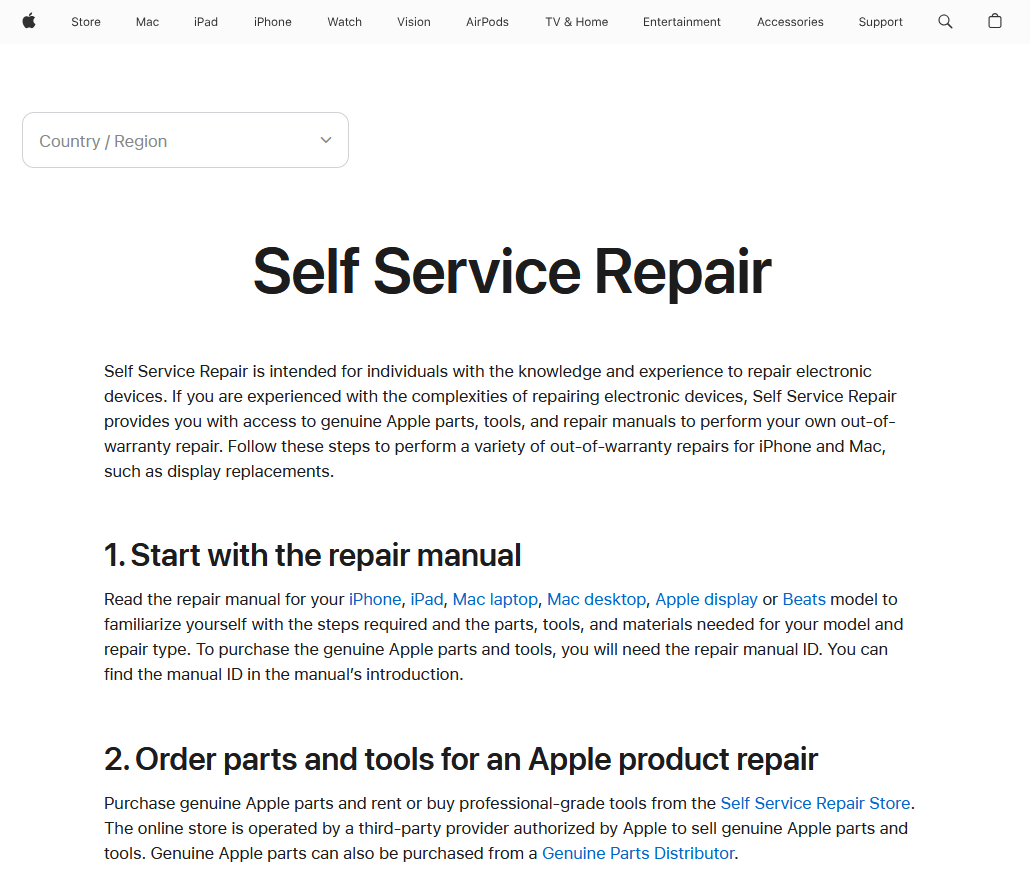
As mentioned above, for smartphones that comply with information disclosure requirements, you can follow a link from the energy label to reach the repair information page. However, a survey of 2,334 smartphones by Right to Repair Europe revealed that only 18% of smartphones had a link to a page where users could quickly find repair procedures and replacement parts prices, meaning that 82% of smartphones were being sold in violation of the rules.
An example of a rule violation is shown below. The Chinese-made smartphone ' Oukitel WP35 Pro ' has a repairability rating of A.
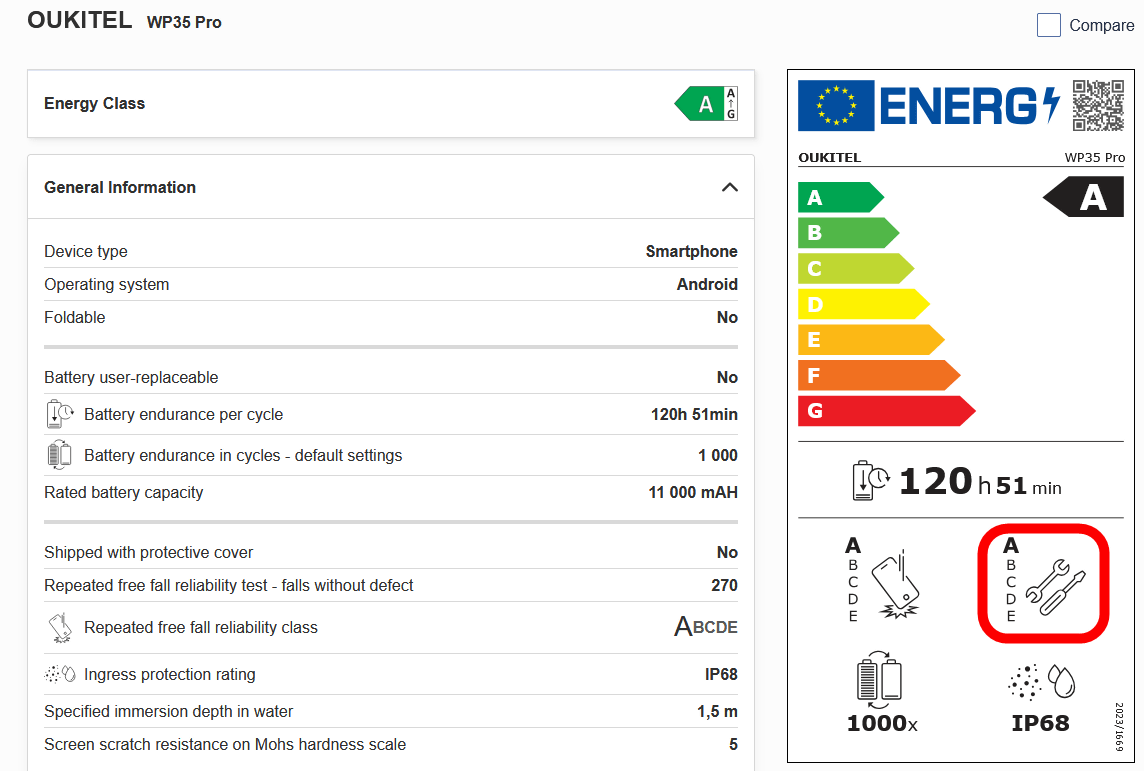
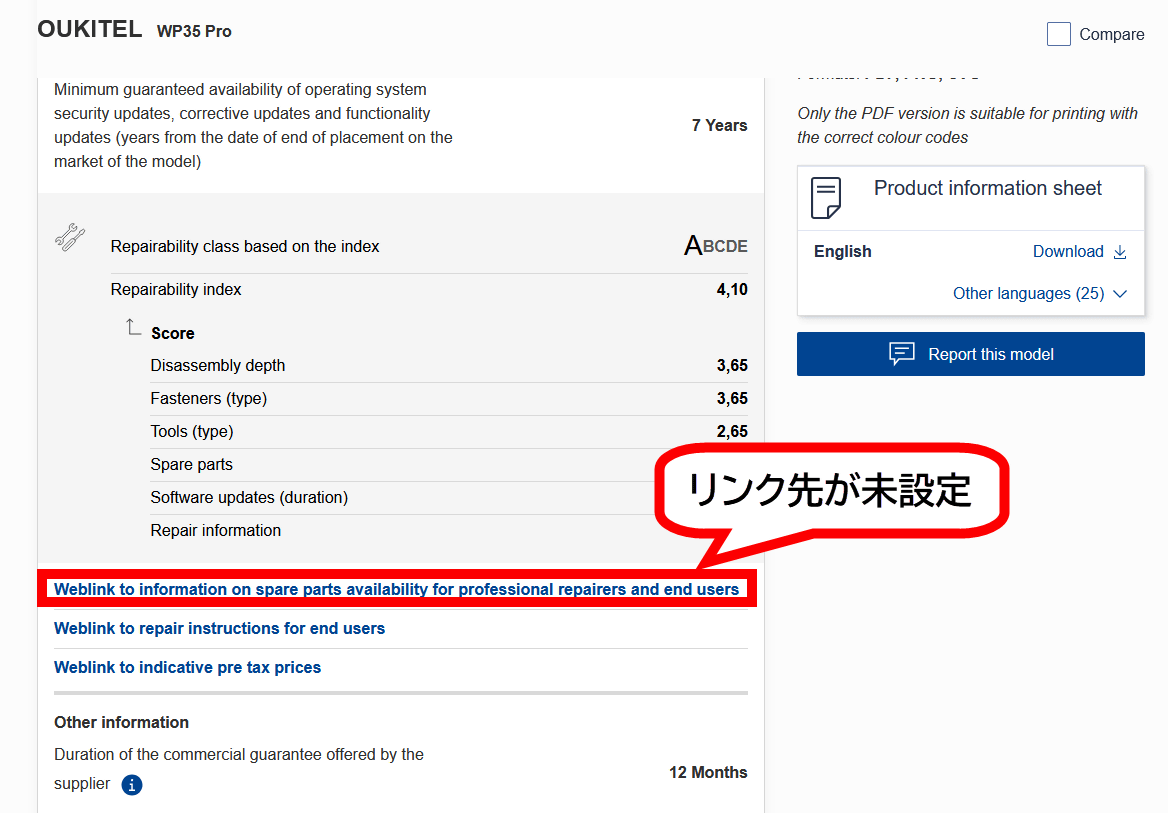
However, the links at the bottom of the information page do not have destination URLs set, so clicking them does not lead anywhere.
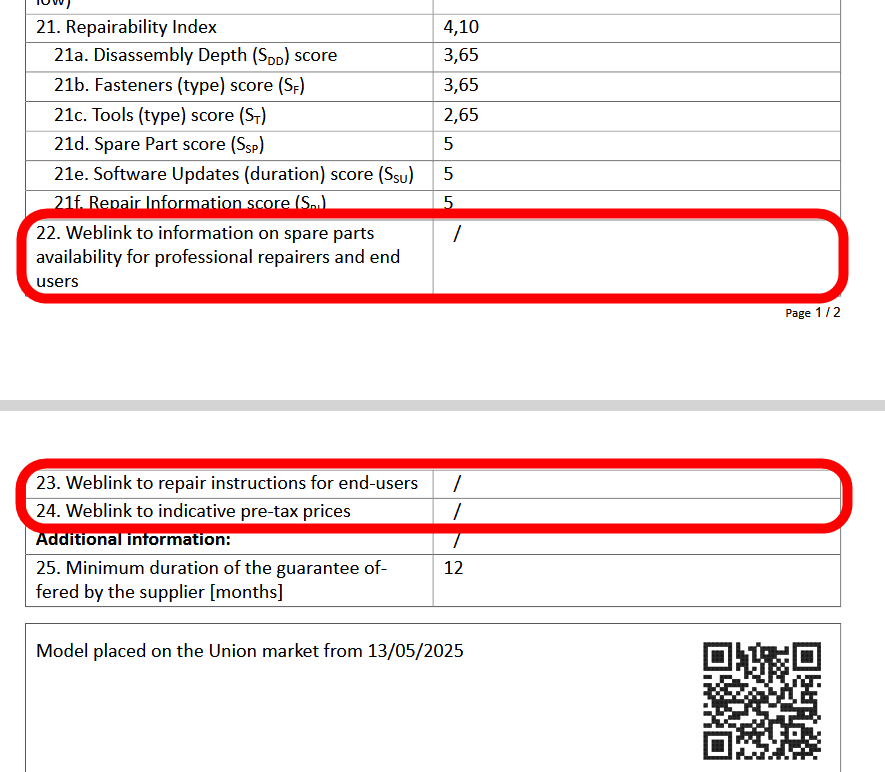
Upon reviewing the product information sheet, I found that all three fields for URLs were blank.
According to Right to Repair Europe, 8% of smartphones only provide useless information such as 'Please check the manual,' and 5% include links to online shopping sites like Temu and AliExpress.
Right to Repair Europe points out that 'while it should be easy to detect if there are blank fields in the application data, thousands of blanks are actually being overlooked,' and argues that 'market surveillance authorities should invest more resources in verifying compliance.'
Furthermore, Right to Repair Europe points out that even for companies like Apple and Samsung that comply with the rules, 'after accessing their websites, it takes multiple clicks to find information about repairs and replacement parts. It is questionable how many consumers will go through so many steps when considering a purchase.'
Related Posts:



in Smartphone, Posted by log1o_hf